Menu

Free Consultation
Cosmetic dentistry has transformed how people enhance their smiles, and dental bonding remains one of the most accessible, conservative, and effective treatments available today. But many patients still ask:
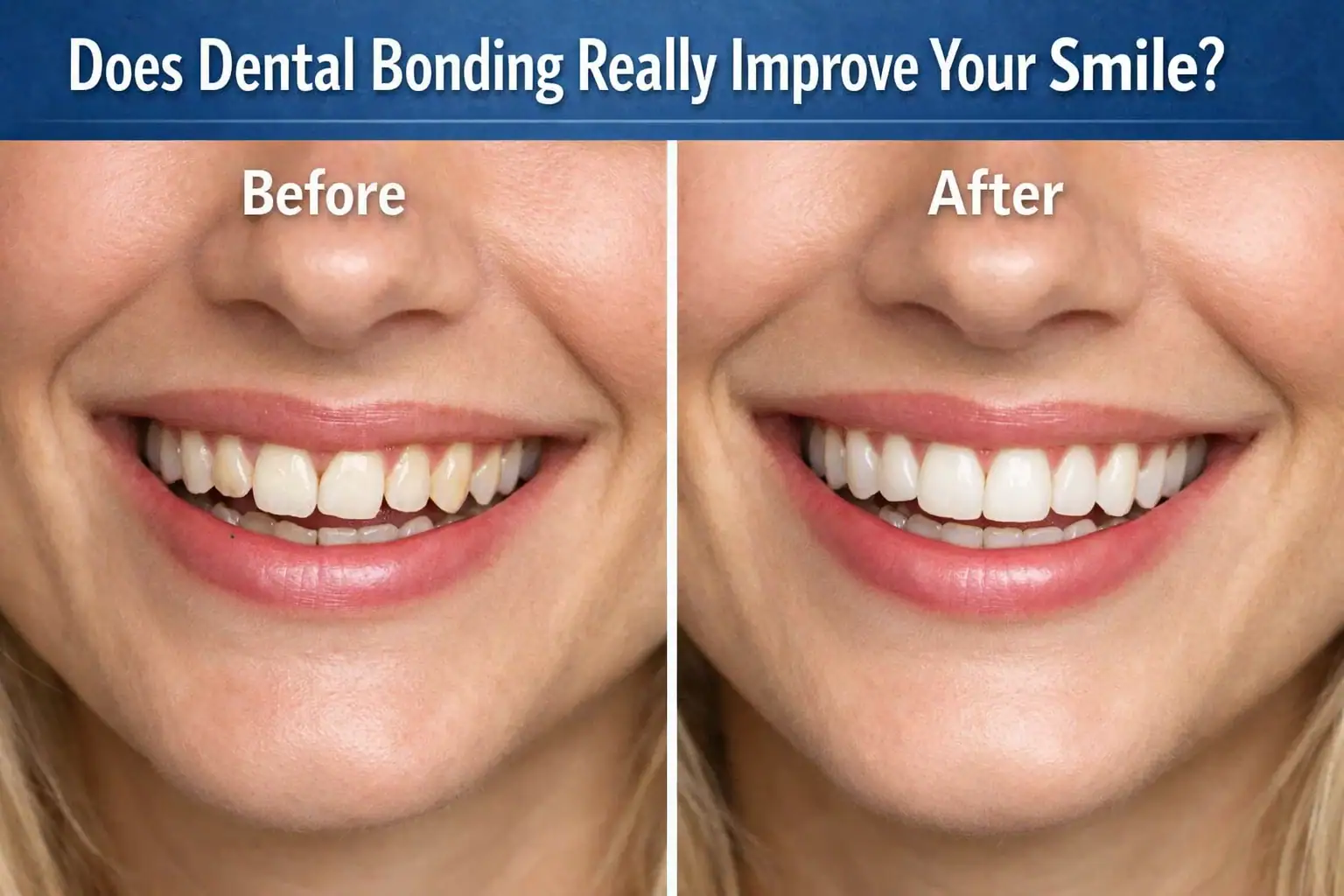
Does dental bonding really improve your smile?
Is dental bonding worth it long term?
How natural does bonding look compared to veneers?
Can bonding correct crooked teeth and gaps?
This in-depth guide answers everything from science to aesthetics about dental bonding and its true impact on smile transformation.
Dental bonding is a cosmetic restorative procedure where a tooth colored composite resin is applied directly to the enamel surface and sculpted to enhance tooth shape, color, length, and alignment.
The resin is then hardened using high-intensity curing light, chemically bonding it to natural tooth structure.
• Closing gaps (diastema)
• Repairing chipped teeth
• Masking stains
• Improving tooth symmetry
• Lengthening worn teeth
• Minor alignment corrections
It is considered one of the most conservative cosmetic dentistry procedures.
Dental bonding improves multiple smile parameters simultaneously:
Creates balanced tooth height-to-width ratios.
Aligns uneven edges and shapes.
Covers stains and discoloration.
Improves light reflection and brightness.
Corrects irregular edges that disrupt harmony.
Modern composite materials replicate:
• Enamel translucency
• Light refraction
• Natural surface gloss
Advanced layering techniques allow dentists to mimic dentin and enamel structure.
This is why professionally applied dental bonding blends seamlessly.
Bonding can close gaps instantly without braces.
Restores natural contours.
Balances length and width.
Rebuilds tooth edges.
Visually aligns teeth (optical straightening).
✔ Minor cosmetic issues
✔ Healthy enamel
✔ Non-smokers (or light smokers)
✔ Good oral hygiene
✔ Realistic expectations
❌ Severe crowding
❌ Large structural damage
❌ Heavy bruxism (without night guard)
No drilling or enamel removal.
Immediate transformation.
Lower than veneers or crowns.
Usually no anesthesia required.
Fully personalized smile design.
Bonding is not perfect for every case.
Composite is softer than porcelain.
Can discolor over time.
Hard foods may damage it.
Typical lifespan:
3 to 7 years
Factors affecting longevity:
• Oral hygiene
• Diet
• Smoking
• Grinding habits
• Dentist skill
| Feature | Dental Bonding | Porcelain Veneers |
|---|---|---|
| Lifespan | 3–7 years | 10–20 years |
| Cost | Lower | Higher |
| Enamel removal | None | Minimal |
| Aesthetic quality | Very good | Excellent |
| Repairability | Easy | Complex |
Yes composite resins are biocompatible and widely used in restorative dentistry.
No known systemic risks.
Yes — by improving:
• Smile width
• Tooth proportions
• Lip support
Many patients appear younger and more confident.
✔ Brush twice daily
✔ Floss regularly
✔ Limit dark beverages
✔ Avoid biting hard objects
✔ Wear night guard if grinding
Studies show improved smiles lead to:
• Higher self-esteem
• Increased social confidence
• Better professional impressions
Yes — unlike veneers, composite can be touched up or reshaped easily.
No, but long term cosmetic solution.
Rare if properly placed.
No.
Bonding doesn’t whiten but can be replaced lighter.
• Micro-layering
• Shade mapping
• Digital smile design integration
These elevate aesthetic results significantly.
Dental bonding provides:
✔ Immediate aesthetic enhancement
✔ Natural appearance
✔ Conservative treatment
✔ Affordable transformation
For mild to moderate smile imperfections, dental bonding is one of the best cosmetic dental solutions available.
• Dental bonding enhances shape, color, and symmetry
• Safe and minimally invasive
• Fast and affordable
• Requires maintenance
• Ideal for cosmetic corrections