
E-max Restoration
E-max veneers and crowns: lithium disilicate glass-ceramic with enamel-like translucence, placed as a veneer, a full crown or an onlay.
- Lithium disilicate glass-ceramic
- Placed as veneer, crown or onlay
- High translucence for front teeth
- Restoration type stated in the written plan
First consultation free · same-day reply · no price pressure
E-max, also written emax or e.max, is the trade name of restorations pressed or milled from lithium disilicate glass-ceramic, so the word describes a material rather than a procedure, and the same material is placed as a crown, as a laminate veneer and as a partial coverage restoration, each with its own published record. Across 64 clinical studies, monolithic lithium disilicate single crowns recorded 98.5% five-year survival, the highest figure in that analysis (PubMed 41489982). As veneers, lithium disilicate survived at 96.81% over 10.4 years (PubMed 39523553). Bridges are the exception: across 41 studies, lithium disilicate multiple-unit fixed prostheses survived at 82.5%, significantly below metal-ceramic (PubMed 41650383). A written plan should therefore state the restoration type, not only the material name.
- 01The same ceramic performs differently by unit count. A systematic review of 12 clinical studies reported 97.8% five-year and 96.7% ten-year cumulative survival for lithium disilicate single crowns, the ten-year figure resting largely on one study, against 78.1% at five years and 70.9% at ten years for fixed dental prostheses in the same material, with most failures in the posterior region (PubMed 24674802).
- 02Monolithic and layered construction are sold under one name and separate on outcome. In the 64-study meta-analysis, layered leucite and lithium disilicate crowns survived at 95.7%, significantly below monolithic lithium disilicate (P = 0.021), and monolithic designs showed significantly fewer ceramic fractures and less chipping (PubMed 41489982).
- 03As a veneer, the complication load is low: at 10.4 years, technical, esthetic and biological complication rates for lithium disilicate laminate veneers were 6.1%, 1.9% and 0.45%, against 41.48%, 19.64% and 6.51% for feldspathic porcelain in the same review (PubMed 39523553).
- 04Partial coverage is the third form and the evidence is short. Pooling six randomised controlled trials, posterior lithium disilicate partial coverage restorations survived at 93.7% over three years (95% CI 83.7-97.7), against 89.3% for resin matrix ceramic (95% CI 76.4-95.3), with long-term performance described as uncertain (PubMed 39558793).
- 05The bridge limitation has a named mechanism. Framework fracture exceeded 10% over five years for lithium disilicate and glass-infiltrated alumina fixed prostheses, while 71.0% of all restorations in that analysis stayed complication-free at five years (PubMed 41650383). If a quote prices a bridge per unit, it is not describing the same product as a quote for single crowns.
/ What is Emax Dental?
Emax - empress porcelains are among the most aesthetically advanced veneers with their structure made of reinforced porcelain in their infrastructure or completely made of reinforced porcelain as a block. Emax dental veneers, in other words empress dental veneers, are basically based on lithium disilicate glass and have the feature of being a completely ceramic dental coating system consisting of elements such as lithium dioxide, quartz, alumina, potassium oxide.
Today, special ceramics are used to ensure that individuals have realistic and natural-looking smiles. Unlike other dental restoratives, emax tooth is a ceramic material that provides a durable and aesthetic appearance at the same time. Dental restorations made entirely of ceramic do not contain metal. Therefore, the light shines inside the tooth as it does in natural teeth. Generally applied to the front incisors, emax tooth is not preferred for the teeth in the back of the mouth because it does not have sufficient durability.
In addition to being one of the most preferred crowns by dentists, emax teeth are also popular among patients. Long-lasting and durable, emax tooth offers an aesthetically pleasing appearance that resembles natural teeth. Made of lithium disilicate ceramic ingot, known for its durability, emax tooth provides the look and feel of a real tooth.
Strikingly similar to natural teeth, it is one of the most vibrant materials that can be used for a crown, and it is also possible to benefit from its translucency and ability to color to match all shades of teeth. The shine of natural teeth can also be achieved with emax teeth, as they are made entirely of ceramic and contain no metals. Being resistant to chipping, emax teeth are less likely to chip and crack than crowns made of porcelain and zirconium materials.
The lifespan of Emax dental crowns usually varies between 10 and 20 years, but this period may vary depending on how much attention the patient pays to the oral and dental care routine. In order to prolong the lifespan of Emax dental veneers, the patient should pay attention to their oral and dental care routine as well as regular dental check-ups. Therefore, a standardized lifetime of emax dental veneers cannot be mentioned for each patient.
Thanks to Emax dental coating treatment, the patient's teeth can gain a more pleasant and aesthetic appearance. On the other hand, if the patient's teeth are broken, destroyed or discolored due to many different reasons, it may be possible to benefit from emax dental veneers treatment. The success of emax dental veneers treatment, just like other dentistry procedures, depends on the fact that the planning is made in accordance with the needs of the patient and the treatment is applied by an expert and experienced dentist.
| At a glance | |
|---|---|
| Duration | 5-7 days |
| Sessions | 2 |
| Warranty | 5 years |
| Materials Used | E-max IPS (Ivoclar Vivadent) |
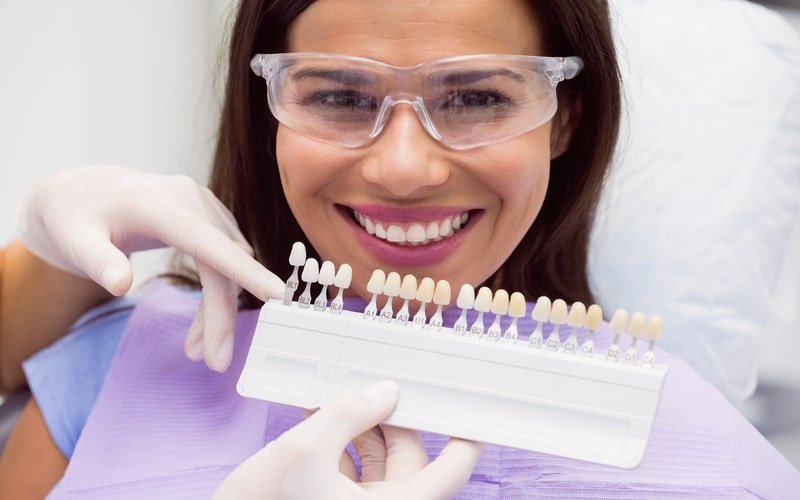
/ What is Empress Tooth?
Made of high quality, fully porcelain material, empress teeth offer aesthetically satisfying results by imitating the appearance of natural teeth. The durability of the porcelain is increased by reinforcing the ceramic piece with glass ceramic without using any metal material. These porcelains are used in empress dental veneers treatment.
Empress dental veneers are one of the most widely used aesthetic dentistry procedures today. Empress dental veneers provide extremely successful results, especially in patients who have problems with their front teeth. It may also be preferable to use empress dental veneers on molars, where less force is applied compared to the front teeth.
/ Why are Emax & Empress Teeth Made?
Emax & empress dental veneers are specially reinforced porcelains that do not contain metal infrastructure. Thanks to Emax & empress dental veneers, it is possible to achieve a perfect aesthetic and gum harmony. The veneers have high herpes permeability and resemble the appearance of natural teeth, so they can be used to meet high aesthetic expectations and in the front areas of the mouth. Emax & empress porcelain dental veneers are generally used in the front areas of the mouth, and zirconium dental veneer treatment may be preferred in the back areas where high resistance and aesthetics are required.
In order to understand the need for Emax empress dental veneers treatment, it is first determined which part of the patient's mouth will be corrected. Patients who have complaints about their front teeth and need correction of their front teeth are generally considered suitable candidates for emax empress dental veneers treatment.
In cases where aesthetic veneer treatment will be applied on a single tooth, emax empress dental veneer treatment may be preferred. However, if the patient also has a lack of teeth, emax empress dental veneer treatment may not be the right option.
/ How are Emax & Empress Teeth Made?
In patients who are decided to be suitable for Emax empress dental treatment, the teeth are first photographed and impressions of the teeth are taken. In order to prepare the teeth for emax empress dental veneers, an abrasion process must be performed on the teeth. Teeth are adjusted to be suitable for veneers and impressions are taken again. Emax empress dental veneers are prepared in the laboratory according to the measurements taken from the patient and adhered to the teeth with medical adhesive. With the application of these steps, emax empress dental veneer treatment is completed.
/ Treatment Process
- 01Consultation: Initial examination and needs assessment; imaging where required.
- 02Treatment: Precise preparation, digital impression, laboratory fabrication.
- 03Follow-up: Outcome review and aftercare guidance.
/ What are the Advantages of Emax & Empress Teeth?
- One of the most important advantages of Emax empress tooth coating treatment is that it can be applied by performing patient-specific color controls and color determination. In this way, results suitable for the natural form can be obtained.
- Due to its high light transmittance, emax empress dental veneers are frequently preferred.
- Emax empress dental veneers can be preferred to eliminate deformities not only in the front teeth but also in the back teeth.
- Emax empress is a dental procedure that helps to eliminate bad breath and discoloration caused by unhealthy teeth.
- If Emax empress dental veneers treatment is applied successfully, you can have aesthetically satisfying teeth that are compatible with the natural tooth appearance. Thanks to the regular application of routine oral and dental care, emax empress dental veneers can be used comfortably and safely for a long time.
- Emax empress dental veneers treatment does not cause any damage to the patient's tooth structure. There is no risk of a purplish color on the edge of the treated teeth or on the gums.
- Emax empress dental veneer treatment reduces the sensitivity of the teeth. It helps the patient to have a smooth and slippery tooth structure.
/ In Which Situations Should Emax & Empress Teeth Be Applied?
Emax empress tooth coating treatment;
- Those with wear or various damages on their front teeth,
- Damage to premolars due to different causes,
- Advanced discoloration and staining of the teeth,
- A person whose teeth are broken due to trauma or tooth decay,
- Discoloration of teeth due to devitalization, fluorosis, tetracycline or age-related discoloration,
- Discoloration of teeth that occurs after root canal treatment and this discoloration cannot be removed for any reason,
- Deformations of the protective layer of the tooth (enamel defects) with deficiencies such as enamel hypoplasia,
- Teeth with position and alignment errors (malpositioned teeth),
- Has a tooth that is worn or deformed and has had a large number of restorations,
- It can be applied to people with gaps between their teeth to provide the targeted aesthetic correction.
After Emax empress dental veneers treatment, patients can have an aesthetic smile and a smooth and healthy tooth alignment. Emax empress dental veneers give the most natural and effective results on the front incisors where aesthetic concerns are at the forefront.
On the other hand, emax empress dental veneer treatment;
- To the molars in the tooth alignment,
- Teeth with metal pivots added by root canal treatment,
- Cavities where teeth are missing,
- It is not applicable to teeth with metal abutments on which dental implant treatment has been applied.
Emax & Empress Dental Crown Prices
As with all dental procedures, the prices for Emax and Empress dental crowns can vary based on several different factors. Fundamental factors that determine the cost include the current oral and dental health of the patient and the number of teeth to undergo Emax and Empress dental crown treatment.
Emax and Empress dental crown treatment can only be applied to patients with healthy teeth and gums. If any decay or issues requiring other dental treatments are identified in the tooth or teeth planned for the Emax and Empress dental crown treatment, the dentist will first address and treat the dental decay or other problems. Therefore, whether another dental treatment is required for the patient undergoing Emax and Empress dental crown treatment is one of the decisive factors influencing the prices.
In addition to these factors, the experience of the dentist performing the Emax and Empress dental crown treatment, the pricing policy of the clinic where the treatment is conducted, and the quality of materials and equipment used during the treatment also directly affect the prices of Emax and Empress dental crowns
- 1.Pjetursson BE, Pitta J, Balet A, Bjarnadottir GR, Sailer I, Romandini P. A Systematic Review and Meta-analysis Evaluating the Survival, Failure, and Complication Rates of Metal-Ceramic, Veneered, and Monolithic All-Ceramic Tooth-Supported Single Crowns-Part 1. Int J Prosthodont 2026;39:308-324. PubMed 41489982
- 2.Pieger S, Salman A, Bidra AS. Clinical outcomes of lithium disilicate single crowns and partial fixed dental prostheses: a systematic review. J Prosthet Dent 2014;112:22-30. PubMed 24674802
- 3.Romandini P, Pjetursson BE, Pitta J, Balet A, Ikumi R, Sailer I. A Systematic Review and Meta-analysis Evaluating the Survival, Failure, and Complication Rates of Metal-Ceramic, Veneered, and Monolithic All-Ceramic Tooth-Supported Multiple-Unit Fixed Dental Prostheses (FDPs)-Part 2. Int J Prosthodont 2026;39:444-462. PubMed 41650383
- 4.Klein P, Spitznagel FA, Zembic A, Prott LS, Pieralli S, Bongaerts B, et al. Survival and Complication Rates of Feldspathic, Leucite-Reinforced, Lithium Disilicate and Zirconia Ceramic Laminate Veneers: A Systematic Review and Meta-Analysis. J Esthet Restor Dent 2025;37:601-619. PubMed 39523553
- 5.Prott LS, Pieralli S, Klein P, Spitznagel FA, Ibrahim F, Metzendorf MI, et al. Survival and Complications of Partial Coverage Restorations on Posterior Teeth-A Systematic Review and Meta-Analysis. J Esthet Restor Dent 2025;37:620-641. PubMed 39558793

Which one suits you?
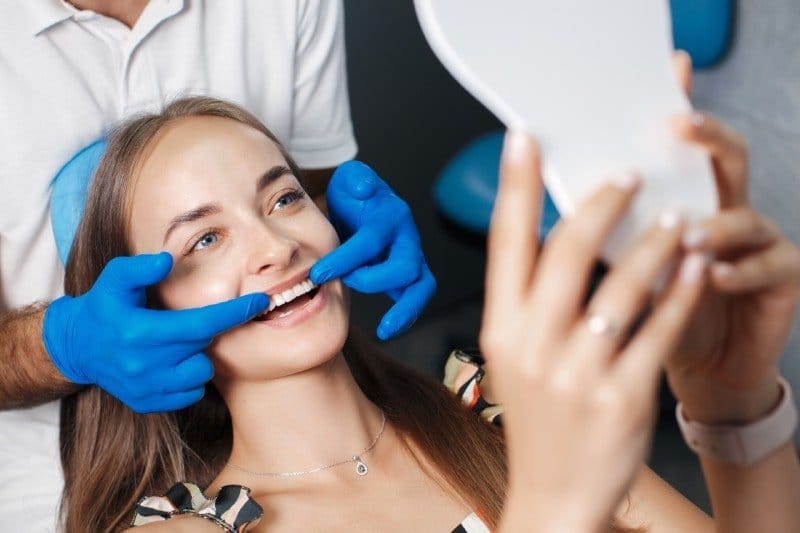
E-max
High esthetics, full ceramic (lithium disilicate)
- Naturalness / Esthetics
- ★★★★★
- 10-year survival*
- ~96%
- Tooth reduction
- Low (0.5–1.5 mm)
- Metal-free
- Yes
- Sessions
- 2
- Cost tier
- $$$$$
- Evidence source
- PubMed 24674802
- Best for
- Anterior esthetics and naturalness
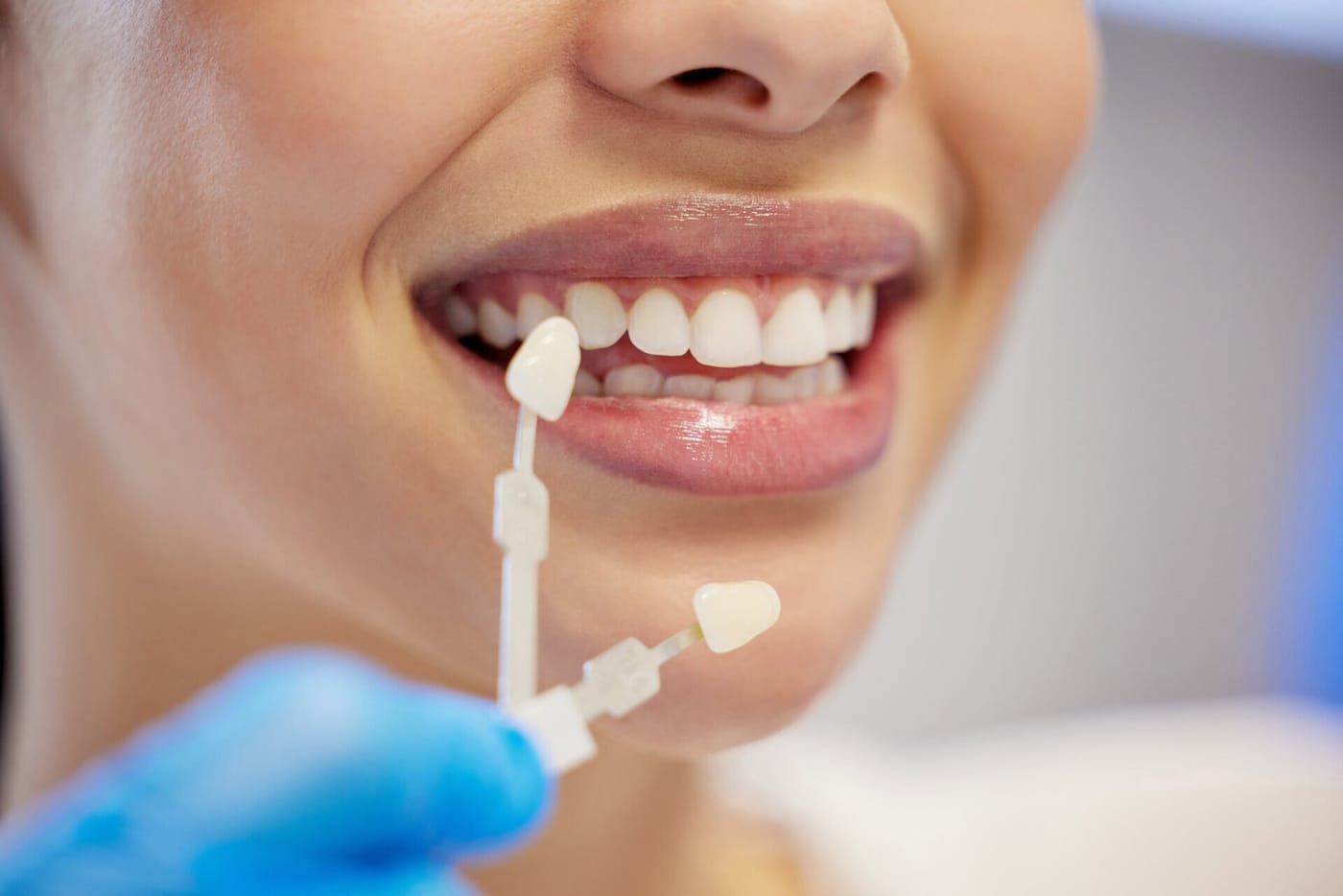
Zirkonyum
Maximum strength, metal-free
- Naturalness / Esthetics
- ★★★★☆
- 10-year survival*
- ~95%
- Tooth reduction
- Low (0.6–1 mm)
- Metal-free
- Yes
- Sessions
- 2
- Cost tier
- $$$$$
- Evidence source
- PubMed 41489982
- Best for
- Bridges, posterior teeth, bruxism
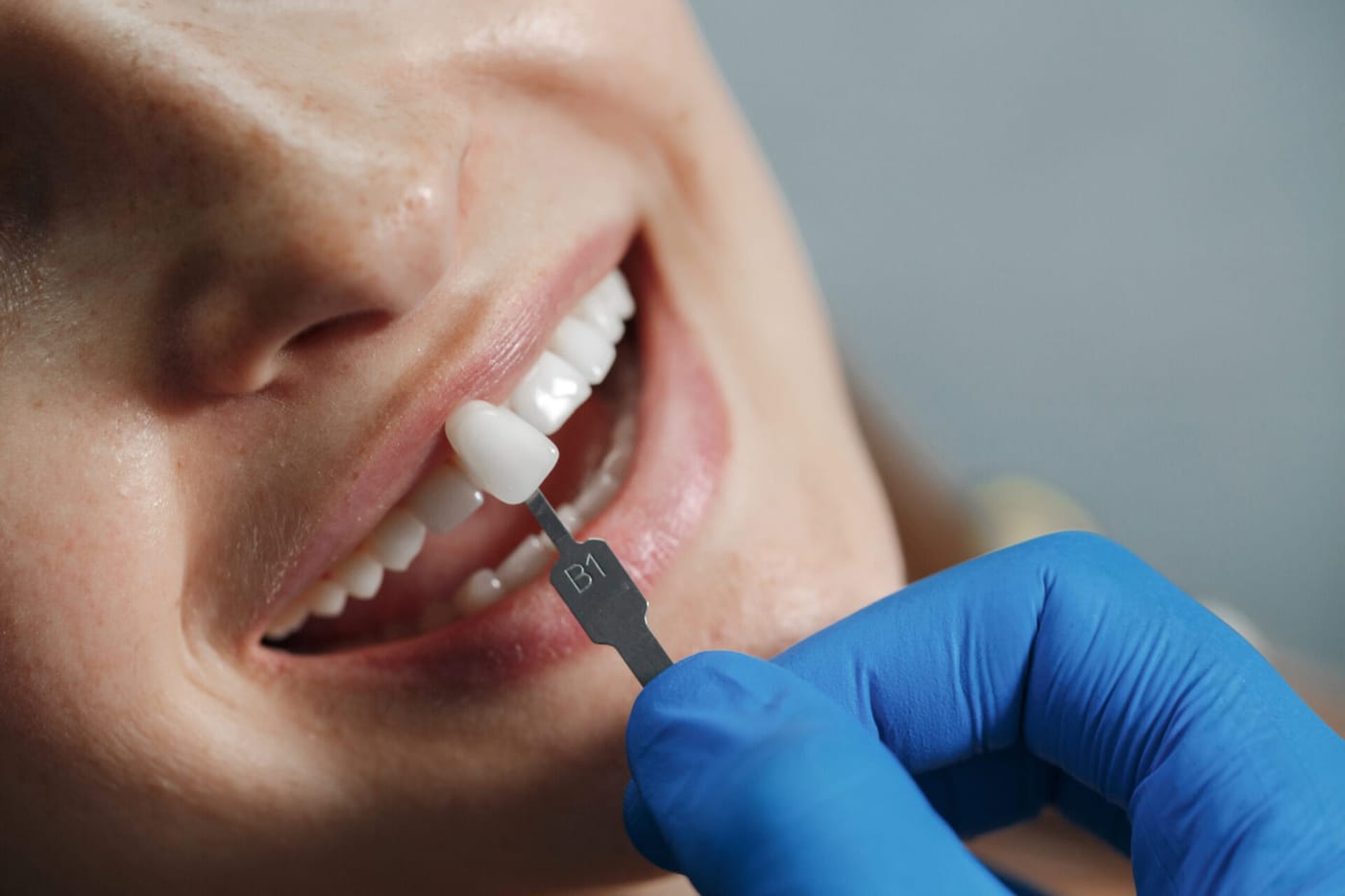
Metal-Destekli Porselen
Proven durability, economical
- Naturalness / Esthetics
- ★★★☆☆
- 10-year survival*
- ~95%
- Tooth reduction
- Standard (1.2–2 mm)
- Metal-free
- No
- Sessions
- 2
- Cost tier
- $$$$$
- Evidence source
- PubMed 17594372
- Best for
- Durability priority; back teeth and bridges
Kompozit
Single visit, economical, reversible
- Naturalness / Esthetics
- ★★★★☆
- 10-year survival*
- ~90%
- Tooth reduction
- None (no reduction)
- Metal-free
- Yes
- Sessions
- 1
- Cost tier
- $$$$$
- Evidence source
- PubMed 39122602
- Best for
- Minor shape/color corrections
Akrilik
Provisional / economical acrylic (PMMA)
- Naturalness / Esthetics
- ★★★☆☆
- 10-year survival*
- Provisional · ~90% (16 mo)
- Tooth reduction
- Standard
- Metal-free
- Yes
- Sessions
- 1
- Cost tier
- $$$$$
- Evidence source
- PubMed 25898895
- Best for
- Temporary protection and a short-term, economical solution
* Survival rates are estimates from systematic reviews and meta-analyses; they do not promise an individual outcome. Sources: E-max (lithium disilicate) single crown 10-year ~96.7% (PubMed 24674802) · Monolithic zirconia single crown 5-year ~96.8% (PubMed 41489982) · Metal-ceramic (PFM) single crown 5-year ~95.6% (PubMed 17594372) · Composite (direct) annual failure 0–5.4% (PubMed 39122602). Acrylic (PMMA) is not a permanent crown material but a long-term provisional; fixed prostheses showed ~90.4% survival at ~16 months (PubMed 25898895), with no 10-year data. The cost tier is a relative indicator; the exact price is set at examination. The right material for you is decided together at consultation, based on your smile, bite load and tooth position.
Doctors specialising in this treatment

Frequently asked
01Can E-max be used as a veneer or a full crown?+
E-max is suitable for both ultra-thin veneer and full crown applications. The appropriate form depends on the tooth's condition and any existing restorations.
02What is the difference between E-max and zirconium?+
E-max offers higher translucence and is preferred for anterior aesthetics; zirconia carries more load and is used for bridges and posterior teeth. The numbers follow that split: as single crowns, monolithic lithium disilicate survived at 98.5% and monolithic zirconia at 96.8% over five years (PubMed 41489982), while in multiple-unit bridges lithium disilicate dropped to 82.5%, significantly below metal-ceramic and layered zirconia (PubMed 41650383).
03What is E-max made of, and is it porcelain?+
E-max restorations are pressed or milled from lithium disilicate glass-ceramic. It is a glass-ceramic rather than conventional feldspathic porcelain, and that difference shows up clinically: over 10.4 years, technical, aesthetic and biological complication rates for lithium disilicate laminate veneers were 6.1%, 1.9% and 0.45%, against 41.48%, 19.64% and 6.51% for feldspathic porcelain in the same review (PubMed 39523553).
04How long do E-max veneers last?+
In a systematic review and meta-analysis of 29 studies, lithium disilicate laminate veneers survived at 96.81% over 10.4 years (PubMed 39523553). As single crowns the same ceramic recorded 97.8% five-year and 96.7% ten-year cumulative survival across 12 clinical studies, with the ten-year figure resting largely on a single study (PubMed 24674802).
05What are the pros and cons of E-max veneers?+
The measured advantage is a low complication load in single units and veneers, together with translucence close to enamel. The measured limit is span: across 41 studies, lithium disilicate multiple-unit fixed prostheses survived at 82.5% at five years, significantly below metal-ceramic, and framework fracture exceeded 10% over the same period (PubMed 41650383). E-max is therefore chosen for veneers, single crowns and onlays rather than for long bridges.
Prosthodontics & Crowns
Zirconium Crown
Zirconia crowns and bridges: metal-free full-coverage restorations, custom-made per tooth from a digital impression and milled in-house.
Explore→02Porcelain Crown
Classic metal-supported porcelain, proven durability.
Explore→03Laminate Veneer
Ultra-thin porcelain, minimal preparation. A subtle elevation of your smile.
Explore→Speak with your doctor about this treatment.
Not sure which treatment fits? Tell us what’s wrong →