Teeth whitening lightens the natural shade of enamel and dentine using peroxide gels: hydrogen peroxide for chairside sessions, carbamide peroxide at 10% to 20% in dentist-made home trays. More treatment is not automatically better. Across 12 randomised trials, combining in-office and at-home bleaching raised the risk of tooth sensitivity compared with at-home bleaching alone (risk ratio 1.40, 95% CI 1.10 to 1.80) without improving colour change (PubMed 31468261). A chairside session runs about one to two hours; home trays work gradually over days to weeks, and both need healthy teeth and gums first.
- 01Two agents, two settings: hydrogen peroxide is the fast chairside gel activated under supervision, while carbamide peroxide at 10% to 20% is the slower home-tray agent that releases hydrogen peroxide gradually.
- 02Stacking protocols costs comfort without buying colour: combined in-office plus at-home bleaching increased tooth sensitivity risk against at-home alone (risk ratio 1.40, 95% CI 1.10 to 1.80) with no difference in colour change across 12 randomised trials (PubMed 31468261).
- 03Within chairside bleaching, lower concentration gel reduced sensitivity risk by an average 33% (risk ratio 0.67, 95% CI 0.51 to 0.86) while achieving equivalent colour change, pooled from 25 randomised trials (PubMed 33068711).
- 04Whitening pastes, pens and strips act on surface stain; they cannot reach discolouration that sits inside the tooth, which is the limit that separates cosmetic products from peroxide bleaching.
- 05Whitening is postponed, not refused, when there is untreated decay, active gum disease, or during pregnancy and breastfeeding, because the mouth has to be healthy before the gel is applied.
One of the most common applications in today's aesthetic dentistry is teeth whitening. Teeth may become yellow and stained over time for various reasons. Many people resort to teeth whitening methods to have a whiter and brighter smile. However, there are still many questions and uncertainties about this process. Having information about the benefits and harms of teeth whitening, the best whitening methods and its effects on dental health will help you make the right choice.
/ What is Teeth Whitening?
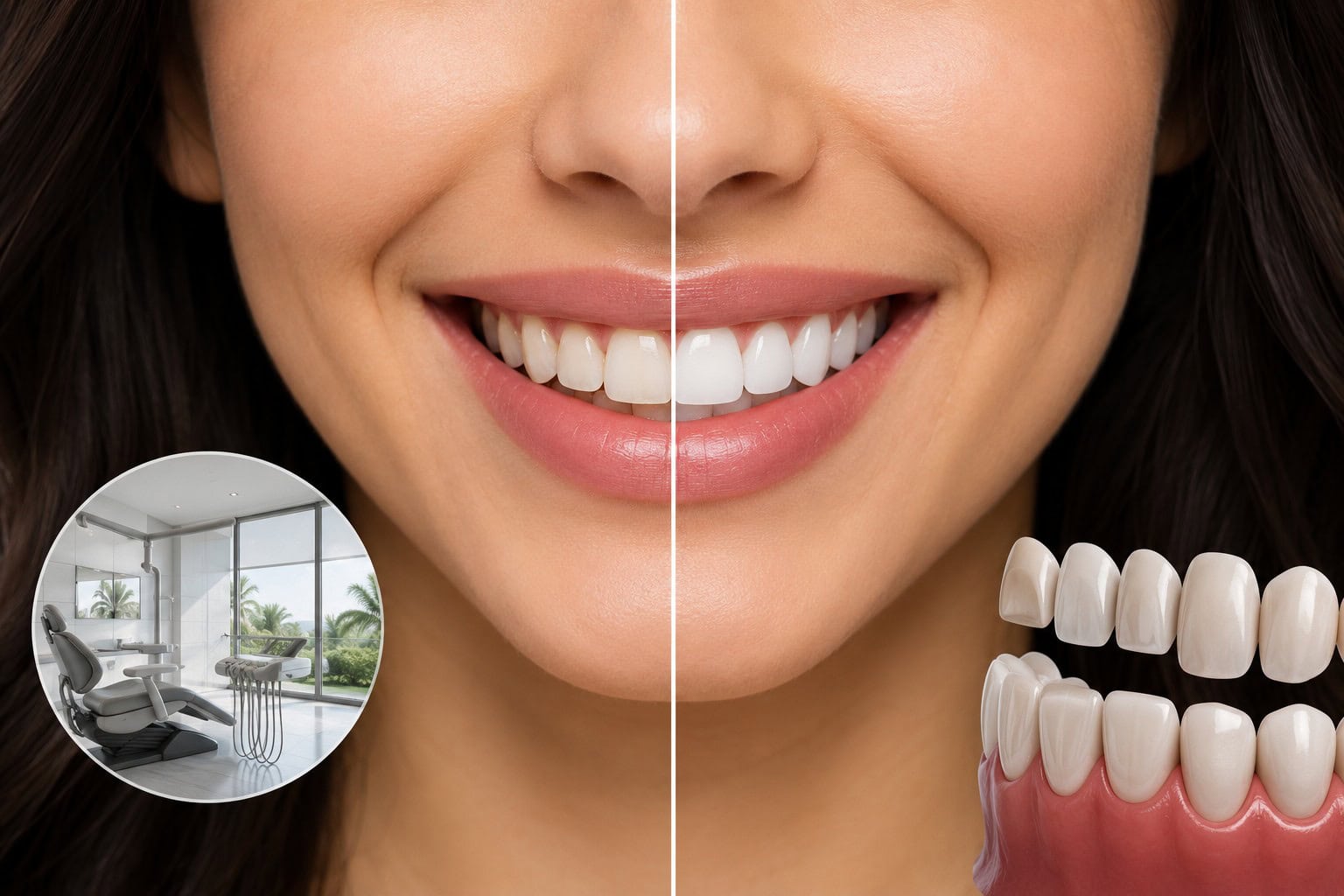
The procedure performed to lighten the natural color of the teeth and obtain a whiter and more aesthetic appearance is within the scope of cosmetic dentistry. Yellowing and staining on teeth are usually caused by various reasons such as aging, smoking, excessive consumption of pigmented beverages such as coffee and tea, or genetic factors. The whitening process aims to lighten the color of the teeth a few shades and is done with aesthetic concerns. The whitening process is usually achieved by penetrating the teeth with special whitening gels applied to the teeth with active ingredients (usually peroxide derivatives).
/ Teeth Whitening Methods: Which Method Should You Prefer?
There are many different methods for teeth whitening. Each method has different advantages, disadvantages and conditions of use. You can choose a method based on your personal preferences, dental health and budget. Here are the most popular teeth whitening methods:
1. Office Type Teeth Whitening (Professional Whitening)
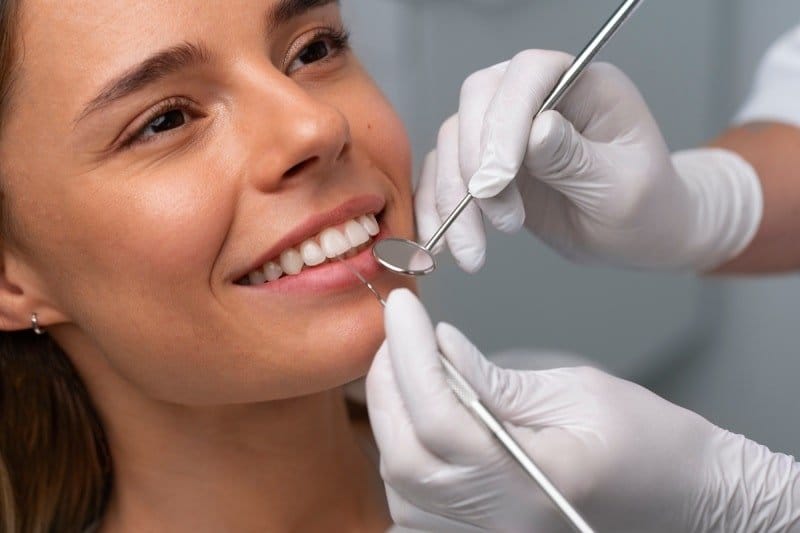
Office whitening is the most effective and fastest teeth whitening method applied by a dentist. The whitening gel applied to the teeth is usually activated by laser light or a special heat source. This procedure is performed in a professional environment and significant results can usually be achieved in a single session.
Advantages :
- Fast Results: Office whitening provides significant whiteness in one session. Visible results can be achieved with a procedure that takes approximately 1-2 hours.
- Long-Lasting Whiteness: Professional whitening results can last longer. When you take proper care of your teeth, their whiteness lasts for a long time.
- Safe: This procedure, performed under the supervision of a dentist, is safer than whitening at home. Physician control is important to prevent damage to your gums.
Disadvantages:
- High Cost: Office whitening may be more expensive than at-home methods. The cost may increase as more than one session may be required.
- Temporary Sensitivity: Temporary sensitivity may occur in the teeth after the procedure. Hot and cold foods and drinks may need to be avoided.
2. Home Teeth Whitening
Home teeth whitening includes whitening trays and gels that are recommended by dentists and that a person can use at home. This method is usually applied by placing the whitening gel into custom-made dental plaques. At-home whitening can usually take a few days or weeks.
Advantages :
- Economical: It is more affordable than office whitening.
- Application at Your Own Pace: You can do the whitening process at home, whenever you want.
- Less Sensitivity: Generally, home whitening causes less sensitivity than office whitening. Because low concentration whiteners are used.
Disadvantages:
- Slow Results: Results become apparent gradually over a few days or weeks.
- Risk of Misapplication: When whitening products are used incorrectly, the desired results may not be achieved or they may damage the teeth.
3. Whitening Toothpastes and Products
Whitening toothpastes and products are one of the most practical options that help whiten teeth by removing superficial stains. These products usually contain low-concentration whitening agents and lighten teeth with regular use.
Advantages:
- Easy Access: Whitening toothpastes are easily available in pharmacies and supermarkets.
- Economical: It is cheaper than other whitening methods.
- Daily Use: It can help whiten your teeth while brushing your teeth every day.
Disadvantages:
- Superficial Effect: Whitening pastes only remove stains on the surface of the teeth. It is not effective on deep stains.
- Time Consuming: Whitening toothpastes usually show their effects after a long time. Expecting quick results can be misleading.
4. Whitening Pens and Gels
Whitening pens and gels attract attention with their practical use. These products can generally be applied comfortably at home and are easy to carry. After it is applied to the teeth, it is waited for a while and then effective results are obtained.
Advantages :
- Portability: Whitening pens are easily portable and you can use them whenever you need.
- Quick Results: With regular use, visible whiteness can be achieved in a short time.
Disadvantages:
- Limited Effect: Whitening pens are generally effective on superficial blemishes and do not provide permanent results.
- Misapplication Risk: When the product is used incorrectly, it may damage the surface of your teeth.
/ Teeth Whitening Ingredients and Ingredients
Whitening agents used in teeth whitening processes generally contain peroxide derivatives. These substances create whitening effects on the teeth. The main substances used during the whitening process are:
1. Carbamide Peroxide
It is a compound commonly used in home whitening products. Carbamide peroxide dissolves stains on teeth and provides whitening. Carbamide peroxide can have a concentration of 10% to 20% in gels used by dentists.
2. Hydrogen Peroxide
Hydrogen Peroxide is a compound frequently preferred in office whitening procedures. This substance lightens the color of teeth quickly and effectively. However, it may cause sensitivity in teeth at high concentrations, so it is important to use it under the supervision of a dentist.
/ Teeth Whitening Harms and Possible Side Effects
Teeth whitening is generally a safe procedure, but in some cases side effects may be observed. Possible side effects of teeth whitening include:
1. Tooth Sensitivity
Temporary tooth sensitivity may occur in some people after teeth whitening. This sensitivity usually becomes evident when consuming hot and cold foods and drinks. The sensitivity goes away on its own within a few days.
2. Gum Irritation
Beyazlatıcı jelin yanlış uygulanması veya diş etlerine temas etmesi durumunda, diş etlerinde tahrişler ve hassasiyet meydana gelebilir. Ancak bu tahrişler geçicidir ve tedavi ile iyileşir.
3. Tooth Color Change
Excessive whitening can lead to loss of natural tooth color and overly white teeth. This can damage the natural appearance of the teeth.
/ To Whom Can Teeth Whitening Be Applied?
Anyone with Healthy Dreams is suitable for teeth whitening. However, some situations may prevent the whitening process:
- Tooth Decay: Whitening should not be applied to decayed teeth.
- Gum Diseases: Whitening is not recommended in case of gingivitis and other gum diseases.
- Pregnancy and Breastfeeding: Whitening is not recommended during pregnancy and breastfeeding.
/ After-Teeth Whitening Care: Ways to Maintain Your Whiteness
After teeth whitening, it is important to pay attention to some care recommendations to preserve whiteness for a long time:
- Brush Your Teeth Regularly: You can prevent the formation of plaque and stains by brushing your teeth at least twice a day after whitening.
- Use Dental Floss: Cleaning the plaque between your teeth helps you maintain the whiteness of your teeth for a long time.
- Avoid Colored Foods: After whitening, avoid colored foods such as coffee, tea, red wine.
1. How long does the teeth whitening process take?
Office type whitening process usually takes 1-2 hours. Home whitening may take a few days or weeks.
2. Is teeth whitening permanent?
The teeth whitening effect is not permanent, but with proper care and regular tooth brushing, whiteness can be maintained for longer.
3. Is teeth whitening painful?
Teeth whitening causes little discomfort for most people, though some notice temporary tooth sensitivity afterwards.
4. What foods should I eat after teeth whitening?
Avoid colored foods for a few hours after the whitening procedure. It is also beneficial to stay away from hot and cold foods.
5. Is teeth whitening suitable for everyone?
Teeth whitening is suitable for people with healthy teeth. However, whitening is not recommended for people with tooth decay, gum disease or some health problems.
/ Teeth Whitening for a Brighter Smile
Teeth whitening can be an aesthetic and self-confidence-boosting procedure. However, the whitening process should be compatible with your dental health and the right methods should be chosen. Having healthy teeth is the most basic condition for getting a brighter and natural smile. With proper care, you can enjoy your white teeth for a long time.
Let’s plan the right treatment together.
Free Assessment→- 1.Cardenas AFM, Maran BM, Araújo LCR, de Siqueira FSF, Wambier LM, Gonzaga CC, et al. Are combined bleaching techniques better than their sole application? A systematic review and meta-analysis. Clin Oral Investig 2019;23:3673-3689. PubMed 31468261
- 2.Maran BM, Matos TP, de Castro ADS, Vochikovski L, Amadori AL, Loguercio AD, et al. In-office bleaching with low/medium vs. high concentrate hydrogen peroxide: A systematic review and meta-analysis. J Dent 2020;103:103499. PubMed 33068711