
Night Guard
A night guard is a hard acrylic appliance made to an impression of your teeth; worn in sleep, it covers them and spreads the load of clenching and grinding.
- Custom-made
- Hard acrylic
- Helps protect against tooth wear
First consultation free · same-day reply · no price pressure
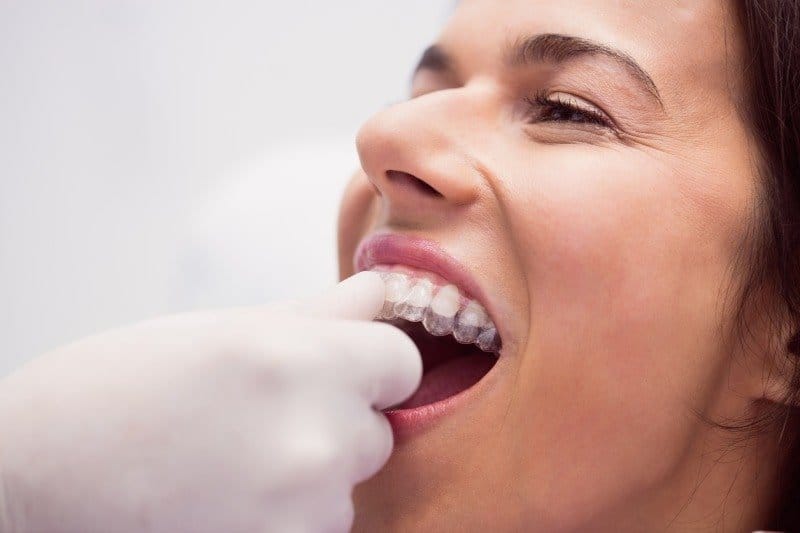
A night guard is a hard acrylic occlusal appliance, made to an impression of your own arch, that covers the teeth during sleep and spreads the load of clenching and grinding. The Cochrane review of occlusal splints for sleep bruxism screened 32 candidate trials, included 5, and concluded there is not sufficient evidence that the splint treats sleep bruxism, while noting possible benefit for tooth wear (PubMed 17943862). A 2020 health technology assessment pooling 52 randomised trials found no study had measured tooth wear in bruxism patients at all (PubMed 32065109). The protective role is plausible, not proven.
- 01A night guard manages the consequence, not the behaviour. The 2018 international consensus classifies bruxism in otherwise healthy people as a behaviour that can be a risk or protective factor, and withholds the label of disorder (PubMed 29926505), so no plan should promise that an appliance stops it.
- 02The custom versus off-the-shelf question is unanswered in randomised evidence. Comparing prefabricated with custom-made splints was the explicit second objective of the 2020 health technology assessment; because no difference was found between splints and no splint, that second comparison was never carried out and the report says so (PubMed 32065109).
- 03Some of the wear you can see is simply age. Across 13 studies, the predicted proportion of adults with severe tooth wear rises from 3% at 20 to 17% at 70 (PubMed 19260425). Erosion and ageing have to be separated from grinding before a diagnosis is made.
- 04Keep the appliance in the reversible class. The 2023 BMJ guideline issues a strong recommendation against irreversible oral splints for chronic TMD pain (PubMed 38101929); any device that works by grinding teeth down or permanently altering the bite falls in that class.
- 05Not everyone who grinds their teeth needs an appliance. A systematic review of adult epidemiology put frequent sleep bruxism at 12.8% ± 3.1%, decreasing with age (PubMed 23630682), so the decision rests on symptoms and examination rather than on a general assumption.
/ Night Guard Definition and Use
What is the Night Guard?
Transparent devices applied to the lower or upper jaw depending on the complaints of patients are called night guards. Night guard treatment is often resorted to to relieve temporomandibular disorders. Since night guards are mostly the subject of short-term use, they do not lead to permanent changes in the patient's teeth or jaw structure.
What Is the Use of a Night Guard?
Night guard is basically an apparatus used to relieve ailments caused by habits such as teeth clenching and teeth grinding. Depending on habits such as clenching and grinding teeth, problems such as headache, jaw pain and tooth wear may occur.
The most common causes of teeth clenching and grinding problems include stress, fatigue, sleep apnea, abnormalities in tooth and jaw structure and side effects of certain medications. Using a night guard can prevent tooth wear and pain by protecting the teeth.
In addition to such situations, the use of night guard may be on the agenda after some dental procedures. If a person feels pain in the jaw and neck area after waking up from sleep, if he experiences problems such as tooth sensitivity, sleep disorders and shoulder pain, the use of night guard can be benefited. Using a night guard supports the healing process of teeth and jaw structure, it can reduce the possible pain experienced after treatment.
Using a night guard at night is an element that helps prevent further damage to the teeth. It may be possible to eliminate disorders in the jaw through the use of a jaw plate. The jaw muscles can be strengthened over time by using night guard produced specifically for the patient. After treatment, when the teeth are clenched, it is possible to observe that the jaw muscles are no longer as large and stiff as they were before.
| At a glance | |
|---|---|
| Duration | 2 sessions |
| Sessions | 2 |
| Warranty | 1 year |
| Materials Used | Hard acrylic night guard |
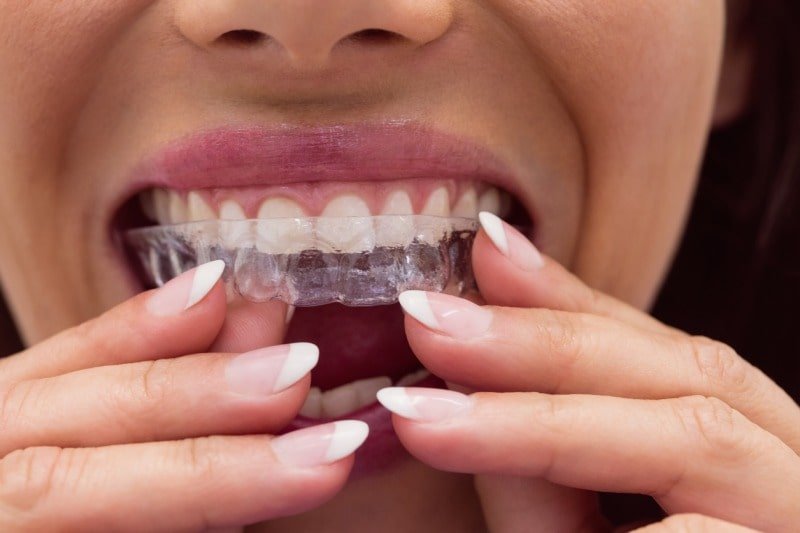
/ How is the Night Guard Used?
A night guard is an apparatus that prevents unwanted movements that occur in the jaw as a result of clenching or grinding teeth during sleep from causing any damage to the teeth. It is often encountered to use night guard to prevent the occurrence of wear and sliding on the teeth. Unfortunately, many people do not realize how serious a problem teeth clenching and grinding are. As a result, problems such as tooth fracture or tooth enamel loss are often observed in the long term.
The use of night guard is often preferred in cases such as tooth clenching, teeth grinding, jaw shifting, teeth grinding and the presence of incorrect tooth alignment. Often, the patient may see that the pain in the head and jaw area begins to decrease a few days after starting using the night guard. Because when you start using the night guard, tooth clenching and grinding problems caused by stress and various problems in daily life can disappear.
The decision to use night guard is made by the dentist after the examination. The dentist listens to the problems experienced by the patient, plans the treatment according to the needs of the patient. Then, he takes the measurements of the patient's teeth and jaw and produces the molds using these measurements. Because the night guard is designed to fit these molds, night guard treatment can be successful.
The night guard can be started to be used immediately after preparation, depending on the measurements taken from the patient. The duration of use is one of the points that need to be paid the most attention during the treatment process. At the point of use of night guard, the dentist's recommendations should definitely be followed.
Treatment Process
- 01Consultation: Initial examination and needs assessment; imaging where required.
- 02Treatment: Impression, fabrication, adjustment.
- 03Follow-up: Outcome review and aftercare guidance.
/ Night Guard Cleaning and Types
Performing the cleaning of the night guard sensitively is very important for long-term and healthy use. To ensure this, it is necessary to make night guard cleaning a part of the oral and dental care routine. The use of hot water should be avoided when cleaning the night guard. If this point is not paid attention to, the plastic of the night guard may soften.
In addition, it is necessary to wash the night guard after each use. Performing the cleaning process only gently and with the help of water and a soft-bristled toothbrush prevents any wear on the night guard. The cleaned night guard should be dried in a non-humid environment. When the night guard is cleaned regularly, the residues that accumulate on the night guard during sleep can be removed.
What are the Types of Night Guards?
Three different types of night guards can be listed as follows:
- Soft night guard is the most preferred type of night guard to use. The use of soft night guard may be preferred for people with mild tooth clenching and grinding problems.
- Double laminate night guard is usually used in patients with moderate bruxism. The inside of the double laminate night guard is soft and the outside is hard.
- Hard night guard has a durable and hard structure and acrylic material is used in its production.
/ Night Guard Benefits
Night guards, which are transparent devices prepared by dentists specifically for each patient, help prevent tooth wear and pain caused by problems such as tooth clenching and grinding.
Wear on the jaw muscles and teeth may occur due to clenching and grinding of the teeth. Night guards play a critical role in preventing this problem. Since the night guard also performs the task of a mouth guard, its use is often preferred. The protection of teeth can be ensured by placing transparent night guard prepared according to the measurements taken from the patients into the mouth.
A night guard can be used to prevent advanced damage to the teeth, reduce tension in the chewing muscles, ensure adequate blood supply to the tissues and eliminate temporomandibular joint complaints.
Night guard helps to improve the quality of life of people with bruxism problems. Many people from different age groups unconsciously clench and grind their teeth during sleep. Due to this habit, wear on the teeth, fractures and pain in the jaw may occur. Thanks to night guard, grinding of teeth, contact with each other and damage to teeth can be prevented accordingly.
Depending on the bruxism problem, pressure may increase in the jaw muscles and jaw joints. As a result, headaches, facial pain and jaw pain may be experienced. Using a night guard can reduce or eliminate such pain.
The use of night guard is often encountered in the treatment of temporomandibular joint disorder. The night guard protects and relaxes the jaw joints. In this way, it contributes to the relief of TMJ symptoms.
People who experience sleep disorders due to teeth clenching and grinding may notice an increase in their sleep quality when they start using a night guard. In addition, fracture and abrasion of teeth are prevented in people who use a night guard. In this way, it can be ensured that the teeth last longer and are healthy.
/ Night Guard Application
The patient who will be treated for night guard is examined and measurements are taken. According to the measurements taken, a personalized night guard is prepared. Another issue that is as important as applying the night guard with the right measurements is its correct use.
The decision to apply night guard is made by the dentist on a patient-by-patient basis. In this context, the dentist examines the patient. It evaluates the current condition of the teeth and whether they are suitable for night guard treatment.
If the patient is found suitable for night guard treatment, a special mold is taken from the teeth to obtain a measure that will exactly match the patient's teeth. After the preparation of the mold, the material to be used in the production of the night guard is selected and poured into the mold.
The mold is placed in the patient's mouth so that it fits exactly to the teeth. The material of the night guard inside the mold, which fits exactly into the mouth, is hardened by the dentist. The fully hardened night guard is delivered to the patient. The patient is informed in detail about how the use process will be.
When the patient uses the night guard, he should make sure that the guard fits exactly in his mouth and care should be taken not to clench his teeth. Regular cleaning and maintenance of the night guard during the period of continued use should not be neglected.
/ Night Guard Use, Duration and Daytime Considerations
Night guard should be placed on the teeth and started to be used in the evening after eating and drinking is completed and the teeth are brushed. If the patient continues to clench his teeth while awake, the dentist may also recommend using night guard during daylight hours. In patients with bruxism problems, the habit of tooth clenching usually increases under intense stress. In such cases, the use of night guard during the day may be beneficial.
Using a night guard at night will not cause any harm. However, it is necessary to follow the dentist's recommendations on how long to use the night guard. In order to benefit from night guard treatment, the patient should provide regular use for the recommended period of time. If night guard causes any problems in the mouth, the dentist should be contacted immediately. In this way, it may be possible to ensure both the comfort of the patient and the success of the treatment.
The duration of use of the night guard varies depending on the patient, as mentioned earlier. This period usually varies from 6 months to 3 years, but it is determined depending on the degree of tooth clenching and grinding problem, the type of night guard used, its quality and other similar factors.
/ Night Guard Removal, Cleaning and Replacement Considerations
The most important point to be considered during the use of night guard is the removal of night guard, especially when consuming hot food and drinks. The night guard has a transparent structure. For this reason, it does not cause aesthetic concerns during use, and it can also be used comfortably during the day.
The fact that night guards have a delicate structure should not be overlooked. If it comes into direct contact with food residues or fat deposits, there is a risk that night guard will deform within a short period of time. It is also extremely important that night guard cleaning is done regularly. It may be preferable to use soap and toothpaste during the cleaning phase. Soap or toothpaste is applied with soft bristled toothbrushes, and the night guard can be cleaned gently.
In cases where there is a need to replace the night guard due to various reasons, the dentist should take a re-measurement from the patient and prepare new night guards according to these measurements. In cases where the night guard no longer fits the patient's dental structure, its color fades, wounds form in the patient's mouth due to the use of night guard, tears, holes or cracks occur in the night guard, it becomes necessary to replace the night guard.
Patients may stop using night guard under normal conditions with the disappearance of the tooth clenching or grinding problem. However, the decision to stop using night guard is made by the dentist after the patient has been examined. Clenching and grinding of teeth negatively affect oral and dental health, and people experiencing such problems should contact a dentist without wasting time.
/ Night Guard Prices and Professional Night Guards in Turkey
The night guard is specially designed for the patient to prevent tooth clenching and grinding problems. Due to the custom-made production, the night guard can be in different sizes. For this reason, it is necessary to contact the dentist to use a night guard and use a night guard prepared according to the measurements taken by the dentist.
Night guard prices may vary depending on patient-specific factors such as the measurements of the tooth and jaw structure, the material used in night guard production and the quality of this material. In addition, the expertise, experience of the dentist who performs the night guard application and the clinic's pricing policy can be listed among the elements that have an impact on night guard prices.
Night guards are used by people who grind their teeth (bruxism) or clench their jaw, conditions that can damage the teeth and strain the jaw joint if left untreated. In Turkey, obtaining a professionally designed night guard offers a personalized and practical approach to maintaining oral health.
Unlike generic, over-the-counter night guards, those made by dental professionals are customized to fit your mouth perfectly. This tailored fit improves comfort and provides enhanced protection for your teeth and gums. A properly fitted night guard can reduce the risk of dental problems such as enamel erosion, tooth fractures, and jaw discomfort.
/ Night Guards at Mosdent Dental Hospital
A night guard is made to an impression of the patient's own arch, so the fit is specific to that mouth.
How the night guard is prepared at Mosdent
Assessment comes first: the dentist evaluates the teeth and the jaw joint and decides whether a night guard is the right response to the complaint.
The guard is produced to the measurements taken from the patient, and the type is chosen according to the severity of the clenching or grinding.
Review appointments follow. The guard is checked for wear, colour change, tears and fit; when it no longer matches the dental structure it is remade from a new impression.
- 1.Macedo CR, Silva AB, Machado MA, Saconato H, Prado GF. Occlusal splints for treating sleep bruxism (tooth grinding). Cochrane Database Syst Rev 2007;2007:CD005514. PubMed 17943862
- 2.Riley P, Glenny AM, Worthington HV, Jacobsen E, Robertson C, Durham J, et al. Oral splints for patients with temporomandibular disorders or bruxism: a systematic review and economic evaluation. Health Technol Assess 2020;24:1-224. PubMed 32065109
- 3.Lobbezoo F, Ahlberg J, Raphael KG, Wetselaar P, Glaros AG, Kato T, et al. International consensus on the assessment of bruxism: Report of a work in progress. J Oral Rehabil 2018;45:837-844. PubMed 29926505
- 4.Van't Spijker A, Rodriguez JM, Kreulen CM, Bronkhorst EM, Bartlett DW, Creugers NH. Prevalence of tooth wear in adults. Int J Prosthodont 2009;22:35-42. PubMed 19260425
- 5.Busse JW, Casassus R, Carrasco-Labra A, Durham J, Mock D, Zakrzewska JM, et al. Management of chronic pain associated with temporomandibular disorders: a clinical practice guideline. BMJ 2023;383:e076227. PubMed 38101929
- 6.Manfredini D, Winocur E, Guarda-Nardini L, Paesani D, Lobbezoo F. Epidemiology of bruxism in adults: a systematic review of the literature. J Orofac Pain 2013;27:99-110. PubMed 23630682

Who is this treatment for?
- Teeth clenching or grinding habits
- Jaw and neck pain after waking from sleep
- Tooth sensitivity, sleep disorder or shoulder pain
- Tooth wear, fractures or jaw pain
- Jaw shifting or incorrect tooth alignment
- Temporomandibular joint disorder
Doctors specialising in this treatment

Frequently asked
01Should I wear a night guard every night?+
Yes, nightly use is recommended for effective protection. It may take a week or two to adjust; most patients adapt quickly.
02How often does a night guard need replacing?+
Typically every 2-3 years depending on wear and fit. Your dentist checks the condition of the guard at each routine visit.
TMJ & Bruxism
Joint Splint
A joint splint is a hard acrylic full-coverage intraoral appliance used for jaw joint and chewing muscle complaints, custom-made from an impression.
Explore→02TMJ Treatment
TMJ treatment manages temporomandibular disorders (TMD), which cause pain, joint noise and restricted movement in the jaw joint and chewing muscles.
Explore→03Bruxism Treatment
Bruxism treatment aims to limit the tooth wear and muscle pain caused by clenching or grinding; it starts with a night guard, adding botox in some cases.
Explore→Speak with your doctor about this treatment.
Not sure which treatment fits? Tell us what’s wrong →