
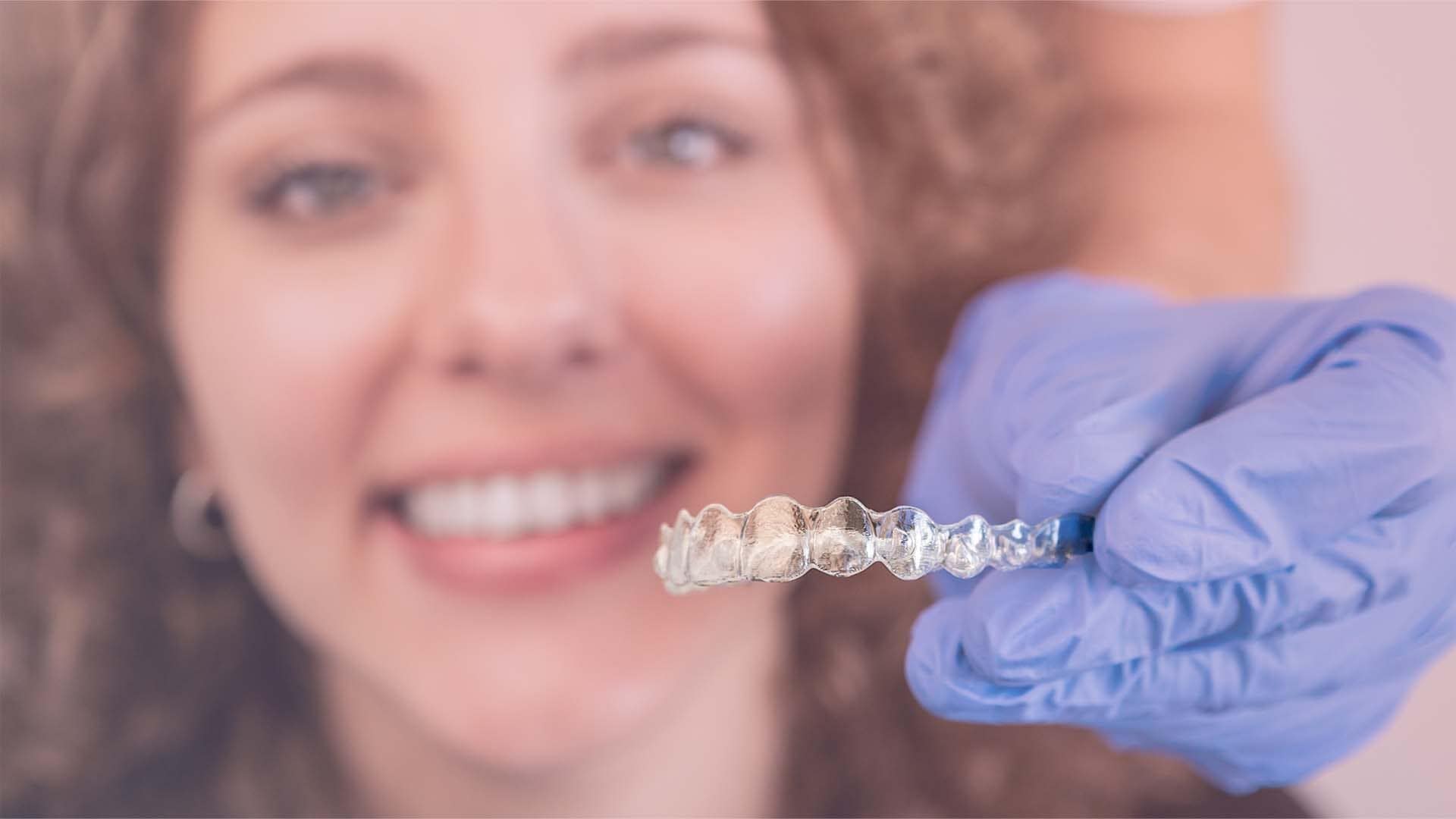
A night guard is a resin or plastic device moulded to the dental arch and worn during sleep, sitting between the upper and lower teeth so that grinding contact is intercepted and the load reaching teeth and jaw muscles is spread rather than concentrated. Three categories exist: custom made by a dentist, prefabricated versions sold over the counter, and thermoformable trays softened and bitten into at home. A guard manages consequences rather than causes, since it does not remove stress, sleep disorders or malocclusion, and it is replaced on average every 1 to 3 years as the surface wears.
- 01A night guard protects against the consequences of bruxism and does not switch off the muscle activity, so stress, sleep disorders and malocclusion still need separate attention.
- 02Bruxism is common. A 2024 meta-analysis put global sleep bruxism prevalence at 21 percent and awake bruxism at 23 percent, rising to 43 percent when measured by polysomnography (PubMed 39064299).
- 03Splint therapy has trial evidence for jaw muscle pain: in a randomised trial of 60 patients with probable sleep bruxism, graded chronic pain scores fell significantly at three months (odds ratio 13.26, 95 percent confidence interval 6.61 to 26.59) and at six months (odds ratio 12.36, 4.93 to 30.98), with the occlusal splint matching botulinum toxin-A and performing better on jaw opening and functional limitation (PubMed 39510242).
- 04Custom, prefabricated and thermoformable are three different products, and fit is what decides whether the device is comfortable enough to be worn every night.
- 05A sports mouthguard is not a substitute: it is designed for impact absorption, not nightly wear, and a night guard is expected to be replaced every one to three years.
Bruxism , or Teeth Grinding, Is a Disorder That Affects Nearly 8% of Adults Worldwide, According to the American Dental Association (ADA). This often nocturnal phenomenon can have severe consequences on oral and general health, including jaw pain, headaches, and excessive tooth wear. Night guards play a crucial role in preventing and managing these issues.
/ Understanding Bruxism
What Is Bruxism?
Bruxism is an unconscious muscle activity that often occurs during sleep. There are two main types of bruxism :
- Centric Bruxism: Clenching the teeth without sliding them.
- Eccentric Bruxism: Grinding the teeth by sliding them against each other.
The causes of bruxism include stress, anxiety, sleep disorders such as apnea, and dental malocclusions. Without treatment, bruxism can lead to severe consequences:
- Tooth Wear: Weakening of the enamel and increased risk of cavities.
- Muscle Pain: Tension in the jaw, neck, and shoulder muscles.
- Temporomandibular Disorders (TMD): Dysfunction of the temporomandibular joint.
- Chronic Headaches: Persistent pain linked to muscle tension and jaw dysfunction.
How Do Night Guards Work?
A night guard is a resin or plastic device custom molded to fit the patient’s dentition. It acts as a physical barrier between the upper and lower teeth, preventing direct contact and reducing the pressure exerted on the teeth.
Benefits of Night Guards:
- Reduction of Tooth Wear: By absorbing shocks and preventing abrasion.
- Relief of Muscle Pain: By reducing tension on the jaw muscles.
- Prevention of Temporomandibular Disorders (TMD): By stabilizing the jaw and avoiding excessive movement.
- Improved Sleep Quality: By reducing grinding noises that can disrupt sleep.
The Different Types of Night Guards
Night guards fall into three main categories:
- Custom-Made Night Guards: Manufactured by a dentist, offering a perfect fit and optimal comfort. Recommended for severe cases of bruxism.
- Prefabricated Night Guards: Available in pharmacies, they are less expensive but can be uncomfortable and less effective.
- Thermoformable Night Guards: Adapted at home by heating and molding them to the teeth, offering a compromise between cost and fit.
Statistics and Research on Night Guard Effectiveness
Studies show that using night guards can reduce bruxism symptoms by up to 70%. Research published in the Journal of Oral Rehabilitation found that patients wearing a custom-made night guard experienced significant improvements in muscle and joint pain after only one month of use.
Moreover, a 2020 study of 200 participants revealed that 80% of custom-made night guard users reported better sleep quality and reduced morning headaches.
/ Choosing the Right Night Guard
Night guard selection depends on several criteria.
Criteria to Consider:
- Severity of Bruxism: For severe cases, a custom-made night guard is preferable.
- Budget: Custom-made models are expensive, but their effectiveness often justifies the investment.
- Comfort: A poor fit can worsen problems or cause irritation.
Consultation with a Professional:
A consultation with an oral health professional , such as a dentist, is a crucial step to ensure optimal protection for your teeth and jaw. Each person has a unique oral morphology, and only an expert can accurately assess your specific needs and recommend the most suitable type of mouthguard. They can also make adjustments to ensure maximum comfort and protection.
In addition to designing the mouthguard, a dentist can provide advice on its maintenance and offer regular follow-ups to ensure it remains in good condition. This is particularly important for children and adolescents, whose growth may alter their oral structure over time.
A consultation with a dentist is therefore an investment in your health and safety. By choosing a well-adapted mouthguard, you significantly reduce the risk of oral injuries.
Maintenance and Lifespan of Night Guards
Regular maintenance is essential to ensure the durability and effectiveness of the night guard. Here are some tips:
- Daily Cleaning: Rinse with cold water and use a soft toothbrush with mild soap or a specialized product.
- Storage: Keep in a rigid and ventilated case.
- Replacement: On average, every 1 to 3 years, depending on wear.
Limitations of Night Guards
While night guards effectively reduce bruxism symptoms, they do not address the underlying cause. A comprehensive approach may include:
- Stress Management Techniques: Such as meditation or cognitive therapy.
- Orthodontic Treatments: To correct malocclusions.
- Medical Treatments: Such as muscle relaxants for severe cases.
/ Frequently Asked Questions About Bruxism and Night Guards
1. Are Night Guards Uncomfortable?
A well-fitted night guard should not be uncomfortable. Custom-made models are designed for maximum comfort.
2. Can I Use a Sports Mouthguard for Bruxism?
No, sports mouthguards are not designed for long-term wear and do not meet the specific needs of bruxism.
3. How Can I Tell If I Grind My Teeth at Night?
Signs include morning headaches, jaw pain, and worn teeth. A dentist consultation can confirm the diagnosis.
4. Are Night Guards Suitable for All Ages?
Yes, they can be used at any age, but their design may vary depending on the user's needs and dentition.
5. How Long Does It Take to Get Used to a Night Guard?
Most people adapt within one to two weeks. If discomfort persists, consult your dentist for adjustments.
6. Can mouthguards prevent headaches related to bruxism?
Yes, by reducing the pressure exerted on the jaw muscles, mouthguards can alleviate headaches caused by bruxism.
7. How long should I wear a mouthguard?
It is recommended to wear the mouthguard every night throughout the duration of your sleep. This ensures optimal protection against teeth grinding and its consequences.
You now understand that night guards are an effective solution for preventing the effects of bruxism and reducing jaw pain. While their use is essential, addressing the underlying causes of teeth grinding is also critical for comprehensive care.
Don’t hesitate to consult a professional to choose the device best suited to your needs.
Let’s plan the right treatment together.
Free Assessment→- 1.Zielinski G, Pajak A, Wojcicki M. Global prevalence of sleep bruxism and awake bruxism in pediatric and adult populations: a systematic review and meta-analysis. J Clin Med. 2024;13(14):4259. PMID 39064299
- 2.Chisini LA, Pires ALC, Poletto-Neto V, et al. Occlusal splint or botulinum toxin-A for jaw muscle pain treatment in probable sleep bruxism: a randomized controlled trial. J Dent. 2024;151:105439. PMID 39510242