Dental anxiety is a fear response to dental treatment that ranges from mild unease before an appointment to a diagnosable specific phobia, and it is common enough to change how people use dental care. A meta-analysis of 31 population studies covering 72,577 adults put global prevalence at 15.3% for dental fear and anxiety, 12.4% for high dental fear and 3.3% for severe dental fear, with higher figures among women and younger adults (PubMed 33711405). It is a treatable condition rather than a fixed trait: pooled evidence from 173 randomised trials supports cognitive behavioural therapy for chronic dental anxiety (PubMed 38945067).
- 01Dental fear and dental phobia are levels of the same problem, not separate conditions: global prevalence is 15.3% for dental fear and anxiety and 3.3% for the severe form that meets specific phobia criteria (PubMed 33711405).
- 02The clinical cost of anxiety is avoidance, and it is unevenly distributed: prevalence is higher among women and younger adults, and the measuring instrument itself changes the reported figure (PubMed 33711405).
- 03Cognitive behavioural therapy carries the strongest pooled effect on chronic dental anxiety, SMD -0.65 (95% CI -1.06 to -0.24), in a review of 173 randomised controlled trials (PubMed 38945067).
- 04Acute distress during surgery is a different target: hypnosis (SMD -0.31) and benzodiazepines (SMD -0.43) had supporting evidence, while virtual reality exposure therapy, music and aromatherapy did not (PubMed 38945067).
- 05Conscious sedation is not sleep. The patient stays awake and responsive throughout, which separates it from general anaesthesia and its different monitoring requirements.
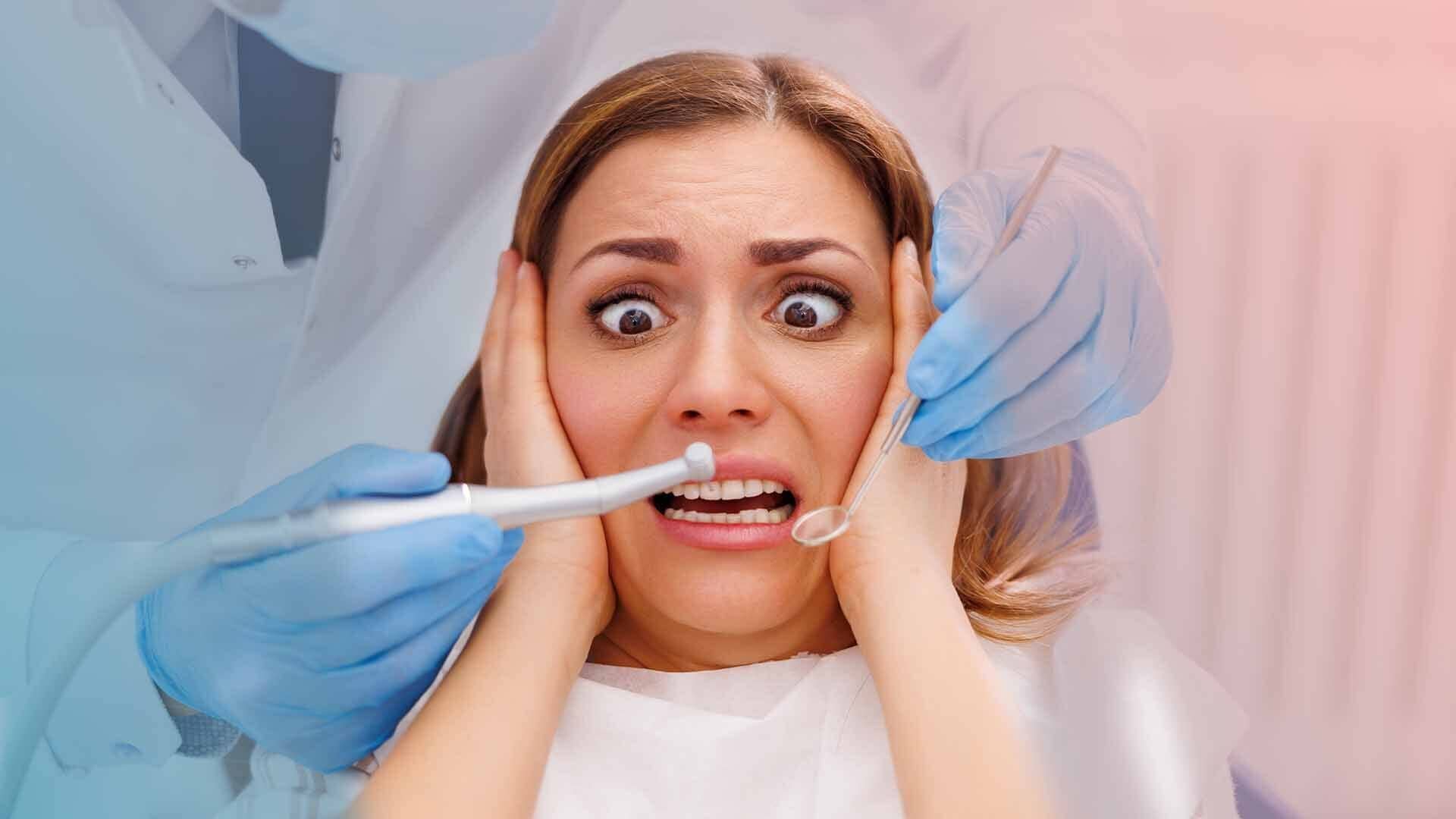
For many people, the idea of visiting the dentist evokes apprehension, or even intense fear. This phenomenon, known as dental anxiety, affects a wide range of patients. Some fear dental instruments, others dread pain, and many recall unpleasant past experiences.
/ Understanding Dental Anxiety and Its Main Causes
Dental anxiety, or the fear of the dentist, is a psychological reaction that can manifest in various ways. Symptoms include an increased heart rate, sweating, a sense of panic, or even an inability to visit the dentist altogether.
Main Causes of Dental Anxiety:
Dental anxiety is a common phenomenon often stemming from a mix of psychological and emotional factors that vary from person to person. Understanding these causes helps in better addressing this fear and in managing it effectively with the support of informed professionals. Here are the main triggers of this anxiety:
- Fear of Pain: An exaggerated perception of pain associated with dental care.
- Fear of Instruments: The sounds and appearance of dental tools can be intimidating.
- Traumatic Memories: Unpleasant past experiences, especially during childhood .
- Loss of Control: Being reclined in a chair and entrusting one’s health to a professional can cause significant stress.
- Shame or Embarrassment: Some patients avoid the dentist due to the condition of their teeth.
Studies show that nearly 15% of adults avoid dental care because of this fear. This behavior can lead to a negative cycle: avoiding appointments worsens dental problems, which in turn heightens anxiety.
/ Mosdent’s Approach to a Stress-Free Experience
At Mosdent, the primary goal is to transform every visit into a positive and calming experience. The clinic has developed a comprehensive approach that combines modern techniques, open communication, and a relaxing environment. Here are the key strategies Mosdent employs:
1. A Relaxed First Consultation
To help patients feel comfortable, Mosdent offers an initial consultation without any procedures. This session allows for:
- Discussing the patient’s concerns.
- Explaining the steps of future treatments.
- Establishing a trusting relationship.
No dental intervention occurs during this first session, reducing tension and putting patients at ease.
2. A Compassionate and Well-Trained Team
The staff at Mosdent is specially trained to handle anxious patients. Every team member adopts a gentle and empathetic approach, prioritizing reassurance and continuous support throughout the treatment process.
3. Digital Tools That Keep Treatment Minimally Invasive
Mosdent utilizes modern equipment to minimize discomfort:
- Dental Lasers: Significantly reduce pain and vibrations compared to traditional tools.
- 3D Imaging: Provides precise diagnostics without unnecessary discomfort.
- Conscious Sedation: An ideal option for patients with severe anxiety, allowing them to remain conscious yet completely relaxed.
4. A Soothing Environment
The clinic environment affects how anxious an appointment feels. At Mosdent:
- Modern and Warm Decor: Calming colors and a welcoming design.
- Relaxing Music: Gentle tunes to soothe the mind.
- Aromatherapy: Use of essential oils to create a relaxing atmosphere.
5. Transparent and Personalized Communication
Mosdent emphasizes informing patients about each step of their treatment. This approach helps to:
- Eliminate fear of the unknown.
- Build trust between the patient and the dentist.
- Actively involve the patient in their care.
6. Behavioral Therapies and Relaxation Techniques
Mosdent also offers stress management techniques, such as:
- Deep breathing exercises.
- Positive visualization.
- Guided relaxation exercises before treatment.
/ Benefits and Questions About Dental Anxiety
The advantages of dental care in a calming setting extend far beyond oral health. Here are some key benefits:
1. Improved Dental Health
When patients no longer fear dental visits, they are more likely to attend regular check-ups, allowing them to:
- Identify dental problems at an early stage.
- Reduce the risk of complications.
- Maintain good oral hygiene.
2. Emotional Well-Being
A healthy smile can significantly impact mental health. Feeling confident about one’s smile enhances self-esteem and quality of life.
3. Long-Term Cost Savings
Regular preventive care is often less expensive than major interventions required to address advanced issues.
Your Questions About Dental Anxiety
1. What solutions does Mosdent offer to manage dental anxiety?
Mosdent provides several options for anxious patients, including:
- Conscious sedation.
- Laser treatments, with little to no discomfort.
- Relaxation techniques and personalized support.
2. What happens during the first consultation?
During the first consultation, no procedures are performed. This session is primarily a conversation to understand your needs and answer your questions.
3. Are treatments truly pain-free?
Thanks to modern technologies and advanced pain management methods, treatments at Mosdent are designed to be as comfortable as possible.
4. What if I haven’t seen a dentist in years?
Mosdent welcomes all patients, regardless of how long it has been since their last visit. The team is dedicated to supporting you without judgment and developing a tailored treatment plan.
5. How can I book an appointment?
You can book online at Mosdent’s official website: mosdenthospital.com, or contact the clinic directly by phone.
Let’s plan the right treatment together.
Free Assessment→- 1.Silveira ER, Cademartori MG, Schuch HS, Armfield JA, Demarco FF. Estimated prevalence of dental fear in adults: A systematic review and meta-analysis. J Dent 2021;108:103632. PubMed 33711405
- 2.Steenen SA, Linke F, van Westrhenen R, de Jongh A. Interventions to reduce adult state anxiety, dental trait anxiety, and dental phobia: A systematic review and meta-analyses of randomized controlled trials. J Anxiety Disord 2024;105:102891. PubMed 38945067