
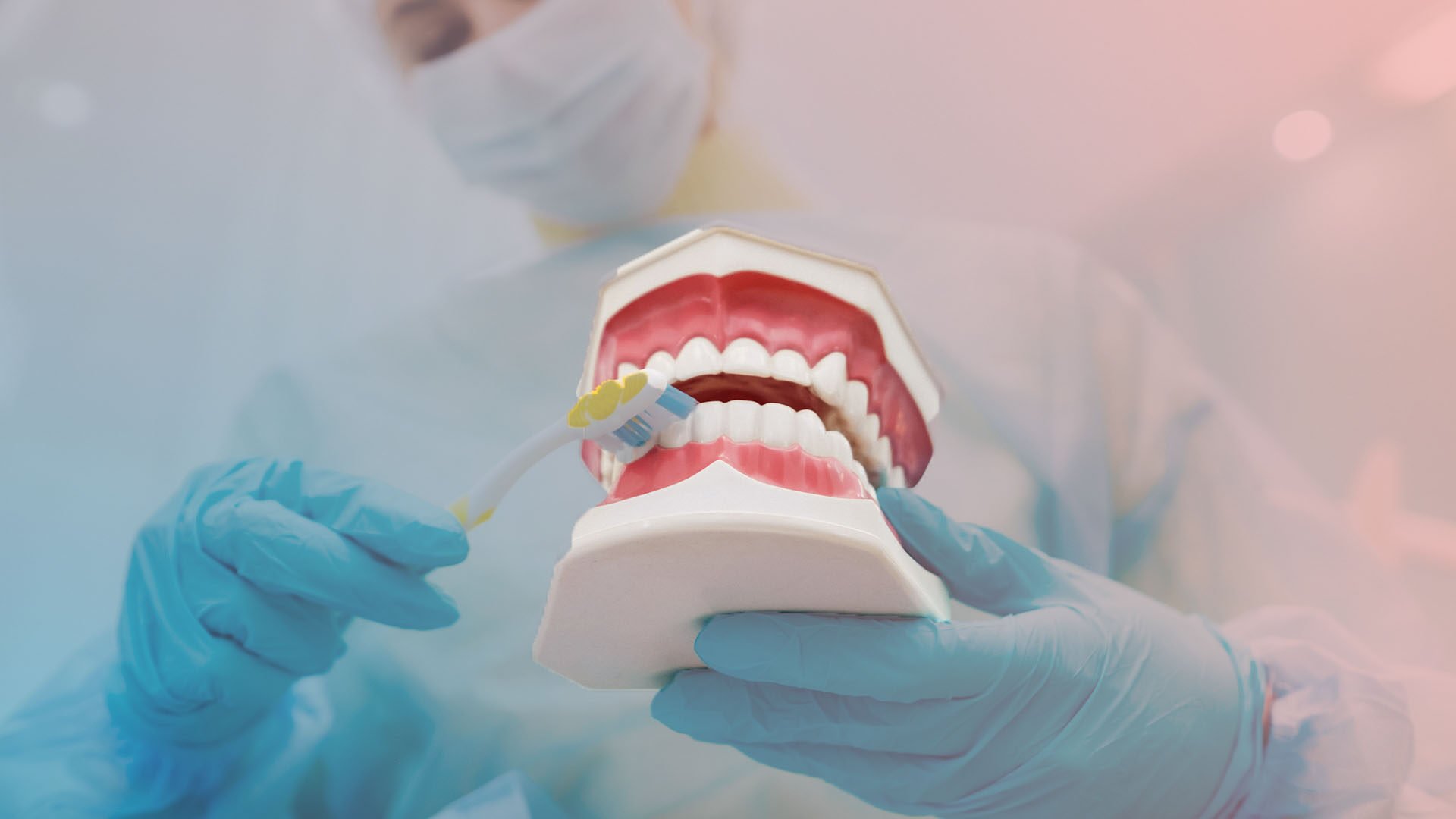
Basic oral care rests on three daily habits and one routine: brushing twice a day for at least two minutes with a fluoride toothpaste, cleaning between the teeth every day, cleaning the tongue, and a dental check-up roughly every six months. The European workshop consensus on preventing gingivitis supports the first of those directly, recommending that everyone brush twice daily for at least two minutes with a fluoridated dentifrice, and that patients with gingivitis clean interdentally once a day (PubMed 25639826). Sugary and acidic foods, smoking, alcohol, dry mouth and night-time clenching are the everyday factors that undo the routine fastest.
- 01Brushing twice a day for at least two minutes with fluoridated toothpaste is the consensus baseline, and expert opinion in the same document notes that two minutes is likely insufficient for periodontitis patients (PubMed 25639826).
- 02Fluoride concentration matters: a Cochrane review of 96 studies found that both 1,000 to 1,250 ppm and 1,450 to 1,500 ppm toothpastes reduce caries increment against non-fluoride toothpaste, with standardised mean differences of -0.28 and -0.36 (PubMed 30829399).
- 03Interdental cleaning is a separate job from brushing: once-daily interdental cleaning is recommended for patients with gingivitis, and interdental brushes are the device of choice wherever they pass without trauma (PubMed 25639826).
- 04Severe periodontitis affects over 11 percent of adults and is a major cause of tooth loss, which is why bleeding gums are treated as a signal rather than a nuisance (PubMed 25639826).
- 05Replace a toothbrush every 3 months or sooner if the bristles wear, and keep a dental check-up and professional cleaning roughly every 6 months.
Why Daily Oral Care Matters Beyond the Smile
Oral and dental health is part of overall health, and the daily routine that protects it is short. It rests on brushing twice a day with a fluoride toothpaste, cleaning between the teeth, cleaning the tongue and having regular dental check-ups. Each of these steps has a specific job, and skipping one leaves a gap the others do not cover.
Teeth and gums are sensitive tissues. When plaque is left on them, the first result is usually bleeding and inflamed gums, and over time the inflammation can reach the bone that holds the teeth. Severe periodontitis affects over 11% of adults and is a major cause of tooth loss, with negative effects on speech, nutrition, quality of life and self-esteem (PubMed 25639826). The same consensus notes that periodontitis is preventable and that treatment leads to reduced rates of tooth loss (PubMed 25639826).
Bad breath, decay and gum disease also affect how people eat and how comfortable they feel speaking and smiling. A healthy mouth is the foundation for any aesthetic smile work as well, since whitening, bonding or veneers placed on inflamed gums or active decay do not last.
The evidence clearly supports mechanical plaque removal done every day. According to the European consensus on preventing gingivitis, mechanical plaque removal remains the bedrock of successful periodontal disease management, and successful prevention depends on sustaining high standards of daily plaque removal throughout life (PubMed 25639826). Rinses, supplements and special products can add to this routine, but none of them replaces the brush and the interdental cleaner.
Brushing Twice a Day with Fluoride Toothpaste
The baseline for brushing is well established. The European workshop consensus supports the almost universal recommendation that all people should brush their teeth twice a day for at least 2 minutes with fluoridated dentifrice (PubMed 25639826). The same document adds, as expert opinion, that 2 minutes is likely to be insufficient for periodontitis patients, especially when interdental cleaning is also needed (PubMed 25639826).
Fluoride is what turns brushing into caries prevention. A Cochrane review that included 96 studies found high- and moderate-certainty evidence that 1,000 to 1,250 ppm or 1,450 to 1,500 ppm fluoride toothpaste reduces caries increments compared with non-fluoride toothpaste, with standardised mean differences of -0.28 and -0.36 (PubMed 30829399). For most adults, an ordinary fluoride toothpaste in that range is the right choice, and higher concentrations are prescribed only for people at high risk.
Technique matters more than force. Hold the brush at a 45-degree angle to the gum line and move it gently, covering the outer, inner and chewing surfaces of every tooth. Scrubbing hard does not remove more plaque; it wears the gum margin and can expose the roots. A soft brush and steady coverage for the full two minutes do the work. Spitting out the excess paste without rinsing leaves some fluoride on the teeth.
Replace the toothbrush every 3 months, or sooner when the bristles start to splay. Worn bristles no longer reach into the gum margin properly, so the same brushing time removes less plaque. The same rule applies to electric toothbrush heads.
Cleaning Between the Teeth and the Tongue
Brushing alone does not reach the surfaces between the teeth, and those are the places where decay between teeth and gum disease often begin. Interdental cleaning is therefore a separate daily task. In patients with gingivitis, once-daily interdental cleaning is recommended (PubMed 25639826).
The choice of device depends on the space between the teeth. Interdental brushes are the device of choice for plaque removal between the teeth, while floss is recommended only for healthy sites where an interdental brush will not pass without trauma (PubMed 25639826). A Cochrane review of 35 randomised trials with 3,929 adult participants found that using floss or interdental brushes in addition to toothbrushing may reduce gingivitis or plaque, or both, more than toothbrushing alone (PubMed 30968949). The same review concluded that interdental brushes may be more effective than floss and rated the overall evidence as low to very low certainty (PubMed 30968949). Whatever the device, it should be used gently, since forcing floss or a brush that is too large into a gap can injure the gum.
The tongue is a frequent source of bad breath, because bacteria collect on its rough upper surface. A tongue brush or scraper, used from back to front a few times each day, removes this layer.
Mouthwash is an addition to this routine. It reduces bacteria in the mouth and keeps the breath fresh, and alcohol-free antiseptic rinses are the gentler option for gum health, since alcohol contributes to a dry mouth. A rinse does not remove plaque that is attached to the teeth, so it cannot make up for skipped brushing or interdental cleaning.
Diet, Dry Mouth, Smoking and Clenching
Several everyday factors can undo a good cleaning routine. Sugary and acidic foods are the first. Each sugary snack or drink gives plaque bacteria material to produce acid, and frequent exposures throughout the day keep the teeth under attack for longer than a single larger amount would. Limiting snacks between meals, drinking water after eating and choosing foods that contain calcium, vitamin D and phosphorus support the teeth.
Saliva protects the teeth by neutralising acid and supplying minerals. When saliva production falls, whether because of medication, illness or not drinking enough, the risk of decay and gum problems rises. Drinking plenty of water and chewing sugar-free gum can help increase saliva flow, and a persistent dry mouth is worth mentioning to both the dentist and the doctor.
Smoking and alcohol affect the mouth directly. Smoking contributes to gum disease and yellowing of the teeth, and the working group on preventing gingivitis names smoking among the lifestyle risk factors that patients need to address (PubMed 25639826). Alcohol dries the mouth, which allows bacteria to multiply more easily.
Stress shows up in the mouth as clenching and grinding, often at night and often without the person noticing. Over time this can wear the enamel, cause sensitivity and crack fillings or teeth. A dentist can recognise the wear pattern at a check-up, and a custom night guard worn during sleep protects the teeth from the forces of grinding. Jaw pain in the morning or a partner hearing grinding at night are signs worth reporting.
Oral Care in Pregnancy, Childhood and Older Age
Oral care needs change at different stages of life, and each stage has its own points to watch.
During pregnancy, hormonal changes can make the gums more sensitive and more prone to bleeding. This is a period to keep the daily routine careful and to keep dental check-ups on schedule instead of postponing them. Bleeding gums during pregnancy are a reason to see the dentist, and routine dental care can continue during this time with the dentist aware of the pregnancy.
For children, care starts as soon as the first teeth appear. At that stage the teeth are cleaned with a soft cloth or a child's toothbrush, and regular care continues from then on. Teaching the correct brushing technique early turns it into a lifelong habit, and parents usually need to help or supervise until the child can brush thoroughly alone. Early dental visits also help children see check-ups as routine.
In older age, gum recession and tooth loss become more common. Exposed root surfaces are more vulnerable to decay than enamel, so fluoride toothpaste and careful cleaning at the gum line matter even more. Many older adults also wear dentures or have implants. Dentures need daily cleaning and regular checks of their fit, and implant restorations need the same careful cleaning and regular professional check-ups as natural teeth, since the gum and bone around them can become inflamed as well.
Check-ups, Professional Cleaning and Whitening
A dental check-up and professional cleaning roughly every 6 months catch problems while they are still small. Early decay and early gum disease are usually painless, so they are found at an examination before they are felt. Professionally administered plaque control significantly improves gingival inflammation and lowers plaque scores, and there is some evidence that reinforcing oral hygiene instruction adds further benefit (PubMed 25639826). People with a history of gum disease, frequent decay or a dry mouth may need shorter intervals.
Bleeding gums and gum sensitivity should be taken seriously instead of being treated as normal. Bleeding on brushing is usually the first sign of gingivitis, and gingivitis is the stage at which gum disease can still be reversed with better cleaning and professional care. Early intervention can also help prevent gum recession.
Whitening is a common question at check-ups. Teeth whitening carried out with methods recommended by your dentist is generally safe. The risk comes from overuse, since excessive or unsupervised whitening can damage tooth enamel and cause sensitivity. That is the argument for dentist-supervised whitening over repeated shop-bought treatments, and for treating whitening as a periodic procedure after the teeth and gums have been checked, since whitening does not change the colour of existing fillings or crowns.
At a check-up it helps to mention any sensitivity, bleeding, dry mouth, grinding or new medication. These details guide the dentist in setting the right interval for your next visit and in deciding whether a different toothpaste, an interdental brush size or a night guard would help.
Let’s plan the right treatment together.
Free Assessment→- 1.Chapple IL, Van der Weijden F, Doerfer C, Herrera D, Shapira L, Polak D, et al. Primary prevention of periodontitis: managing gingivitis. J Clin Periodontol 2015;42 Suppl 16:S71-6. PubMed 25639826
- 2.Walsh T, Worthington HV, Glenny AM, Marinho VC, Jeroncic A. Fluoride toothpastes of different concentrations for preventing dental caries. Cochrane Database Syst Rev 2019;3:CD007868. PubMed 30829399
- 3.Worthington HV, MacDonald L, Poklepovic Pericic T, Sambunjak D, Johnson TM, Imai P, et al. Home use of interdental cleaning devices, in addition to toothbrushing, for preventing and controlling periodontal diseases and dental caries. Cochrane Database Syst Rev 2019;4:CD012018. PubMed 30968949