Orthodontic treatment is the branch of dentistry that moves teeth through bone and guides the relationship between the jaws, correcting crowding, rotations, gaps and bite discrepancies that affect chewing and cleaning as much as appearance. Age is less of a barrier than it is assumed to be: pooling 11 studies covering 2,969 adolescents and 1,380 adults found no significant difference in the duration of comprehensive fixed appliance treatment (mean difference -0.8 month, 95% CI -4.2 to 2.6 months) (PubMed 33015719). A typical course runs six months to two years and ends with a retainer, which holds the result rather than creating it.
- 01Orthodontics treats position and relationship: crowding, rotations, spacing and the way upper and lower arches meet, which is why it changes chewing, cleaning access and speech alongside appearance.
- 02Adults are not slower patients: across 11 studies with 2,969 adolescents and 1,380 adults, comprehensive fixed appliance treatment lasted essentially the same (mean difference -0.8 month, 95% CI -4.2 to 2.6), on low-certainty evidence (PubMed 33015719).
- 03One movement is the exception: aligning a palatally displaced canine took 3.8 months longer in adults than adolescents (95% CI 1.4 to 6.2 months, one study), so the individual case, not the birthday, sets the timeline (PubMed 33015719).
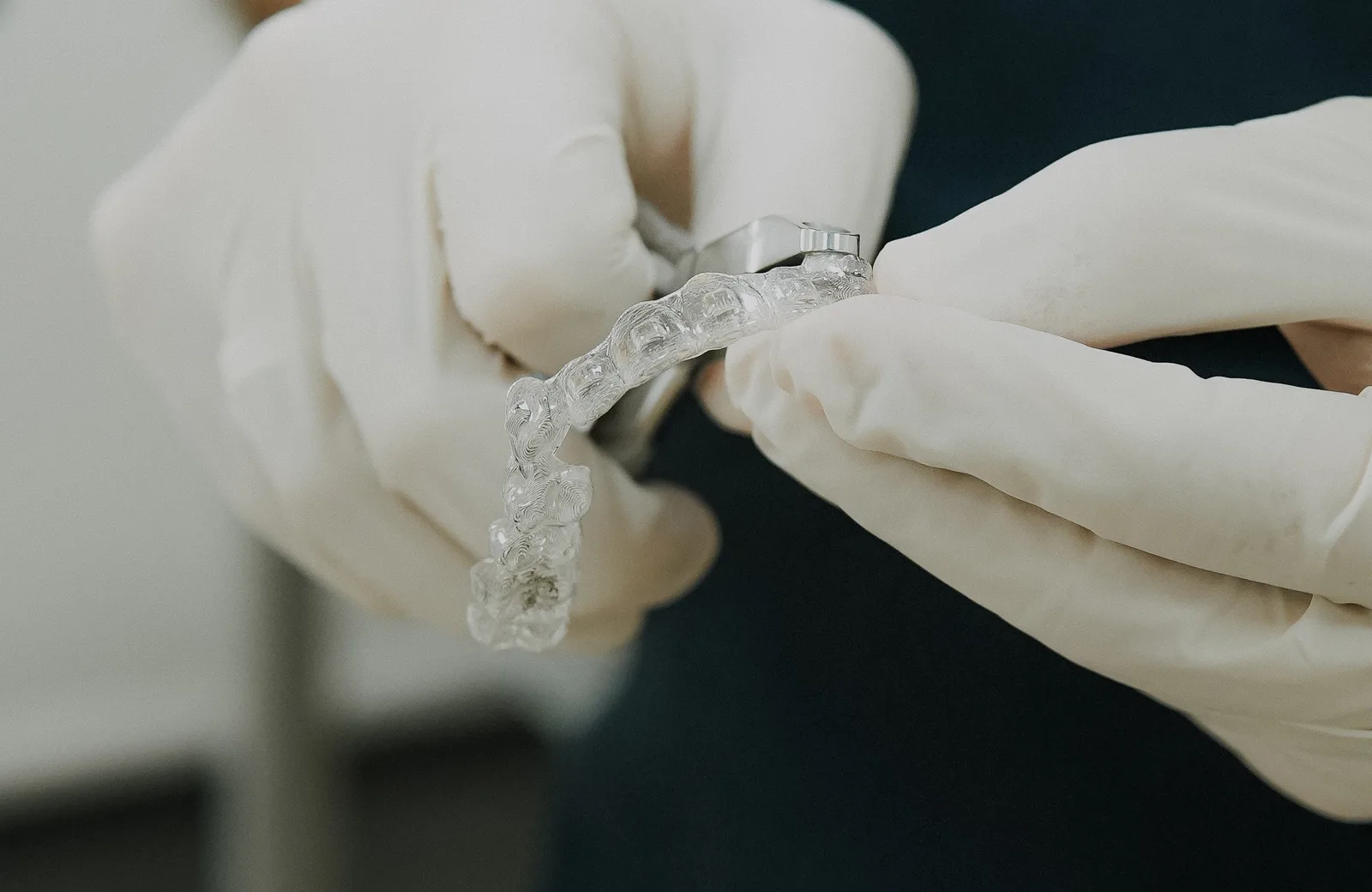
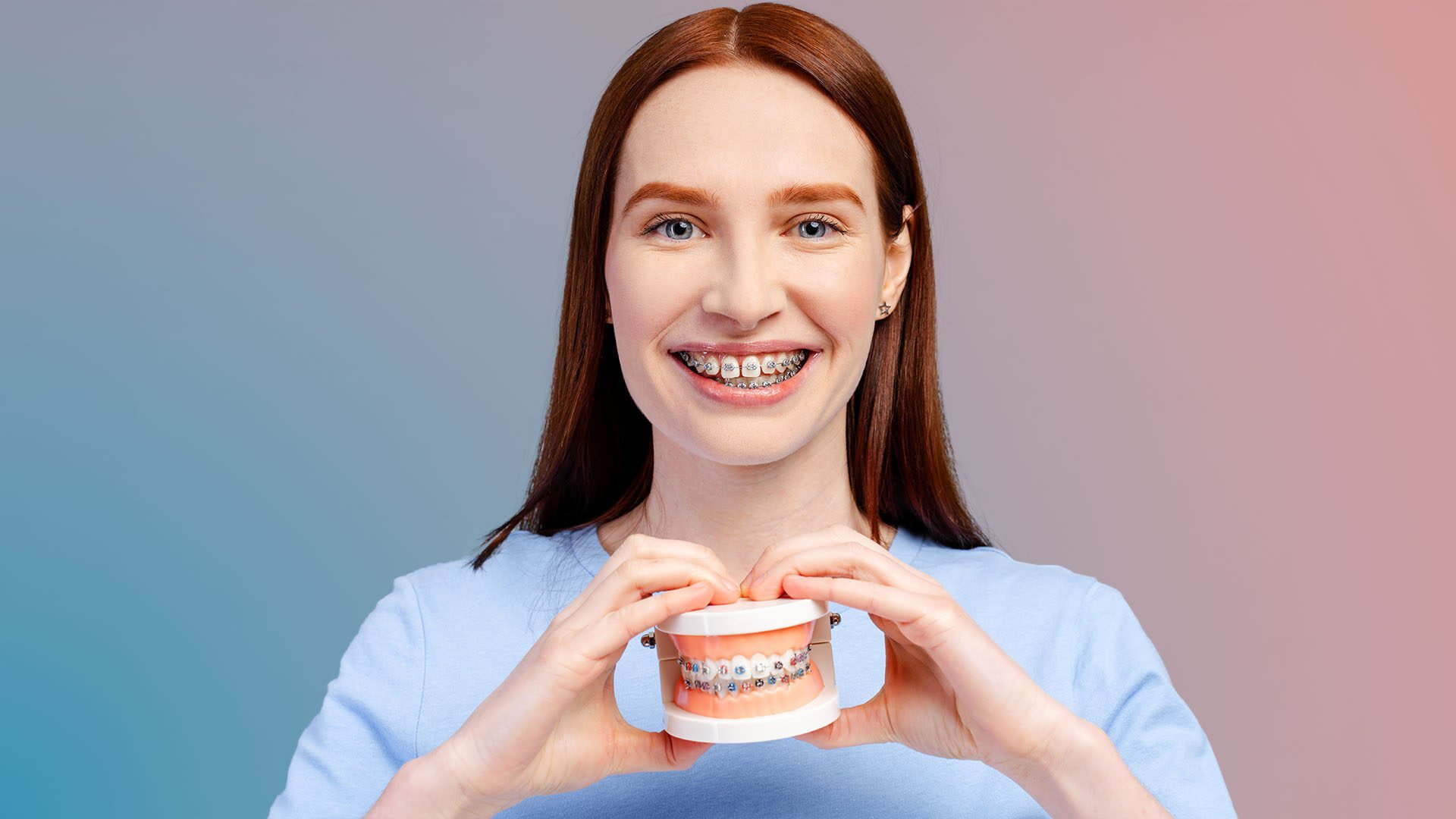
- 04Appliance choice trades visibility for mechanics: metal brackets, ceramic brackets in tooth-like shades, lingual brackets placed on the inner surfaces, and removable clear aligners for milder discrepancies.
- 05Hygiene during fixed appliances has measured support: chlorhexidine rinses controlled gingival inflammation against untreated controls in 14 randomised trials with 602 patients, but showed no significant advantage over propolis, probiotic or herbal rinses at three to four weeks (mean difference 0.07, 95% CI -0.18 to 0.31) (PubMed 35762364).
Orthodontic treatment is a branch of dentistry that provides both aesthetic and functional improvement by correcting disorders in the tooth and jaw structure. Today, many people apply to orthodontic treatment to have healthier and straighter teeth. This treatment process helps to protect dental health in the long term by being planned specifically for the person.
/ Orthodontic Treatment, Benefits and Suitable Candidates
What is Orthodontic Treatment?
Orthodontics is a branch of dentistry that corrects disorders in the jaw structure and crooked teeth. In addition to providing an aesthetic smile , orthodontic treatment also positively affects chewing functions and oral health. A correct orthodontic treatment process both ensures that the teeth are aligned regularly and helps you achieve a healthier oral structure by supporting the jaw structure.
Benefits of Orthodontic Treatment
- Corrects irregularities and crookedness in teeth.
- Facilitates digestion by improving chewing functions.
- Helps to correct speech disorders.
- Can prevent jaw joint disorders.
- Reduces the risk of tooth decay and gum disease.
- Increases self-confidence by providing an aesthetic smile.
Who Can Get Orthodontic Treatment?
Orthodontic treatment is suitable for individuals of all ages. However, it is recommended to start treatment at an early age to get the best results. An orthodontic examination performed on children at the age of 7-8 can help prevent serious teeth and jaw problems that may occur in the future. However, adults can also benefit from orthodontic treatment and correct their teeth without aesthetic concerns thanks to advanced treatment methods.
/ Orthodontic Treatment Methods, Process and Aftercare
Orthodontic treatment can be applied with different methods depending on the patient's needs:
Metal Braces
–
Metal braces , which are the classic orthodontic treatment method, are quite effective in correcting teeth. Today, they offer comfortable use thanks to their thinner and more aesthetic designs.
Treatment with Clear Aligners (Invisalign)
–
For individuals looking for a more aesthetic solution, clear aligners are a modern treatment method that corrects teeth in certain stages and has a removable structure.
Lingual Orthodontics (Invisible Braces)
–
Lingual braces placed on the inside of the teeth are not noticeable when viewed from the outside. It is an ideal option for patients with aesthetic concerns.
Ceramic (Porcelain) Braces
–
Less visible than metal braces, porcelain braces have color tones close to the natural structure of the teeth. It can be preferred for individuals with high aesthetic concerns.
How Does the Orthodontic Treatment Process Work?
The orthodontic treatment process is planned specifically for the individual and usually consists of the following stages:
- Examination and Evaluation: In the first stage, the dentist evaluates the patient's mouth and jaw structure.
- Treatment Planning: A treatment plan is created according to the direction of movement of the teeth and the patient's needs.
- Start of Treatment: The selected orthodontic treatment method is applied and regular check-ups are performed.
- Reinforcement Process: Reinforcement treatment is applied to maintain the new positions of the teeth.
Things to Consider During the Orthodontic Treatment Process
Individuals undergoing orthodontic treatment need to pay more attention to oral care. Since braces or plates can cause food residue to accumulate, regular brushing and flossing are very important. In addition, hard and sticky foods should be avoided and regular dentist check-ups should be attended.
What to Do After Orthodontic Treatment
After the treatment is completed, a retainer (reinforcement device) must be used to maintain the new position of the teeth. Otherwise, the teeth may move back to their old positions.
/ Frequently Asked Questions
How long does orthodontic treatment take?
The duration of orthodontic treatment varies depending on the patient's tooth structure and the treatment method. It can generally last between 6 months and 2 years.
Is orthodontic treatment painful?
A slight discomfort may be felt in the early stages of treatment, but this decreases within a few days. Thanks to modern orthodontic methods, patient comfort is kept at the highest level.
Will the teeth deteriorate again after orthodontic treatment?
A retainer (reinforcement apparatus) should be used after treatment to prevent the teeth from returning to their former positions. In this way, the treatment is permanent.
Are clear aligners (Invisalign) or metal braces more effective?
Which treatment method is more suitable depends on the patient's tooth structure and treatment needs. Clear aligners can be effective for mild tooth misalignments, while metal braces may be recommended for more serious orthodontic problems.
Is there an age limit for orthodontic treatment?
Orthodontic treatment can be applied at any age. While starting at an early age is advantageous for children, adults can also achieve healthy and straight teeth with appropriate treatment methods.
Orthodontic treatment provides an aesthetic smile and also makes daily life more comfortable by protecting your oral and dental health in the long term.
Let’s plan the right treatment together.
Free Assessment→- 1.Abbing A, Koretsi V, Eliades T, Papageorgiou SN. Duration of orthodontic treatment with fixed appliances in adolescents and adults: a systematic review with meta-analysis. Prog Orthod 2020;21:37. PubMed 33015719
- 2.Karamani I, Kalimeri E, Seremidi K, Gkourtsogianni S, Kloukos D. Chlorhexidine Mouthwash for Gingivitis Control in Orthodontic Patients: A Systematic Review and Meta-Analysis. Oral Health Prev Dent 2022;20:279-294. PubMed 35762364