
Crooked Teeth Treatment
Crooked teeth treatment moves overlapping teeth into the space they lack using braces or clear aligners, with space creation or extraction where indicated.
- Options for children and adults
- Aesthetic or invisible treatment
- Bite correction included
First consultation free · same-day reply · no price pressure
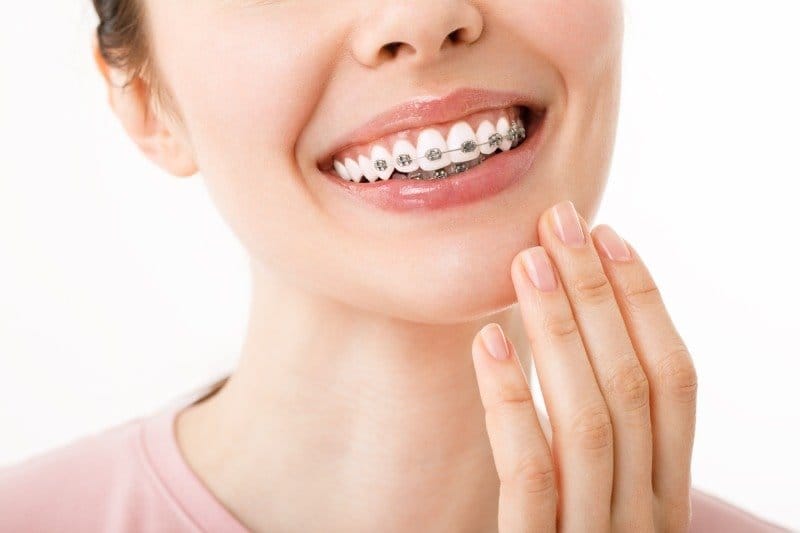
Crooked teeth, called crowding in clinical use, are corrected by moving overlapping teeth into the arch space they lack, using fixed braces, clear aligners, space creation and, where indicated, extraction. A worldwide meta-analysis of 77 studies put malocclusion prevalence at 56%, though the 95% confidence interval of 11-99% is so wide that the figure indicates a trend rather than a rate; in the same analysis crowding was one of the few traits whose prevalence increased on the move from primary to permanent dentition (PubMed 32567942). Before travelling, ask which movements your case needs, because that is what selects the appliance.
- 01Lower front crowding keeps returning after treatment as a physiological trend. In the University of Washington follow-up series built on more than 800 sets of patient records, post-treatment mandibular anterior crowding continues into the 20 to 40 age bracket and beyond, its degree is unpredictable, and no pre-treatment clinical, cast or cephalometric measure proved a useful predictor (PubMed 10860071).
- 02Wisdom teeth are not the cause. The same series found that the presence, absence, impaction or full eruption of third molars had little effect on whether relapse occurred or how severe it was (PubMed 10860071).
- 03No retainer type wins outright, so plan retention before you book treatment abroad. The 2023 Cochrane update of 47 studies and 4,377 participants found the stability difference between full-time lower clear plastic retainers and fixed retainers was not clinically significant (Little's Irregularity Index mean difference 0.60 mm, 95% CI 0.17 to 1.03), with less gingival bleeding on removable retainers (risk ratio 0.53, 95% CI 0.31 to 0.88) but a higher risk of retainer failure (3.42, 95% CI 1.38 to 8.47) (PubMed 37219527).
- 04Appliance choice follows the movements your case needs. In a review of eight comparative studies, the three that could be pooled showed aligner therapy finishing on average 6.31 months sooner, yet the review found aligners not as effective at producing occlusal contacts, controlling torque, increasing transverse width or holding the result (PubMed 30674307).
- 05The claim that crowding causes jaw joint disease is not supported by trial evidence. A Cochrane review of six randomised trials with 392 patients found occlusal adjustment neither treated nor prevented temporomandibular disorders and could not be recommended (PubMed 12535488). Orthodontic treatment is planned for other reasons; a jaw joint complaint on its own is not one of them.
/ Orthodontics and Post-Treatment Considerations
Orthodontics can be defined as a specialized field of dentistry that aims to correct misplaced teeth and jaws. General dentistry procedures mainly focus on tooth decay and misalignment. Orthodontics, on the other hand, targets problems such as misalignment of the jaw and crooked teeth and supports the achievement of a healthy tooth structure. However, orthodontics is not only concerned with providing straight and beautiful teeth and smiles. Various orthodontic problems that cause tooth decay and tooth loss are also within the scope of orthodontics. In this way, patients can have healthy teeth and gums.
Orthodontics helps to correct problems with how teeth and jaws are aligned and undertakes the diagnosis and treatment of misaligned teeth and jaws.
What should be considered after orthodontic treatment?
- After the start of orthodontic treatment, the patient should avoid the consumption of hard nuts; he/she should also be careful not to bite hard fruits such as apples and pears.
- Sticky foods such as caramel chocolate, jelly beans, Turkish delight and chewing gum should be avoided.
- The mouth area should be protected against possible hard impacts from outside.
- Transparent aligners given after treatment should be used regularly.
- Transparent aligners should be cleaned every day.
- Teeth should be brushed twice a day, including the back surfaces, to prevent plaque accumulation around the fixed wires placed on the back surfaces of the teeth.
| At a glance | |
|---|---|
| Duration | 6-18 months |
| Sessions | 12 |
| Warranty | · |
| Materials Used | Bracket systems · Clear aligner |
/ Problems Covered by Orthodontic Treatment
Orthodontics treats malocclusion, incorrect tooth and jaw positions. The diseases that orthodontics deals with include crooked, crowded and protruding teeth and biting difficulties. As a result of the application of orthodontic treatment designed to suit the needs of the patient, patients can achieve a beautiful smile, long-term health and comfort that will increase their self-confidence.
Orthodontic problems can affect both children and adults. Even those who wore braces in their youth can experience orthodontic problems. This is because teeth are mobile and continue to move very slowly in response to normal biting and chewing forces. However, if young children develop bad habits such as thumb sucking or tongue thrusting, the teeth can be pushed out of their proper alignment. This and various other orthodontic problems are usually seen around the age of 7 when the permanent teeth begin to erupt.
The way the teeth come together and align is called "occlusion". Under normal circumstances, when the upper jaw is closed, the upper teeth should rest on the lower teeth and the upper surfaces of the molars should be aligned. This may not happen for various reasons and dental malocclusion can cause serious oral health complications. Orthodontic treatment may be considered at this stage.
/ Orthodontic Treatment Eligibility, Age Limit and Duration
Who Can Receive Orthodontic Treatment?
Orthodontics is the field of dentistry that deals with malocclusions in which the proper biting function cannot be performed due to misalignment of the teeth. Within the scope of orthodontics, treatments can be performed to improve both oral health and cosmetic appearance . People with curvature, distortion and structural disorders in the teeth and mouth structure are considered to be suitable candidates for orthodontic treatment.
Is There an Age Limit for Orthodontic Treatment?
Orthodontic treatment can be applied to patients of all age groups, in other words, orthodontic treatment has no age limit. Because it is possible to move healthy teeth in the mouth of patients at any age. However, orthodontic treatment can also be used to help prosthesis applications in adults.
In case of orthodontic treatment, the problem and the suitability of the treatment are evaluated for each patient. The treatment plan is determined according to factors such as the patient's age, lifestyle habits, type and degree of the problem to be treated.
How Long Does Orthodontic Treatment Take?
Orthodontic treatment is completed within an average period of 6 months to 2 years. This period may vary depending on patient-specific needs, the scope of the treatment to be applied, the patient's oral and dental structure and the duration of response to the treatment.
/ How the Orthodontic Treatment Process is Planned
Orthodontic treatment can be applied to patients with crowding, crookedness, spacing or jaw problems. In this context, it can be applied to people who feel uncomfortable with the appearance of their teeth. When your milk teeth fall out, permanent teeth begin to erupt. It is extremely important to have the permanent teeth checked regularly and to apply treatment to the detected orthodontic problems. Within the scope of orthodontic treatment; metal and transparent braces , intraoral and extraoral appliances, aligners and surgical interventions may be used.
Patients undergoing orthodontic treatment are first subjected to a detailed examination and different tests are applied. After the examination performed by the dentist, facial and dental photographs of the patient are taken with the help of cephalometric and panoramic radiographs, and the diagnosis is made. The patient is informed about the braces treatment to be applied. In addition, the wires and treatment methods to be used within the scope of treatment are explained. Bracket and plate design is made. A personalized treatment plan is determined by evaluating intraoral photographs and films.
After the treatment plan is determined, if there are treatments such as filling, tooth extraction, implant treatment and scaling, which are needed for the patient to achieve ideal oral health, these are applied first. If there is gum disease , this should also be treated.
Treatment Process
- 01Consultation: Initial examination and needs assessment; imaging where required.
- 02Treatment: Invisalign or bracket therapy per the treatment plan.
- 03Follow-up: Outcome review and aftercare guidance.
/ Braces Placement Methods in Orthodontic Treatment
The choice of braces is made in accordance with the patient's mouth and dentition. When braces are first worn, it is usual to experience an adjustment period for 3 to 4 days. After this period, the mouth and teeth get used to the braces. In addition, it is possible to get fast and effective results from orthodontic treatment if the right braces are applied specifically for the patient.
After the braces and brackets are selected, an appliance called "retractor" is attached to the edge of the patient's lips. In this way, the inside of the mouth is expanded and the procedure begins. While the patient is being braced, the dentist can easily see the teeth in the anterior and posterior regions thanks to the retractor. The teeth must be dry when the braces are placed. After the teeth are etched and dried, it is possible to apply the brackets by two methods. These methods are traditional and bonding methods.
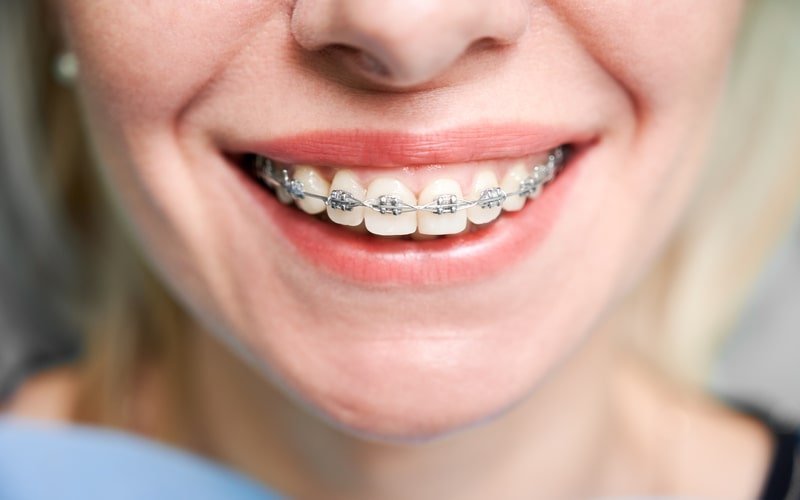
In traditional orthodontic treatment, brackets are placed one by one on the teeth using a special adhesive. After the brackets are light cured, the surrounding area is cleaned and a wire called "archwire" is passed through the brackets. If necessary, the brackets are fixed using an elastic.
Bonding method is a method that has been frequently used in recent years. In this method, measurements are taken from the patient's mouth and a tooth model is prepared. Brackets are glued on this model. Then they are transferred onto the teeth and cured with light. One of the most important features of the bonding method is the reduction in the time the patient spends in the dentist's chair.
/ Reinforcement Treatment and Orthodontic Treatment Prices
Braces treatment is an effective process that helps to position the teeth properly. However, it is also extremely important to maintain the permanence of the results provided by orthodontic treatment. For this, after the active treatment is completed, reinforcement treatment is applied and the patient's teeth are prevented from returning to their old position.
Within the scope of reinforcement treatment, it may be preferred to use fixed or removable appliances. The removable appliance applied to the upper jaw is called "Hawley". "Essix", on the other hand, is a removable appliance that cannot be easily recognized. Fixed reinforcement appliances are generally used to prevent the movement of the teeth after the braces are removed by adhering to the tongue-facing surfaces of the teeth in the lower anterior region.
Orthodontic Treatment Prices
Orthodontic treatment prices may vary depending on factors such as the degree of difficulty of the treatment and how crooked the person's teeth are. Although some disorders are considered minor by the patient, it may take a long time to correct them because they are actually skeletal. For this reason, orthodontic treatment prices may vary according to the scope of the patient-specific treatment.
/ Orthodontic Treatment in Turkey
Patients travel to Turkey for orthodontic treatment mainly because the same appliance costs less here than in Western Europe or North America. What such a trip involves is worth setting out plainly:
- Affordability: Orthodontic treatment in Turkey is significantly more cost-effective than in Western countries, often costing 50-70% less. This allows patients to access high-quality care at a fraction of the price.
- Training and equipment: Orthodontics is a recognised speciality in Turkey and part of that training is often completed abroad. Equipment and experience still differ from clinic to clinic, so ask about the clinician who will treat you rather than about the country.
- Comprehensive Options: Whether you need traditional braces, clear aligners, or other advanced orthodontic treatments, Turkish clinics offer various options tailored to individual needs.
- Treatment Length: orthodontic treatment runs over months, so ask before you travel how many visits it needs, which of them can be handled remotely and who checks the aligners or brackets in between.
- English-Speaking Staff: Communication is accessible, as many dental clinics in Turkey, particularly in popular cities like Istanbul and Antalya, have English-speaking staff who ensure international patients feel comfortable.
/ Mosdent Dental Hospital for Orthodontic Treatment
Orthodontic treatment at Mosdent is planned on digital records and followed through to retention. What that means in practice:
- Planning: treatment is planned from digital scans and imaging rather than from impressions alone, so the movements and their sequence are set out before the appliance is fitted.
- Clinicians: orthodontic cases are handled by the orthodontics department, and the treatment plan is written for the individual case rather than taken from a package.
- Patient comfort: the staff go through what to expect before each step and keep visits as straightforward as possible, which matters most for patients travelling in.
- Cost: orthodontic treatment here costs less than the equivalent course in the United States or the United Kingdom, and the quote is itemised in writing after an examination.
- International Patients: Mosdent is accustomed to working with international patients, offering seamless communication, clear treatment plans, and support for those coming from abroad.
Before booking, ask for a written treatment plan that names the appliance, the expected number of visits and the retention arrangement after the appliance comes off.
- 1.Lombardo G, Vena F, Negri P, Pagano S, Barilotti C, Paglia L, et al. Worldwide prevalence of malocclusion in the different stages of dentition: A systematic review and meta-analysis. Eur J Paediatr Dent 2020;21:115-122. PubMed 32567942
- 2.Little RM. Stability and relapse of mandibular anterior alignment: University of Washington studies. Semin Orthod 1999;5:191-204. PubMed 10860071
- 3.Martin C, Littlewood SJ, Millett DT, Doubleday B, Bearn D, Worthington HV, et al. Retention procedures for stabilising tooth position after treatment with orthodontic braces. Cochrane Database Syst Rev 2023;5:CD002283. PubMed 37219527
- 4.Ke Y, Zhu Y, Zhu M. A comparison of treatment effectiveness between clear aligner and fixed appliance therapies. BMC Oral Health 2019;19:24. PubMed 30674307
- 5.Koh H, Robinson PG. Occlusal adjustment for treating and preventing temporomandibular joint disorders. Cochrane Database Syst Rev 2003:CD003812. PubMed 12535488
- 6.Tsichlaki A, Chin SY, Pandis N, Fleming PS. How long does treatment with fixed orthodontic appliances last? A systematic review. Am J Orthod Dentofacial Orthop 2016;149:308-18. PubMed 26926017
- 7.Alhamwi AM, Burhan AS, Idris MI, Nawaya FR. Duration of orthodontic treatment with clear aligners versus fixed appliances in crowding cases: a systematic review. Clin Oral Investig 2024;28:249. PubMed 38607436

Who is this treatment for?
- Crowding, crookedness or spacing between teeth
- Biting difficulties caused by crooked or protruding teeth
- Misalignment, crookedness or structural disorders in the teeth and mouth
- Feeling uncomfortable with the appearance of the teeth
- Hard-to-clean areas between teeth and risk of decay
- Misalignment of the teeth or jaw
Doctors specialising in this treatment
Frequently asked
01How long does treatment take?+
Duration depends on severity. Comprehensive treatment with fixed appliances averaged 19.9 months across 22 prospective studies (PubMed 26926017), and in mild to moderate crowding a systematic review found no significant difference in duration between aligners and brackets (PubMed 38607436).
02Is orthodontics possible for adults?+
Yes. Orthodontics can be applied at any age once skeletal growth is complete; a significant proportion of our guests are adults. Orthodontics is a treatment that moves teeth through bone in a controlled way, and that biology does not stop with age.
03Can crooked teeth be fixed without braces?+
In mild to moderate cases clear aligners move crooked teeth without fixed brackets; in a review of eight comparative studies, the three pooled studies showed aligners finishing on average 6.31 months sooner. Brackets kept the advantage for torque control and transverse widening, and in the one extraction study they were faster (PubMed 30674307). Which one applies is decided from the movements your case needs, not from preference alone.
Orthodontics
Invisalign Treatment
Invisalign is an orthodontic system that aligns teeth with a custom series of clear trays, worn 20-22 hours a day and taken out to eat and brush.
Explore→02Bracket Treatment
Bracket treatment, or fixed braces, moves teeth in three planes using metal or ceramic brackets bonded to the teeth and an archwire running through them.
Explore→Speak with your doctor about this treatment.
Not sure which treatment fits? Tell us what’s wrong →