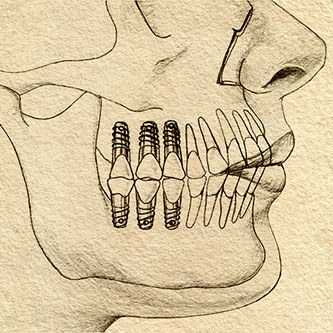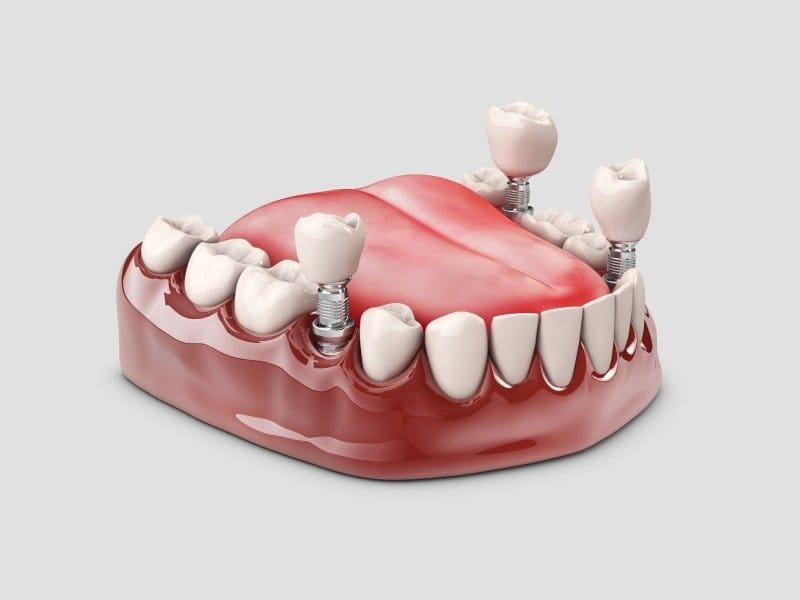
All-on-4 is a full-arch treatment concept in which one complete arch of fixed prosthetic teeth is carried by four implants: two placed upright at the front and two angled backwards, so that existing bone is used instead of grafting an atrophic jaw. A provisional fixed bridge is usually loaded the same day. A systematic review of 24 studies reported an implant survival rate of 99.8% beyond 24 months, while a retrospective series followed for a mean of 6.46 years reported cumulative implant survival of 89.7% and prosthesis survival of 88.2% for all-on-four (PubMed 28298995, 36197040).
- 01The concept is defined by implant position, not implant count alone: two axial implants anteriorly and two tilted posteriorly, chosen so the atrophic jaw can be treated without regenerative surgery (PubMed 28298995).
- 02A systematic review of 24 studies reported 99.8% implant survival beyond 24 months, but the same review flagged short follow-up and sample attrition as limits on that figure (PubMed 28298995).
- 03Over longer follow-up the picture is less flattering: in 28 edentulous patients with 164 implants, cumulative implant survival was 89.7% for all-on-four against 99.0% for all-on-six, mean follow-up 6.46 years, range 1 to 10 years (PubMed 36197040).
- 04Mean marginal bone loss around these full-arch reconstructions was 1.38 mm at 5 years and 2.09 mm at 10 years, with no significant difference between tilted and axial implants at 5 years (PubMed 36197040).
- 05Methodological quality is the weak point of the evidence: only one of the 24 studies in the systematic review reported a sample size calculation (PubMed 28298995).
Imagine stepping into a world where missing teeth are a thing of the past. Where you can smile confidently, eat your favourite foods, and enjoy life without limitations. This dream is closer than you think, thanks to revolutionary dental solutions like All on 4 Implant Treatment.
If you've ever wondered whether this innovative procedure is proper for you, you're in the right place. Get ready to explore the ins and outs of All on 4 implants, what they are, their benefits, who they're suitable for, and answers to some common questions that may be on your mind. Let's dive deep into this transformative treatment that could change your life forever!
/ All on 4 Implant Treatment Overview and Initial Benefits
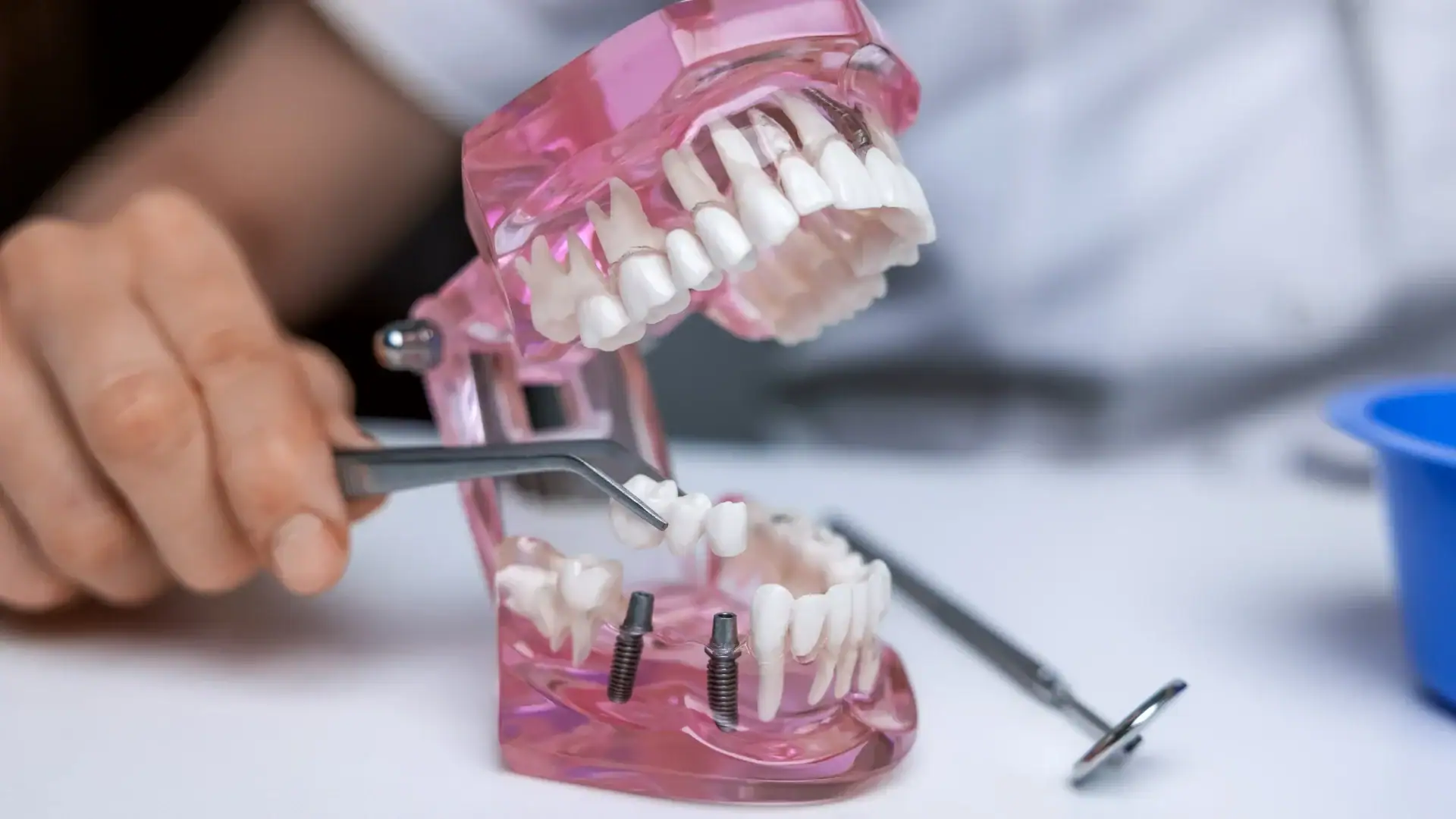
All on 4 Implant Treatment is a modern dental solution for those with significant tooth loss. Instead of placing an implant for every missing tooth, this method uses four strategically positioned implants to support an entire arch of prosthetic teeth.
The process begins with a thorough examination and planning phase. The dental team evaluates your jawbone structure and oral health to ensure the best outcome.
Next, two implants are placed at the front of the mouth, while two others are angled towards the back for optimal stability. This unique configuration allows immediate loading of a temporary denture, enabling patients to leave the office with new teeth in one day.
This treatment saves time and minimizes surgical interventions compared to traditional methods. It's ideal for individuals looking for efficient solutions without compromising quality or aesthetics.
All on 4 Implant Treatment offers a transformative solution for those facing tooth loss. One of the standout benefits is its ability to restore an entire arch of teeth using just four strategically placed implants. This approach minimizes surgical intervention, making it less invasive than traditional methods.
/ Further Advantages and Candidates for All on 4 Implant Treatment
The treatment has additional advantages and candidate considerations.
Another advantage lies in the speed of treatment. Many patients can receive a temporary fixed prosthesis within a single day, allowing them to leave the clinic with a functional smile almost immediately.
Additionally, All on 4 implants enhance stability and durability compared to removable dentures. Patients experience greater comfort and improved chewing efficiency, which can lead to better nutrition and overall health.
The procedure also helps preserve jawbone structure by stimulating bone growth through implant integration. This long-term benefit contributes to oral health and enhances facial aesthetics, giving patients renewed confidence in their appearance.
All on 4 Implant Treatment is designed for individuals seeking a long-term solution for missing teeth. Those with significant tooth loss or decay often find this option appealing.
Patients advised against traditional implants due to insufficient bone density may also benefit. The unique placement of the four implants allows them to anchor securely, even in less-than-ideal conditions.
Individuals looking for immediate results will appreciate that temporary prosthetics can be attached soon after the procedure. This means they can leave the clinic with a functional smile on the same day.
Candidates must maintain good overall health and commit to proper oral hygiene post-treatment. Discussing personal dental history with a qualified professional ensures tailored advice and optimal outcomes.
/ Frequently Asked Questions about All on 4 Implant Treatment
All on 4 Implant Treatment is a revolutionary dental solution that has transformed the lives of countless individuals seeking to restore their smiles. As with any procedure, there are common questions and concerns potential patients may have.
One frequently asked question is about the longevity of All on 4 implants. Typically, these implants can last over a decade or even longer with proper care and regular dental visits . However, individual results may vary based on lifestyle choices and oral hygiene practices.
Another concern relates to pain during the procedure. Most patients report minimal discomfort due to sedation options available during treatment. A local anaesthetic is used at the implant sites, ensuring you remain comfortable.
People often wonder about recovery time as well. Generally, many patients return to normal activities within a few days post-surgery, though it might take several weeks for complete healing.
Cost is another significant consideration for those exploring All on 4 Implant Treatments. While it varies by location and specific cases, many find this option more affordable than traditional implants because fewer surgical procedures are needed.
Someone considering All on 4 might ask if they need bone grafting beforehand. Fortunately, one of the benefits of this method is its ability to utilize existing bone structure effectively in most cases, a significant advantage for many candidates who don’t want additional surgeries.
These insights help demystify All on 4 Implant Treatment and empower you with knowledge when deciding if it suits your needs.
Let’s plan the right treatment together.
Free Assessment→- 1.Soto-Penaloza D, Zaragozí-Alonso R, Penarrocha-Diago M, Penarrocha-Diago M. The all-on-four treatment concept: Systematic review. J Clin Exp Dent 2017;9:e474-e488. PubMed 28298995
- 2.La Monaca G, Pranno N, Annibali S, Di Carlo S, Pompa G, Cristalli MP. Immediate flapless full-arch rehabilitation of edentulous jaws on 4 or 6 implants according to the prosthetic-driven planning and guided implant surgery: A retrospective study on clinical and radiographic outcomes up to 10 years of follow-up. Clin Implant Dent Relat Res 2022;24:831-844. PubMed 36197040