A zirconia implant crown is the visible tooth fitted onto a dental implant abutment, milled from zirconium dioxide ceramic with no metal substructure underneath. Its measured record is short to medium term rather than lifelong: a meta-analysis of 49 randomised and prospective studies covering 57 material cohorts put three-year survival at 96.1 percent for monolithic zirconia implant single crowns and 96.3 percent for veneered zirconia (PubMed 34642991). Crown design changes the failure mode more than the survival figure, with an annual ceramic chipping rate of 1.65 percent for veneered crowns against 0.39 percent for monolithic ones.
- 01A zirconia implant crown is the third component of an implant restoration, sitting above the fixture and the abutment, and it is made of zirconium dioxide rather than porcelain fused to a metal core.
- 02Three-year survival was 96.1 percent for monolithic zirconia and 96.3 percent for veneered zirconia implant single crowns across 49 studies and 57 material cohorts (PubMed 34642991).
- 03Veneered crowns chip roughly four times more often than monolithic ones: annual ceramic chipping was 1.65 percent versus 0.39 percent, and the difference was statistically significant (PubMed 34642991).
- 04At five years, zirconia implant single crowns survived at 97.6 percent (95 percent CI 94.3 to 99.0, n=912) and metal-ceramic at 98.3 percent (n=4,363), but failures caused by material fracture were significantly more frequent in zirconia, 2.1 percent versus 0.2 percent (PubMed 30328190).
- 05Published follow-up does not yet reach the fifteen to twenty year figure often quoted: the 2018 review found no study of newer monolithic zirconia implant crowns with three years of follow-up and clinical examination (PubMed 30328190).
Dental implants are one of the most advanced solutions for missing teeth. However, many patients do not realize that the implant itself is only the “root.” The visible tooth on top is called the implant crown and the material used for this crown makes a huge difference in aesthetics, durability, and long term success.
In recent years, the zirconia implant crown has rapidly become the preferred option for patients seeking a natural, long lasting, and metal-free restoration. Mosdent Hospital uses zirconia for implant restorations where a metal-free margin matters and the monolithic failure profile suits the case; the material is chosen tooth by tooth rather than as a default.
Zirconia crowns on dental implants differ from other crown materials in strength, appearance and failure mode, and the published survival data cover three to five years rather than decades.
/ Zirconia Implant Crown Basics and Material Comparison
What Is a Zirconia Implant Crown?
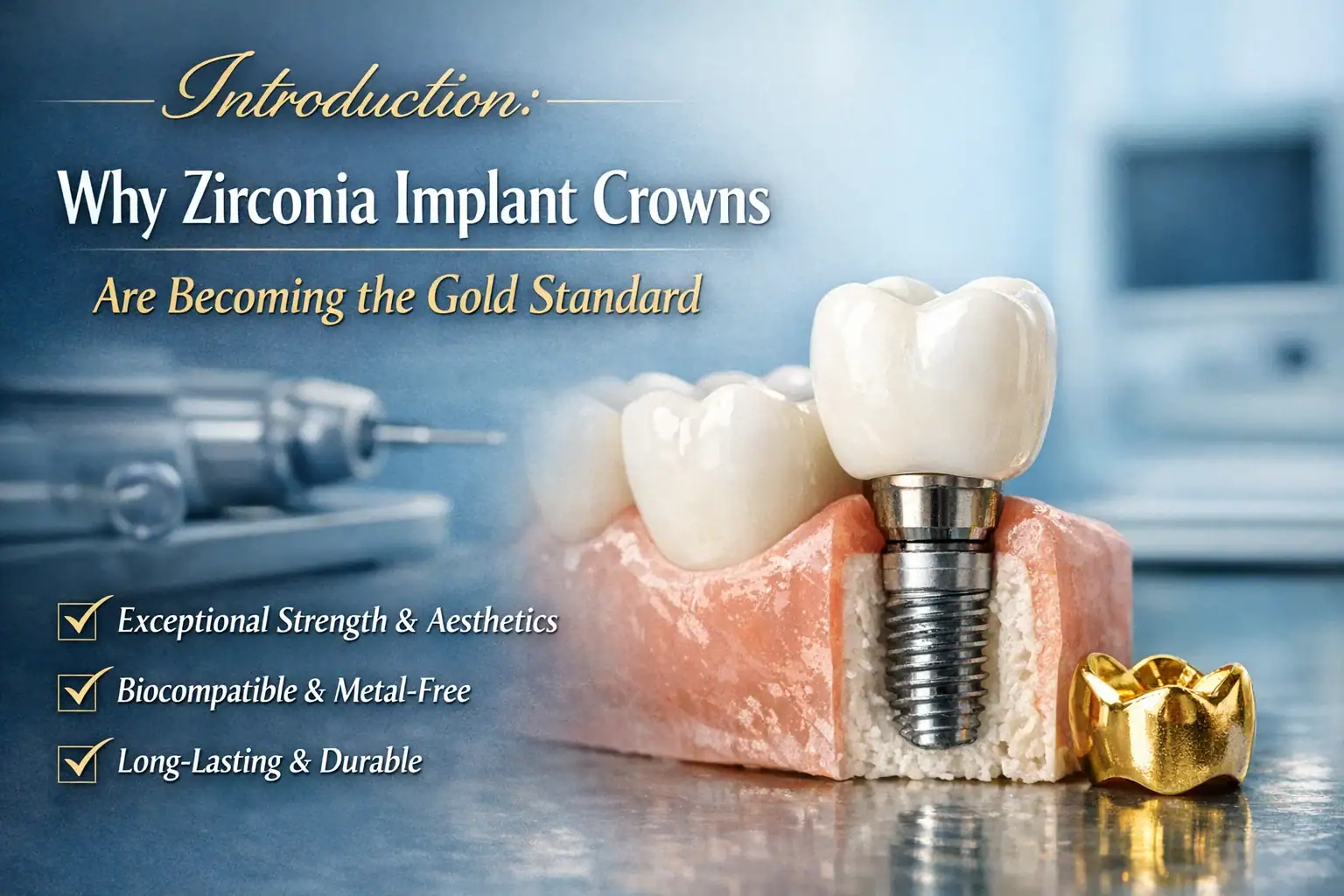
A zirconia implant crown is the visible tooth placed on top of a dental implant, made from zirconium dioxide an extremely strong and biocompatible ceramic material.
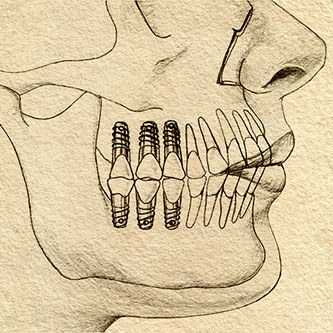
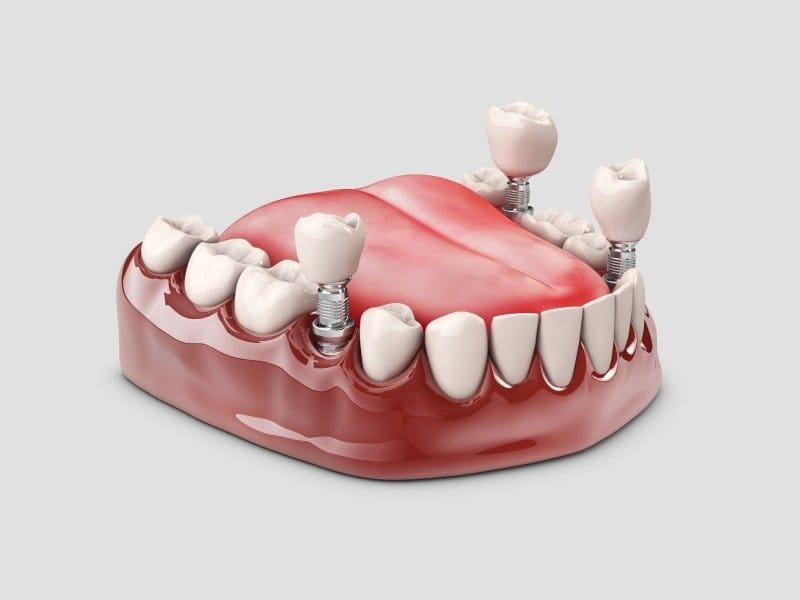
A dental implant restoration consists of three parts:
- Implant fixture (placed in the bone)
- Abutment (connector)
- Crown (visible tooth)
The zirconia implant crown is the final restoration that restores chewing function and aesthetics .
Why Zirconia Is Ideal for Implant Crowns
Zirconia is preferred over porcelain or metal ceramic crowns for its combination of strength and appearance.
Key properties of zirconia:
- Extremely strong ceramic material
- Metal-free and biocompatible
- Translucent and natural looking
- Resistant to fractures and wear
- Highly resistant to staining
These properties make zirconia one of the most advanced materials in modern dentistry.
Zirconia Implant Crown vs Porcelain Implant Crown
The main differences between a zirconia and a porcelain implant crown:
| Feature | Zirconia Crown | Porcelain Crown |
|---|---|---|
| Strength | Extremely high | Moderate |
| Aesthetics | Very natural | Natural |
| 5-year survival | 97.6% | 98.3% (metal-ceramic) (PubMed 30328190) |
| Metal content | None | Often metal base |
| Stain resistance | Excellent | Good |
Zirconia crowns are often preferred for long-term implant restorations, especially in modern digital dentistry .
/ Benefits of Zirconia Implant Crowns
Benefits of Zirconia Crowns on Dental Implants
1️⃣ Exceptional Strength
Zirconia is sometimes called “ceramic steel” because of its incredible durability. This makes zirconia implant crowns ideal for:
- Back teeth (molars)
- Full-arch implant restorations
- Patients who grind their teeth
2️⃣ Natural Aesthetics
A zirconia implant crown mimics the translucency of natural enamel. This allows the crown to blend naturally with surrounding teeth.
This is especially important in smile design and aesthetic dentistry.
3️⃣ Metal-Free & Biocompatible
Traditional crowns may contain metal substructures. Zirconia crowns are:
✔ Hypoallergenic
✔ Biocompatible
✔ Ideal for sensitive patients
4️⃣ Excellent Gum Compatibility
Gum tissue responds very well to zirconia. The material reduces inflammation risk and creates a natural gum line appearance.
5️⃣ Long-Term Durability
Zirconia implant crowns showed 97.6% survival at five years (PubMed 30328190); published follow-up beyond that is still limited.
Who Is a Good Candidate for Zirconia Implant Crowns?
Zirconia implant crowns are ideal for:
- Patients seeking natural aesthetics
- Patients allergic to metals
- Full-arch implant patients
- Smile makeover patients
- Patients wanting long-lasting restorations
Step-by-Step Procedure at Mosdent
Step 1, Consultation & 3D Imaging
Advanced 3D scans and digital planning are used to design the restoration.
Step 2, Implant Placement
The implant is placed surgically into the jawbone.
Step 3, Healing Phase
Osseointegration takes 2–4 months.
Step 4, Digital Crown Design
CAD/CAM technology creates the zirconia implant crown.
Step 5, Final Placement
The crown is attached and adjusted for bite and aesthetics.
How Long Do Zirconia Implant Crowns Last?
What the data show:
- Survival at five years: 97.6% (PubMed 30328190)
- Follow-up beyond five years is still limited
Longevity depends on:
- Oral hygiene
- Regular dental visits
- Lifestyle habits
Cost Factors of Zirconia Implant Crowns
Rather than fixed prices, costs depend on:
- Implant brand
- Digital planning technology
- Complexity of the case
- Crown customization level
Caring for Zirconia Implant Crowns
Daily care includes:
- Brushing twice daily
- Flossing around implants
- Using interdental brushes
- Regular professional cleaning
/ FAQs
Are zirconia implant crowns better than porcelain fused to metal?
On five-year survival the two sit close together: 97.6% for zirconia implant single crowns against 98.3% for metal-ceramic. What differs is the failure mode, since failures caused by material fracture were significantly more frequent in zirconia, 2.1% against 0.2% (PubMed 30328190).
Do zirconia crowns look natural?
They are chosen in the aesthetic zone because there is no metal core to shadow thin gum tissue. Veneered designs read more lifelike than monolithic ones, at the cost of a higher chipping rate: 1.65% a year against 0.39% (PubMed 34642991).
How long do zirconia implant crowns last?
Measured survival is 97.6% at five years (PubMed 30328190); longer data are limited.
Are zirconia crowns metal-free?
Zirconium dioxide carries no metal substructure. On biological outcome the systematic review found the two crown types comparable, with fewer aesthetic complications for zirconia (PubMed 30328190).
How zirconia is used at Mosdent
Zirconia implant crowns are one option among crown materials and their published record covers three to five years rather than decades. Which material suits a case depends on the space available, the bite and how much of the margin shows.
Let’s plan the right treatment together.
Free Assessment→- 1.Pjetursson BE, Sailer I, Latyshev A, Rabel K, Kohal RJ, Karasan D. A systematic review and meta-analysis evaluating the survival, the failure, and the complication rates of veneered and monolithic all-ceramic implant-supported single crowns. Clin Oral Implants Res 2021;32 Suppl 21:254-288. PubMed 34642991
- 2.Pjetursson BE, Valente NA, Strasding M, Zwahlen M, Liu S, Sailer I. A systematic review of the survival and complication rates of zirconia-ceramic and metal-ceramic single crowns. Clin Oral Implants Res 2018;29 Suppl 16:199-214. PubMed 30328190