A sinus lift raises the floor of the maxillary sinus and places bone graft beneath it, so the posterior upper jaw gains the bone height an implant needs. Two routes exist: a closed transcrestal lift when residual bone is about 5 mm or more, often in the same session as the implant, and an open lateral window when bone height is lower. Healing before the implant is fully fixed averages 4 to 6 months. Across 1,598 lateral-window sinus lifts and 3,604 implants, survival was 98.88% under intact membranes and 97.68% under repaired perforations, with a perforation rate of 30.6% (PubMed 34250560).
- 01Membrane perforation is common rather than exceptional: 30.6% across 1,598 lateral-window procedures, and repairing it was not a risk factor for implant survival, 97.68% against 98.88% (PubMed 34250560).
- 02The technique threshold is residual bone height: closed transcrestal lifting above roughly 5 mm, often simultaneous with the implant, and the open lateral approach below it with the implant usually staged later.
- 03In 22 studies covering 864 implants placed simultaneously with graft-free sinus floor elevation at a mean residual bone height of 5.7 mm, implant survival was 97.9% and mean vertical bone gain 3.8 mm (PubMed 28168901).
- 04Graft integration takes 4 to 6 months on average, and during that period diving, heavy exertion and anything that raises sinus pressure are avoided.
- 05Graft material falls into 4 classes, autogenous bone, allograft, xenograft (usually bovine) and synthetic substitutes; the choice changes handling, not the objective, which is bone volume.
/ Upper Jaw Bone Insufficiency and Sinus Lift
A Common Problem in Upper Jaw Implants, Bone Insufficiency
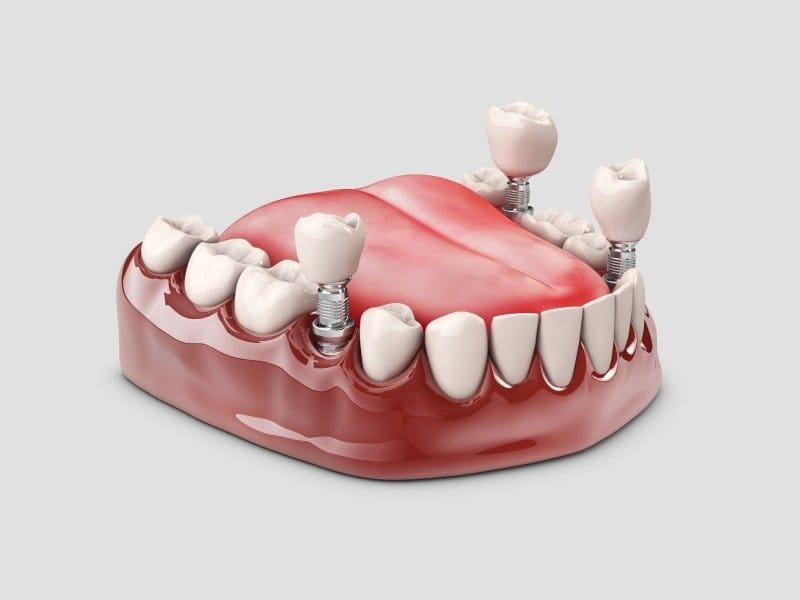
Implant treatments stand out as the healthiest and long-lasting solution to missing teeth today. However, not every patient may be suitable for implant treatment . Especially in the back area of the upper jaw (molars), bone loss may occur over time. This makes implant placement difficult. At this point, the sinus lift procedure, which is frequently used in dentistry, comes into play.
What is Sinus Lift?
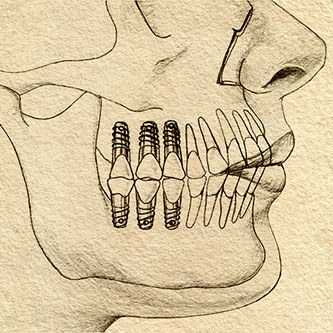
Sinus lift is the process of lifting the sinus floor and adding bone to this area in cases where there is not enough bone height for implant application in the upper jaw back area (maxillary sinus).
With this operation, the bone volume required for the implant is created. Bone graft is applied under the sinus cavity and over time the graft here integrates with the natural bone and creates a strong structure.
Why is Sinus Lifting Performed?
Causes of Bone Loss in the Upper Jaw
- Long-term absence of prosthesis after tooth loss
- Osteoporosis due to advanced age
- Periodontal diseases
- Naturally large sinuses
These factors reduce the bone height required for the implant. Sinus lifting is a safe and effective method for solving this problem.
/ Sinus Lift Candidates and Procedure Types
Who is a Sinus Lift Candidate?
- Individuals with missing back teeth in the upper jaw
- If the bone height in the area where the implant is planned is less than 4 mm
- If the sinus cavity is anatomically wide
- People with a history of previous failed implants
Sinus lifts generally yield successful results in patients with a bone height of 2–5 mm.
What are the Types of Sinus Lifts?
Closed (Transcrestal) Sinus Lift
- Less invasive
- Preferred if existing bone height is 5 mm and above
- Usually done in the same session as the implant
- The healing process is faster
Open (Lateral) Sinus Lift
- Applied in cases where the bone height is very low
- A window is opened from the side wall and the sinus membrane is lifted up
- The graft is placed and the implant is usually applied later
- Requires surgical experience
How is Sinus Lifting Applied?
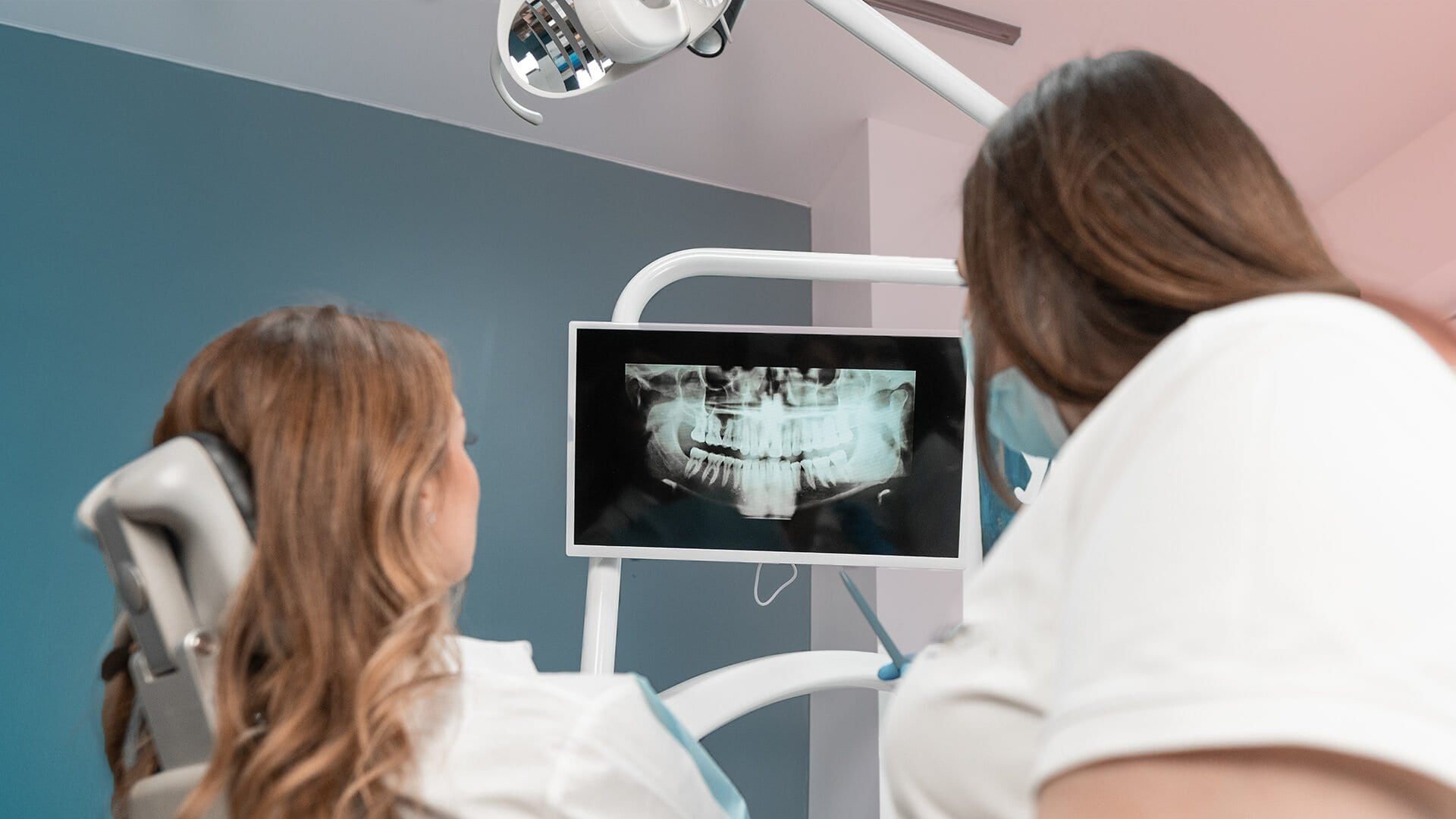
- A panoramic x-ray or tomography is taken: The structure of the sinus and bone height are evaluated.
- Anesthesia is applied: The procedure is performed with local anesthesia.
- The sinus membrane is lifted: The sinus membrane is carefully pushed upwards.
- A bone graft is placed: The shallow sinus cavity is filled with bone graft material.
- Implant placement (if necessary): If there is adequate bone volume, the implant can be placed at the same time.
- Healing process: After an average of 4–6 months, the implant becomes completely fixed.
/ Sinus Lift Bone Grafts and Recovery
What are the bone grafts used?
- Autogenous graft: Taken from the patient's own bone
- Allograft: Human-derived grafts
- Xenograft: Animal-derived (usually bovine bone)
- Synthetic graft: Artificial bone graft materials produced in a laboratory environment
What is the Healing Process?
- There may be mild swelling and pain in the first 48 hours
- Nosebleeds, sneezing or congestion may be experienced
- The average healing period varies between 4-6 months
- At the end of this period, the bone graft turns into natural bone tissue in the area where it is placed
- During the healing process, activities that will strain the sinus area (high pressure, heavy exercise, diving) should be avoided
Is Sinus Lift a Safe Procedure?
When performed by an experienced surgeon, sinus lift is quite safe. However, like any surgical procedure, it may carry some risks:
Possible Complications
- Rupture of the sinus membrane
- Risk of infection
- Bleeding
- Failure of the graft material
- Implant loss (rare)
These complications can usually be prevented with good hygiene, proper planning and physician follow-up.
Things to Consider After Sinus Lift
- No forceful nose blowing
- No smoking
- Very hot foods should be avoided for the first week
- Antibiotics and painkillers should be taken regularly
- Doctor check-ups should not be skipped
These recommendations support the healthy and rapid progress of recovery.
/ Frequently Asked Questions About Sinus Lift
Is the sinus lift procedure painful?
The procedure is performed under local anesthesia, no pain is felt. There may be slight discomfort afterwards.
Can the implant be placed immediately?
It varies according to the bone height. In closed lifting, it is usually placed at the same time, in open lifting it can be postponed.
What happens if the procedure fails?
Although rare, if the graft does not hold, it can be repeated or different treatment methods can be planned.
Can it be performed together with other dental treatments?
Yes. If the planning is done correctly, it can be performed together with procedures such as tooth extraction and bone graft application.
Sinus Lift and Dental Implant Treatment Outcomes
Sinus Lift Increases Dental Implant Success Rate
Sinus lift significantly increases the success rate in dental implant applications. When adequate bone support is provided, implants can function healthily for many years. This application is one of the gold standard solutions that make implant treatment possible, especially for patients with bone insufficiency in the posterior region of the upper jaw.
Implants are Not Impossible with Sinus Lift
Sinus lift is an advanced surgical procedure that eliminates the obstacles to implant treatment. When well planned and applied by experienced hands, it is both safe and extremely effective. If there is not enough bone in the upper jaw for an implant, you can get rid of your missing teeth and achieve a healthy and aesthetic smile with this treatment option.
Let’s plan the right treatment together.
Free Assessment→- 1.Díaz-Olivares LA, Cortés-Bretón Brinkmann J, Martínez-Rodríguez N, Martínez-González JM, López-Quiles J, Leco-Berrocal I, et al. Management of Schneiderian membrane perforations during maxillary sinus floor augmentation with lateral approach in relation to subsequent implant survival rates: a systematic review and meta-analysis. Int J Implant Dent 2021;7:91. PubMed 34250560
- 2.Duan DH, Fu JH, Qi W, Du Y, Pan J, Wang HL. Graft-Free Maxillary Sinus Floor Elevation: A Systematic Review and Meta-Analysis. J Periodontol 2017;88:550-564. PubMed 28168901