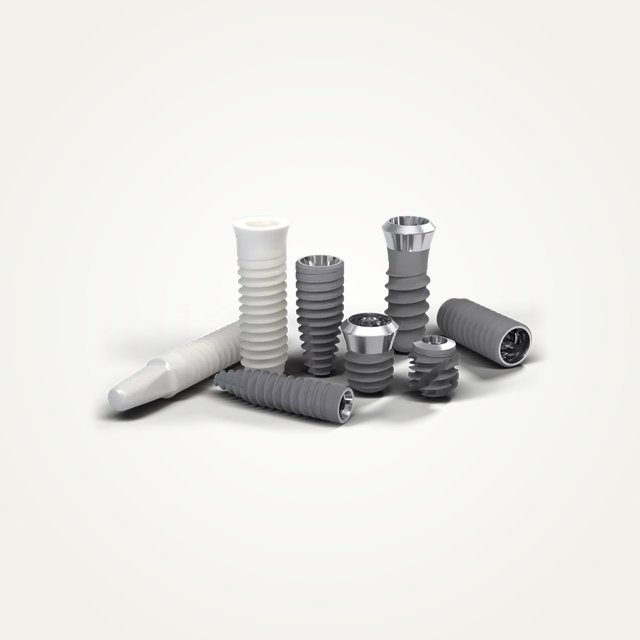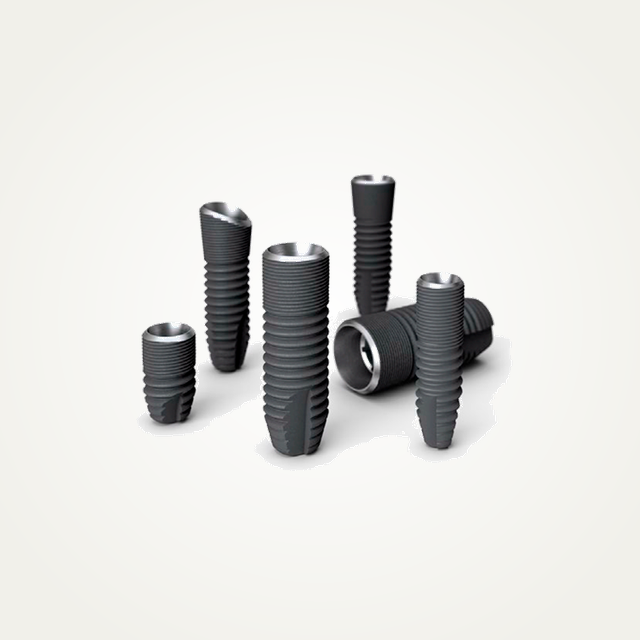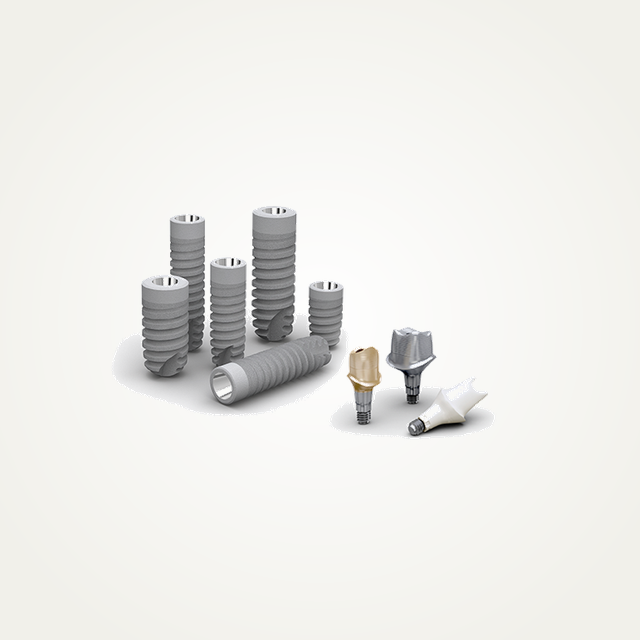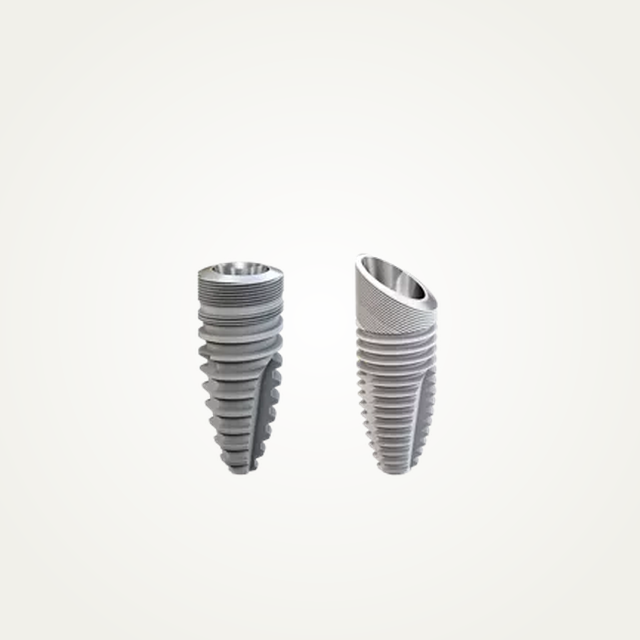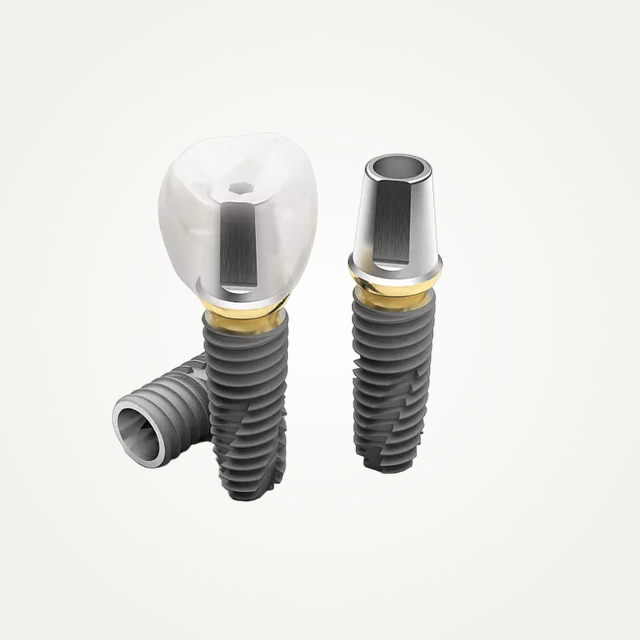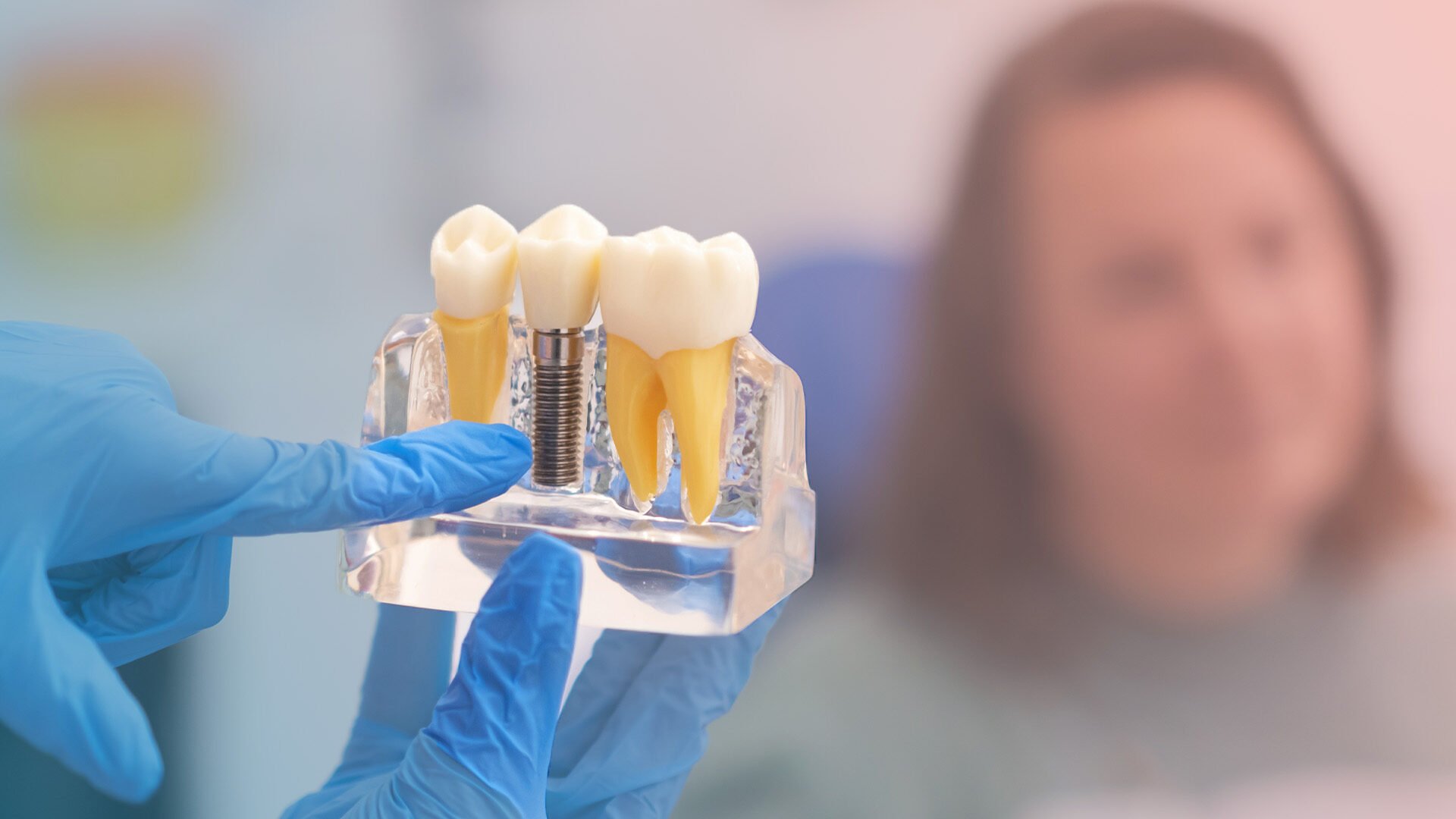
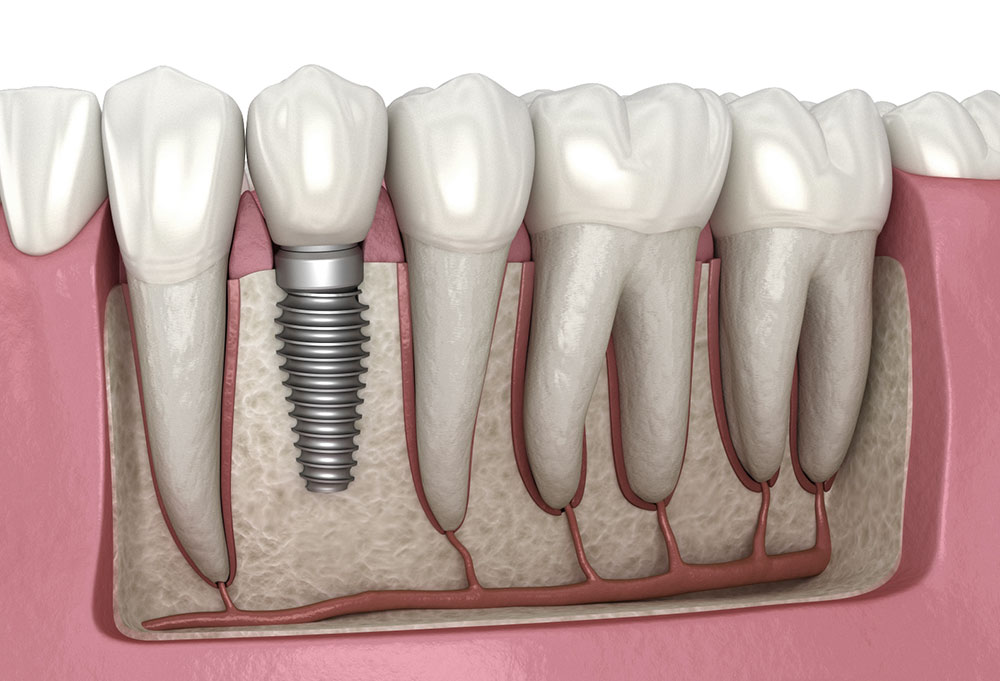
Same-day dental implants, known clinically as immediate loading, means a temporary tooth or bridge is fixed to the implant within 1 week of placement (PubMed 23543525). You qualify if the implant is firmly anchored the moment it goes in and no bone grafting is needed at the same visit. In single-tooth trials that stability was defined as an insertion torque of 20 to 45 Ncm or an ISQ of 60 to 65 (PubMed 24660200); most full-arch studies recommended at least 30 Ncm (PubMed 24660202). Across 40 randomised trials, immediately loaded single implants survived as well as conventionally loaded ones up to 5 years (PubMed 42386429). The final call is made in surgery, from the value measured on the day.
- 01Loading timing has three bands: immediate within 1 week, early between 1 week and 2 months, conventional after 2 months; conventional protocols keep implants load-free for 3 to 8 months (PubMed 23543525).
- 02The single-tooth evidence for immediate loading comes from implants placed at 20 to 45 Ncm or an ISQ of 60 to 65, with no bone augmentation at the same time (PubMed 24660200).
- 03A Cochrane review of 26 randomised trials and 2,120 implants found a mean first-year implant failure rate of 2.5%, with no convincing difference between immediate and conventional loading (PubMed 23543525).
- 04Extraction, implant and temporary tooth in one visit (Type 1A) showed 95.8% implant survival at 5 years in the upper front teeth (PubMed 37750531).
- 05Implants in probable bruxers had an odds ratio for failure of 2.189 compared with non-bruxers, so clenching and grinding weigh on the same-day decision (PubMed 37589382).
What same-day dental implants actually are
Same-day dental implants is the everyday name for immediate loading: a temporary tooth or bridge is fixed to the implant within 1 week of it being placed (PubMed 23543525). The Cochrane review on loading times sets out three bands. Immediate loading happens within 1 week, early loading between 1 week and 2 months, and conventional loading after 2 months, with conventional protocols leaving the implant load-free for 3 to 8 months while it fuses with bone (PubMed 23543525).
Two different things get sold under the same-day label, and it pays to know which one you are being offered. Immediate loading is about when the tooth goes on. Immediate placement is about when the implant goes in: straight into the socket on the day the tooth is taken out. When both happen together the literature calls it Type 1A; an implant placed in healed bone and loaded conventionally is Type 4C. Weighted cumulative survival was 98.4% for Type 1A and 97.7% for Type 4C (PubMed 30328194). Type 4C counts as scientifically and clinically validated, Type 1A as clinically documented (PubMed 30328194).
The tooth fitted on the day is a temporary. It covers appearance and speech while the bone heals, and the final crown or bridge is made to measure once integration is complete. How a single implant goes from consultation to crown is set out on our dental implant treatment page.
Who qualifies: primary stability and insertion torque
You qualify for same-day teeth if the implant is firmly anchored in bone the moment it is placed. That anchorage is called primary stability, and the surgeon measures it in two ways: insertion torque, the turning force in Ncm needed to seat the implant, and the ISQ value read by resonance frequency analysis. A review of the literature notes that what makes integration predictable is the absence of micromotion, and that forces of 30 Ncm or more are routinely used in healed ridges and fresh sockets before immediate loading; the lowest acceptable torque has not been defined (PubMed 28156122).
The thresholds in the research depend on the protocol. A meta-analysis of 10 randomised trials comparing immediate and conventional loading of single crowns drew its results from implants placed at 20 to 45 Ncm or an ISQ of 60 to 65, with no bone augmentation needed at the same time (PubMed 24660200). In a review of 62 studies on fixed full-arch bridges, most studies recommended a minimum of 30 Ncm for immediate loading (PubMed 24660202), and the All-on-4 consensus asks for more than 35 Ncm in patients of ASA I or II general health (PubMed 28512551).
Treat those numbers as guides. In a meta-analysis of seven studies, immediately loaded implants placed at 35 Ncm or less showed 96% survival against 92% for those above 35 Ncm, and the difference was not significant over a mean follow-up of 24 months (PubMed 36217696). That is why nobody can promise same-day teeth before surgery. The CBCT scan shows bone volume and density and the plan is built on it, but the deciding number is the one measured as the implant goes in.
Same-day versus traditional implants: what the trials show
In well-selected patients, implants loaded on the day survive about as well as implants left to heal first. A 2026 meta-analysis that re-analysed 40 randomised trials and more than 1,200 single implants found no difference in survival between immediate and conventional loading at 1, 2, 3 or 5 years (PubMed 42386429). Bone loss differences were clinically negligible and patient satisfaction was similar in both groups. The authors rate the certainty of evidence as moderate for survival and low to very low for the other outcomes.
The Cochrane review points the same way. Across 26 randomised trials with 1,217 participants and 2,120 implants, mean implant failure in the first year was 2.5%, and there was no evidence of a difference in implant or prosthesis failure between immediate and conventional loading (PubMed 23543525). Of those trials, 12 carried a high risk of bias (PubMed 23543525).
The picture is not perfectly even. A meta-analysis of 39 randomised trials on fixed prostheses found slightly lower implant survival with immediate loading than with conventional loading when each implant was counted separately (risk ratio 0.974), while immediate and early loading performed alike (PubMed 31421892). In plain terms, immediate loading is a reliable option for the right patient and not a default for everyone. For a whole arch, the way a fixed temporary bridge is planned on the day is covered on our full-arch implants page.
Extraction and implant on the same day
An implant can go into the socket at the extraction visit and, in suitable cases, carry a temporary tooth the same day; this is the Type 1A protocol (PubMed 30328194). Whether that is possible is decided at the visit itself, once the socket has been checked and the stability of the implant measured. A meta-analysis of 63 studies on single front teeth in the upper jaw reported implant survival of 99.2% at 1 year, 97.5% at 3 years and 95.8% at 5 years, and 1,064 immediately loaded restorations showed 94.8% survival at 5 years (PubMed 37750531).
Those figures come from carefully chosen patients. A companion review of 68 articles found that every Type 1A study used highly selective inclusion and exclusion criteria, and that the size of the gap between the implant and the thin bone wall on the lip side, and whether an infection was coming from the root canal of the tooth, were associated with survival rates (PubMed 37750515). The ITI consensus report regards Type 1A in the upper front teeth as predictable under favourable conditions, while noting that surgical, technical and biological complications can occur (PubMed 37750529).
Whether a socket meets those conditions is judged on the CBCT scan beforehand and by looking at the socket itself once the tooth is out. If bone is missing or has to be built up at the same visit, bone grafting is planned and loading is usually deferred, because the single-tooth evidence for immediate loading comes from implants that needed no augmentation (PubMed 24660200).
When same-day teeth are postponed, and what it means for your trip
Same-day loading is put off when the implant does not reach enough primary stability or when bone has to be added at the same visit. The decision rests on the torque or ISQ reading taken as the implant goes in. The implant is then left to integrate and the tooth goes on later; our day-by-day healing timeline shows what that period looks like.
Some patient factors raise the risk and are weighed in the decision. Clenching and grinding come first: in a meta-analysis of 27 studies, 2,105 implants in probable bruxers had an odds ratio for failure of 2.189 compared with non-bruxers (PubMed 37589382). Smoking is the second: across 292 publications comparing 35,511 implants in smokers with 114,597 in non-smokers, the odds ratio for failure was 2.402 (PubMed 35056347). Diabetes is not an automatic bar. In type 2 diabetes, immediately loaded implants survived as well as in non-diabetic patients (RR 1.00), provided blood sugar was controlled, oral hygiene was good and the technical steps were followed strictly (PubMed 34586502).
If you are travelling for treatment, plan for two trips whichever way the decision goes. The first covers the scan, surgery and, if stability allows, the temporary teeth; the final teeth follow on a second visit once the bone has integrated. For a full arch, the All-on-4 consensus also expects the temporary bridge to be rigid enough to stop micromovement and strong enough not to fracture, with a balanced bite free of interferences (PubMed 28512551). The order of each visit is laid out in our step-by-step implant guide.
Let's plan the right treatment together.
Free Assessment→- 1.Esposito M, Grusovin MG, Maghaireh H, Worthington HV. Interventions for replacing missing teeth: different times for loading dental implants. Cochrane Database Syst Rev 2013;2013:CD003878. PubMed 23543525
- 2.Pachiou A, Strauss FJ, Pagkalidou E, Liakos A, Ioannidis A, Jung RE, et al. Clinical outcomes of immediate versus early or conventional loading of single implants: A de novo RCT-level meta-analysis with contextual synthesis of systematic reviews. J Prosthet Dent 2026;136:702-715. PubMed 42386429
- 3.Chen J, Cai M, Yang J, Aldhohrah T, Wang Y. Immediate versus early or conventional loading dental implants with fixed prostheses: A systematic review and meta-analysis of randomized controlled clinical trials. J Prosthet Dent 2019;122:516-536. PubMed 31421892
- 4.Benic GI, Mir-Mari J, Hämmerle CH. Loading protocols for single-implant crowns: a systematic review and meta-analysis. Int J Oral Maxillofac Implants 2014;29 Suppl:222-38. PubMed 24660200
- 5.Papaspyridakos P, Chen CJ, Chuang SK, Weber HP. Implant loading protocols for edentulous patients with fixed prostheses: a systematic review and meta-analysis. Int J Oral Maxillofac Implants 2014;29 Suppl:256-70. PubMed 24660202
- 6.Darriba I, Seidel A, Moreno F, Botelho J, Machado V, Mendes JJ, et al. Influence of low insertion torque values on survival rate of immediately loaded dental implants: A systematic review and meta-analysis. J Clin Periodontol 2023;50:158-169. PubMed 36217696
- 7.Greenstein G, Cavallaro J. Implant Insertion Torque: Its Role in Achieving Primary Stability of Restorable Dental Implants. Compend Contin Educ Dent 2017;38:88-95. PubMed 28156122
- 8.Penarrocha-Diago M, Penarrocha-Diago M, Zaragozí-Alonso R, Soto-Penaloza D, On Behalf Of The Ticare Consensus M. Consensus statements and clinical recommendations on treatment indications, surgical procedures, prosthetic protocols and complications following All-On-4 standard treatment. 9th Mozo-Grau Ticare Conference in Quintanilla, Spain. J Clin Exp Dent 2017;9:e712-e715. PubMed 28512551
- 9.Gallucci GO, Hamilton A, Zhou W, Buser D, Chen S. Implant placement and loading protocols in partially edentulous patients: A systematic review. Clin Oral Implants Res 2018;29 Suppl 16:106-134. PubMed 30328194
- 10.Wittneben JG, Molinero-Mourelle P, Hamilton A, Alnasser M, Obermaier B, Morton D, et al. Clinical performance of immediately placed and immediately loaded single implants in the esthetic zone: A systematic review and meta-analysis. Clin Oral Implants Res 2023;34 Suppl 26:266-303. PubMed 37750531
- 11.Hamilton A, Gonzaga L, Amorim K, Wittneben JG, Martig L, Morton D, et al. Selection criteria for immediate implant placement and immediate loading for single tooth replacement in the maxillary esthetic zone: A systematic review and meta-analysis. Clin Oral Implants Res 2023;34 Suppl 26:304-348. PubMed 37750515
- 12.Morton D, Wismeijer D, Chen S, Hamilton A, Wittneben J, Casentini P, et al. Group 5 ITI Consensus Report: Implant placement and loading protocols. Clin Oral Implants Res 2023;34 Suppl 26:349-356. PubMed 37750529
- 13.Häggman-Henrikson B, Ali D, Aljamal M, Chrcanovic BR. Bruxism and dental implants: A systematic review and meta-analysis. J Oral Rehabil 2024;51:202-217. PubMed 37589382
- 14.Mustapha AD, Salame Z, Chrcanovic BR. Smoking and Dental Implants: A Systematic Review and Meta-Analysis. Medicina (Kaunas) 2021;58. PubMed 35056347
- 15.Andrade CAS, Paz JLC, de Melo GS, Mahrouseh N, Januário AL, Capeletti LR. Survival rate and peri-implant evaluation of immediately loaded dental implants in individuals with type 2 diabetes mellitus: a systematic review and meta-analysis. Clin Oral Investig 2022;26:1797-1810. PubMed 34586502