
Dental Bone Grafting in Turkey
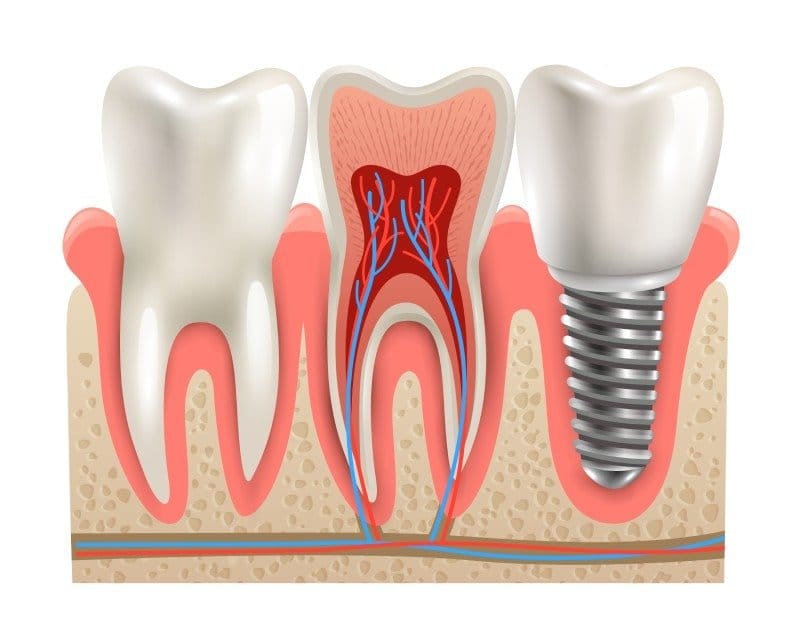
A bone graft rebuilds deficient jawbone with graft material, in most cases under a barrier membrane, so an implant can be placed, usually 4-6 months later.
- Pre-implant bone augmentation
- Synthetic or autogenous graft
- Guided regeneration with membrane
First consultation free · same-day reply · no price pressure
Your images are only used to assess your case.
Cost in Turkeygraft from €340 (about £290)Implant packages in TurkeyFull cost
Written by: Dr Ömer Faruk Şarkbay, PhD · Medically reviewed by: Dr Hakan Kaval
A bone graft rebuilds deficient bone in the jaw so that a dental implant can be placed there, using graft material and, in most cases, a barrier membrane. The material may be your own bone (autograft), donor human bone (allograft), animal-derived mineral (xenograft) or a synthetic biomaterial. Implants placed in grafted sites show survival of 91.6-100% at ten years or more, in the same band as non-grafted sites, although only three studies have followed that question for a decade and heterogeneity ruled out a meta-analysis (PubMed 39555856). Grafting adds a separate healing period before the implant goes in, and that is its main effect on a treatment timeline.
- 01Autogenous and allogeneic bone blocks perform alike in the published record: 96.2% implant survival across 6,861 implants in autogenous blocks against 97.7% across 3,434 implants in allogeneic blocks, with no significant difference (p = 0.54; PubMed 34946333).
- 02Ridge preservation limits bone loss after an extraction, it does not prevent it. In a Cochrane review of 16 randomised trials, xenograft reduced ridge width loss by 1.18 mm and height loss by 1.35 mm against extraction alone, on very low-certainty evidence and with no measurable difference in the need for further augmentation (PubMed 33899930).
- 03Membrane exposure is the recognised complication of guided bone regeneration. Across 20 studies, cross-linked collagen membranes showed roughly 30% higher exposure rates than non-cross-linked ones (PubMed 28938035).
- 04Tearing the Schneiderian membrane during a lateral sinus lift is common, reported in 30.6% of 1,598 procedures, but once repaired it did not change implant survival: 97.7% under repaired membranes against 98.9% under intact ones (p = 0.229; PubMed 34250560).
- 05Whether the implant is placed at the same appointment as the graft or at a second one is a separate decision; the same meta-analysis found similar implant survival for simultaneous and staged placement (PubMed 28938035).
Dental Bone Graft Overview
One of the most important factors for the success of dental implant treatment is the presence of sufficient bone support in the area to be treated. If there is no bone support with sufficient width and length in the area, implant treatment cannot be successful. For this reason, the first and most important step in patients with bone deficiency and implant treatment is to eliminate the bone deficiency problem.
Bone grafting is often preferred in patients who will undergo dental implant treatment. In case of bone loss in the jawbone, a series of procedures are applied to create bone in the lost area. The bone grafting procedure can be performed using bone tissue taken from the patient's own body, grafts obtained from animal sources or synthetic grafts.
Bone grafting, which is a surgical procedure, should be performed by an experienced and specialized dentist. In cases where the patient's bone tissue is used, graft material is usually taken from under the jaw. A solid structure is created on the jawbone to ensure suitability for implant treatment.
Bone grafting is an effective treatment used to create a suitable jawbone for implant treatment. Thanks to the bone grafting procedure, jawbone deficiency problems of patients who will receive dental implants are eliminated and a healthy and durable foundation is prepared for dental implants.
| At a glance | |
|---|---|
| Duration | 1 session + healing |
| Sessions | 2 |
| Materials Used | Synthetic graft · Autogenous graft · Membrane |
Candidates and Uses for Bone Grafting
Bone graft treatment is used to compensate for the loss of jawbone due to various reasons and to create a suitable basis for dental implant treatment. Some conditions that require bone grafting can be listed as follows:
- Long-term tooth loss: It is possible for the jawbone to weaken in the area where teeth are lost due to various reasons and where there is a long-term lack of teeth. Adding bone to the weakened area with a bone grafting procedure can strengthen the jawbone.
- Jawbone deficiency: The jawbone may be deficient due to congenital structural problems, genetic factors or trauma-related deficiencies. In this case, a bone grafting procedure can be used to strengthen the jawbone.
- Periodontal diseases: Damage to the gums and surrounding tissues may occur due to periodontal diseases. In case of bone loss in the jawbone, bone grafting can be applied to compensate for these losses.
- Incorrect prosthesis use: Loss of jawbone may occur due to toothlessness or the use of inappropriate prostheses. As a result of treating these losses with bone graft, it may be possible to provide a suitable environment for implant treatment.
- Conditions due to genetic factors: People with weak jawbone structure due to genetic reasons can be treated with bone graft treatment to strengthen the jawbone.
- Accidents or traumatic events: Damage to the jawbone can occur due to accidents, injuries or traumatic events. Bone grafting can be applied to correct the damaged area.
Some of the advantages of bone grafting treatment are as follows:
- Missing or damaged bone tissue can be repaired and reconstructed with bone grafting.
- It can provide the bone tissue needed to place dental implants.
- It can correct bone loss and deformity.
- It helps to improve oral and dental health.
- It can play an important role in the process of restoring functional loss.
Dental Bone Graft Types and Pain During Treatment
The types of dental bone graft are determined depending on the needs and general health status of the patient. Dental bone graft types are as listed below:
Autogenous grafts: Highly compatible autogenic grafts are made by taking tissue from the patient's own body.
Isogeneic grafts: Isogeneic grafts, in which tissue compatibility is extremely important, are applied by taking similar tissues from another living being.
Allogenic grafts: Allogeneic grafts, which are usually obtained from banks, include donor tissues with different genetic structures from the same species.
Xenogeneic grafts: They are usually of animal origin and are tissues taken from different species.
The types of dental bone graft listed above are used to eliminate the loss of jaw bone and to provide suitability for implant treatment.
Dental bone grafting usually causes minimal pain and discomfort. On the other hand, the pain felt during dental bone grafting treatment may vary depending on the pain threshold, sensitivity to the surgical intervention and the application site.
Dental bone grafting is a procedure usually performed under local anesthesia. The application site is numbed with local anesthesia, which prevents pain during the operation. Patients may experience mild to moderate discomfort after the procedure. Post-procedure discomfort may vary depending on the complexity of the operation, the type of dental bone graft used and the general health of the patient.
Painkillers and anti-inflammatory medications prescribed by dentists can be used to reduce pain and discomfort after the procedure. In this way, the comfort of the healing process can be optimized.
The recovery time after dental bone graft treatment may vary depending on the patient-specific structural features and the type of dental bone graft used. Pain and discomfort usually decrease within a few days, and the healing process progresses smoothly.
Comparing Autograft, Allograft, Xenograft and Alloplastic Bone Grafts
Dental bone grafts fall into four groups by where the material comes from: autograft is the patient's own bone, allograft is processed bone from a human donor, xenograft is processed bone mineral of animal origin, and alloplastic grafts are synthetic materials (PubMed 41711003). Their biology differs, yet a meta-analysis of sinus floor and ridge augmentation found no evidence that the patient's own bone is superior to bone substitute materials for implant survival; in ridge augmentation, survival was 97.4% with substitutes and 98.6% with autogenous bone (PubMed 24977257).
| Graft type | Where the material comes from | What the published evidence reports |
|---|---|---|
| Autograft | The patient's own bone, taken from a second site such as the ramus of the lower jaw | Brings living cells and inductive factors, the signals that trigger new bone, at the cost of donor-site morbidity and unpredictable resorption (PubMed 41711003); implant survival 96.23% across 6,861 implants in autogenous blocks (PubMed 34946333) |
| Allograft | Processed bone from a human donor | Holds its volume reliably, with less inductive potential (PubMed 41711003); implant survival 97.66% across 3,434 implants in allogeneic blocks (PubMed 34946333) |
| Xenograft | Processed bone mineral of animal origin | Holds its volume reliably, with less inductive potential (PubMed 41711003); after an extraction it reduced ridge width loss by 1.18 mm against no graft, on very low-certainty evidence (PubMed 33899930) |
| Alloplastic | Synthetic material such as beta-tricalcium phosphate, hydroxyapatite or bioactive glass | Comparable to natural grafts in selected indications, mainly where space has to be held open (PubMed 41711003); after a sinus lift, less new bone than autogenous bone and no difference in implant survival against xenograft (PubMed 29771732) |
Starting fees on the current price list: autograft from €830 (from the ramus); allograft from €340 (0.5 cc); xenograft from €470 (1 cc).
The materials are often combined. Small amounts of the patient's own bone chips mixed with a slowly resorbing xenograft or alloplast, protected by a membrane or mesh, improve contour stability in sinus lifts and ridge augmentation (PubMed 41711003). The steps of grafting and the healing time before the implant are covered in our article on what a dental bone graft is.
Sinus Lift by the Lateral Window or the Crestal Approach
A sinus lift, or sinus floor elevation, is the bone graft procedure used when the bone left in the back of the upper jaw is too short for a standard implant, and it raises the sinus membrane to make room for the implant (PubMed 25123761). There are two approaches. The lateral window, often called the open sinus lift, reaches the sinus through a window opened in its side wall. The crestal or osteotome approach, often called the closed sinus lift, raises the sinus floor through the implant site itself with osteotomes of increasing diameter. The crestal route is less invasive than the lateral window, and more than nine out of 10 patients who had it said they would undergo it again (PubMed 25123761).
Remaining bone height largely decides which approach fits. In a systematic review of 25 osteotome studies covering 3,092 implants, the failure rate was 3.85%; an initial bone height under 4 mm affected implant success, while heights above 4 mm did not (PubMed 24818194). A meta-analysis of 11 lateral window studies with at least five years of follow-up, in patients with 6 mm of residual bone or less, found a weighted annual implant loss of 0.43%, with no difference between implants placed at the same time as the lift or later, or between the patient's own bone and bone substitutes (PubMed 30624789).
Implant survival is similar with both approaches, and a meta-analysis of 17 studies found no statistically significant difference between direct and indirect sinus lifts (PubMed 36511050). Their complications differ. Across 74 studies and 4,411 procedures, membrane perforation and sinusitis were more frequent with the lateral approach, while some studies reported benign paroxysmal positional vertigo after the crestal approach (PubMed 35737681). With the crestal technique, membrane perforation was reported in 3.8% of patients and postoperative infection in 0.8% (PubMed 25123761). Who is a candidate and what recovery involves are covered in our article on what a sinus lift is and who it suits.
How Is Tooth Bone Grafting Performed?
- The first step of the dental bone graft treatment is to evaluate the general health status of the patient and to determine the deficiencies in the jawbone.
- Local anesthesia is applied to the patient.
- The appropriate graft material is selected and placed in the area with bone deficiency.
- After the graft, which is used to support and strengthen the jawbone, is fixed, sutures are applied and the procedure is completed.
- Bone graft treatment is usually performed under local anesthesia. Sedation may be applied if deemed necessary for the patient.
- The duration of the bone grafting procedure may vary depending on the type of graft used and the complexity of the procedure.
When the graft is protected with a barrier membrane (guided bone regeneration), whether that membrane stays under the gum during healing affects the result. In a meta-analysis of eight studies, edentulous ridges without membrane exposure achieved 74% more horizontal bone gain than ridges where the membrane became exposed (PubMed 29368353).
Treatment Process
- 01Evaluation: General health and the jawbone deficiency are assessed.
- 02Anaesthesia: The area is numbed with local anaesthesia, with sedation added if needed.
- 03Graft & Closure: Graft material is placed in the deficient area, covered with a membrane, and the area is sutured.
Tooth Bone Graft Healing Time
The healing process of a dental bone graft can vary depending on the patient's general health condition, the graft material used, how well the patient follows the dentist's recommendations after the procedure and various other factors. Mild pain, swelling and bleeding may occur in the first 1 to 2 weeks after the procedure. The patient's comfort can be optimized during this period with the regular use of medications prescribed by the dentist.
Within a few weeks to a few months after the dental bone graft procedure, the process of integration of the graft material into the jawbone begins. A period of several months is needed to ensure long-term healing. Once this process is complete, a dental implant can be applied.
During the healing process after bone graft treatment, the treatment area should be kept clean and necessary oral care should not be neglected. Failure to pay due attention to oral hygiene after the procedure may lead to infection and various dental problems. During the first few days following the bone graft treatment, soft foods should be consumed and very hot drinks should be avoided.
It is recommended to sleep with the head elevated for the first 3 days to prevent blood accumulation at the incision site. The desired bone density in the bone grafted area is usually reached within 3 months after the procedure. During this period, the check-ups requested by the dentist should not be missed.
Working Mechanism of Bone Grafts
Bone grafts are used to replace or regenerate missing bone tissue on the jawbone or gums. Bone grafts work in various ways to stimulate bone regeneration.
- When bone graft material is placed in the area of bone deficiency, it stimulates new bone formation in the area. The graft material combines with the surrounding living tissues and promotes the formation of new bone tissue.
- Bone grafts often act as a scaffold to replace missing bone tissue. They can be used in procedures such as implant placement or as a supportive material to prevent bone loss after tooth extraction.
- Bone grafts encourage bone cells to settle and multiply in the missing area. This depends on the graft material being compatible with the surrounding living tissues and the bone cells being able to easily settle into the graft material.
- Bone grafts can trigger bone regeneration and accelerate the body's natural healing process. The graft material interacts with surrounding cells and can stimulate inflammatory responses and tissue regeneration.
- Bone grafts can help to increase the volume and density of missing bone tissue. This can compensate for bone loss in the jawbone or gums. Structures such as implants and dentures can then be placed on a more solid foundation.
- 1.Gurbanov S, Plugmann P. Dental Implants Placed in Grafted and Non-Grafted Sites: A Systematic Review. Oral Health Prev Dent 2024;22:595-600. PubMed 39555856
- 2.Atieh MA, Alsabeeha NH, Payne AG, Ali S, Faggion CMJ, Esposito M. Interventions for replacing missing teeth: alveolar ridge preservation techniques for dental implant site development. Cochrane Database Syst Rev 2021;4:CD010176. PubMed 33899930
- 3.Donkiewicz P, Benz K, Kloss-Brandstätter A, Jackowski J. Survival Rates of Dental Implants in Autogenous and Allogeneic Bone Blocks: A Systematic Review. Medicina (Kaunas) 2021;57. PubMed 34946333
- 4.Wessing B, Lettner S, Zechner W. Guided Bone Regeneration with Collagen Membranes and Particulate Graft Materials: A Systematic Review and Meta-Analysis. Int J Oral Maxillofac Implants 2018;33:87–100. PubMed 28938035
- 5.Díaz-Olivares LA, Cortés-Bretón Brinkmann J, Martínez-Rodríguez N, Martínez-González JM, López-Quiles J, Leco-Berrocal I, et al. Management of Schneiderian membrane perforations during maxillary sinus floor augmentation with lateral approach in relation to subsequent implant survival rates: a systematic review and meta-analysis. Int J Implant Dent 2021;7:91. PubMed 34250560
- 6.Garcia J, Dodge A, Luepke P, Wang HL, Kapila Y, Lin GH. Effect of membrane exposure on guided bone regeneration: A systematic review and meta-analysis. Clin Oral Implants Res 2018;29:328-338. PubMed 29368353
- 7.Haugen HJ, Sanz J, Perale G, Saiz AM, Romandini M, Rahmati M. Bone Grafts: Everything You Need to Know. J Periodontal Res 2026. PubMed 41711003
- 8.Al-Nawas B, Schiegnitz E. Augmentation procedures using bone substitute materials or autogenous bone - a systematic review and meta-analysis. Eur J Oral Implantol 2014;7 Suppl 2:S219-S234. PubMed 24977257
- 9.Starch-Jensen T, Mordenfeld A, Becktor JP, Jensen SS. Maxillary Sinus Floor Augmentation With Synthetic Bone Substitutes Compared With Other Grafting Materials: A Systematic Review and Meta-analysis. Implant Dent 2018;27:363-374. PubMed 29771732
- 10.Pjetursson BE, Lang NP. Sinus floor elevation utilizing the transalveolar approach. Periodontol 2000 2014;66:59-71. PubMed 25123761
- 11.Călin C, Petre A, Drafta S. Osteotome-mediated sinus floor elevation: a systematic review and meta-analysis. Int J Oral Maxillofac Implants 2014;29:558-76. PubMed 24818194
- 12.Raghoebar GM, Onclin P, Boven GC, Vissink A, Meijer HJA. Long-term effectiveness of maxillary sinus floor augmentation: A systematic review and meta-analysis. J Clin Periodontol 2019;46 Suppl 21:307-318. PubMed 30624789
- 13.Shah D, Chauhan C, Shah R. Survival rate of dental implant placed using various maxillary sinus floor elevation techniques: A systematic review and meta-analysis. J Indian Prosthodont Soc 2022;22:215-224. PubMed 36511050
- 14.Hsu YT, Rosen PS, Choksi K, Shih MC, Ninneman S, Lee CT. Complications of sinus floor elevation procedure and management strategies: A systematic review. Clin Implant Dent Relat Res 2022;24:740-765. PubMed 35737681
- 15.Pjetursson BE, Tan WC, Zwahlen M, Lang NP. A systematic review of the success of sinus floor elevation and survival of implants inserted in combination with sinus floor elevation. J Clin Periodontol 2008;35(8 Suppl):216-40. PubMed 18724852
- 16.Tan WC, Lang NP, Zwahlen M, Pjetursson BE. A systematic review of the success of sinus floor elevation and survival of implants inserted in combination with sinus floor elevation. Part II: transalveolar technique. J Clin Periodontol 2008;35(8 Suppl):241-54. PubMed 18724853
- 17.Kofina V, Monfaredzadeh M, Rawal SY, Dentino AR, Singh M, Tatakis DN. Patient-reported outcomes following guided bone regeneration: Correlation with clinical parameters. J Dent 2023;136:104605. PubMed 37419383
- 18.Hnitecka S, Olchowy C, Olchowy A, Dąbrowski P, Dominiak M. Advancements in alveolar bone reconstruction: A systematic review of bone block utilization in dental practice. Dent Med Probl 2024;61:933-941. PubMed 38780363
- 19.Aloy-Prósper A, Peñarrocha-Oltra D, Peñarrocha-Diago M, Peñarrocha-Diago M. The outcome of intraoral onlay block bone grafts on alveolar ridge augmentations: a systematic review. Med Oral Patol Oral Cir Bucal 2015;20:e251-8. PubMed 25662543

Bone grafting and sinus lift in Turkey: cost, package and travel
Starting prices at Mosdent in Istanbul, from our current price list. They are starting prices, not a quote: the figure that applies to you is written down after a free examination.
Starting prices
- Donor bone graft (allograft, MaxGraft), 0.5 ccfrom €340about £290
- Donor bone graft (allograft, MaxGraft), 1 ccfrom €470about £400
- Animal-derived graft (xenograft, Cerabone), 1 ccfrom €470about £400
- Animal-derived graft (xenograft, Cerabone), 2 ccfrom €610about £520
- Your own bone (autograft), taken from the lower jaw (ramus)from €830about £705
- Sinus lift, closed techniquefrom €490about £415
- Sinus lift, open technique, graft material includedfrom €710about £605
Graft material is priced by volume. How much your site needs, and whether a membrane is placed over it, is set in your written plan after the CBCT scan.
£ figures are approximate, at the ECB rate of 2 October 2026.
Your visit
How long you stay in Istanbul for Bone Graft (Membrane) and how many visits you need are set in your written plan after the examination.
Flights, arrival and follow-up after you fly home: how we plan your trip to Istanbul
Prices for other treatments and how we plan your stay: prices and treatment planning
What our guests say.
Real reviews from Google and Trustpilot; guests who had this treatment come first.

I visited for teeth cleaning and teeth whitening, and all of my procedures were completed quickly and professionally. I would like to sincerely thank the patient consultant, Ms. Ecran, for her kindness and support, Dr. Ferit for his excellent care, and Endodontic Specialist Dr. Melike for her prompt diagnosis and treatment. The entire team was friendly, attentive, and professional. I left the hospital very satisfied. Thank you to everyone for their outstanding service.
I recently had a gum graft procedure at Mosdent and had an excellent experience. The dentist was highly skilled, my contact person was very helpful and the overall cost was quite reasonable. The entire team was friendly and professional. I definitely recommend Mosdent.

I recently visited Mosdent for two different procedures—my daughter’s tooth extraction and my own dental implants—and I couldn’t be more impressed! From start to finish, the team was professional, caring, and highly skilled. They made my daughter feel completely at ease during her extraction, ensuring a smooth and pain-free experience. As for my dental implants, the entire process was handled with precision and expertise. The staff took the time to explain everything clearly, and the results have been fantastic! I truly appreciate their exceptional service, friendly approach, and high level of professionalism. If you’re looking for a trustworthy dental clinic that puts patient care first, I highly recommend Mosdent
Super pro and very friendly and concerned about your health not only about your money.
Who is this treatment for?
- Weakened jawbone in an area with long-term tooth loss
- Jawbone deficiency due to congenital structural problems
- Jawbone loss due to periodontal diseases
- Jawbone loss caused by incorrect prosthesis use
- Weak jawbone structure due to genetic causes
- Jawbone damage after an accident, injury or trauma
Doctors specialising in this treatment

Frequently asked
01Why is a bone graft needed for an implant?+
Sufficient bone volume and density are essential for implant placement. A graft stimulates new bone formation over 4-6 months where bone is deficient.
02Where does the graft material come from?+
Options include the patient's own bone (autograft), donor human bone (allograft), animal-derived material (xenograft), or synthetic biomaterials. The best choice is determined case by case. The source does not change the outcome much: implants placed in grafted sites show 91.6-100% survival at ten years or more, the same band as non-grafted sites.
03What is the success rate of a sinus lift?+
Implants placed with a sinus lift survive at high rates. Across 48 studies and 12,020 implants, 3-year implant survival was 90.1%, and 98.3% with rough-surface implants and a membrane over the lateral window (PubMed 18724852). Lateral window studies followed for five years or more show a weighted annual implant loss of 0.43% (PubMed 30624789), and the crestal technique reached 92.8% survival at 3 years across 19 studies (PubMed 18724853).
04Why would you need a sinus lift for dental implants?+
You need a sinus lift when the bone height left under the sinus in the upper back jaw does not allow a standard implant; raising the sinus membrane, with or without graft material, makes room for it (PubMed 25123761). The remaining height also steers the technique: with the osteotome approach, an initial bone height under 4 mm affected implant success, while heights above 4 mm did not (PubMed 24818194).
05Does bone grafting hurt?+
A bone graft is placed under local anaesthesia, so the procedure itself is not painful; pain and swelling start once the numbness wears off and are strongest in the first days. In a study of 27 patients who had a graft placed at the time of extraction, symptoms peaked on day 2, when 41-56% of patients reported moderate to severe pain, swelling or difficulty opening the mouth, while most patients had mild or no symptoms over the whole postoperative period (PubMed 37419383).
06Can the body reject a bone graft?+
The risk of an immune reaction is very low with your own bone, while donor human bone carries a higher reported risk of immune reaction and disease transmission (PubMed 38780363). Even so, in a review of 100 studies, implants placed in donor bone blocks survived at 97.66% against 96.23% in autogenous bone, a difference that was not significant (PubMed 34946333). The main problems reported when a graft does not take are wound opening and exposure of the graft or membrane (PubMed 25662543).
07What is a membrane in bone grafting?+
A graft membrane is a thin barrier laid over the graft material that keeps soft tissue from growing into the grafted area while it heals. In a meta-analysis of 20 studies on collagen membranes, cross-linked membranes showed exposure rates roughly 30% higher than non-cross-linked ones (PubMed 28938035). Where the membrane stayed covered, horizontal bone gain was 74% greater (PubMed 29368353).
08What is the difference between an open and a closed sinus lift?+
An open sinus lift reaches the sinus through a lateral window in the side wall of the upper jaw; a closed sinus lift works through the implant site itself with osteotomes. The closed technique is less invasive and is most predictable when 5 mm or more of bone remains and the sinus floor is relatively flat (PubMed 25123761). A meta-analysis of 17 studies found no statistically significant difference in implant survival between the two techniques (PubMed 36511050).
Oral Surgery
Maxillofacial Surgery
Maxillofacial surgery treats the facial skeleton beyond the teeth: jaw fractures, orthognathic correction, jaw cysts and tumours, and TMJ surgery.
Explore→02Sedation & General Anaesthesia
Sedation and general anaesthesia change consciousness, not the dental work: conscious sedation leaves the patient responsive, general anaesthesia does not.
Explore→03Implant
A dental implant is a titanium screw replacing a lost tooth root; it usually fuses with bone in 3-6 months, then a zirconium or porcelain crown is fitted.
Explore→04Full Mouth Dental Implants
Full mouth dental implants replace every tooth in a jaw with one fixed bridge screwed onto four (All-on-4) or six (All-on-6) implants, planned on a CBCT scan.
Explore→05Zygomatic Implants
Zygomatic implants anchor in the cheekbone when the upper jaw has too little bone for standard implants, so a fixed bridge can be fitted without grafting.
Explore→06Wisdom Tooth Extraction
Wisdom tooth extraction removes a third molar at the back of the jaw under local anaesthesia, sectioning it if impacted; not every wisdom tooth must come out.
Explore→Speak with your doctor about this treatment.
Not sure which treatment fits? Tell us what's wrong →