A dental bone graft is a surgical procedure that rebuilds missing jawbone with grafting material so there is enough jawbone volume for an implant to be anchored in. It is needed because the ridge shrinks once a tooth is gone: a systematic review of 20 studies reported 29-63% horizontal and 11-22% vertical bone loss six months after extraction, with a mean horizontal reduction of 3.79 mm (PubMed 22211303). Material may be autograft, allograft, xenograft or synthetic. Healing before implant placement runs from about 3-4 months for a small socket graft to 6-9 months after a sinus lift graft.
- 01Bone loss after extraction is measured, not theoretical: 29-63% horizontal and 11-22% vertical ridge reduction at six months, with a mean horizontal loss of 3.79 mm and the fastest change in the first three to six months (PubMed 22211303).
- 02Grafting the socket works: in a network meta-analysis of 88 randomised trials, 2805 patients and 3073 sockets, every tested material significantly reduced horizontal and vertical shrinkage compared with spontaneous healing (PubMed 34826029).
- 03Graft sources differ in what they cost the patient surgically: an autograft needs a second surgical site, while allograft, xenograft and synthetic materials avoid one.
- 04In that same network meta-analysis, xenografts and allografts ranked highest for preserving ridge dimensions, while platelet concentrates ranked highest for percentage of new bone formation (PubMed 34826029).
- 05Sinus membrane tearing is common but not decisive: across 1598 lateral-window sinus surgeries the perforation rate was 30.6%, and implants placed under repaired membranes survived at 97.68% versus 98.88% under intact ones (PubMed 34250560).
/ Dental Bone Graft Need for Implants and Basic Procedure
When Is a Bone Graft Needed for Dental Implants?
A bone graft dental procedure is one of the most important treatments in modern implant dentistry. Many patients who are planning to get a dental implant are told they need a bone graft dental treatment first and this often raises questions and concerns.
What Is a Bone Graft Dental Procedure?
A bone graft dental procedure is a surgical treatment used to rebuild or replace missing jawbone in areas where bone volume is insufficient.
When a tooth is lost or extracted, the surrounding jawbone begins to shrink a process called bone resorption. Over time, this can lead to significant dental bone loss, making it difficult or impossible to place a dental implant without reinforcement. General bone health plays a part too: in a prospective study of 32 women whose front upper jaw was rebuilt with hip bone grafts, those with osteoporosis lost 2.57 mm of graft width in six months, against 0.97 mm in the control group. General bone health plays a part too: in a prospective study of 32 women whose front upper jaw was rebuilt with hip bone grafts, those with osteoporosis lost 2.57 mm of graft width in six months, against 0.97 mm in the control group.
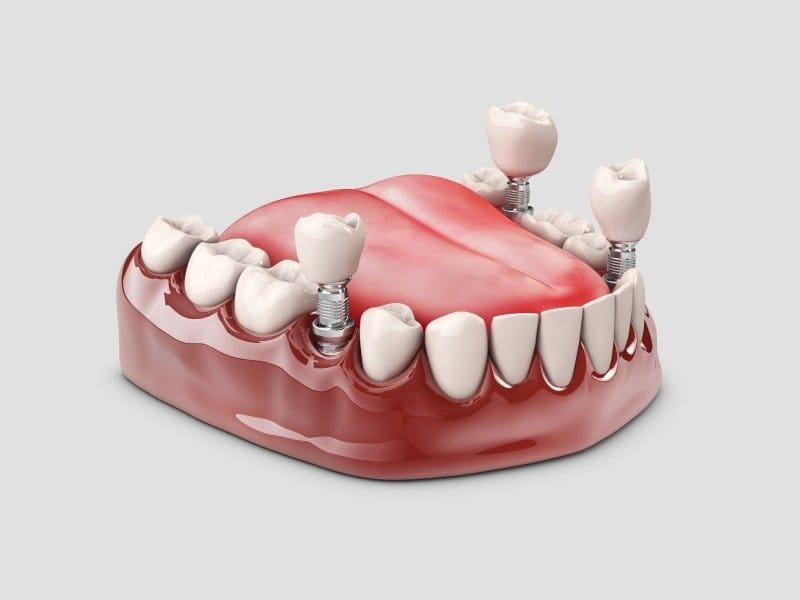
A bone graft dental treatment restores the lost bone structure, creating a stable foundation for future implants.
Why Is Bone Graft Needed?
The most common reason for a bone graft dental procedure is to prepare the jaw for dental implants.
A bone graft for implant placement is necessary when:
- The jawbone is too thin
- The bone height is insufficient
- There is advanced dental bone loss
- Periodontal disease has damaged bone
- The tooth has been missing for a long time
- Trauma caused bone damage
Without adequate bone density, implants cannot properly integrate with the jaw.
/ Dental Bone Graft Types and Socket Preservation
Bone Graft After Tooth Extraction
After a tooth is removed, the socket begins to collapse. Studies show that up to 50% of bone width can be lost within the first year.
A bone graft dental procedure performed immediately after extraction helps:
- Preserve bone volume
- Prevent ridge collapse
- Maintain gum architecture
- Prepare the site for a future implant
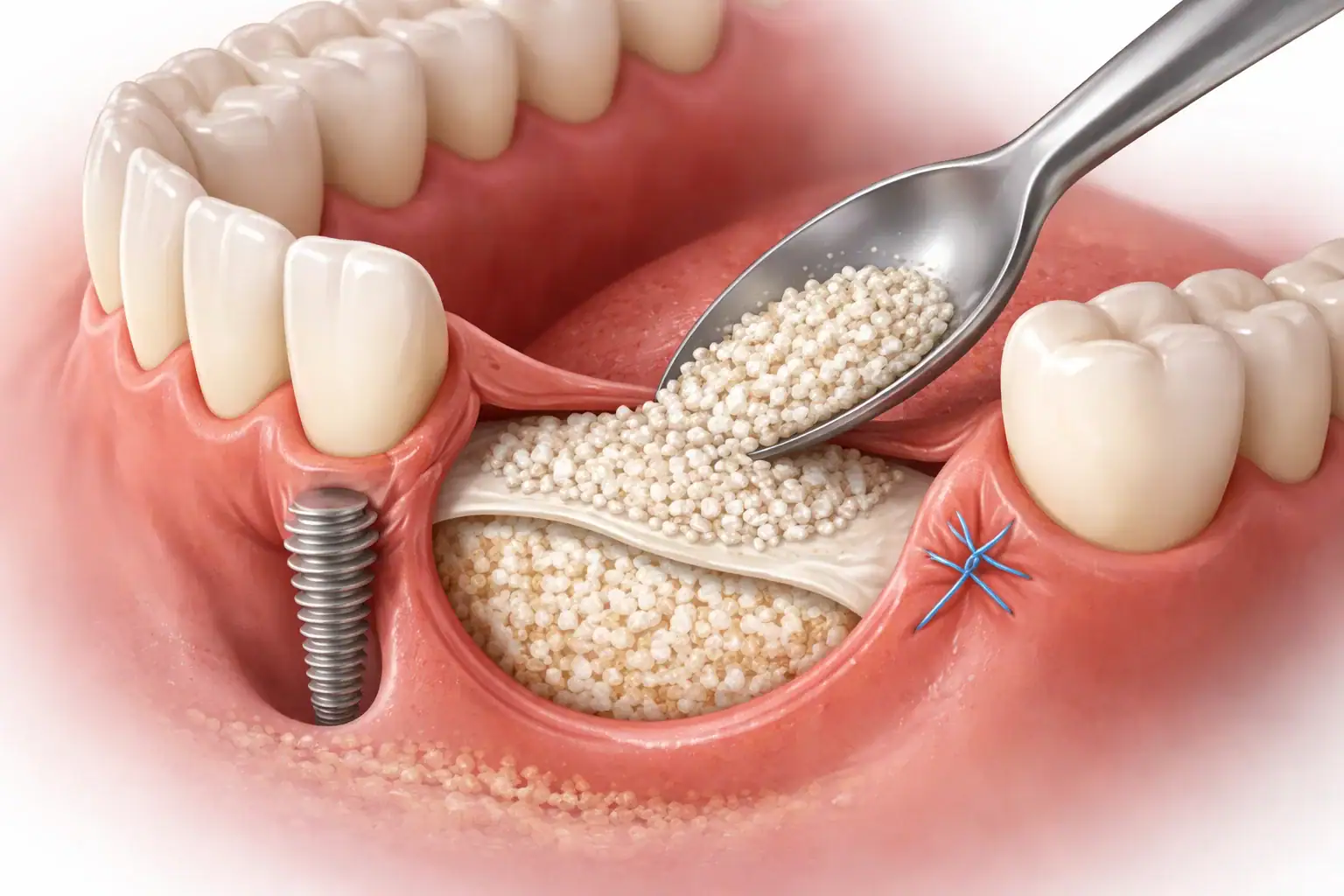
This is called socket preservation grafting.
Types of Dental Bone Graft
There are different types of dental bone graft materials used in a bone graft dental procedure.
1. Autograft (Your Own Bone)
Bone taken from another part of your body (usually chin or jaw).
Pros:
- Highest integration rate
- Natural bone cells present
Cons:
- Requires second surgical site
2. Allograft (Donor Bone)
Processed human donor bone.
Pros:
- No second surgery
- Widely used
Cons:
- Slightly longer healing time
3. Xenograft (Animal-Derived Bone)
Usually bovine-based material.
Pros:
- Excellent structure support
- Long-lasting scaffold
4. Synthetic Bone Graft
Lab-made materials.
Pros:
- No biological donor
- Safe and predictable
Each bone graft dental material is selected based on clinical needs.
What Is Ridge Augmentation?
When severe dental bone loss has occurred, a larger bone graft dental procedure called ridge augmentation may be required.
This treatment rebuilds:
- Bone width
- Bone height
- Jaw contour
Ridge augmentation is common when teeth have been missing for years.
What Is a Sinus Lift Bone Graft?
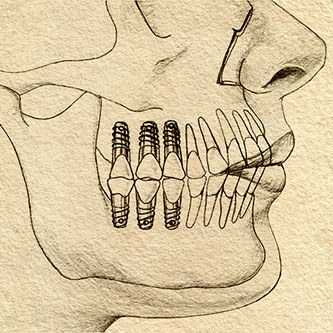
In the upper jaw, especially in the molar area, there may not be enough vertical bone due to sinus anatomy.
A sinus lift bone graft elevates the sinus membrane and adds bone underneath.
This allows placement of implants in areas previously considered impossible.
/ Dental Bone Graft for Implants and Healing
When Is Bone Graft Needed for Implants?
A bone graft dental procedure is needed when:
- Bone thickness < 5–6 mm
- Bone height is insufficient
- Implant stability cannot be achieved
- There is active bone resorption
- The patient has severe gum disease history
A CBCT scan determines whether a bone graft for implant is necessary.
How Long Does Bone Graft Dental Healing Take?
Healing time depends on:
- Graft type
- Patient health
- Smoking habits
- Site size
Typical healing:
- Small socket graft: 3–4 months
- Ridge augmentation: 4–6 months
- Sinus lift bone graft: 6–9 months
During healing, the graft integrates and transforms into natural bone.
Is a Bone Graft Dental Procedure Painful?
Most patients report mild to moderate discomfort.
Pain level is usually:
- Similar to tooth extraction
- Controlled with medication
- Most intense in first 48 hours
Severe pain after 5–7 days may indicate infection.
Bone Graft Dental Risks and Complications
Although highly successful, a bone graft dental procedure can carry minor risks:
- Swelling
- Bruising
- Temporary bleeding
- Graft exposure
- Rare infection
Serious complications are uncommon when performed properly.
What Happens If You Don’t Get a Bone Graft?
If a bone graft dental treatment is skipped when needed:
- Implant may fail
- Bone loss continues
- Facial structure may collapse
- Chewing function decreases
Long-term untreated dental bone loss can alter facial appearance.
Success Rate of Dental Bone Graft
Success rate of a bone graft dental procedure is very high typically over 90%.
Factors influencing success:
- Surgeon experience
- Sterile technique
- Patient compliance
- Smoking avoidance
- Proper aftercare
How to Care After a Bone Graft Dental Procedure
Post-operative instructions include:
- Avoid spitting or rinsing first 24 hours
- Soft diet for several days
- Avoid smoking
- Gentle oral hygiene
- Follow antibiotic schedule
Proper care dramatically improves healing.
Bone Graft Cost Factors
Cost depends on:
- Graft material
- Graft size
- Additional procedures
- Geographic location
- Surgeon expertise
A simple bone graft after tooth extraction costs less than full ridge augmentation.
/ Frequently Asked Questions
Is bone graft necessary for every implant?
No. Only when bone volume is insufficient.
How long after bone graft can I get implant?
Usually 3–6 months.
Can bone graft fail?
Rarely, but infection or smoking increases risk.
Is bone graft safe?
Yes, when performed by qualified professionals.
Final Thoughts
A bone graft dental procedure is a predictable and essential treatment in modern implant dentistry.
If you are considering dental implants and have been told you need a bone graft dental treatment, remember:
✔ It strengthens implant success
✔ It preserves facial structure
✔ It prevents further bone loss
✔ It increases long-term stability
Modern techniques make bone grafting safe, reliable, and highly successful.
Let’s plan the right treatment together.
Free Assessment→- 1.Tan WL, Wong TL, Wong MC, Lang NP. A systematic review of post-extractional alveolar hard and soft tissue dimensional changes in humans. Clin Oral Implants Res 2012;23 Suppl 5:1-21. PubMed 22211303
- 2.Canullo L, Del Fabbro M, Khijmatgar S, Panda S, Ravidà A, Tommasato G, et al. Dimensional and histomorphometric evaluation of biomaterials used for alveolar ridge preservation: a systematic review and network meta-analysis. Clin Oral Investig 2022;26:141-158. PubMed 34826029
- 3.Díaz-Olivares LA, Cortés-Bretón Brinkmann J, Martínez-Rodríguez N, Martínez-González JM, López-Quiles J, Leco-Berrocal I, et al. Management of Schneiderian membrane perforations during maxillary sinus floor augmentation with lateral approach in relation to subsequent implant survival rates: a systematic review and meta-analysis. Int J Implant Dent 2021;7:91. PubMed 34250560
- 4.Tabrizi R, Shafiei S, Moslemi H, Dastgir R, Peacock ZS. Impact of Osteoporosis on Autogenous Bone Graft Resorption. J Oral Maxillofac Surg. 2024;82(8):961-967.