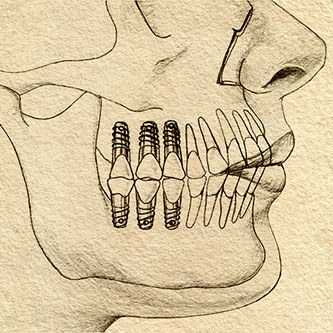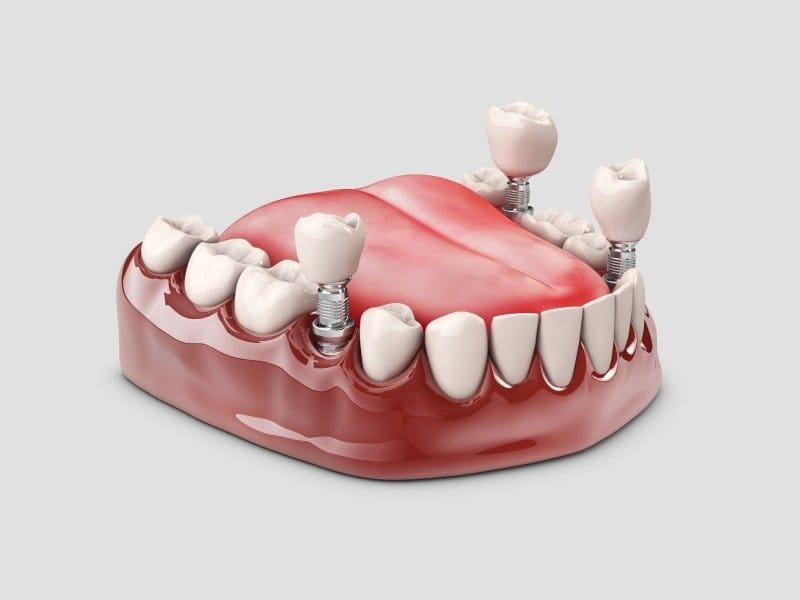
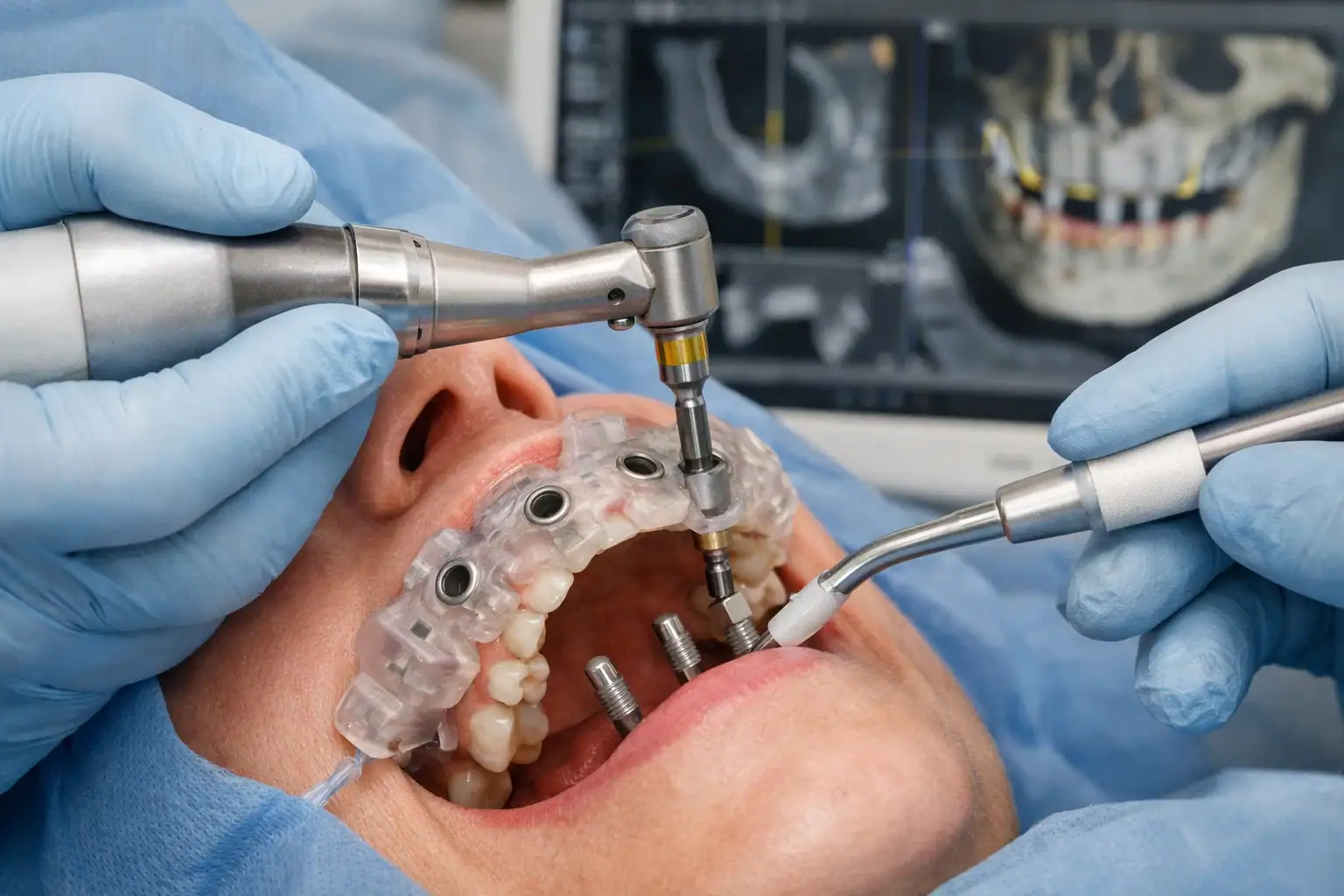
Guided implant surgery is dental implant placement carried out through a custom surgical guide designed from a CBCT scan merged with a digital impression, so the drill follows a position, angle and depth planned on screen before the operation begins. A meta-analysis of 67 clinical studies measured the resulting deviation from plan at 1.11 mm at the entry point, 1.40 mm at the apex and 3.51 degrees in angulation, with fully guided protocols significantly more accurate than pilot-guided ones (PubMed 38509530). The guide narrows deviation; it does not remove the need for surgical judgement.
- 01The implant is placed through a custom template built from a CBCT scan merged with a digital impression, so the plan is fixed before the incision rather than at the chair.
- 02Across 67 clinical studies the mean deviation from plan was 1.11 mm at the entry point, 1.40 mm at the apex and 3.51 degrees in angulation (PubMed 38509530).
- 03Fully guided protocols were significantly more accurate than pilot-guided ones, while the difference against partially guided protocols was not significant.
- 04Robot-assisted placement showed the lowest deviations in the same analysis: 0.81 mm coronal, 0.77 mm apical and 1.71 degrees angular.
- 05Accuracy is a margin rather than a guarantee, which is why safe distances to the inferior alveolar nerve and the maxillary sinus are still built into the plan.
/ A Complete Guide to Computer-Guided Dental Implant Placement
Dental implantology has evolved significantly over the last decade. One of the advanced and precise techniques used today is guided implant surgery , also known as computer-guided implant surgery. This approach allows dental implants to be placed according to a digital plan, in a more controlled and predictable way.
When deciding on guided implant surgery, these questions matter:
- What guided implant surgery is
- How computer-guided implant placement works
- Who is a good candidate
- Benefits and limitations
- Step-by-step treatment process
- Guided surgery vs freehand implant placement
- Risks, accuracy, and success rates
What Is Guided Implant Surgery?
Guided implant surgery is a digital dental implant technique where implants are placed using a custom-made surgical guide, designed with advanced 3D imaging and planning software.
Instead of placing implants freehand, the dentist follows a pre-planned digital roadmap, ensuring the implant is positioned at the exact:
- Angle
- Depth
- Location
This technique improves precision and helps reduce surgical risks.
Key Terms You Should Know
Guided implant surgery is also referred to as:
- Computer-guided implant surgery
- Digital implant surgery
- Fully guided implant placement
- 3D guided dental implants
All describe the same technology-driven approach.
How Does Guided Implant Surgery Work?
Guided implant surgery combines digital dentistry , 3D imaging, and custom surgical guides.
Step-by-Step Overview
- CBCT Scan (3D X-ray)
A cone-beam CT scan captures a detailed 3D image of the jawbone, nerves, and sinuses.
- Digital Impression
An intraoral scanner records the patient’s bite and soft tissue anatomy.
- Virtual Implant Planning
Specialized software merges CBCT data with digital impressions.
The dentist virtually plans:
- Implant size
- Implant position
- Bone availability
- Prosthetic outcome
- Surgical Guide Fabrication
A custom surgical guide is designed and produced (usually via 3D printing).
- Guided Implant Placement
During surgery, the guide directs the drill and implant placement with extreme accuracy.
What Is a Surgical Guide?
A surgical guide is a transparent, custom-made template that fits over the patient’s teeth or gums. It contains small openings that guide surgical instruments during implant placement.
Types of surgical guides:
- Tooth-supported
- Mucosa-supported
- Bone-supported
/ Benefits of Guided Implant Surgery
Benefits of Guided Implant Surgery
1. Higher Accuracy
Guided implant surgery gives control over:
- Implant angulation
- Correct depth
- Appropriate spacing
This approach reduces operator-related deviation and supports long-term success.
2. Increased Safety
Critical anatomical structures such as:
- Inferior alveolar nerve
- Maxillary sinus
are clearly visualized and protected in the plan.
3. Minimally Invasive Procedure
In many cases:
- No large incisions
- No flap surgery
- Less bleeding
This can make the healing period more comfortable.
4. Faster Recovery Time
Patients often experience:
- Less pain
- Minimal swelling
- Shorter downtime
5. Predictable Prosthetic Results
Implants are placed according to the final crown position, not just available bone.
This approach can contribute to:
- Better aesthetics
- Improved bite alignment
- Longer-lasting restorations
6. Shorter Surgery Time
Guided implant placement can be faster than traditional freehand surgery.
Guided Implant Surgery vs Freehand Implant Placement
| Feature | Guided Implant Surgery | Freehand Implant Surgery |
|---|---|---|
| Planning | Fully digital | Visual & manual |
| Accuracy | Extremely high | Operator-dependent |
| Surgical time | Shorter | Longer |
| Risk level | Lower | Higher |
| Invasiveness | Minimal | More invasive |
| Learning curve | Technology-based | Experience-based |
Who Is a Good Candidate for Guided Implant Surgery?
Guided implant surgery may be suitable for:
✔ Patients seeking maximum precision
✔ Complex implant cases
✔ Full-arch implant treatments
✔ Immediate implant placement
✔ Patients with limited bone volume
✔ Patients wanting minimally invasive surgery
Who May Not Be Suitable?
Although highly versatile, guided implant surgery may not be recommended for:
- Severe mouth opening limitation
- Extremely unstable bite without preliminary treatment
- Cases requiring major bone reconstruction first
/ Guided Implant Surgery Treatment Process
Guided Implant Surgery for Full-Arch Implants
Guided implant surgery is especially valuable in:
Guided planning allows multiple implants to be placed simultaneously with high precision.
Is Guided Implant Surgery Painful?
No. Guided implant surgery is typically:
- Performed under local anesthesia
- Can be combined with sedation
Because it is minimally invasive, patients often report less discomfort compared to traditional implant surgery.
How Long Does Guided Implant Surgery Take?
- Planning phase: 1–2 weeks
- Surgery: 30–90 minutes (depending on number of implants)
In some cases, same-day implants and temporary teeth are possible.
Healing After Guided Implant Surgery
Typical recovery timeline:
- First 24–48 hours: mild swelling
- 3–7 days: tissue healing
- 2–4 months: bone integration
Healing is often faster due to reduced trauma.
Success Rate of Guided Implant Surgery
Clinical studies show success rates of:
- 95–99% when properly planned and executed
Accuracy and digital planning can support treatment outcomes.
Risks and Limitations
While highly effective, guided implant surgery has some limitations:
❌ Higher initial planning cost
❌ Requires advanced technology
❌ Dependent on accurate data acquisition
In many cases the benefits can outweigh these limitations.
Cost of Guided Implant Surgery
Costs vary depending on:
- Number of implants
- Technology used
- Clinic expertise
- Complexity of the case
Although the initial cost may be higher, fewer complications can support long-term value.
Guided Implant Surgery and Bone Grafting
In some cases:
- Guided surgery is combined with bone grafting
- Allows precise graft placement
This can improve predictability in challenging cases.
Guided Implant Surgery vs Traditional Surgery: Long-Term Outcomes
Guided implant surgery can offer:
- Better implant alignment
- Improved prosthetic fit
- Reduced implant failure risk
Common Myths About Guided Implant Surgery
Myth: It’s only for complex cases
Truth: It can benefit simple cases too
Myth: It replaces dentist skill
Truth: It enhances expertise, not replaces it
/ Frequently Asked Questions
Is guided implant surgery safer?
Digital planning and precision can improve safety.
Can implants be placed without cutting the gum?
In many cases, yes (flapless surgery).
Does guided surgery guarantee success?
No medical procedure is 100% guaranteed, but success rates are very high.
Is guided implant surgery worth it?
For most patients it can be a worthwhile option.
Final Thoughts and Key Takeaway
Final Thoughts: Is Guided Implant Surgery the Future?
Guided implant surgery represents the future of implant dentistry by combining:
✔ Digital precision
✔ Patient comfort
✔ Predictable results
✔ Advanced technology
For patients seeking safe, accurate, and minimally invasive implant treatment, computer-guided implant surgery is one of the strong options available today.
Key Takeaway
Guided implant surgery allows dentists to place implants with very high accuracy and confidence. This approach can contribute to:
- Better aesthetics
- Faster healing
- Higher success rates
- Long-term satisfaction
Let’s plan the right treatment together.
Free Assessment→