
Implant
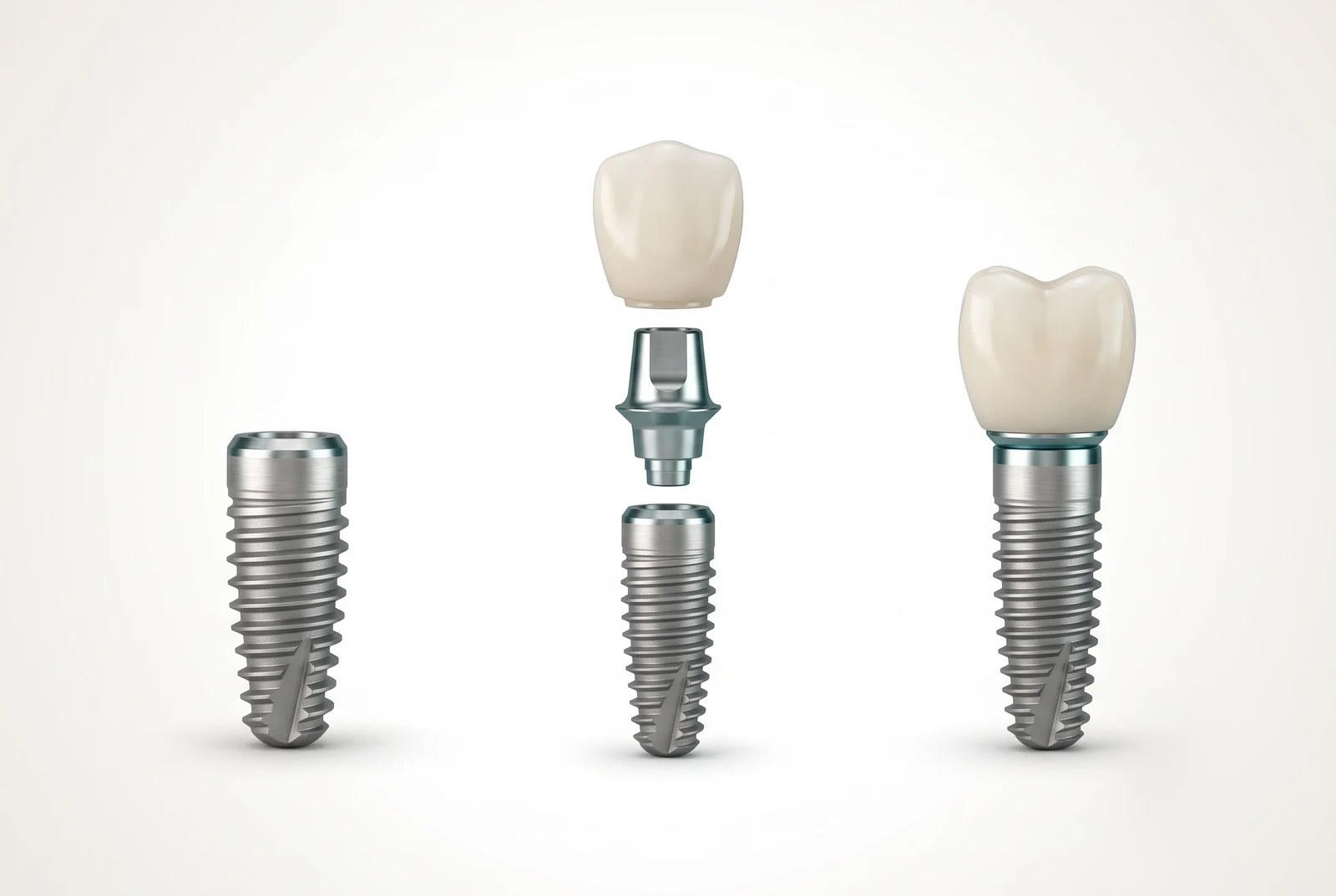
A dental implant is a titanium screw replacing a lost tooth root; it usually fuses with bone in 3-6 months, then a zirconium or porcelain crown is fitted.
- No impact on neighbouring teeth
- Natural appearance
- Lifetime material warranty
First consultation free · same-day reply · no price pressure



 MegaGenMedentikaNeodent
 Nobel Biocare
A dental implant is a titanium screw placed in the jaw in place of a lost tooth root; once it has fused with bone through osseointegration, a zirconia or porcelain crown is fitted on top. The method dates to 1952, when Per-Ingvar Brånemark found at Lund University that titanium had bonded to bone, with the first human implant following in 1965 (PMC11568825). The published record is specific. In 1,692 tissue-level implants followed in 881 patients, 10-year cumulative survival was 98.2% at implant level and 95.7% at patient level (PubMed 30110515). At 20 years, five retrospective studies covering 1,440 implants reported 88% survival, 95% CI 78-94% (PubMed 39305362).
- 01Osseointegration is a direct structural connection between living bone and the titanium surface, with no fibrous tissue in between. It is what allows the implant to carry chewing load.
- 02Survival and success are different measures. Survival counts implants still in place; success additionally requires a defined marginal bone level and absence of symptoms, and success figures run lower than survival figures.
- 03Two titanium classes get conflated. Grade 4 is unalloyed commercially pure titanium (ASTM F67); Grade 5 is the Ti-6Al-4V alloy, 6% aluminium and 4% vanadium (ASTM F136). Both are biocompatible, but they are not the same material.
- 04Smoking is a measured risk factor. Across 292 publications comparing 35,511 implants in smokers with 114,597 in non-smokers, the odds ratio for failure was 2.40 (PubMed 35056347).
- 05Peri-implant tissue health needs long-term monitoring. A systematic review of 11 studies estimated weighted mean prevalence at 22% for peri-implantitis (CI 14-30%) and 43% for peri-implant mucositis (PubMed 25495683).
/ What is an Implant?
Implant treatment is applied to complete the missing tooth or teeth in the mouth. Within the scope of the procedure, screw-shaped artificial tooth roots are placed in the jaw and it is generally preferred to use screws made of titanium. The procedure is completed by placing dental prostheses on the screws.
As part of implant treatment, one or more missing teeth are replaced with an artificial root and prosthesis. Unlike dentures, in other words, removable prostheses, which can be easily removed, dental implants are surgically placed in the jawbone.
The implant, which is usually made of titanium, looks like a screw. The bone grows over time around the implant, which is placed where the missing tooth roots are located in the jaw. Thus, the implant stays firmly in place. To fill the gap caused by the missing tooth, an artificial crown or tooth must be placed on the metal screw. Since the crowns are custom-made, they resemble the patient's other teeth in shape, color and size. In some cases, dental implants can be used to hold dentures or dental bridges in place.
| At a glance | |
|---|---|
| Duration | 3-5 days (first visit) |
| Sessions | 2 |
| Warranty | 5-year clinical · lifetime material |
| Materials Used | Straumann · Nobel Biocare · Astra Tech |
With good care a lifetime
Well-maintained implants function for ten to fifteen years and often longer in most cases. No fixed duration can be guaranteed; the outcome depends on hygiene, regular check-ups, smoking and general health.
*No fixed duration can be guaranteed; the outcome varies by personal factors.
/ How is Implant Treatment Performed?
One of the most popular dental procedures, dental implants are usually performed under local anesthesia. In the first stage of the procedure, a scan is performed and x-rays are taken. The dental implant is then placed into the jawbone through a surgical procedure. The bone around the dental implant grows within a few months, allowing the implant to become stable. This provides a solid foundation for the new tooth or teeth. The patient's mouth impressions are taken to make the artificial tooth or teeth. Dental implant treatment is completed after screwing or bonding the artificial tooth or teeth to the foundation.
A dental implant is placed in the jawbone in about 10 to 25 minutes. However, in order for the treatment to continue, the implant must match and fuse with the jawbone and replace a real tooth root. This usually requires a period of time ranging from 3 to 6 months.
In order to reach the final stage of implant treatment, the implants placed in the jawbone must be fixed. In this way, the implant can carry the prostheses to be placed on it. How long it will take to complete the healing process in the patient with implant treatment may vary depending on many different factors, especially how strong the patient's bone structure is.
For implant treatment, the patient's gums must be healthy and the bone structure must be strong. Otherwise, bone graft material is added to increase the thickness and height of the bone. Thanks to the procedure performed under local anesthesia, the graft material that was placed is gradually replaced by the patient's own bone. With this process, which takes place over a period of approximately 6 months, it is ensured that the bone has sufficient strength for implant treatment.
Treatment Process
- 01Planning: 3D imaging defines optimal placement angle.
- 02Placement: A forty-minute procedure under local anaesthesia.
- 03Healing: Three months of osseointegration.
- 04Crown: Zirconium or porcelain crown is fitted.
/ Implant Dental Treatment Advantages and Initial Stages
- Implants can be made in a similar shape, size and color to other teeth. Therefore, it provides an aesthetic appearance and harmony with the patients' natural teeth.
- Long-term and safe use can be achieved if the implants are applied correctly and the oral and dental care routine is performed completely after the treatment.
- Implants stimulate and support the jawbone because they are directly integrated with the jawbone. This can prevent the loss of the jawbone and gives an advantage over other dental treatment methods in maintaining jawbone density.
- Traditional bridges require support by cutting through the adjacent intact teeth. However, since implants are directly integrated with the jawbone, they can be placed without damaging neighboring teeth.
- Implant teeth can improve chewing and speaking ability, similar to natural teeth. This allows patients to eat comfortably and have a natural ability to speak.
Implant Stages
Implant dental treatment is carried out by following different stages:
Examination and Planning
The patient undergoes a detailed examination. The gums, the relationship between the upper and lower jaw and the teeth are evaluated. The number, size and type of implants to be applied and the prostheses to be placed on the implants are determined. In addition to classical radiography, in complicated cases, three-dimensional tomography is used to meticulously plan the areas where the implants will be placed.
Operation
The operation phase is performed under local anesthesia. An incision is made through the gum and a slot is made in the bone to insert the implant. Special instruments are used to place the implant in this cylindrical slot. Depending on the number of implants to be applied, the duration of the procedure may vary.
/ Implant Recovery, Placement and Prosthesis Fabrication
Recovery Process
After the implant is placed, a certain period of time is needed for it to integrate with the bone. This period is usually 2 to 2.5 months for the lower jaw and 3 to 4 months for the upper jaw. During this period, temporary prosthesis may be preferred to increase the comfort of the patient. However, it is important that patients do not place the chewing load directly on the implants during normal feeding processes.
Implant Placement
Proper planning is very important for successful implant treatment. Again, the procedure should be performed by experienced and specialized dentists. Although the dental implant procedure is performed under local anesthesia, if the jawbone is not sufficient, it is necessary to add tissue called graft. In this case, it may be preferable to perform the procedure under general anesthesia or sedation in long operations or in extremely stressed patients.
Fabrication of the Prosthesis
Upon completion of the healing process and the complete filling of the implant surroundings with new bone, ensuring a strong adaptation to the bone, a prosthesis can be placed onto the implant. After taking measurements for the planned prosthesis, it may be preferable to fabricate the prosthesis as a single crown, bridge, partial, or full denture.
/ Dental Implant Application Cases, Material and Treatment Duration
Dental Implant Application Cases
Dental implants can be applied to individuals who have one or more missing teeth in their mouths due to decay, trauma, periodontal disease, or any other reason. Individuals may experience aesthetic and functional issues due to tooth loss in the oral cavity. Patients may feel uncomfortable with the appearance caused by tooth loss and may also encounter problems while eating and speaking. Additionally, preventing potential bone loss over time in the area of tooth loss can be possible through implant treatment, which has the ability to support the jawbone.
Implant Materials
Dental implants are typically made from biologically compatible and durable materials. Implant materials can be defined as structures that can remain in the body for a long time, exhibit biocompatibility, and are usually placed through surgical procedures. The choice of materials for implants may vary depending on the areas where implants are used.
The most commonly used implant material is titanium. Titanium is a highly biocompatible metal that is lightweight and has a durable structure. Implants made from titanium or its alloys are designed to be resistant to oral fluids and withstand forces that may occur in the oral cavity.
Dental Implant Treatment Duration
Dental implant treatment includes the time from the initial examination of the patient to the placement of the implant, abutment, and crown. The completion time of dental implant treatment generally ranges from 3 to 9 months. However, like in all dental procedures, the duration of dental implant treatment can vary depending on various factors such as the individual's specific conditions, healing time, and the initial situation. If bone grafting or sinus lifting procedures are required for the patient, the completion time of dental implant treatment may be longer.
TITANIUM
So strong. So compatible.
Grade 4 is pure titanium, Grade 5 a high-strength titanium alloy; both biocompatible, low reaction risk.
A sandblasted/acid-etched (SLA) surface speeds bone-cell attachment.
Chemically stable for years in the moist oral environment.
/ Eligibility for Dental Implant Treatment
Dental implant treatment can be applied to individuals who are over 18 years old and have completed jaw and facial development. However, the eligibility for dental implant treatment is determined after specific evaluations for each patient.
Before applying dental implant treatment, the patient's jaw structure is examined, and a decision is made whether the patient is suitable for implant treatment. If the patient has diabetes, insulin levels should be controlled before treatment. If the patient is taking blood thinners, blood thinning medications should be stopped before the treatment under the supervision of a doctor. If the patient has bone resorption issues, dental implant treatment can be applied after completing the treatment processes.
Individuals with one or more missing teeth in the upper or lower jaw are suitable candidates for implant treatment. On the other hand, for the implantation of implants to stabilize in the jawbone, the bone structure in the planned treatment area must be sufficient, or bone grafting must be applied. In addition, the patient's oral tissue should be healthy, their general health condition should not be an obstacle to implant treatment, and they should not have diseases that could negatively affect bone healing. People who have received radiation therapy to the head and neck area or those whose bone development is not yet complete are not suitable for dental implant treatment.
Implant Prices
Implant prices can vary depending on factors such as the number of implants to be applied for each patient, the quality of the materials used, which implant will be used, and many other different factors.
- 1.Kim S, Jung UW, Cho KS, Lee JS. Retrospective radiographic observational study of 1692 Straumann tissue-level dental implants over 10 years: I. Implant survival and loss pattern. Clin Implant Dent Relat Res 2018;20:860-866. PubMed 30110515
- 2.Kupka JR, König J, Al-Nawas B, Sagheb K, Schiegnitz E. How far can we go? A 20-year meta-analysis of dental implant survival rates. Clin Oral Investig 2024;28:541. PubMed 39305362
- 3.Mustapha AD, Salame Z, Chrcanovic BR. Smoking and Dental Implants: A Systematic Review and Meta-Analysis. Medicina (Kaunas) 2021;58. PubMed 35056347
- 4.Al Ansari Y, Shahwan H, Chrcanovic BR. Diabetes Mellitus and Dental Implants: A Systematic Review and Meta-Analysis. Materials (Basel) 2022;15. PubMed 35591561
- 5.Derks J, Tomasi C. Peri-implant health and disease. A systematic review of current epidemiology. J Clin Periodontol 2015;42 Suppl 16:S158-71. PubMed 25495683
- 6.Agarwal S, Mistry L, Mistry S, Kadam I, Bhiwapurkar S. The Per-Ingvar Brånemark Era (1929-2014): Evolution of a No Compromise Prosthetic Dental Replacement. Cureus 2024 (PMC11568825)

Which one suits you?
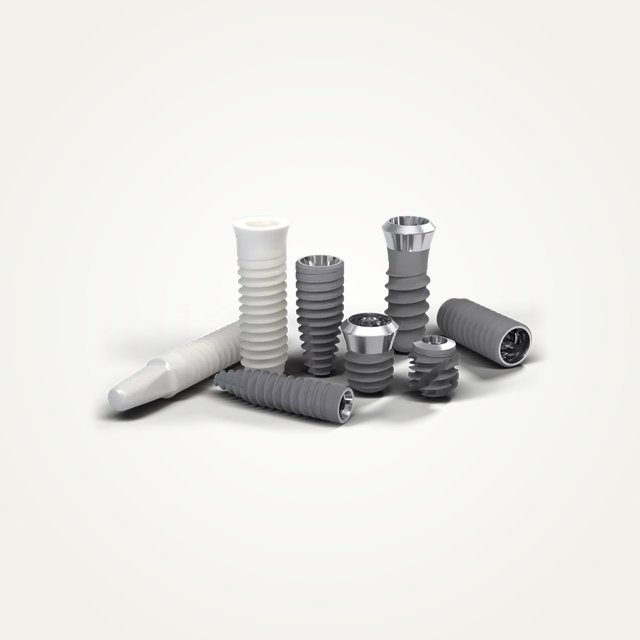
Straumann
Switzerland · SLActive · hydrophilic surface
- Origin
- Switzerland
- Manufacturer group
- Straumann Group
- Body material
- Ti grade 4 · Roxolid® (Ti-Zr)
- Surface treatment
- SLActive®
- Surface wettability
- Hydrophilic
- Connection type
- Internal conical (TorcFit™, 7°)
- 10-year survival*
- ~98%
- Cost tier
- $$$$$
- Evidence source
- PubMed 30110515
- Best for
- Broadest long-term evidence; soft bone and early-loading protocols
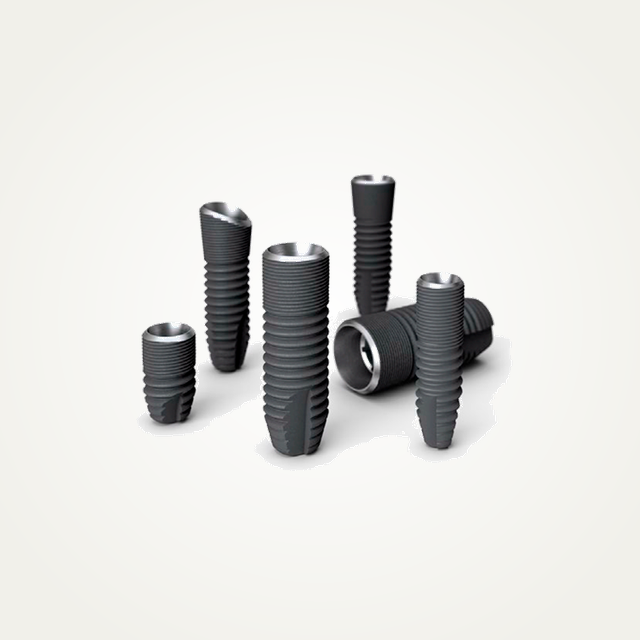
Astra Tech
Sweden · OsseoSpeed · fluoride-modified surface
- Origin
- Sweden
- Manufacturer group
- Dentsply Sirona
- Body material
- Commercially pure titanium (grade 4)
- Surface treatment
- OsseoSpeed® (TiO₂ blasted + fluoride)
- Surface wettability
- Conventional · fluoride-modified
- Connection type
- Internal conical (Conical Seal Design)
- 10-year survival*
- ~92–100%
- Cost tier
- $$$$$
- Evidence source
- PubMed 37906305
- Best for
- Esthetic zone; frequently studied for marginal bone level outcomes
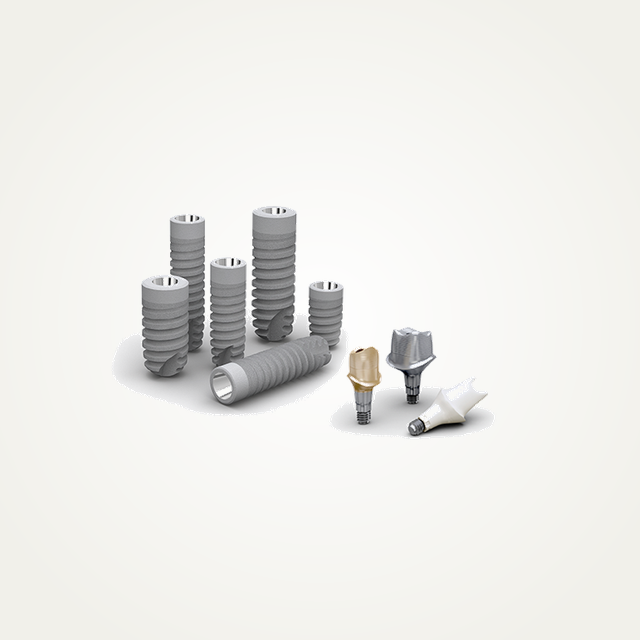
Ankylos
Germany · TissueCare · tissue-friendly connection
- Origin
- Germany
- Manufacturer group
- Dentsply Sirona
- Body material
- Commercially pure titanium (grade 2)
- Surface treatment
- Friadent® plus
- Surface wettability
- Conventional
- Connection type
- Conical Morse + platform switch (TissueCare)
- 10-year survival*
- ~93–97%
- Cost tier
- $$$$$
- Evidence source
- PubMed 26813443
- Best for
- Long-term bone and gum stability
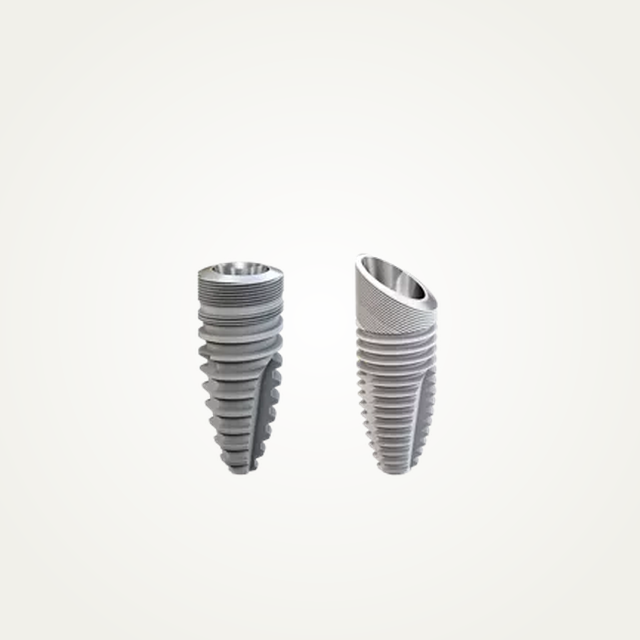
Medentika
Germany · Straumann Group · prosthetic-component origin
- Origin
- Germany
- Manufacturer group
- Straumann Group
- Body material
- Commercially pure titanium (grade 4)
- Surface treatment
- Sandblasted + acid-etched
- Surface wettability
- Conventional
- Connection type
- Conical + platform switch
- 10-year survival*
- Limited data
- Cost tier
- $$$$$
- Evidence source
- Group standard
- Best for
- Broad prosthetic component compatibility; cases where part supply matters
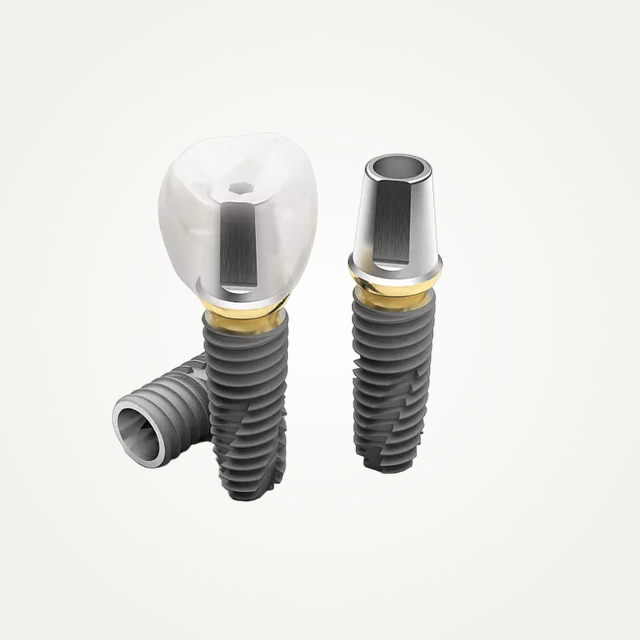
Osstem
South Korea · SA surface · high case volume
- Origin
- South Korea
- Manufacturer group
- Osstem Implant
- Body material
- Commercially pure titanium (grade 4)
- Surface treatment
- SA (blasted + acid-etched)
- Surface wettability
- Conventional
- Connection type
- 11° Morse taper + internal hex
- 10-year survival*
- ~95–98%
- Cost tier
- $$$$$
- Evidence source
- PubMed 24868503
- Best for
- Reliable performance, affordable
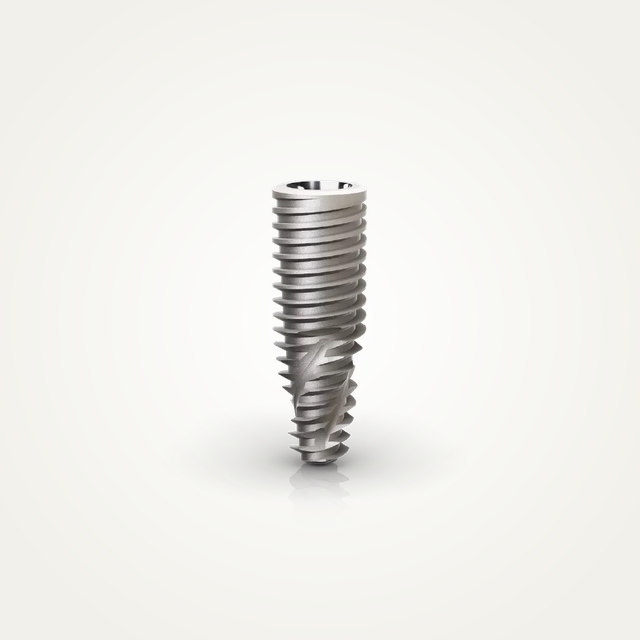
Neodent
Brazil · Straumann Group · Acqua hydrophilic
- Origin
- Brazil
- Manufacturer group
- Straumann Group
- Body material
- Commercially pure titanium (grade 4)
- Surface treatment
- Acqua® (SLA-type)
- Surface wettability
- Hydrophilic
- Connection type
- 16° Morse taper + platform switch (Grand Morse®)
- 10-year survival*
- ~95%
- Cost tier
- $$$$$
- Evidence source
- PubMed 41463602
- Best for
- Grand Morse single-platform connection; prosthetic flexibility
* Survival rates are estimates from systematic reviews, meta-analyses and long-term cohorts; they do not promise an individual outcome. Sources: Straumann 10-year implant-level 98.2% (PubMed 30110515) · Ankylos 8-year ~96.9% (PubMed 26813443), and ~93% at 10 years in two large cohorts · Astra Tech OsseoSpeed 10-year ~92–100% (PubMed 37906305; 37847838) · Osstem 7-year ~95.4% (PubMed 24868503) and 98.3% up to 10 years across 2,474 implants (J Oral Implantol 2025, PubMed 41241387) · Neodent ~95.4% across 4,783 implants (mean 30-month follow-up, PubMed 41463602). Connection type is included as a criterion because conical connections show less marginal bone loss than external connections (PubMed 34776267; PMC8638280). Surface wettability is a measurable surface property; a hydrophilic surface has not been shown to integrate faster in general: no ISQ difference was found in the maxilla or mandible, and a difference favouring SLActive appeared only in the palatal subgroup (Evidence-Based Dentistry 2025;26(1):67-68, PMC11953047). Material and connection data come from manufacturer technical documentation. The right system for you is decided together at consultation, based on your bone volume and the site. The cost tier is a relative indicator (based on brand origin, technology and group position); the exact price is determined at examination. Medentika is a brand within Straumann Group that began as a prosthetic component manufacturer; independent long-term clinical data specific to it is limited.
Who is this treatment for?
- Missing teeth due to decay, trauma, or periodontal disease
- Problems eating or speaking due to one or more missing teeth
- The need to replace a missing tooth without affecting neighbouring healthy teeth
- The need to prevent bone loss in the tooth-loss area and support the jawbone
- People over 18 whose jaw and facial development is complete
- Healthy gums and sufficient bone structure for an implant
Doctors specialising in this treatment


Frequently asked
01What is a dental implant?+
A dental implant is a permanent tooth replacement consisting of a titanium screw, serving as an artificial root, placed into the jaw bone. Through osseointegration, the titanium fuses with surrounding bone; a zirconium or porcelain crown is then attached on top.
02Is dental implant surgery painful?+
The placement procedure is carried out under local anaesthesia and is pain-free during surgery. Some mild tenderness may occur afterwards, typically resolving in three to four days with prescribed analgesics. Conscious sedation is also available.
03How long do dental implants last?+
Survival depends on the system and the case. In a study following 1,692 Straumann tissue-level implants in 881 patients, 10-year survival was 98.2% at implant level and 95.7% at patient level (PubMed 30110515). At Mosdent, implant components carry a lifetime manufacturer guarantee; clinical work is covered for five years.
04How long does a single implant placement take? How many visits?+
Placement takes approximately forty minutes under local anaesthesia. Osseointegration takes three months, after which the crown is fitted. Two visits are normally sufficient.
05Is it safe to get dental implants in Turkey?+
Mosdent holds the Turkish Ministry of Health Health Tourism Authorisation. Only CE- and FDA-cleared implant systems are used; Straumann, Nobel Biocare and Astra Tech are among them. Every guest receives a certificate listing the serial numbers of their specific implants.
06What should a full mouth dental implant package in Turkey include?+
Ask for the package to be itemised before you accept it: the number of implants, the implant system and its origin, whether bone grafting or a sinus lift is needed, the superstructure (single crowns, bridge or full-arch prosthesis) and its material, the number of visits and the warranty on each part. A package quoted without those lines is not comparable to another package. At Mosdent the itemised plan is issued in writing after the CBCT scan is read.
07What is the difference between All-on-4 and All-on-6?+
Both restore a full edentulous jaw with a fixed prosthesis: All-on-4 carries the arch on four implants, All-on-6 on six. Which one applies depends on bone volume, bone density and the state of the opposing jaw, and cannot be decided without a CBCT scan. The implant count and superstructure type are written into the treatment plan, since they drive both the surgery and the cost of the package.
08Where in Istanbul are All-on-4 and All-on-6 treatments carried out?+
At our clinic in Bahçelievler, Istanbul. A full-arch case is normally planned across two visits: the CBCT scan, the surgery and the temporary prosthesis in the first, the final prosthesis after osseointegration in the second. Because the implant count and the superstructure are decided from the scan, the itemised plan is issued in writing before travel is booked.
09What do people mean by fake teeth?+
Fake teeth is the everyday name for replacing missing teeth, and it covers three different clinical answers: a removable denture, a fixed bridge carried by the neighbouring teeth, and an implant that replaces the root itself. Only the implant is anchored in bone and leaves the neighbouring teeth untouched. Which one suits you follows from how many teeth are missing, the bone volume at the site, and whether the neighbouring teeth are sound enough to carry a bridge.
Oral Surgery
Wisdom Tooth Extraction
Wisdom tooth extraction removes a third molar at the back of the jaw under local anaesthesia, sectioning it if impacted; not every wisdom tooth must come out.
Explore→02Oral & Maxillofacial Surgery
Oral and dental surgery, a four-year dental specialty in Turkey, covers impacted tooth removal, implant placement, root-end resection and jaw fracture repair.
Explore→03Jaw Correction
Jaw correction (orthognathic) surgery cuts and repositions one or both jaws at bone level to correct skeletal discrepancies that tooth movement cannot close.
Explore→04Jaw Fracture Treatment
Jaw fracture treatment depends on displacement: minimally displaced, stable fractures are held with wires or elastics, displaced ones with plates and screws.
Explore→05Bone Graft (Membrane)
A bone graft rebuilds deficient jawbone with graft material, in most cases under a barrier membrane, so an implant can be placed, usually 4-6 months later.
Explore→06Maxillofacial Surgery
Maxillofacial surgery treats the facial skeleton beyond the teeth: jaw fractures, orthognathic correction, jaw cysts and tumours, and TMJ surgery.
Explore→Speak with your doctor about this treatment.
Not sure which treatment fits? Tell us what’s wrong →