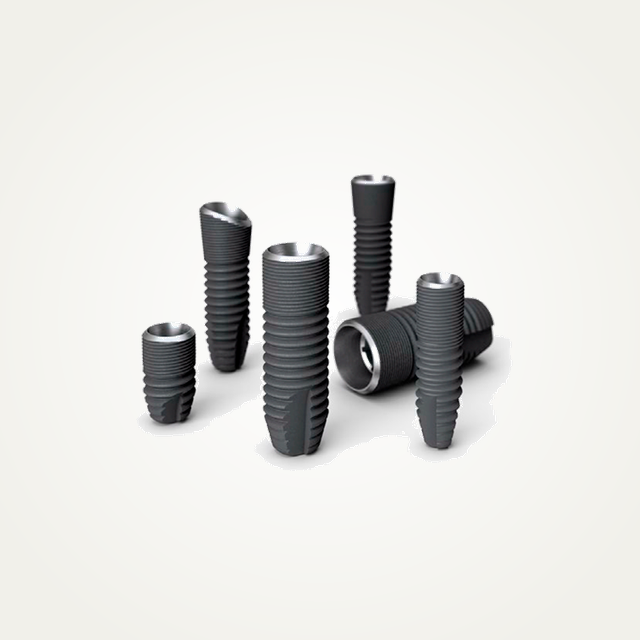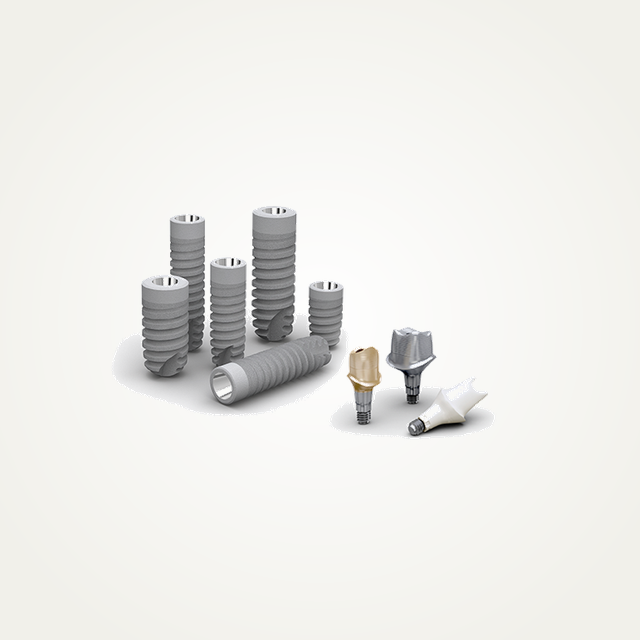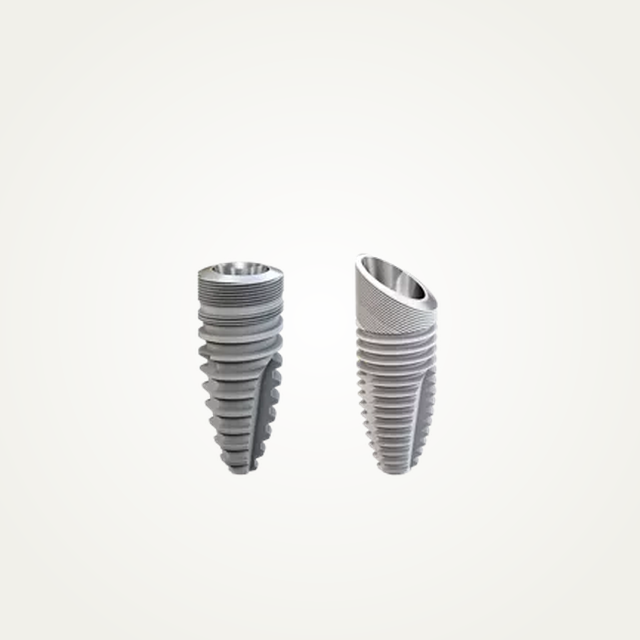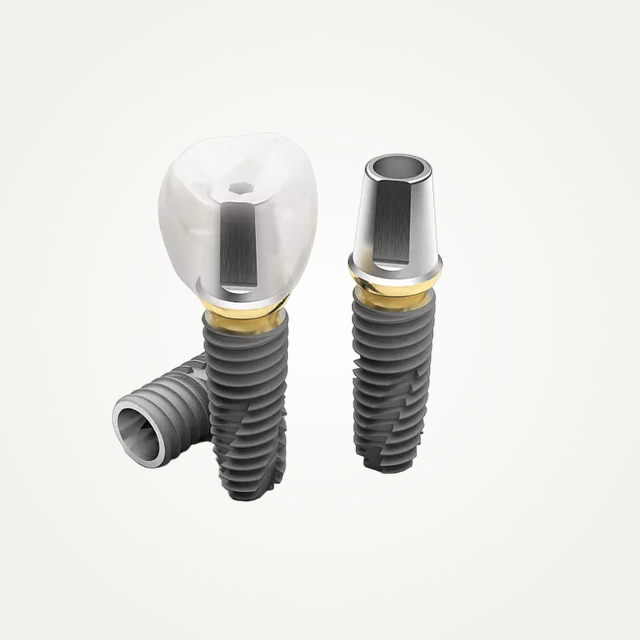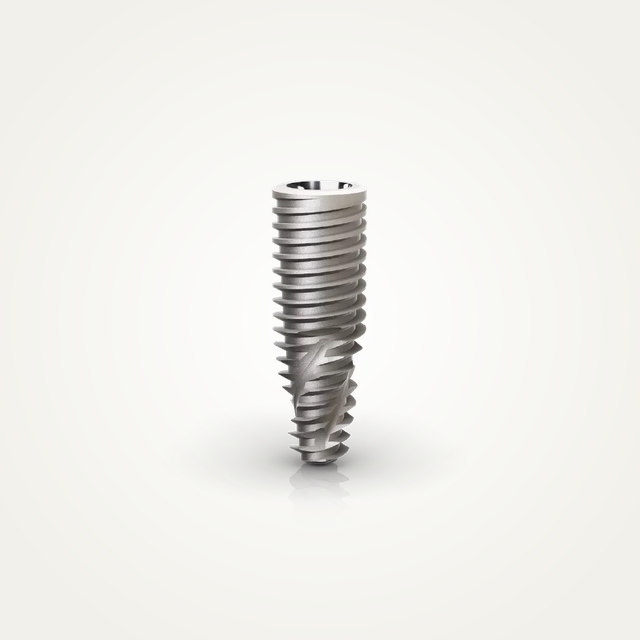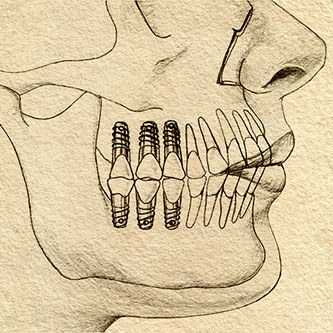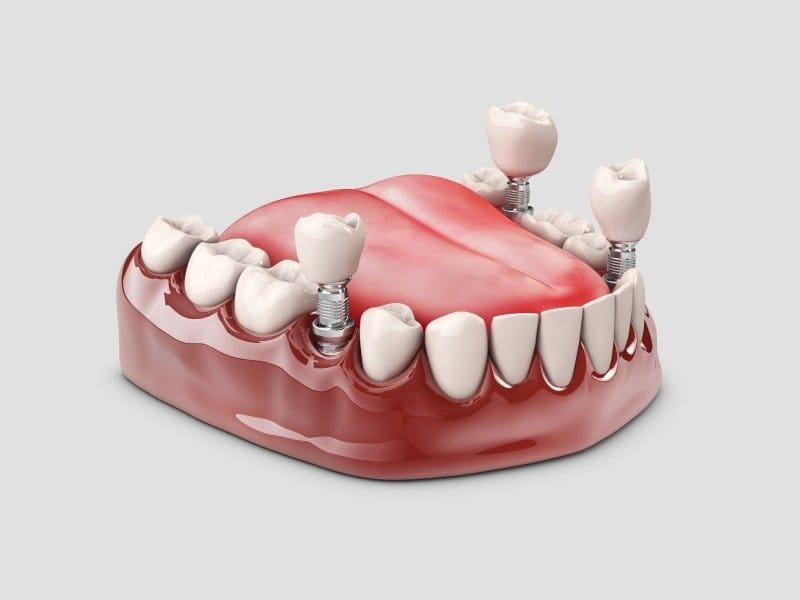
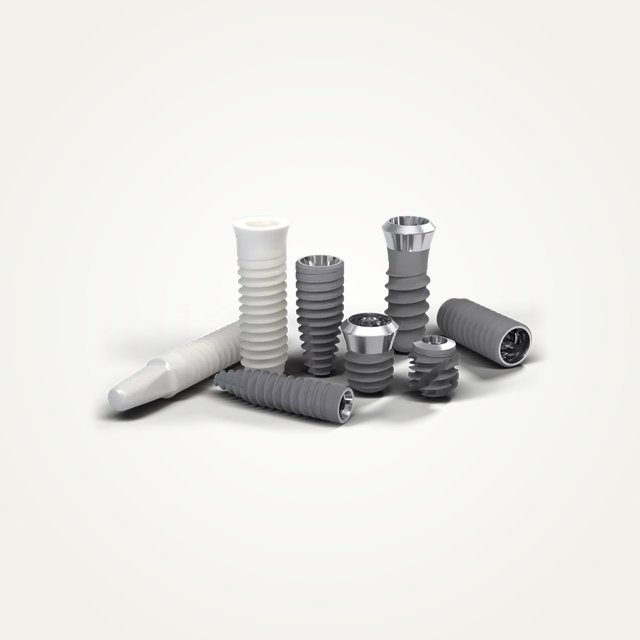
Straumann is the dental implant brand of the Straumann Group, headquartered in Basel, Switzerland, with its historic manufacturing and research site in Waldenburg. The implant body is offered either in commercially pure grade 4 titanium or in the titanium-zirconium alloy the manufacturer markets as Roxolid®; the surface treatment is SLActive®, the surface is hydrophilic, and the connection is a 7-degree internal conical interface (TorcFit™). In the largest single-centre follow-up published on the system, 1,692 tissue-level Straumann implants in 881 patients reached a 10-year cumulative survival of 98.23% at implant level and 95.70% at patient level (PubMed 30110515). Those numbers describe one system's published record; they do not establish that any brand outperforms another, because the right implant for a given mouth depends on bone volume, the site and the prosthetic plan.
- 01Straumann implants are made in Switzerland by the Straumann Group, which also owns Neodent (Brazil) and Medentika (Germany). A quote that says "Straumann Group implant" does not by itself tell you which product you are getting.
- 02Ten-year cumulative survival across 1,692 tissue-level implants was 98.23% at implant level and 95.70% at patient level (PubMed 30110515). A second cohort of 374 implants reported 99.7% and 99.4% at ten years, with peri-implantitis in 7% of implants (PubMed 25370914).
- 03Survival and success are different measures. In a ten-year randomised trial, survival was 98.9% for titanium-zirconium implants while the success criterion, which also counts bone level and soft tissue health, fell to 94.6% (PubMed 37942666).
- 04A hydrophilic surface has not been shown to integrate faster clinically. Across six randomised trials and 326 implants there was no meaningful difference in implant stability between SLA and SLActive over 12 weeks (PMC11953047).
- 05Warranty and traceability are two separate things. The manufacturer's component warranty and the clinic's treatment warranty are different documents, and the implant passport with its lot number is what makes either one usable in another country.
/ Straumann implant definition and manufacturing origin
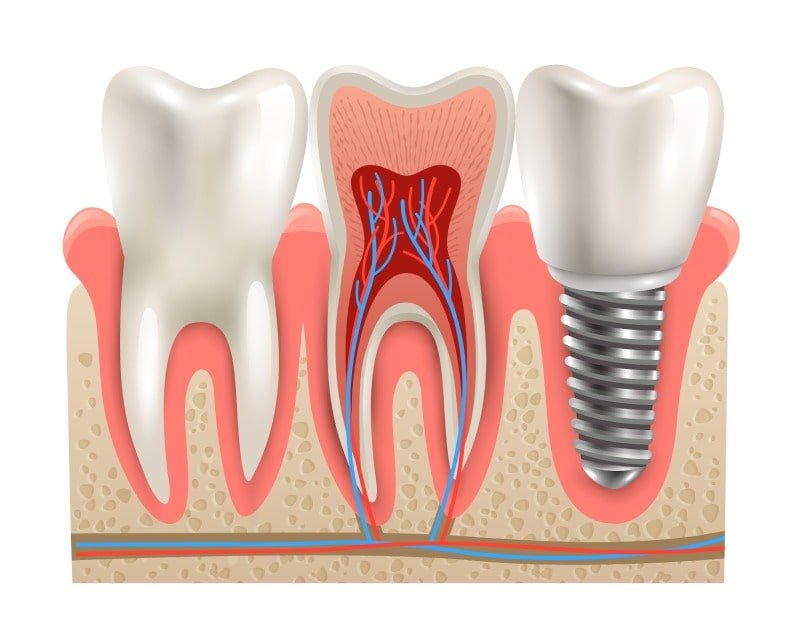
Straumann implants are made in Switzerland. The company traces back to a research institute founded in 1954 by Reinhard Straumann in Waldenburg, in the canton of Basel-Landschaft, under the name Dr. Ing. R. Straumann AG. Production of the first titanium implants began in 1974, the present-day entity Institut Straumann AG was established in 1990 alongside a strategic decision to focus the business exclusively on dental implantology, and the corporate headquarters moved from Waldenburg to Basel in 2004 after fifty years on the original site.
Origin on its own is not a clinical argument. What separates implant systems in evidence terms is the volume and length of their published follow-up, the documented material and surface, and the connection geometry. The ITI, whose treatment guidelines are widely cited in implant dentistry, was established in 1980 with Fritz Straumann among its founders, and by its own account Straumann is its industry partner and holds one seat on its board and on each of its committees. That is useful context when an ITI document is presented as neutral third-party evidence.
Manufacturing location and the location where treatment is delivered are separate facts. An implant manufactured in Switzerland is the same device whether it is placed in Zurich, Manchester or Istanbul; what varies between those settings is the surgical plan, the follow-up structure and the price of the surrounding treatment. If you are still deciding whether an implant is the right answer at all, our dental implant treatment page and the guide to what a dental implant is cover the procedure end to end.
/ Straumann Group ownership and related brands
The Straumann Group is not a single-brand company. Its own corporate publications list five global brands: Straumann, Neodent, Medentika, Anthogyr and ClearCorrect. Neodent originated in Curitiba, Brazil, and joined the group through a partial stake in 2012 followed by full ownership in 2015. Medentika was founded in Hügelsheim, Germany, attracted investment in 2013 and came under group control in 2017. The French manufacturer Anthogyr was acquired in 2019 and the American clear-aligner brand ClearCorrect in 2017. The link is observable rather than inferred: medentika.com redirects into a path on straumann.com, and Neodent's professional pages are published under the same domain.
The consequence for a patient is concrete: a quote for "Straumann Group implants" does not name a single product. The group spans different product lines at different price positions, each with its own specification, its own surface treatment and its own published data. If your quote says Straumann Group, ask for the product line in writing. What separates one Straumann line from another, tissue level from bone level, BLT from BLX, grade 4 titanium from Roxolid, is set out with the published data for each in our Straumann product lines guide.
None of this makes any of those brands better or worse than the others; they are different products that share an owner, and the Neodent specification and the Medentika explainer set out each one separately. If you want a broader survey first, our overview of implant brands sets out the categories.
/ Roxolid and grade 4 titanium in the implant body
The Straumann implant body comes in two materials. The first is commercially pure grade 4 titanium, unalloyed, and the long-standing default for implant fixtures. The second is a titanium-zirconium alloy the manufacturer markets as Roxolid®, at roughly 85% titanium and 15% zirconium by composition. The manufacturer's own technical documentation is an acceptable source for material, surface name and geometry, and not for clinical outcome claims.
The reason the alloy exists is mechanical. Adding zirconium raises the strength of the fixture, which allows the same load to be carried by a narrower body. Clinically that matters where the bone ridge is thin, because the alternative in a narrow ridge is often a graft. It does not remove the need for grafting where bone height rather than width is the problem, and our bone graft guide and sinus lift guide explain when each applies.
The two materials have been compared directly over a long horizon. A double-blind, randomised, split-mouth trial in edentulous mandibles followed narrow-diameter titanium-zirconium implants against narrow-diameter grade 4 titanium implants for ten years. Kaplan-Meier survival at ten years was 98.9% for the titanium-zirconium group and 95.8% for the titanium group, four implants were lost in total, and cumulative marginal bone change was close to identical between the two arms at 1.49 mm and 1.56 mm (PubMed 37942666). The five-year report of the same trial gave 98.9% and 97.8% (PubMed 26458813). The manufacturer appears in that trial's funding statement.
/ SLActive hydrophilic surfaces and evidence limits
The Straumann surface treatment is sandblasted and acid-etched, and the SLActive® variant is stored so that the surface stays chemically active. The measurable property that follows is wettability: the surface is hydrophilic, meaning it draws fluid rather than repelling it. That is a surface characteristic, and it is testable in a laboratory.
What has not been shown is that a hydrophilic surface integrates faster in the mouth. A synthesis of six randomised controlled trials covering 326 implants in 155 patients compared SLA and SLActive surfaces on implant stability quotient over twelve weeks. In the palatal subgroup SLActive reached the minimum stability threshold at week four against week five for SLA, and in the maxilla and mandible the stability levels were similar (PMC11953047). Over the twelve-week window, in other words, no clinically meaningful stability advantage emerged.
Survival data points the same way. A systematic review covering seven randomised trials and twelve prospective observational studies of immediate and early loading protocols reported that 95% of SLA implants and 97% of SLActive implants survived to the end of follow-up (PubMed 24814519), and a separate appraisal concluded there was little difference between the two surfaces (PubMed 25343397). The early biological response to a hydrophilic surface, meaning clot formation and protein adsorption, is demonstrable. The translation of that response into faster clinical healing is not. A promise of shorter healing time because of the surface goes beyond the evidence. The surface trials are reported in more detail, alongside the rest of the range, in our specification guide to the Straumann product lines.
/ The TorcFit conical connection and marginal bone loss
The Straumann connection is a 7-degree internal conical interface, marketed as TorcFit™. The connection is where the implant body meets the abutment that carries the crown, and its geometry influences how much bone is preserved around the implant neck over the years.
The literature on connection geometry is mixed. A systematic review and network meta-analysis of randomised clinical trials found conical interfaces to be the most effective for marginal bone loss and prosthetic complications at twelve months after prosthetic loading, with a significant difference against external hexagonal connections, while finding no significant difference between connection types for survival or biological complications (PubMed 34776267). A separate review assessing one-, three- and five-year data found no statistically significant difference in marginal bone loss between connection types at all (PubMed 31576952).
A meta-analysis restricted to single implants in the aesthetic zone gives the clearest numbers on the supportive side: annual bone loss of 0.16 mm around platform-switched conical connections against 0.48 mm around platform-matched parallel connections, with annual implant loss of 0.13% against 0.73% (PMC8638280). Taken together this justifies treating connection geometry as a selection criterion. It does not justify writing that a conical connection will preserve your bone, which is a stronger claim than the evidence carries.
/ Straumann implant longevity in published cohorts
How long Straumann implants last has been measured in several long-term cohorts. In a university clinic, 1,692 tissue-level Straumann implants placed in 881 patients between 2003 and 2009 were followed for ten years. Cumulative survival was 98.23% at implant level and 95.70% at patient level; thirteen implants failed before the prosthesis was fitted and eight after, and survival was related to implant diameter, length, site and insertion torque (PubMed 30110515).
A second cohort followed 374 tissue-level Straumann implants with an SLA surface in 177 patients. One implant was lost over the period, giving ten-year survival of 99.7% at implant level and 99.4% at patient level, with mean bone loss of 0.52 mm and peri-implantitis present in 7% of the implants observed (PubMed 25370914). A third, in private practice rather than a university setting, followed 4,591 Straumann implants in 2,060 patients and reported seven-year survival of 98.4% at implant level and 95.9% at patient level (PubMed 25134415).
A larger dataset comes with two caveats. A cohort of 10,871 implants in 4,247 patients with follow-up to 22 years reported 96.8% implant-level and 92.5% patient-level survival at ten years, and 94.0% and 86.0% at fifteen years. Straumann tissue-level SLA implants were the dominant design at 55.2% of the total, and the manufacturer provided financial assistance for the statistical analysis (PMC8359846). So this is neither a pure single-brand result nor an independent one.
/ Survival is not success, and the gap is measurable
Two different measures circulate in implant dentistry and they are routinely conflated. Survival asks only whether the implant is still in the mouth. Success adds conditions: the bone level must be maintained, the soft tissue must be healthy, and there must be no ongoing complication. Because success is the stricter test, the success figure is always the lower of the two.
The size of the gap has been measured in the same patients. In the ten-year randomised trial described above, survival was 98.9% for the titanium-zirconium arm against a success rate of 94.6%, and 95.8% against 91.9% for the grade 4 titanium arm (PubMed 37942666). At the five-year point of the same trial the pairs were 98.9% and 95.8%, and 97.8% and 92.6% (PubMed 26458813). Roughly four percentage points separate the two measures in each case.
Ask any clinic quoting you a percentage whether the figure is survival or success, over how many years, and across how many implants. A "98% success" figure quoted without a named study cannot be checked, and it may be a survival figure under the wrong label.
/ Patient selection for Straumann implants
System selection starts with the anatomy of the mouth rather than a brand preference. Straumann is among the systems chosen where the bone is soft and where an early loading protocol is planned, on the basis of the surface wettability and the published follow-up for those protocols. Early loading means bringing the prosthesis into function before the classical healing interval has elapsed, and it is not appropriate for every patient or every site.
Narrow ridges are the second typical scenario. Because the titanium-zirconium alloy allows a narrower fixture at comparable strength, it can sometimes let a case proceed in a thin ridge without grafting. Where the deficit is in height rather than width, particularly in the posterior maxilla, that logic does not apply and a sinus procedure re-enters the plan. In severe resorption the discussion moves to different surgical categories entirely.
For full-arch cases the system is only part of the decision, because the prosthetic configuration drives the outcome as much as the fixture does. We set out the four-implant configuration in our All-on-4 guide and the six-implant configuration in our All-on-6 guide, and the choice between a bridge and an implant for a single gap in our implant versus bridge comparison. Digital planning of the surgical position is covered in our guided implant surgery article, and the restorations that sit on top in our implant-supported prosthesis guide.
/ Straumann implant cost in Turkey and quote components
The cost of Straumann implant treatment in Turkey is a structure rather than a single figure. A "from" price covers one component of a multi-part treatment, so two quotes can only be compared through the structure of the total. Current figures are listed on the dental implant treatment page, and a plan-specific figure is given in writing after an assessment, which can be arranged through the contact page.
A complete implant total is built from the fixture, the abutment, the crown, and the laboratory work behind the crown. Around it sit the items that are quoted separately almost everywhere: extraction if the tooth is still in place, bone grafting, a sinus lift where the posterior maxilla lacks height, any soft tissue procedure, the provisional restoration you wear while healing, and the imaging and planning at the start. A quote that lists only the fixture and a quote that lists all of the above can differ by a multiple without either being dishonest, which is exactly why the comparison has to be line by line.
There are travel-side costs that belong in the same arithmetic and are usually left out. Most implant cases are not completed in one visit, so a second flight and a second stay are part of the real total. Our 2026 implant pricing overview sets out how the components are usually grouped, and the Istanbul treatment guide covers the logistics. The one number nobody should give you is a total before anyone has looked at your bone, because the graft decision alone can change the plan.
/ Straumann implant trip count for Turkey cases
Trip count is a scheduling question with a clinical answer. In the most straightforward pattern the implant is placed on the first visit, the mouth is left to heal, and the patient returns for the abutment and the final crown. That gives two visits, with an interval between them that follows the healing biology rather than the calendar.
The interval widens when bone has to be built. If a graft or a sinus lift is required, the site needs its own healing period before the implant can be placed at all, which can extend the plan and in some cases adds a third visit. It narrows in immediate protocols, where a provisional restoration is fitted in the same episode as placement, but those protocols depend on achieving sufficient primary stability at surgery and cannot be promised in advance. Our day-by-day healing timeline sets out what happens between the visits.
The practical point for anyone booking flights is that the second visit should be scheduled after the plan is confirmed, not before. A clinic that fixes both dates before seeing your imaging is scheduling around its own calendar rather than your healing. Ask which protocol is planned, what would change it, and what happens to the second booking if the graft decision changes at surgery.
/ The implant passport, the lot number and verifying a genuine implant
A Straumann implant passport turns the promise of a genuine product into a procedure you can check.
The passport is also a regulatory entitlement rather than a courtesy. Article 18 of the EU Medical Device Regulation requires the manufacturer of an implantable device to supply an implant card with the device, carrying the device name, the serial or lot number, the unique device identifier, the model and the manufacturer's details, and it requires the health institution to give that card to the patient together with information identifying them. The exemption list in the same article is worth reading closely: sutures, staples, dental fillings, dental braces, tooth crowns, screws, wedges, plates, wires, pins, clips and connectors are exempt. Dental implants are not on that list. If you are treated in the EU or by a manufacturer placing devices on the EU market, the card is part of the process.
A usable passport records the brand and product line, the diameter and length of the fixture, the lot or serial number, the date of placement and the clinician who placed it. Its value appears years later, when a dentist in another country needs to know which abutment to order before touching your prosthesis. Without it, a routine repair becomes an exercise in reverse engineering, and a returning patient may be told their case cannot be serviced locally.
/ The four-link verification chain, step by step
The verification chain has four links and each is checkable. The implant arrives in a sealed sterile carrier printed with a product reference and a lot number, and you can ask to see or photograph it unopened in theatre. The lot label is then transferred into your record and onto the card. The supply route can be evidenced by the invoice from the authorised distributor. Finally, the manufacturer publishes an online verification tool that takes the product reference and the lot number and confirms whether the component is original, and it describes that confirmation as a precondition of its own guarantee. That tool sits in the professional section of the manufacturer's site, so ask your clinic to run the check and show you the result. Every implant we place is issued with a serial-numbered certificate, and you can ask for it at discharge rather than chasing it after you have flown home.
/ Straumann lifetime guarantee and treatment warranty after travel
A "lifetime warranty" on an implant quote compresses two separate undertakings into one phrase, and the manufacturer's own terms show how different they are. The Straumann guarantee is tiered, at five years for ceramic abutments, ten years for metal abutments and lifetime for implants, with a further tier for titanium-zirconium fixtures. Its published terms state that it covers replacement of the products only and not associated costs, explicitly including chair time and laboratory fees. They also state that the guarantee runs in favour of the treating dentist, and that third parties, patients specifically named among them, derive no rights from it. It applies to products bought from a Straumann affiliate or official distributor, carries a claim deadline, varies by country, and the manufacturer reserves the right to modify or end it.
None of the above makes the manufacturer's guarantee worthless. It means the document that actually protects you is the clinic's treatment warranty, and the manufacturer's tier is a component-level backstop your dentist can invoke on your behalf. So the question that matters to a patient travelling for treatment is a practical one: if a crown chips in year four at home, who pays and do you have to fly back. Answering it takes three things in writing before you travel. First, what the clinic's warranty covers and excludes, item by item, including whether laboratory and chair costs are inside or outside it. Second, whether remedial work can be done locally and on what terms, or whether the warranty requires return travel. Third, whether the components used are obtainable from a distributor in your own country, which is where the product line recorded on your card becomes decisive.
/ Serviceability after overseas implant treatment
Serviceability is not the same as brand prestige. A widely distributed system is easier to service in most countries because abutments and prosthetic parts are stocked more broadly, and that is a logistics fact about distribution rather than a clinical statement about quality. Ask your own dentist at home, before you travel, whether they can source parts for the system being proposed. It is a five-minute question that prevents a five-year problem. On our side, the surgeon and the restorative clinician who will handle your follow-up are named on our clinical team page, and it is reasonable to ask any clinic for the same before you book.
One criticism of treatment in Turkey is that the prices advertised by Turkish clinics only add up if a generic or grey-market fixture is being used. A patient can test that argument with the verification chain above: the sealed carrier, the lot label, the distributor invoice and the manufacturer's online check.
/ Quote breakdown and lot-number checks for the counterfeit argument
For the counterfeit argument, there is also an arithmetic answer that does not require anyone's word. Ask for the line-item breakdown of the quote, and specifically for the fixture to be priced separately from the abutment, the crown and the laboratory work. A quote that cannot be broken down is the thing to be sceptical about, independently of any country. A quote that can be broken down lets you see where the difference between two totals actually sits, which in practice is usually labour, facility overhead and laboratory cost rather than the device.
The last check is the simplest. Ask, in writing and before booking, which product line will be used, ask for the lot number to be recorded on your card at surgery, and ask for the manufacturer's online verification result on that reference and lot. If the answer to any of those is vague, that is information. If all three are provided without hesitation, the counterfeit argument has been answered in the only way that survives after the fact, which is on paper with a number on it. The manufacturer's verification tool is built for purchasers rather than patients, so this check depends on the clinic running it and showing you the result.
/ Peri-implantitis and what determines the ten-year outcome
Over a ten-year horizon the condition of the tissue around an implant matters more than which system was placed. Peri-implantitis is inflammation of the peri-implant mucosa combined with progressive loss of supporting bone, defined at the 2017 World Workshop consensus through findings such as bleeding on probing, swelling and suppuration (PubMed 29926491). It is not brand-specific and it can occur with any system.
Prevalence has been measured repeatedly. A meta-analysis of 57 studies put it at 19.53% at patient level and 12.53% at implant level (PubMed 36261829), and a review of 47 studies reported 19.83% and 9.25%, with peri-implant mucositis at 46.83% at patient level (PubMed 28478213). A Swedish population study of 588 randomly selected patients nine years after therapy reported 45%, a much higher figure (PubMed 26701919). That gap is a threshold artefact rather than a contradiction, because the Swedish definition counted bone loss above 0.5 mm. Whenever a prevalence figure is quoted to you, the case definition has to be quoted with it.
Two risk factors are quantified and neither is brand-related. Smoking raised the odds of implant failure by 2.4 times across 292 publications, with 0.58 mm more marginal bone loss in smokers (PMC8780868). Diabetes raised the odds by 1.78 times, with a significant difference between type 1 and type 2 (PMC9105616). Maintenance is the controllable side of this, and our implant cleaning guide and peri-implantitis article cover both the daily protocol and what treatment looks like if the condition develops.
Let’s plan the right treatment together.
Free Assessment→- 1.Kim S, Jung UW, Cho KS, Lee JS. Retrospective radiographic observational study of 1692 Straumann tissue-level dental implants over 10 years: I. Implant survival and loss pattern. Clin Implant Dent Relat Res. 2018;20(5):860-866
- 2.van Velzen FJJ, Ofec R, Schulten EAJM, ten Bruggenkate CM. 10-year survival rate and the incidence of peri-implant disease of 374 titanium dental implants with a SLA surface. Clin Oral Implants Res. 2015;26(10):1121-1128
- 3.French D, Larjava H, Ofec R. Retrospective cohort study of 4591 Straumann implants in private practice setting, with up to 10-year follow-up. Part 1. Clin Oral Implants Res. 2015;26(11):1345-1354
- 4.French D, Ofec R, Levin L. Long term clinical performance of 10 871 dental implants with up to 22 years of follow-up: A cohort study in 4247 patients. Clin Implant Dent Relat Res. 2021;23(3):289-297
- 5.Müller F, Srinivasan M, Krause KH, Schimmel M. Small-diameter titanium grade IV and titanium-zirconium implants in edentulous mandibles: Ten-year results from a double-blind, randomised controlled split-mouth core-trial. Clin Oral Implants Res. 2024;35(1):77-88
- 6.Müller F, Al-Nawas B, Storelli S, et al. Small-diameter titanium grade IV and titanium-zirconium implants in edentulous mandibles: five-year results. BMC Oral Health. 2015;15(1):123
- 7.Patel R. A systematic assessment of the stability of SLA and SLActive implant surfaces over 12 weeks. Evid Based Dent. 2025;26(1):67-68
- 8.Chambrone L, Shibli JA, Mercurio CE, Cardoso B, Preshaw PM. Efficacy of standard (SLA) and modified sandblasted and acid-etched (SLActive) dental implants in promoting immediate and/or early occlusal loading protocols. Clin Oral Implants Res. 2015;26(4):359-370
- 9.Stafford GL. Review found little difference between sandblasted and acid-etched (SLA) dental implants and modified surface (SLActive) implants. Evid Based Dent. 2014;15(3):87-88
- 10.Camps-Font O, Rubianes-Porta L, Valmaseda-Castellón E, Jung RE, Gay-Escoda C, Figueiredo R. Comparison of external, internal flat-to-flat, and conical implant abutment connections for implant-supported prostheses: A systematic review and network meta-analysis of randomized clinical trials. J Prosthet Dent. 2023;130(3):327-340
- 11.Rosa EC, Deliberador TM, Nascimento AJ, et al. Does the implant-abutment interface interfere on marginal bone loss? A systematic review and meta-analysis. Braz Oral Res. 2019;33(suppl 1):e068
- 12.Meijndert CM, Raghoebar GM, Vissink A, Meijer HJA. The effect of implant-abutment connections on peri-implant bone levels around single implants in the aesthetic zone: A systematic review and meta-analysis. Clin Exp Dent Res. 2021
- 13.Berglundh T, Armitage G, Araujo MG, et al. Peri-implant diseases and conditions: Consensus report of workgroup 4 of the 2017 World Workshop. J Clin Periodontol. 2018;45(Suppl 20):S286-S291
- 14.Diaz P, Gonzalo E, Villagra LJG, Miegimolle B, Suarez MJ. What is the prevalence of peri-implantitis? A systematic review and meta-analysis. BMC Oral Health. 2022;22(1):449
- 15.Lee CT, Huang YW, Zhu L, Weltman R. Prevalences of peri-implantitis and peri-implant mucositis: systematic review and meta-analysis. J Dent. 2017;62:1-12
- 16.Derks J, Schaller D, Håkansson J, Wennström JL, Tomasi C, Berglundh T. Effectiveness of implant therapy analyzed in a Swedish population: prevalence of peri-implantitis. J Dent Res. 2016;95(1):43-49
- 17.Mustapha AD, Salame Z, Chrcanovic BR. Smoking and dental implants: A systematic review and meta-analysis. Medicina (Kaunas). 2021;58(1):39
- 18.Al Ansari Y, Shahwan H, Chrcanovic BR. Diabetes mellitus and dental implants: A systematic review and meta-analysis. Materials (Basel). 2022;15(9):3227
- 19.Straumann technical information 702115 (Roxolid® and SLActive® material and surface names, TorcFit™ connection geometry). The document does not state the alloy ratio; used only for material, surface name and geometry, and no clinical outcome claim rests on this source.
- 20.Straumann Group, corporate history page (1954 foundation in Waldenburg, 1974 first titanium implant production, 2004 relocation of headquarters to Basel)
- 21.Straumann Group, brands and partners page and Annual Report 2025, table "The Group's brands and partially owned partner companies"
- 22.ITI, "Who we are" and "Partners" pages (1980 foundation, founders, industry-partner relationship and board seat)
- 23.Straumann Guarantee, official terms and conditions form (tiers, replacement-only cover, guarantee in favour of the treating dentist, country-dependent conditions)
- 24.Straumann Online Verification Tool, authenticity check by product reference and lot number
- 25.Regulation (EU) 2017/745 on medical devices, Article 18 (implant card obligation and exemption list)