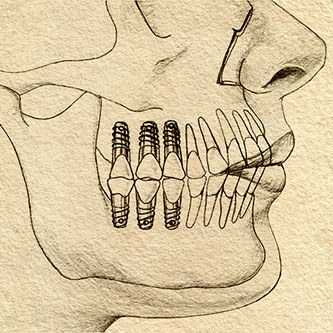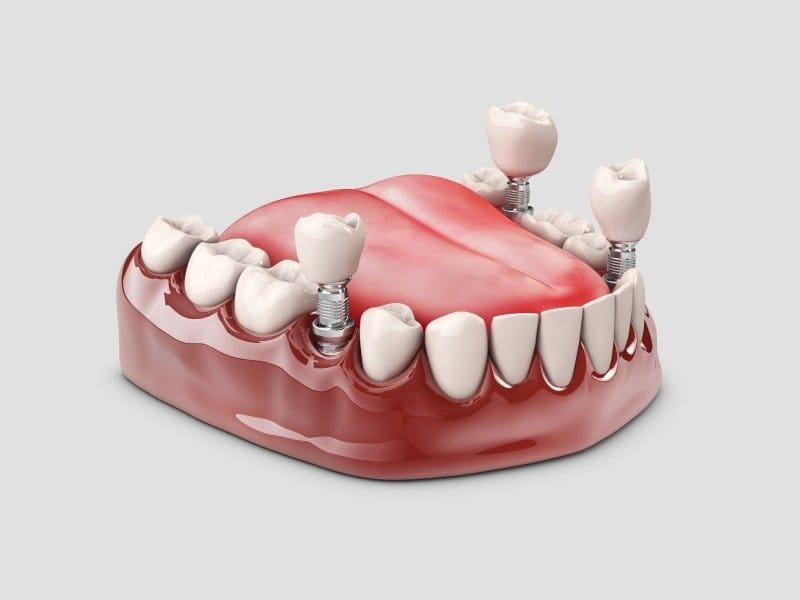
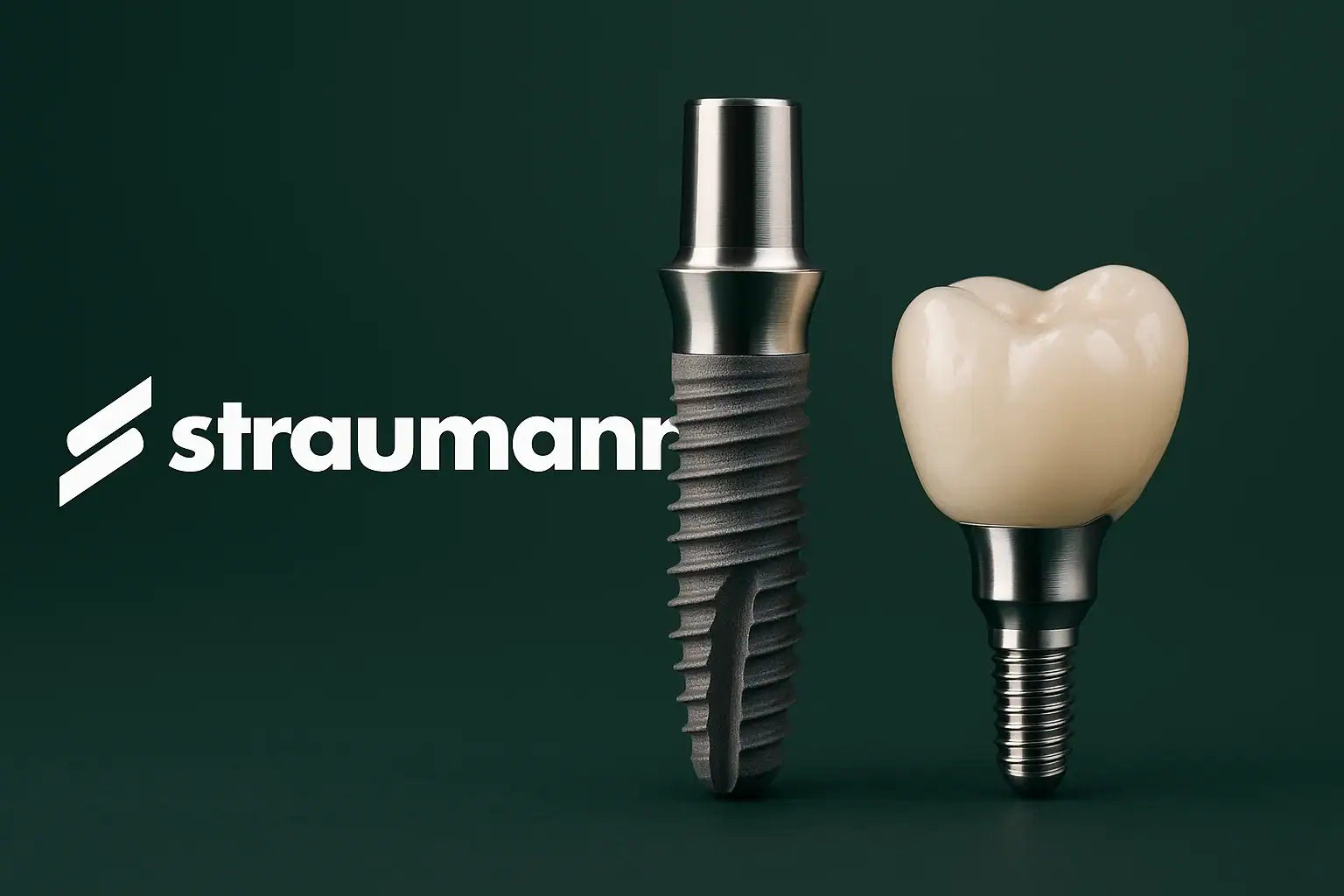
Straumann is a Swiss implant manufacturer whose system is described by its fixture lines, bone level and tissue level, its Roxolid titanium-zirconium alloy and its SLA and SLActive surfaces, rather than by a single product. The surface carries one of the longer published records in implant dentistry: in 303 partially edentulous patients with 511 sandblasted and acid-etched implants, the 10-year survival rate was 98.8% and the success rate 97.0%, with peri-implantitis recorded in 1.8% over the period (PubMed 22897683). Which system suits a given case depends on bone volume, the site and the prosthetic plan rather than on the brand alone.
- 01The SLA surface carries the long-term figure: 511 implants in 303 patients gave a 10-year survival rate of 98.8% and a success rate of 97.0%, with six implants (1.2%) lost and no fractures (PubMed 22897683).
- 02Peri-implantitis was uncommon in that orally healthy cohort, at 1.8% prevalence over ten years, which is a cohort-specific figure rather than a general expectation (PubMed 22897683).
- 03The two main lines split by placement depth, not by quality: bone level fixtures finish at bone height for anterior soft tissue management, tissue level fixtures carry a transmucosal collar and simplify posterior cases.
- 04Roxolid is a titanium-zirconium alloy used where a narrower diameter is needed in limited bone volume; PURE is the metal-free ceramic option.
- 05The crown on top has its own survival curve: across 35 studies, implant-supported single crowns showed an estimated 5-year survival of 98.3% for metal-ceramic (n = 4,363) and 97.6% for zirconia (n = 912) (PubMed 30328190).
Introduction
Straumann is a Swiss implant manufacturer whose specifications cover precision engineering, biocompatibility and surface technology. The system is used across a wide range of clinical indications and has one of the longer published follow-up records in implant dentistry.
What Are Straumann Dental Implants?
Straumann implants are titanium or ceramic-based artificial tooth roots, surgically placed in the jawbone to support crowns, bridges, or dentures. With decades of research and innovation, they offer high success rates and are suitable for a wide range of clinical situations.
What the Straumann specification covers:
- Manufacturing tolerances stated by the manufacturer
- Published long-term follow-up data
- Surface technologies (SLA, SLActive®)
- International distribution and component availability
- Fixture lines for simple through to complex cases
Types of Straumann Implants
/ Straumann Implant Types and Digital Technology
Straumann implant types include bone level, tissue level, Roxolid®, SLActive® surface and PURE ceramic options.
1. Bone Level Implants
Designed to be placed at bone level for improved soft tissue management and aesthetic outcomes. These implants are frequently used in the anterior region for their natural gum line integration.
2. Tissue Level Implants
Ideal for posterior restorations, these implants simplify soft tissue management and reduce treatment complexity.
3. Roxolid® Implants
Made from a titanium-zirconium alloy offering greater strength, allowing for narrower implants without compromising stability. Particularly useful in patients with limited bone volume.
4. SLActive® Surface Implants
Promote faster osseointegration by enhancing bone-to-implant contact and reducing healing time. Ideal for immediate and early loading protocols.
5. PURE Ceramic Implants
A metal-free option for patients with aesthetic concerns or metal sensitivities. They provide a natural look, especially in the front teeth area.
Technology Behind Straumann Implants
Straumann is at the forefront of digital dentistry. Their ecosystem includes:
- CAD/CAM integration for precise prosthetic design
- CoDiagnostiX® : digital implant planning software that increases surgical accuracy
- Smile in a Box® : personalized guided surgery solutions from planning to final restoration
- Straumann® BLX : designed for immediate loading and primary stability in low-density bone
- Straumann Smart® : training and digital support tools for clinicians entering implantology
/ Straumann Implant Options and Costs
Global Presence and Group Brands
Straumann Group includes other trusted dental brands like:
- Neodent (implant system with a strong presence in Latin America)
- Medentika (prosthetic components compatible with multiple implant systems)
- Anthogyr (innovative surgical solutions for clinicians seeking flexibility)
- ClearCorrect (clear aligner brand owned by Straumann)
These subsidiaries cover different markets with different price points and product ranges.
Cost of Straumann Implants
Costs vary depending on region, materials, and complexity. On average:
- Single Implant: $3,000–$6,000
- Full Arch: $20,000–$30,000
Factors influencing cost:
- Geographical location
- Dentist's expertise and reputation
- Diagnostic tools used (CBCT scans, digital impressions)
- Need for adjunctive procedures like bone grafting, sinus lifting, or soft tissue augmentation
Aftercare and Longevity
How long Straumann implants last depends largely on daily care:
- Brush and floss daily using soft-bristle toothbrushes
- Use alcohol-free mouthwash
- Avoid smoking and hard foods
- Maintain regular dental checkups and professional cleanings
Mosdent places Straumann alongside other systems and selects per case rather than per brand. What the surgery, the healing period and the final restoration involve is set out on our dental implants in Istanbul page, within the wider oral surgery service.
Sustainability and Ethical Manufacturing
Straumann is committed to sustainable practices, including:
- Ethical sourcing of materials (e.g., traceable titanium supply)
- Environmentally responsible production facilities
- Use of recyclable packaging materials
- Support for global oral health initiatives in underserved regions
/ Straumann Implant Questions and Case Selection
Frequently Asked Questions (FAQs)
How much does a Straumann implant cost?
Costs typically range from $3,000 to $6,000 per tooth, depending on various clinical and geographic factors.
What is documented about Straumann implants?
The surface treatments (SLA, SLActive), the Roxolid titanium-zirconium alloy and the connection geometries are described in the manufacturer’s regulatory filings, and survival data has been published in peer-reviewed long-term cohorts.
Where are Straumann implants made?
Primarily manufactured in Switzerland and Germany under strict quality control standards.
What are Straumann implants made of?
High-grade titanium, proprietary titanium-zirconium alloy (Roxolid), or ceramic (PURE ceramic implants).
How long do Straumann implants last?
There is no fixed lifespan: in one cohort, 98.8% of 511 SLA-surface implants were still in place at 10 years (PubMed 22897683). A 20-year study of titanium plasma-sprayed implants reported 89.5% survival (PubMed 23506385).
Can Straumann implants be placed immediately after tooth extraction?
Yes, depending on bone quality and case complexity, Straumann offers solutions for immediate implant placement and loading.
Conclusion
The Straumann specification is documented across material, surface treatment and connection geometry, with published long-term follow-up. Which system suits a given case depends on bone volume, the site and the prosthetic plan.
Let’s plan the right treatment together.
Free Assessment→- 1.Buser D, Janner SF, Wittneben JG, Brägger U, Ramseier CA, Salvi GE. 10-year survival and success rates of 511 titanium implants with a sandblasted and acid-etched surface: a retrospective study in 303 partially edentulous patients. Clin Implant Dent Relat Res 2012;14:839-51. PubMed 22897683
- 2.Pjetursson BE, Valente NA, Strasding M, Zwahlen M, Liu S, Sailer I. A systematic review of the survival and complication rates of zirconia-ceramic and metal-ceramic single crowns. Clin Oral Implants Res 2018;29 Suppl 16:199-214. PubMed 30328190
- 3.Chappuis V, Buser R, Brägger U, Bornstein MM, Salvi GE, Buser D. Long-term outcomes of dental implants with a titanium plasma-sprayed surface: a 20-year prospective case series study in partially edentulous patients. Clin Implant Dent Relat Res 2013;15:780-90. PubMed 23506385