Full mouth reconstruction, also called full-mouth rehabilitation, is the rebuilding or replacement of the teeth in both jaws using restorative and cosmetic procedures planned as one case rather than as separate treatments. It is used after severe dental trauma, advanced decay, multiple missing teeth, bite and jaw problems and heavy bruxism wear. Plans are staged: stabilisation, foundation work such as grafts and implants, restoration, then maintenance, over 3 to 6 months in simple cases and 12 to 18 months or more in extensive ones. In full-arch implant work, across 24 studies covering 2,637 patients and 2,735 full prostheses followed 3 to 18 years, cumulative survival was 93.91 percent for implants and 99.31 percent for the prostheses (PubMed 36170316).
- 01Full mouth reconstruction is a plan, not a single procedure: implants, crowns and bridges, veneers, inlays and onlays, orthodontics, periodontal treatment and grafting combined into one sequence.
- 02It is driven by function as much as appearance. Difficulty eating or speaking, ongoing jaw pain, failed previous dentistry, gum disease and bone loss are the usual entry points.
- 03Timelines by complexity: 3 to 6 months for simple cases, 6 to 12 months for moderate, 12 to 18 months or more for extensive ones, with healing time between phases.
- 04Full-arch implant work has measured outcomes. Across 24 studies covering 2,637 patients and 2,735 full prostheses followed 3 to 18 years, cumulative survival was 93.91 percent for implants and 99.31 percent for the prostheses (PubMed 36170316).
- 05Maintenance is part of the plan, not an afterthought: professional cleanings every 3 to 4 months, a custom night guard where bruxism is present, and periodic radiographs and occlusion checks.
/ Full Mouth Reconstruction Overview and Candidates
Introduction: What a Rebuilt Smile Actually Restores
A healthy, functional, and confident smile plays a crucial role in both your daily comfort and overall quality of life. For those who have experienced significant tooth loss, advanced decay, bite problems, or jaw dysfunction, a simple filling or crown won’t be enough. That’s where full mouth reconstruction comes in a personalized, comprehensive treatment plan designed to completely restore your oral health, function, and aesthetics.
What Is Full Mouth Reconstruction?
Full mouth reconstruction (also called full-mouth rehabilitation or full-mouth restoration) refers to the process of rebuilding or replacing all the teeth in both the upper and lower jaws using a combination of restorative and cosmetic dentistry techniques.
It is tailored to individuals who suffer from:
- Severe dental trauma
- Advanced tooth decay
- Missing multiple teeth
- Jaw or bite problems (malocclusion or TMJ disorders)
- Worn teeth due to bruxism (teeth grinding)
- Congenital conditions like amelogenesis imperfecta
Unlike a simple cosmetic makeover, full mouth reconstruction focuses on function and health as well as appearance.
Who Needs Full Mouth Reconstruction?
This treatment is typically recommended for patients who have:
- Lost several or all teeth in both arches
- Difficulty eating, chewing, or speaking
- Ongoing jaw pain or muscle fatigue
- Worn-down, broken, or severely decayed teeth
- Previous dental work that has failed
- Gum disease or bone loss
It’s also an option for those who want a total smile transformation that also addresses the underlying oral health issues.
/ Full Mouth Reconstruction Process and Cost
What Procedures Are Involved?
A full-mouth reconstruction plan may include any combination of the following procedures:
- Dental Implants
- Crowns and Bridges
- Veneers
- Inlays and Onlays
- Orthodontics (Braces or Aligners)
- Periodontal Treatment
- Bone or Gum Grafting
- Full or Partial Dentures
Each treatment plan is customized based on digital imaging, clinical diagnostics, and patient goals.
How Long Does Full Mouth Reconstruction Take?
Treatment timelines vary:
- Simple cases: 3–6 months
- Moderate complexity: 6–12 months
- Extensive cases: 12–18 months or more
Healing time between procedures (like implants or grafting) also affects total duration.
Full Mouth Reconstruction Cost Breakdown
How Much Does a Full Mouth Reconstruction Cost?
| Treatment Type | Estimated Cost (USD) |
|---|---|
| Dental Implants (per tooth) | $3,000 – $6,000 |
| Full Arch Implant Bridge | $15,000 – $30,000 |
| Crowns (per tooth) | $800 – $2,000 |
| Veneers (per tooth) | $900 – $2,500 |
| Mixed Full Mouth Reconstruction | $30,000 – $70,000+ |
Does Insurance Cover Full Mouth Reconstruction?
Partial coverage may be available if the treatment is medically necessary. Insurers may cover:
- Oral surgeries
- Restorative crowns or bridges
- TMJ therapy
- Periodontal treatment
However, cosmetic elements like veneers typically aren’t covered.
How to Pay for Full Mouth Reconstruction
Payment options include:
- Dental insurance
- FSAs / HSAs
- Dental financing (CareCredit, etc.)
- In-house payment plans
- Medical loans or personal credit lines
What to Expect: Step-by-Step Process
- Consultation & Diagnosis
- Treatment Planning
- Stabilization Phase (e.g., gum therapy)
- Foundation Phase (e.g., grafts, implants, ortho)
- Restoration Phase (crowns, bridges, etc.)
- Maintenance Phase
/ Long-Term Care After Full Mouth Reconstruction
Maintenance After Full Mouth Reconstruction
Your new smile needs proper care. Post-treatment recommendations:
- Professional cleanings every 3–4 months
- Use of custom night guards (for bruxism)
- Avoid biting on hard foods
- Daily hygiene with flossing and proper brushing
- Periodic X-rays and occlusion checks
Long-term success depends on consistent maintenance.
Risks and Challenges to Consider
Although success rates are high, potential challenges include:
- Implant failure or loss (e.g., failed osseointegration)
- Infection or delayed healing
- Graft incompatibility
- Jaw soreness from orthodontics
- Financial or emotional fatigue over a long treatment plan
Choosing an experienced provider and sticking to your care schedule helps minimize risks.
Technology Used in Full Mouth Reconstruction
Modern technology greatly improves precision, comfort, and aesthetics:
- 3D Cone Beam CT Scans – for accurate bone mapping
- Intraoral Scanners – digital impressions without molds
- CAD/CAM Milling – for same-day restorations
- Guided Implant Surgery – safer, more predictable placement
- Digital Smile Design (DSD) – preview your new smile before beginning
Can Full Mouth Reconstruction Be Done Abroad?
Yes, many patients explore dental tourism for affordability.
Popular destinations:
- Turkey
- Mexico
- Thailand
- Hungary
Pros:
- Lower treatment fees than in the UK, the USA or Western Europe, with the size of the gap depending on the treatment and on what the quote covers
- Multi-specialty teams working under one roof, which shortens the coordination a staged case needs
- Shorter waiting times for the first appointment
Cons:
- Longer travel and recovery coordination
- Follow-up care may be limited
- Communication or quality differences
Always research clinic credential
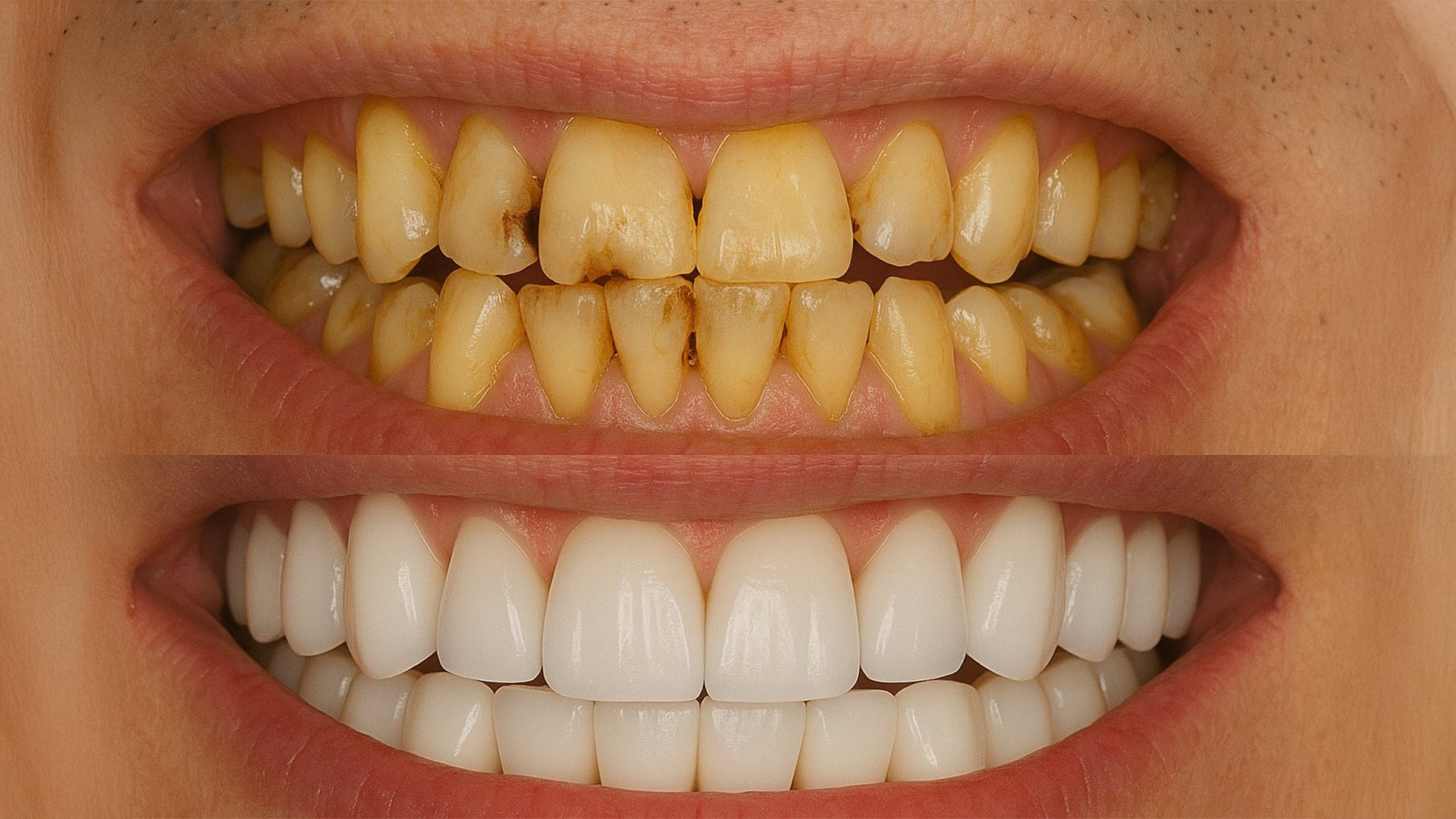
Before-and-after photos help patients visualize outcomes and gain trust in the process.
Who Performs Full Mouth Reconstruction?
These treatments require a team-based approach, involving:
- Prosthodontists
- Oral surgeons
- Periodontists
- Orthodontists
- Cosmetic dentists
Look for clinics offering multi-specialty care under one roof for better coordination.
How to Find Full Mouth Reconstruction Near Me
Tips for finding the right provider:
- Search for board-certified prosthodontists or restorative specialists
- Look at patient reviews and smile galleries
- Ask about technology, timelines, and guarantees
- Inquire about financial plans and aftercare options
/ FAQs
What is full mouth reconstruction?
A comprehensive restoration of all upper and lower teeth using multiple dental disciplines.
How much does it cost?
Typically $30,000–$70,000+, depending on the case and location.
Does insurance cover it?
Partially, especially for medically necessary elements.
How long does it take?
Between 3 and 18 months on average.
Can it be done abroad?
Yes, many patients choose countries like Turkey or Mexico for more affordable care.
Conclusion: A New Smile, A New Life
Full mouth reconstruction is more than a treatment, it’s a transformation. For those dealing with extensive dental damage, jaw issues, or functional limitations, it offers the chance to regain control over your health, appearance, and self-confidence.
With modern materials, advanced technology, and skilled dental teams, the smile you’ve been dreaming of is possible and lasting.
Let’s plan the right treatment together.
Free Assessment→- 1.Del Fabbro M, Pozzi A, Romeo D, de Araújo Nobre M, Agliardi E. Outcomes of Fixed Full-Arch Rehabilitations Supported by Tilted and Axially Placed Implants: A Systematic Review and Meta-Analysis. Int J Oral Maxillofac Implants 2022;37:1003-1025. PubMed 36170316
- 2.Howe MS, Keys W, Richards D. Long-term (10-year) dental implant survival: A systematic review and sensitivity meta-analysis. J Dent 2019;84:9-21. PubMed 30904559