
Periodontology General
General periodontology is where gum treatment starts: pocket depths are charted, bleeding on probing recorded and the maintenance interval set from them.
- Comprehensive examination
- Professional cleaning
- Preventive protocol
First consultation free · same-day reply · no price pressure

A general periodontal appointment is where gum treatment starts: pocket depths are charted, bleeding on probing is recorded, and the maintenance interval is set from those two measurements rather than from a calendar. In 41 patients followed for two and a half years after active therapy, sites that consistently did not bleed on probing predicted the absence of attachment loss with a negative predictive value of 98%, while bleeding itself predicted progression in only 6% of cases (PubMed 2262585). In adults without severe periodontitis, scheduled scaling produced no measurable difference in gingivitis over 24 to 36 months against no scheduled treatment (PubMed 30590875).
- 01Recall frequency is a risk decision, not a fixed number. In a Cochrane review of two trials with 1,736 participants, adults on risk-based recall and adults on six-month recall showed no difference over four years in decayed surfaces, percentage of bleeding sites or oral-health-related quality of life (1,478 participants, high-certainty evidence; PubMed 33053198).
- 02What routine scaling reliably changes is calculus. Pooling two trials with 1,711 participants, the standardised mean difference for gingivitis between six-monthly scaling and no scheduled scaling was -0.01 (95% CI -0.13 to 0.11), against -0.32 (95% CI -0.44 to -0.20) for calculus, and the review states the clinical importance of that small reduction is unclear (PubMed 30590875).
- 03A treated periodontitis patient moves onto supportive care every three to four months, built on mechanical plaque removal. Adding an Er:YAG laser, a low-dose doxycycline or photodynamic therapy produced an overall attachment level change of -0.233 mm (95% CI -1.065 to 0.598, p = 0.351) on weak evidence (PubMed 32060940). If a plan sold to you lists such adjuncts as the reason for its scope, ask what they add.
- 04The general appointment produces the pocket chart that decides the route: staging and grading of the disease on one side, surgery where pockets fail to close on the other. That is why it is booked before any restorative work is scheduled.
Periodontology is the field concerned with the specialized system of hard and soft tissues that support your teeth and keep them in their place in the jaw. This apparatus, known as the periodontium, has some very important functions: It securely attaches the teeth to the jaws.
| At a glance | |
|---|---|
| Duration | 1-2 sessions |
| Sessions | 2 |
| Warranty | · |
| Materials Used | Ultrasonic instruments · Manual periodontal instruments |
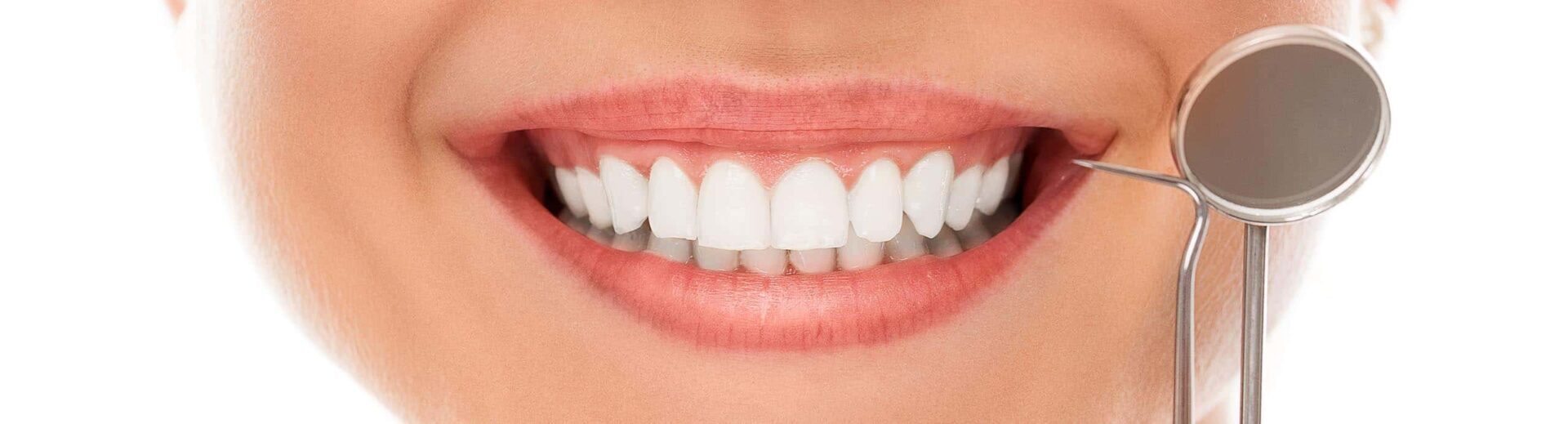
/ How Disease of the Gingiva and Gingivitis Present
This section describes gum recession.
It is the situation where the gum is pulled under the enamel layer, which is the protective layer of the tooth, and the root surfaces are exposed.
The root surfaces of the teeth are not resistant to external factors. When gingival recession occurs, the root surfaces are exposed. When gingival recession is not treated, sensitivity (twinges) and root caries may occur on the root surfaces over time and tooth can be lost.
Today, there are many treatments, both surgically and non-surgically, for gum recession. Surgically exposed root surfaces can be closed with microsurgical techniques and restored to the state they were in before the recession or further recession of the gum can be prevented. Sutures are removed 10-14 days after the microsurgical procedure and the tissue is left to heal.
Gingivitis is the condition in which bacterial plaque and tartar formed by the accumulation of food residues on the tooth and root surfaces cause inflammation in the gums along with bleeding and redness. Most of the time, these bacterial plaque and tartar are firmly adhered to the root surfaces of the teeth and cause the bone under the gum to dissolve due to inflammation. Loosening and abscess can occur in the teeth due to this bone resorption and teeth can be lost. When gum treatment is done, inflammation disappears and bone resorption stops.
Treatment Process
- 01Consultation: Initial examination and needs assessment; imaging where required.
- 02Treatment: Pocket measurement, cleaning, home-care guidance.
- 03Follow-up: Outcome review and aftercare guidance.
/ Periodontology and Gingivitis Care in Istanbul
Gingivitis care and laser gingival treatment are part of periodontal treatment planning.
Sometimes, gum surgery can be performed with microsurgical techniques and bone graft material can be used to replace the lost bone.
In order to prevent the recurrence of gingivitis, teeth should be brushed as and often as recommended by the dentist and oral hygiene should be paid attention to.
Before all dental treatments such as implant treatment, crown, bridge, zirconium, filling and prosthesis, braces, gums should be checked, inflammation should be removed and then these procedures should be performed. Otherwise, severe gingivitis may occur in the future and the treatments performed fail.
Laser Gingival Treatment
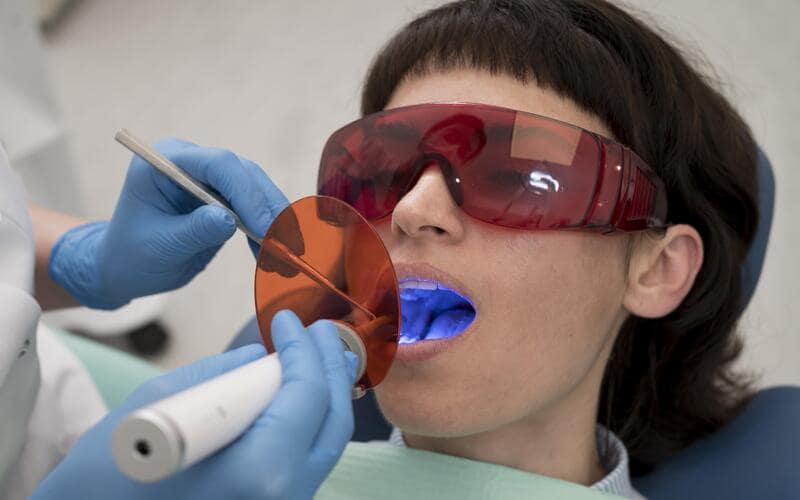
Today, lasers are used in many areas in gum treatment. It is especially used to ensure the harmony of the gums called 'pink aesthetics' with the teeth, to eliminate gum growth and to increase the visibility of the teeth.
In addition, lasers can be used to eliminate gingivitis, accelerate wound healing and eliminate bacteria.
- 1.Lang NP, Adler R, Joss A, Nyman S. Absence of bleeding on probing. An indicator of periodontal stability. J Clin Periodontol 1990;17:714-21. PubMed 2262585
- 2.Lamont T, Worthington HV, Clarkson JE, Beirne PV. Routine scale and polish for periodontal health in adults. Cochrane Database Syst Rev 2018;12:CD004625. PubMed 30590875
- 3.Fee PA, Riley P, Worthington HV, Clarkson JE, Boyers D, Beirne PV. Recall intervals for oral health in primary care patients. Cochrane Database Syst Rev 2020;10:CD004346. PubMed 33053198
- 4.Trombelli L, Farina R, Pollard A, Claydon N, Franceschetti G, Khan I, et al. Efficacy of alternative or additional methods to professional mechanical plaque removal during supportive periodontal therapy: A systematic review and meta-analysis. J Clin Periodontol 2020;47 Suppl 22:144-154. PubMed 32060940

Who is this treatment for?
- Exposed root surfaces due to gum recession
- Sensitivity or soreness on the root surfaces
- Gum inflammation accompanied by bleeding and redness
- Tooth mobility or abscess due to inflammation
- The need to eliminate gum overgrowth
- The need for regular follow-up in people with a history of gum disease
- The need for a gum check before implants and other dental treatments
Doctors specialising in this treatment

Frequently asked
01How often should scaling be performed?+
Twice a year is the standard recommendation. Those with a history of gum disease may require 3-monthly follow-ups as advised by their clinician.
02Does scaling damage enamel?+
No. Professional scaling does not harm tooth surfaces; on the contrary, by preventing gum inflammation it protects long-term dental health.
Periodontology
Gum Disease
Gum disease is two conditions: gingivitis stays in the gum and reverses with plaque control; periodontitis adds tissue and bone loss that does not reverse.
Explore→02Pink Aesthetics
Pink aesthetics corrects how much gum shows, its symmetry and colour; more than 2 mm of gum above the upper incisors at maximum smile counts as excessive.
Explore→03Periodontal Flap Surgery
Periodontal flap surgery lifts the gum, cleans the root under direct vision and stitches it back to close deep pockets that non-surgical cleaning left open.
Explore→04Gum Surgery
Gum surgery rebuilds lost soft tissue: it covers an exposed root, moves a receded gum margin back up and widens the band of keratinised tissue.
Explore→05Gingivectomy
Gingivectomy cuts away excess or diseased gum tissue; it is used to correct a gummy smile, eliminate periodontal pockets and recontour an irregular gum line.
Explore→Speak with your doctor about this treatment.
Not sure which treatment fits? Tell us what’s wrong →