
Gum Surgery
Gum surgery rebuilds lost soft tissue: it covers an exposed root, moves a receded gum margin back up and widens the band of keratinised tissue.
- Gum recession treatment
- Graft tissue augmentation
- Contour correction
First consultation free · same-day reply · no price pressure
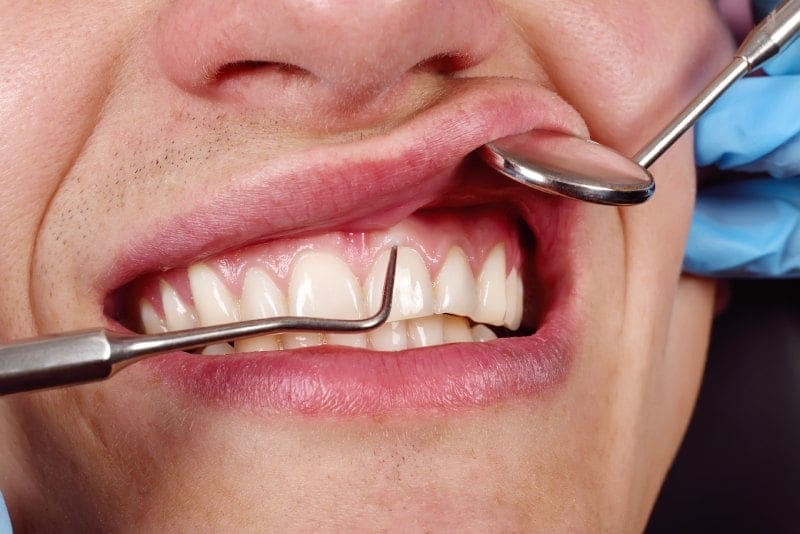
Gum surgery is the umbrella term for procedures that rebuild lost soft tissue: covering an exposed root surface, moving a receded gum margin back up, and widening the band of keratinised tissue. Screening 2,456 publications and including 234, a systematic review found that connective tissue graft based procedures produced the best outcomes for percentage of root coverage, attachment gain and keratinised tissue (PubMed 25644302). The direction of the cut is what separates gum surgery from gingivectomy: gingivectomy removes excess tissue, gum surgery restores tissue that is missing.
- 01Long-term data exists, and the largest fall happens in the first decade. In 102 subjects treated with connective tissue grafts between 1987 and 1996 across 221 recession sites, complete root coverage measured 88.7% at one year, 59.8% at 11 years, 44.4% at 21 years and 51.9% at 27 years, while the reduction in recession depth still stood at 81.7% at 27 years (PubMed 37794814). A written plan that promises permanent coverage is promising more than the published record.
- 02In the same series, keratinised tissue width increased after surgery and kept increasing over time, and it correlated positively with favourable outcomes, while a wider recession area at baseline predicted a poorer result (PubMed 37794814). The size of the defect at the first appointment is therefore what sets the expectation you travel with.
- 03The aesthetic result is a measured quantity. Across 50 randomised trials covering 1,820 subjects and 2,219 single recession defects, adding a subepithelial connective tissue graft to a coronally advanced flap raised both the clinician-scored root coverage aesthetic score and patient satisfaction, and greater root coverage tracked with higher clinician scores, though the same association did not reach significance for patient-perceived aesthetics (PubMed 40693671).
- 04The second outcome of root coverage surgery is sensitivity: in the same review, dentinal hypersensitivity was substantially reduced regardless of which technique was used (PubMed 40693671). Filling an intrabony bone defect is a separate procedure, carried out under periodontal flap surgery.
/ What Gum Surgery Is and How It Is Performed
What is Gum Surgery?
Surgical intervention may be required to eliminate some of the health problems experienced related to the gums. Due to the plaques that accumulate on the tooth surfaces, the formation of dental calculi and gum diseases may occur over time. If gum disease progresses, destruction of the bone structure that supports the tooth and, accordingly, tooth loss can be observed. The most effective way to prevent gum diseases that negatively affect overall health is not to disrupt routine dental examinations and regular cleaning of dental calculi. However, in case of bone destruction or gum disease, it may be possible to perform periodontal surgical procedures.
How is Gum Surgery Performed?
How gum surgery will be performed may vary depending on the current situation, discomfort and the degree of discomfort for each patient. The dentist first of all examines the patient in detail. If he decides that gum surgery is needed, he applies local anesthesia.
Depending on the condition to be treated during the operation, it may be necessary to make an incision in the gums, remove inflamed tissues and reshape them. Stitches are placed at the incision sites to complete the operation. After this procedure, the healing process of the gums begins. In order for this process to progress quickly and healthily, the medications prescribed by the doctor should be used regularly. The stitches in the gums are checked by removing them within the period determined by the dentist.
| At a glance | |
|---|---|
| Duration | 1 session |
| Sessions | 1 |
| Warranty | · |
| Materials Used | Periodontal surgical sets · Laser (case-dependent) |
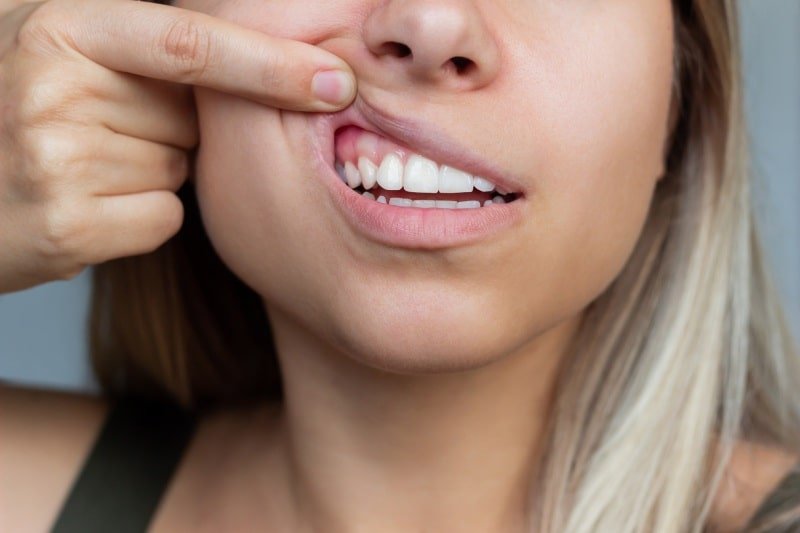
Treatment Process
- 01Consultation: Initial examination and needs assessment; imaging where required.
- 02Treatment: Case-specific surgical protocol under local anaesthesia.
- 03Follow-up: Outcome review and aftercare guidance.
/ Cases Requiring Gum Surgery and Surgical Periodontal Treatments
The surgical procedure used in the treatment of gum diseases is called gum surgery. If the tissues around the teeth become inflamed and damaged, and if these problems progress, gum surgery may need to be performed. There are several different conditions that require gum surgery to be performed.
As part of periodontology surgical procedures, gum tissues are typically rearranged and the gum shape can be fixed by improving its function. In this way, problems that may trigger oral hygiene problems are eliminated, the gums are restored to a suitable condition for providing long-term care, and it becomes easier to maintain oral health.
Surgical Periodontal Treatments
In advanced periodontal diseases, it may be necessary to apply surgical periodontal treatments. As part of surgical periodontal treatments, dental calculi in the deep pockets surrounding the teeth are cleaned and the pockets are eliminated. Creating a smooth and firm root surface also means providing patients with a gum surface where they can provide hygiene more easily. It is possible to treat gum recessions by repairing them with a free gum graft or connective tissue operations.
/ Flap Operation, Gingivectomy and Gingivoplasty
Flap Operation
A flap operation can be performed to provide the necessary plaque control by preventing the progression of periodontal diseases. The flap operation is performed under local anesthesia. After the area is numb, the inflamed tissues are cleaned by removing the gum so that the bone is exposed with the root surfaces. In addition, the root surfaces are flattened and the necessary corrections are made to the bone. Depending on the degree of damage to the bone, it may be possible to complete the procedure using a graft.
Flap operation is one of the most commonly performed periodontology surgical procedures. If harmful bacteria in the gum line where the gum and teeth meet are not cleaned and proper treatment is not applied, pain, tenderness and bleeding may develop along with inflammation of the tissues. In even more advanced cases, gum diseases can cause the loss of the bone structure that supports the tooth or various problems in the body.
Gingivectomy and Gingivoplasty
These are the procedures that are brought up in case of thickening at the edges of the patient's gum. After local anesthesia is applied, the gum is given a physiological form, fibrotic gum growths are treated, and the morphology of the gum is corrected.
/ Gum Surgery Duration and Risks
How Long Does Gum Surgery Take?
How long the gum surgery will take may vary depending on the type of surgical procedure to be performed and the size of the application area. In cases where a small procedure will be performed, gum surgery will be completed in a shorter time, while more extensive procedures may take up to a few hours.
What are the Risks of Gum Surgery?
Gum surgery can be defined as a surgical procedure aimed at restoring gum health that has deteriorated for various reasons and providing smile aesthetics. Gum surgery can be successfully completed as long as it is planned specifically for the patient, applied by specialists and experienced dentists in the field with the right techniques. On the other hand, the patient's general health condition, age and many other factors can trigger the risks associated with gum surgery, as with any surgical procedure.
It is possible to sort the risks of gum surgery as follows:
- As after every surgical procedure, there is a risk of developing an infection after gum surgery.
- Bleeding may occur in the mouth after gum surgery.
- The risk of experiencing an allergic reaction may be raised in some patients.
- The stitches may come undone before the dentist removes them.
- In some cases, a second surgery may be necessary due to the inability to achieve full recovery.
- Temporary taste and bad breath problems may occur.
/ Early Care After Gum Surgery
The postoperative process is of critical importance for gum surgery to be successful. In this context, many different points should be taken into account after gum surgery. The main elements to be considered after periodontal surgery can be listed as follows:
- After the surgical procedure is completed, nothing should be eaten or drunk for about 2 hours until the numbness of the area passes.
- Hot food and drinks should not be consumed during the first 24 hours after gum surgery, and the operation area should not be used during chewing.
- Do not smoke for at least 3 weeks after gum surgery.
- During the 2 weeks after gum surgery, it is recommended to use as little as possible if there is a prosthesis.
- A dressing can be placed on the surgical site to increase comfort and protect the wound area from irritation. It reduces pain, supports wound healing and makes daily activities easier; it is removed on day 3, 7 or 10, as the dentist decides.
- It is necessary not to lift the lip and cheek to see the stitches in the area where the gum surgery was performed, but also to avoid forced jaw movements such as laughing, yawning and excessive talking.
- It is important to make an ice compress on the first day so that swelling does not occur at the surgical site or the swelling does not reach very serious dimensions.
/ Recovery Follow-up After Gum Surgery
- Swelling may occur in the area after gum surgery. Usually, the swelling reaches its peak within the first 48 hours. It passes within an average of 7 to 10 days.
- Movements such as sucking and spitting on the operation area should be avoided so as not to cause bleeding at the operation site.
- In order to have a fast and healthy recovery process after gum surgery, the medications prescribed by the dentist should be used regularly. In case of postoperative pain, the use of simple painkillers may be beneficial. On the other hand, aspirin or similar salicylic acid-derived drugs should be avoided.
- Chills and weakness may occur on the first day after gum surgery. This is considered an extremely usual situation. Although patients can continue their daily activities during this period, they should stay away from exercises and activities that require excessive exertion.
- After gum surgery, depending on the dentist's recommendation, the areas that have not been operated on can be brushed properly.
- In order to ensure a good oral hygiene after surgery, the mouth should definitely be rinsed after meals.
- Dentist checks should not be interrupted to follow up the healing process.
- 1.Chambrone L, Tatakis DN. Periodontal soft tissue root coverage procedures: a systematic review from the AAP Regeneration Workshop. J Periodontol 2015;86:S8-51. PubMed 25644302
- 2.Bertoldi C, Consolo U, Lalla M, Zaffe D, Tanza D, Cairo F, et al. Long-term stability (21-30 years) of root coverage outcomes using sub-epithelial connective tissue grafts at single or multiple gingival recessions: A longitudinal case series. J Clin Periodontol 2024;51:2-13. PubMed 37794814
- 3.Cairo F, Couso-Queiruga E, Barbato L, Rupe C, Stuhr S, Chambrone L, et al. Clinician- and patient-reported outcomes following the surgical treatment of single gingival recession defects: A systematic review. Periodontol 2000 2025;99:7-20. PubMed 40693671

Who is this treatment for?
- Gum recession
- Gum disease or gum infection
- Inflamed and damaged tissues around the teeth
- Advanced periodontal diseases
- Pain, tenderness and bleeding with inflammation
- Thickening or fibrotic growths at the gum edges
- Destruction of the bone structure supporting the tooth
Doctors specialising in this treatment

Frequently asked
01What to expect after gum surgery?+
Some swelling and mild bleeding in the treated area for 1-2 days is normal. Analgesics and antibiotics are prescribed; sutures are removed within a week.
02Can multiple areas be treated in one session?+
This depends on the extent of the case and is determined at consultation.
Periodontology
Gingivectomy
Gingivectomy cuts away excess or diseased gum tissue; it is used to correct a gummy smile, eliminate periodontal pockets and recontour an irregular gum line.
Explore→02Periodontology General
General periodontology is where gum treatment starts: pocket depths are charted, bleeding on probing recorded and the maintenance interval set from them.
Explore→03Gum Disease
Gum disease is two conditions: gingivitis stays in the gum and reverses with plaque control; periodontitis adds tissue and bone loss that does not reverse.
Explore→04Pink Aesthetics
Pink aesthetics corrects how much gum shows, its symmetry and colour; more than 2 mm of gum above the upper incisors at maximum smile counts as excessive.
Explore→05Periodontal Flap Surgery
Periodontal flap surgery lifts the gum, cleans the root under direct vision and stitches it back to close deep pockets that non-surgical cleaning left open.
Explore→Speak with your doctor about this treatment.
Not sure which treatment fits? Tell us what’s wrong →