
TMJ Treatment
TMJ treatment manages temporomandibular disorders (TMD), which cause pain, joint noise and restricted movement in the jaw joint and chewing muscles.
- Stepwise approach
- Conservative first, surgical later
- Physiotherapy integration
First consultation free · same-day reply · no price pressure
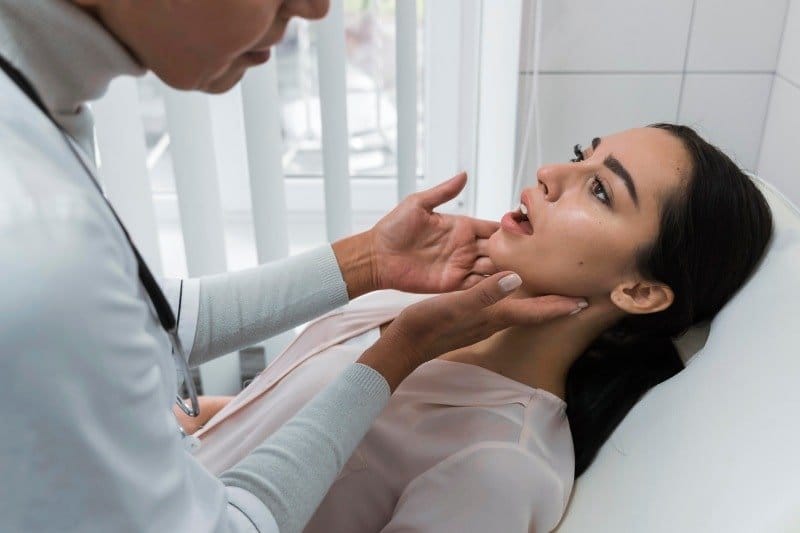
TMJ treatment is the management of temporomandibular disorders (TMD), a group of conditions producing pain, joint noise and restricted movement in the jaw joint and chewing muscles. A GRADE-based clinical practice guideline published in the BMJ in December 2023 describes TMD as the second most common musculoskeletal chronic pain disorder after low back pain, affecting 6-9% of adults (PubMed 38101929). For pain lasting three months or longer, its strong recommendations are all conservative: cognitive behavioural therapy, supervised jaw and postural exercise, therapist-assisted mobilisation and usual care. It recommends strongly against irreversible oral splints and discectomy. Ask for the written diagnosis before agreeing to any irreversible step.
- 01TMD is a diagnostic group, not one disease. A meta-analysis screening 2,741 records and pooling 21 studies put the prevalence of temporomandibular joint disorders at 31.1% in adults and older adults and 11.3% in children and adolescents, with disc displacement with reduction the single most common diagnosis at 25.9% in adults (PubMed 33409693).
- 02There is a validated diagnostic standard, DC/TMD. For pain-related TMD its criteria reach sensitivity of at least 0.86 and specificity of at least 0.98, with inter-examiner reliability of kappa 0.85 or better. Criteria for the other intra-articular disorders are explicitly not valid enough for clinical diagnosis and are for screening only (PubMed 24482784).
- 03Grinding the bite into a new shape is not a TMD treatment. A Cochrane review of six randomised trials covering 392 patients found no difference between occlusal adjustment and control for either treating or preventing TMD, and concluded the procedure cannot be recommended (PubMed 12535488).
- 04A splint on its own is not a settled answer. Pooling 52 randomised trials, a UK health technology assessment found no evidence that splints reduced pain up to three months compared with no splint or minimal intervention (standardised mean difference -0.18, 95% CI -0.42 to 0.06), and graded the evidence very low quality (PubMed 32065109).
- 05Physiotherapy points in a useful direction with limited certainty. Across 48 randomised trials, effect sizes for manual therapy and exercise ranged from low to moderate with no clear superiority over other conservative care, and the overall evidence was rated low (PubMed 26294683).
/ Jaw Joint Treatment
Disorders caused by the jaw joint may occur as a result of a sudden deterioration of the harmony of the surrounding tissues with the joint area connecting the upper jaw and lower jaw, or over time. Jaw joint disorders can progress as long as they are not treated. Depending on this, problems such as locking of the jaw, pain, restriction of mouth opening, head and neck pains may occur.
Diseases such as jaw shift, jaw dislocation and jaw joint disease are disorders that occur in the jaw joint. Diseases of the jaw joint are called TMJ, that is, Temporomandibular Joint Disorders. Basically, they are disorders that occur as a result of intra- or extra-articular pathology in joint functions.
Located just in front of the external auditory meatus, where the lower and upper jaw meet, TMJ is a highly mobile joint located between the temporal fossa beneath the temporal bone and the articular eminence of the temporal bone. Disorders that occur in the jaw joint affect the system consisting of teeth, lips, salivary glands, head and neck muscles and the ligaments.
| At a glance | |
|---|---|
| Duration | Case-dependent |
| Sessions | 3 |
| Warranty | · |
| Materials Used | Splint · Physiotherapy |
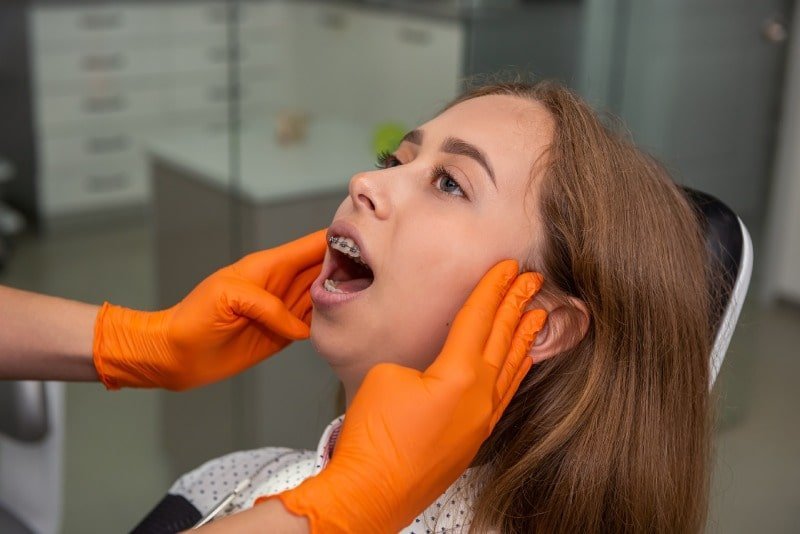
/ How is Jaw Joint Treatment Performed?
In order to start the treatment of the jaw joint, it is first necessary to correctly diagnose the disease. In order to diagnose jaw joint disorders, the closing system of the mouth, teeth and jaw joint are examined in detail. In addition, the characteristics of the chewing muscles are evaluated. After these researches are carried out in detail, patient-specific treatment planning is made. If deemed necessary, MRI examination and intra-articular imaging methods are applied.
Jaw joint treatment is performed according to the diagnosis made after clinical and radiological examinations performed by the maxillofacial surgeon on a patient-specific basis. As a result of the diagnosis, movement restriction, diet, exercise, medication or surgical treatment procedures may be applied.
The primary goal of jaw joint treatment is to identify and eliminate the cause that leads to jaw joint discomfort. In cases where a single form of treatment is not sufficient, multidisciplinary studies may be applied. According to the diagnosis, medical or surgical treatments may be on the agenda.
Medication Treatment
Drug therapy is often preferred in the treatment process of jaw joint diseases. Painkillers and muscle relaxants can optimize the patient's overall comfort. These medications prescribed by the doctor should be used regularly for a certain period of time. In this way, the patient's muscles relax, pain eases and the overall quality of life increases.
Treatment Process
- 01Diagnosis: The bite, tooth alignment and jaw joint are examined; MRI is ordered where needed.
- 02Medical & Physical Therapy: Painkillers, muscle relaxants, electrotherapy and heat reduce pain and spasm.
- 03Splint & Follow-up: A night splint is fitted and progress tracked with check-ups and jaw exercises.
/ Physical Therapy, Cold Treatment and Other Jaw Joint Methods
Physical Therapy
One of the most important methods in the treatment of jaw joint diseases is physical therapy. Electric currents, superficial and deep tissue heaters are used. In this way, it is possible to reduce muscle aches, relieve muscle spasms and stretch shortened tissues and muscles. Thanks to the relief of general pain and discomfort, the jaw joint can be restored to its normal function.
Cold Treatment
Cold therapy is usually one of the most effective methods for the treatment of jaw joint diseases after trauma or surgery. It may be possible to reduce swelling and pain in the jaw area with cold treatment. In this way, a rapid healing process can be encouraged.
Injection Into The Joint
In some cases, it may be necessary to inject into the joint in order to treat jaw joint diseases. In such cases, it may be the case of injecting painkillers directly into the joint, or injecting substances that will increase joint lubricity if joint irregularity has increased.
Splint Treatment
Another of the most preferred methods in the treatment of jaw joint is splint treatment. In patients where the disc is displaced, an appliance is placed in the mouth in order to bring the disc to a normal position. It is also possible to apply splint therapy to relax the muscles, correct closing disorders and minimize functional disorders in cases of grinding teeth.
Manipulation
Within the scope of the manipulation method, the jaw joint is manually moved to the normal position. In cases where the mouth opening is restricted, this method can be used to provide normal range of motion. Manipulation is one of the effective methods that can be preferred for the treatment of jaw joint diseases.
/ How Long, Candidates and Advantages of Jaw Joint Treatment
How long the jaw joint treatment will take may vary depending on the type, degree and preferred treatment method of the problem to be treated on a patient-specific basis. In general, it can be said that the treatment of the jaw joint can last between 3 months and 1 year. How long the jaw joint treatment will take can be determined by performing a patient-specific examination, diagnosing the problem, and planning treatment. In addition, it may vary depending on how long the patient follows the dentist's recommendations and how he responds to the applied treatment.
Who is the Jaw Joint Treatment Applied to?
Jaw joint treatment can mainly be applied to people who complain of jaw joint disorders. In this way, the symptoms caused by jaw joint diseases can be alleviated and the patient's quality of life can be optimized. In order to get the optimal benefit from jaw joint treatment, dentists who are specialists and experienced in their field should be consulted.
Advantages of Jaw Joint Treatment
- Jaw joint treatment can provide relief of ailments such as jaw pain, headache, ear pain and neck pain. With the right planned and applied jaw joint treatment, it may be possible to reduce or completely eliminate these pains.
- There is a risk that jaw joint problems may affect chewing function. Jaw joint treatment restores chewing functions and allows food to be chewed more easily.
- It supports the teeth to last longer by reducing the wear that occurs on the teeth due to jaw joint problems.
- It can eliminate the facial asymmetry caused by jaw joint problems.
- It can improve sleep quality by reducing the symptoms of sleep apnea caused by jaw joint problems.
- Through the elimination of jaw joint problems, the overall health condition is also optimized.
/ Things to Be Considered After Jaw Joint Treatment
After the jaw joint treatment, there are some important points that should be taken into account to experience a faster recovery process and to prevent recurrent problems. At the beginning of these comes nutrition. After the jaw joint treatment, patients should include soft and easy-to-chew foods in the nutrition program. Care should be taken not to consume hard foods and large bites. For this, it is important to break food into small pieces, chew it slowly and thoroughly. In addition, care should be taken to stay away from acidic and spicy foods and drinks, consume plenty of water.
Teeth should be brushed at least twice a day with a soft-bristled toothbrush and a fluoride toothpaste, flossing regularly. Routine dental check-ups should also not be disrupted. The jaw exercises given by the dentist should be performed regularly. However, exercises should not be performed more than necessary and a break should be taken if pain is felt.
In addition, for the protection of joint health, care should be taken not to chew gum, not to bite nails, to use a night guard if there are problems with clenching or grinding teeth during sleep. Another important issue is to stay away from stress and learn stress management techniques.
It is important for patients to fully comply with the dentist's recommendations both during and after jaw treatment, in order to experience a fast and healthy recovery process. In addition, thanks to this, it is possible to prevent the recurrence of jaw joint disorders.
Prices for Jaw Joint Treatment
Jaw joint disorders are often seen in men and women of different age groups. Prices for jaw joint treatment, like all other dental procedures, may vary depending on certain factors.
Prices for jaw joint treatment may vary depending on the type of patient-specific treatment, the quality of equipment used during treatment, the experience of the dentist performing the treatment, and the pricing policy of the clinic where the treatment is performed.
- 1.Busse JW, Casassus R, Carrasco-Labra A, Durham J, Mock D, Zakrzewska JM, et al. Management of chronic pain associated with temporomandibular disorders: a clinical practice guideline. BMJ 2023;383:e076227. PubMed 38101929
- 2.Valesan LF, Da-Cas CD, Réus JC, Denardin ACS, Garanhani RR, Bonotto D, et al. Prevalence of temporomandibular joint disorders: a systematic review and meta-analysis. Clin Oral Investig 2021;25:441-453. PubMed 33409693
- 3.Schiffman E, Ohrbach R, Truelove E, Look J, Anderson G, Goulet JP, et al. Diagnostic Criteria for Temporomandibular Disorders (DC/TMD) for Clinical and Research Applications: recommendations of the International RDC/TMD Consortium Network* and Orofacial Pain Special Interest Group†. J Oral Facial Pain Headache 2014;28:6-27. PubMed 24482784
- 4.Koh H, Robinson PG. Occlusal adjustment for treating and preventing temporomandibular joint disorders. Cochrane Database Syst Rev 2003:CD003812. PubMed 12535488
- 5.Riley P, Glenny AM, Worthington HV, Jacobsen E, Robertson C, Durham J, et al. Oral splints for patients with temporomandibular disorders or bruxism: a systematic review and economic evaluation. Health Technol Assess 2020;24:1-224. PubMed 32065109
- 6.Armijo-Olivo S, Pitance L, Singh V, Neto F, Thie N, Michelotti A. Effectiveness of Manual Therapy and Therapeutic Exercise for Temporomandibular Disorders: Systematic Review and Meta-Analysis. Phys Ther 2016;96:9-25. PubMed 26294683

Who is this treatment for?
- Pain, clicking or locking in the jaw joint
- Restricted mouth opening and difficulty moving the jaw
- Jaw joint problems accompanied by head and neck pain
- Jaw misalignment or jaw dislocation
- Swelling and pain in the jaw area after trauma or surgery
- Teeth clenching or grinding during sleep
Doctors specialising in this treatment

Frequently asked
01Does TMJ pain resolve on its own?+
Mild symptoms may improve with rest and anti-inflammatory medication; however, recurring clicking, locking, or chronic pain should always be assessed by a specialist. It is also common: a GRADE-based guideline published in the BMJ in December 2023 describes TMD as the second most common musculoskeletal chronic pain disorder after low back pain.
02How long does treatment take?+
With a splint and exercise protocol, symptoms typically reduce significantly within 4-12 weeks; full recovery varies from patient to patient.
TMJ & Bruxism
Bruxism Treatment
Bruxism treatment aims to limit the tooth wear and muscle pain caused by clenching or grinding; it starts with a night guard, adding botox in some cases.
Explore→02Night Guard
A night guard is a hard acrylic appliance made to an impression of your teeth; worn in sleep, it covers them and spreads the load of clenching and grinding.
Explore→03Joint Splint
A joint splint is a hard acrylic full-coverage intraoral appliance used for jaw joint and chewing muscle complaints, custom-made from an impression.
Explore→Speak with your doctor about this treatment.
Not sure which treatment fits? Tell us what’s wrong →