
Joint Splint
A joint splint is a hard acrylic full-coverage intraoral appliance used for jaw joint and chewing muscle complaints, custom-made from an impression.
- For TMJ pain
- Bruxism control
- Custom-made acrylic
First consultation free · same-day reply · no price pressure
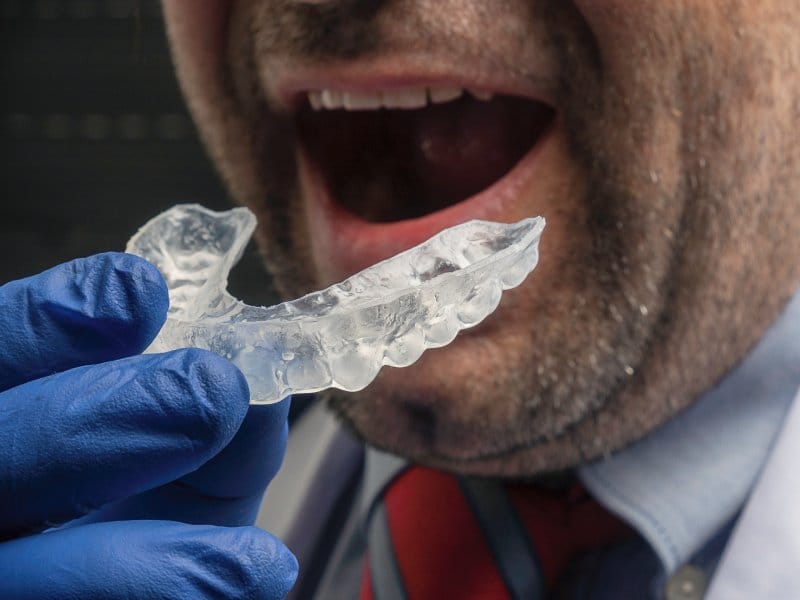
A joint splint is a hard acrylic full-coverage intraoral appliance used for jaw joint and chewing muscle complaints. It belongs to the same device family as a night guard, and the literature studies both under one heading, the occlusal splint. The design that genuinely repositions the joint by advancing the mandible has its own name, the anterior repositioning splint. Pooling 52 randomised trials, a UK health technology assessment found no difference in pain up to three months between splints and no splint or minimal intervention (standardised mean difference -0.18, 95% CI -0.42 to 0.06), on very low quality evidence (PubMed 32065109).
- 01The real separation between these appliances happens at design level. The distinction recognised in the literature is between a stabilisation splint, full coverage and flat plane with even contact on all teeth, and an anterior repositioning splint that advances the mandible. Names such as joint splint and night guard do not carry that distinction, so ask which design a written plan means.
- 02Advancing the mandible did not outperform a plain splint. A meta-analysis of anterior repositioning splints versus other occlusal splints for disc displacement with reduction screened four studies and pooled two (30 participants on anterior repositioning, 40 on other splints). There was no difference in joint clicking short term (risk ratio 1.25, 95% CI 0.91 to 1.72) and a small long-term difference favouring the other splints (2.40, 95% CI 1.04 to 5.55), on low to very low certainty evidence (PubMed 38263554).
- 03The Cochrane review most often quoted for splints has been withdrawn. The 2004 stabilisation splint review analysed 12 randomised trials and found insufficient evidence either for or against; Cochrane Oral Health withdrew it in 2016 as out of date and not meeting current methodological standards (PubMed 14973990, 26727210).
- 04Current guidance does not ban splints, it ranks them lower. The 2023 BMJ guideline issues a conditional recommendation against reversible occlusal splints for chronic TMD pain and a strong recommendation against irreversible oral splints, while every strong recommendation in favour is behavioural or exercise based (PubMed 38101929).
- 05Wearing a splint is not the same as permanently altering the bite, and should not become that. A Cochrane review of six randomised trials with 392 patients found occlusal adjustment no different from control for treating or preventing TMD, and concluded it cannot be recommended (PubMed 12535488).
/ Joint Splint Definition
Habits such as clenching or grinding teeth are usually caused by stress and can lead to jaw joint disorders. Changes to the structure of the jaw joint may occur as a result of a person clenching or grinding their teeth during sleep at night. Chewing muscles may get tired and tissues in the area may be damaged.
Due to joint problems, pains may be experienced on the side of the head, in the temples, inside and in front of the ears, on the cheeks, even in the area extending to the neck and back. In addition, problems such as mouth opening restriction, jaw locking and sound coming from the joint during chewing may occur.
In order to treat these ailments and increase the comfort of the patient's life, special intraoral devices, in other words, splints, are used in accordance with the course of joint disorders that may vary depending on the patient. The patient's response to treatment is evaluated with routine controls. Although the splint and the night guard are confused by many people, they are not the same.
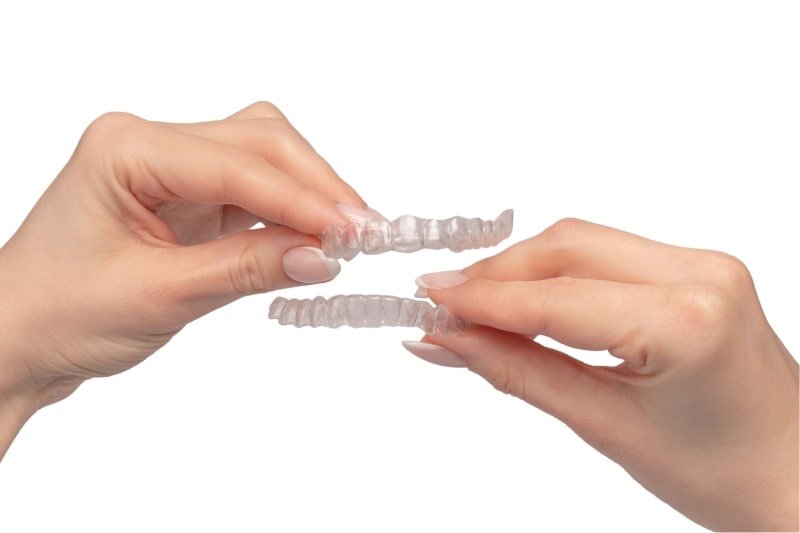
A joint splint is an intraoral device used to relax muscles during the treatment of joint disorders, reduce the pressure on the joint disc and help the temporomandibular joint tissues to renew themselves. The joint splint, which is a transparent appliance that can be easily inserted and removed and sits between the teeth, can be applied to both the lower and the upper jaw. It helps to eliminate tooth clenching and grinding problems, which are one of the most important causes of joint disorders.
When the joint splint first starts to be used, patients may have difficulty speaking for a while and there may be an increase in saliva flow. Over time, the patient gets used to the joint splint and such problems disappear.
| At a glance | |
|---|---|
| Duration | 2-3 sessions |
| Sessions | 3 |
| Warranty | 1 year |
| Materials Used | Acrylic splint |
/ Temporomandibular Joint Problems and Early Diagnosis
The temporomandibular joint, located on the right and left above the lower jaw bone, has an extremely complicated structure. Both articular heads are connected to the lower jaw. Therefore, in the movements or functional changes of the lower jaw, the two joints affect each other. Both joints should be healthy to prevent such undesirable situations.
Especially teeth clenching, teeth grinding and early contacts that occur during the mutual closing of the teeth can create a level of force that will damage the joint structures. In such cases, precautions should be taken before any damage to the joint structures occurs. Although it is not possible to bring the joint tissues to a completely healthy state with the treatment of joint disorders, with early diagnosis and treatment, a decrease in the symptoms and signs of patients can be achieved, accordingly, the progression of the problem can be prevented.
In people who have temporomandibular joint problems, there may be a sound during mouth opening and closing, slight pain or mouth restriction may occur. If joint disorders progress, friction of the bones on the joint surfaces can cause very severe pain, inability to close the mouth after opening, mouth opening restriction, head, neck and ear pain.
/ Joint Splint Use Cases and Symptoms
Joint splint use cases are associated with jaw joint disorder causes and symptoms.
It is possible to experience tooth clenching and grinding problems caused by stress, disorders in the teeth, posture disorders, jaw closing disorders and jaw joint disorders due to the habit of constantly chewing with one side. Such problems are caused by the loss of harmony between the disc in the joint and the articular surface of the jaw joint.
Some situations that require the use of joint splints can be listed as follows:
- The appearance of a squeaking or clicking sound during opening and closing the mouth
- Experiencing mouth opening restriction
- A feeling of pain and fatigue during chewing
- Formation of pain or asymmetry on the face
- Experiencing pain when the teeth are closed on each other
- The appearance of pain and stiffness in the neck area
- Ringing in the ears or feeling a pain similar to a migraine
- Experiencing pain and strain while yawning or chewing gum
- Locking of the jaw or dislocation of the joint
Factors such as crowding of the teeth, tooth losses experienced at an early age and irregular shifts in the teeth due to this, as well as incompatibilities between the jaws, can negatively affect the ideal jaw closure. It may be the case that sliding begins at the jaw closure and this turns into a habit.
/ Joint Splint Functions
A joint splint eliminates the tight contact of the teeth with each other, allowing the lower jaw to move freely and comfortably. When the lower jaw and the muscles attached to it perform their function correctly, the jaw joint can be repositioned correctly, and pain and disorders related to the muscles and the joint can be eliminated. With the usual closure, the joint settles into the correct position.
If a joint splint is used, jaw and dental disorders that cause joint discomfort are masked, and the disorder caused by the jaw or teeth can be temporarily corrected. This condition is considered to be the first step towards treating the discomfort in the jaw joint.
Joint splints should be used for 24 hours if necessary. In this way, joint problems that cause deterioration of a person's quality of life can be reduced. Thanks to the reduction of problems in the jaw joint and the restoration of the actual function of the joint, it is possible to identify the cause of the existing problem much more easily. Later, the treatment process can be started, which will completely correct the problem in the jaw and teeth.
/ Joint Splint Purpose and Examination
The temporomandibular joint is located on both sides of the head and in front of the ears, connecting the jawbone to the skull. The temporomandibular joint can move back and forth and sideways on its own. It plays a critical role in swallowing, speech and chewing functions. There are bones, the muscular system and other tissues around it. In the presence of jaw joint diseases, pain and tenderness may be experienced in the ear, jaw, jaw joint, the jaw and facial muscles and their surroundings.
Joint splinting method can be used to treat abrasions that occur on the teeth, pains felt during chewing, tooth clenching or grinding problems. The success of treatment depends on its planning according to individual needs. At the first stage, a detailed examination is performed by the dentist. If deemed necessary, X-rays and other imaging methods may be used.
The joint splint, which is an apparatus usually attached to the upper teeth, comes into contact with the lower teeth. It helps to relax the jaw muscles and relieve temporomandibular joint problems by maintaining the correct position of the jaw. Joint splints can be used both day and night. In order for the treatment to be successful, the patient should pay attention to making a use in accordance with the dentist's recommendations.
/ How is Joint Splint Treatment Performed?
The first step before the joint splint treatment is applied is to take the patient's measurements. The splint prepared according to the measurements taken is inserted, and the joint splint is re-prepared in case of a change in the joints. How soon the joint splint treatment will be completed may vary depending on the type, degree of joint disease and how the patient responds to the treatment. According to the planning made by the dentist , the joint splint can be used only at certain times during the day or all day. The patient is checked regularly to follow the development process experienced depending on the treatment. Treatment is continued by making the necessary updates.
Joint splint treatment can help reduce stress on the jaw joint and relieve pain. The relaxation of the jaw muscles also reduces the symptoms. The patient's jaw movements are controlled with a joint splint and the jaw position is corrected. With the ability to hold the jaw in the correct position, the patient's sleeping comfort is increased.
Treatment Process
- 01Consultation: Initial examination and needs assessment; imaging where required.
- 02Treatment: Impression, fabrication, adjustment visits.
- 03Follow-up: Outcome review and aftercare guidance.
/ Jaw Joint Disorder Problems and Joint Splint Planning
The sound coming from the jaw joint, experiencing pain in the head and neck area, jaw locking, tooth wear, jaw contraction, facial fatigue, restriction of jaw movements, a feeling of pain and pressure in the ear, wear of the teeth, a biting sensation as if there was a mismatch between the lower and upper jaw can be listed as the most common problems in jaw joint disorders. These problems cause jaw pain, as well as acting alone or together, which can lead to the jaw closing in the wrong position for very long periods of time.
Joint splints have an extremely important place in the field of dentistry. However, decisions regarding which patients the joint splint will be used in are made on a patient-specific basis after the examination and detailed analysis. After the diagnosis, joint splint treatment is applied if deemed necessary. In cases such as teeth clenching, teeth grinding, problems with the jaw muscles, incorrect tooth alignment, jaw shift and disc displacement, joint splinting may be preferred.
Although it is possible to use joint splint for aesthetic concerns such as removing gaps between teeth, the main purpose of joint splint use is to protect teeth, prevent possible deterioration in the jaw structure and restore jaw function, especially in patients suffering from bruxism problems caused by stress.
Joint Splint Prices
Joint splint is an apparatus specially produced for a person. Joint splint prices may vary depending on the type of splint, the material used in splint production, the scope of treatment to be applied, the dentist's specialty, the pricing policy of the clinic where the treatment will be applied, and many other different factors. Therefore, there is no standard joint splint price. Joint splint prices can be determined after the patient-specific examination and treatment planning processes.
- 1.Riley P, Glenny AM, Worthington HV, Jacobsen E, Robertson C, Durham J, et al. Oral splints for patients with temporomandibular disorders or bruxism: a systematic review and economic evaluation. Health Technol Assess 2020;24:1-224. PubMed 32065109
- 2.Maheshwari K, Srinivasan R, Singh BP, Tiwari B, Kirubakaran R. Effectiveness of anterior repositioning splint versus other occlusal splints in the management of temporomandibular joint disc displacement with reduction: A meta-analysis. J Indian Prosthodont Soc 2024;24:15-24. PubMed 38263554
- 3.Al-Ani MZ, Davies SJ, Gray RJ, Sloan P, Glenny AM. Stabilisation splint therapy for temporomandibular pain dysfunction syndrome. Cochrane Database Syst Rev 2004:CD002778. PubMed 14973990
- 4.Al-Ani MZ, Davies SJ, Gray RJ, Sloan P, Glenny AM. WITHDRAWN: Stabilisation splint therapy for temporomandibular pain dysfunction syndrome. Cochrane Database Syst Rev 2016;2016:CD002778. PubMed 26727210
- 5.Busse JW, Casassus R, Carrasco-Labra A, Durham J, Mock D, Zakrzewska JM, et al. Management of chronic pain associated with temporomandibular disorders: a clinical practice guideline. BMJ 2023;383:e076227. PubMed 38101929
- 6.Koh H, Robinson PG. Occlusal adjustment for treating and preventing temporomandibular joint disorders. Cochrane Database Syst Rev 2003:CD003812. PubMed 12535488

Who is this treatment for?
- Sounds coming from the jaw joint
- Jaw fatigue upon waking in the morning
- Pain and fatigue during chewing
- Restricted mouth opening or jaw locking
- Teeth clenching or grinding
- Pain and strain while yawning or chewing gum
Doctors specialising in this treatment


Frequently asked
01When is a splint indicated?+
Clicking in the jaw joint, morning jaw pain, teeth grinding and widespread headaches are key indications. A clinical examination is required for a definitive diagnosis. Expectations should follow the evidence: pooling 52 randomised trials, a health technology assessment found no difference in pain up to three months between splints and no splint.
02Is a splint a permanent solution?+
It controls symptoms and protects the joint; fully treating the underlying muscle and joint dysfunction may require additional physiotherapy or occlusal adjustment. In that same pooled set of 52 trials the splint did not outperform no splint on pain up to three months, so it belongs inside a wider plan rather than standing as a permanent fix.
TMJ & Bruxism
TMJ Treatment
TMJ treatment manages temporomandibular disorders (TMD), which cause pain, joint noise and restricted movement in the jaw joint and chewing muscles.
Explore→02Bruxism Treatment
Bruxism treatment aims to limit the tooth wear and muscle pain caused by clenching or grinding; it starts with a night guard, adding botox in some cases.
Explore→03Night Guard
A night guard is a hard acrylic appliance made to an impression of your teeth; worn in sleep, it covers them and spreads the load of clenching and grinding.
Explore→Speak with your doctor about this treatment.
Not sure which treatment fits? Tell us what’s wrong →