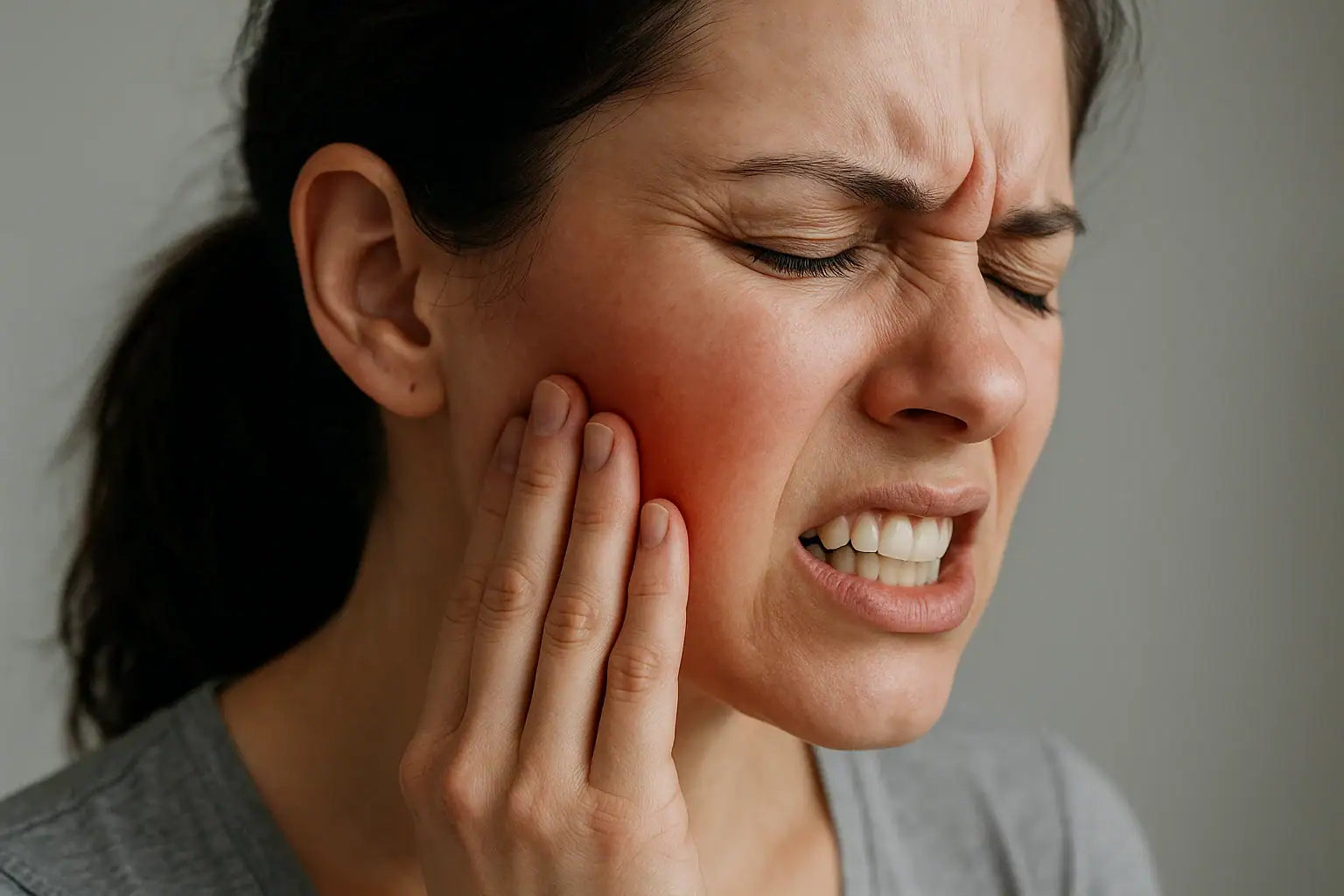
Jaw pain from teeth grinding is muscle and joint overload: sustained clenching keeps the masseter and temporalis engaged and loads the temporomandibular joint, producing morning stiffness, restricted opening, clicking and pain referred to the ear or temple. Temporomandibular disorders are widespread, affecting an estimated 29.5% of people, 36.7% of women against 26.7% of men, with myalgia the most reported sign at 37.2% (PubMed 41070533). Conservative care comes first: in a network meta-analysis of 153 randomised trials and 8,713 participants, therapies that encourage coping and movement ranked highest for pain relief (PubMed 38101924).
- 01Bruxism and temporomandibular disorder are separate diagnoses that overlap: bruxism is the grinding or clenching behaviour, TMD is the joint and muscle disorder, and either can be present without the other.
- 02TMD prevalence is estimated at 29.5% globally, 36.7% in women against 26.7% in men, higher in women than in men; myalgia is reported in 37.2%, joint clicking in 29.8% and limited opening or locking in 8.1% (PubMed 41070533).
- 03In a network meta-analysis of 153 trials and 8,713 participants, cognitive behavioural therapy with biofeedback or relaxation and therapist-assisted jaw mobilisation each reached a risk difference of 36% for achieving a minimally important pain reduction against placebo (PubMed 38101924).
- 04Supervised jaw exercise and stretching produced a risk difference of 43% (95% CI 33-51) for reaching the minimally important 5-point improvement on the SF-36 physical component score, at moderate certainty (PubMed 38101924).
- 05The home exercises in this guide are dose-defined rather than open-ended: the relaxed jaw position is held 5 to 10 seconds and repeated 10 times daily, controlled opening is held 5 seconds for 10 repetitions, and chin tucks are held 3 seconds for 10 repetitions, 2 to 3 sets.
Jaw pain that starts as a dull ache in the morning and intensifies through the day is often more than just stress or fatigue, it can be a sign of teeth grinding (bruxism) or temporomandibular joint (TMJ) dysfunction. According to the American Academy of Oral and Maxillofacial Surgeons, TMJ disorders affect an estimated 10 million Americans, and bruxism impacts nearly one in every five adults. The overlap between these two conditions is significant: chronic clenching and grinding place excessive stress on the TMJ, the hinge that connects your jaw to your skull, leading to inflammation, headaches, facial soreness, and restricted movement.
While professional dental evaluation is crucial for proper diagnosis, there are several dentist-approved home care strategies that can relieve discomfort, improve jaw mobility, and prevent long-term complications.
/ Understanding the TMJ and How Bruxism Causes Jaw Pain
The temporomandibular joint (TMJ) is one of the most complex joints in the human body. Located just in front of each ear, it connects the lower jaw (mandible) to the temporal bone of the skull. The TMJ allows three types of motion:
- Hinge movement – opening and closing the mouth
- Gliding movement – moving the jaw forward and backward
- Side-to-side movement – enabling chewing and speaking
When these motions are disrupted due to overuse, muscle tension, or misalignment, the result is temporomandibular joint disorder (TMD). Common symptoms include:
- Jaw pain or tenderness
- Clicking, popping, or grinding noises when opening the mouth
- Headaches or earaches
- Pain while chewing or talking
- Difficulty opening the mouth fully
- Facial muscle tightness or swelling
How Bruxism Causes TMJ Pain
Bruxism refers to the involuntary clenching or grinding of teeth, often during sleep. The pressure exerted during grinding can exceed 250 pounds per square inch, far more than the force needed to chew food, placing enormous strain on the jaw muscles and TMJ.
1. Muscle Overload and Inflammation
When jaw muscles like the masseter and temporalis are continuously engaged, microscopic tears and inflammation occur, leading to morning stiffness and dull, radiating facial pain.
2. TMJ Disc Displacement
Excessive grinding can shift the cushioning disc that separates the jawbone from the skull, producing the characteristic click or pop sound. Repeated displacement leads to chronic pain and restricted motion.
3. Bite Misalignment and Dental Damage
Over time, grinding wears down enamel and alters bite alignment. This imbalance worsens joint stress, perpetuating a pain-spasm-pain cycle.
4. Stress and Neurochemical Feedback Loops
Bruxism is often stress-induced. Elevated cortisol levels increase muscle tension, making nighttime clenching worse. The persistent strain triggers inflammation, which then amplifies pain sensitivity through nerve pathways.
/ TMJ and Bruxism Risk Factors
TMJ and Bruxism: The Overlapping Risk Factors
Several factors heighten your risk for developing both bruxism and TMJ dysfunction:
| Risk Factor | Impact |
|---|---|
| Stress & Anxiety | Triggers unconscious clenching or grinding. |
| Malocclusion (bad bite) | Causes uneven pressure distribution across the jaw. |
| Sleep Disorders | Bruxism commonly co-occurs with sleep apnea. |
| Arthritis or Joint Degeneration | Erodes cartilage and reduces joint cushioning. |
| Hormonal Fluctuations | TMD is more common in women, linked to estrogen-related ligament laxity. |
| Postural Imbalance | Forward head posture strains jaw alignment and neck muscles. |
Diagnosis: How Dentists Identify TMJ-Related Bruxism
A comprehensive dental exam is the best way to differentiate TMJ disorder from other conditions like sinus infections or ear issues. A dentist-approved TMJ evaluation usually includes:
- Medical & Dental History Review – Identifying stressors, injuries, and lifestyle factors.
- Palpation and Range of Motion Tests – Checking muscle tenderness and jaw movement.
- Bite and Alignment Analysis – Detecting occlusal interferences.
- Imaging (CBCT or MRI) – Visualizing joint structure, disc position, and degeneration.
- Sleep Study (if needed) – Assessing nocturnal bruxism or sleep apnea links.
Before exploring exercises, it’s vital to address underlying habits and environmental factors that aggravate TMJ pain.
/ Dentist-Approved At-Home Remedies for Jaw Pain and TMJ Relief
1. Apply Moist Heat or Cold Compresses
- Heat: Use a warm, moist towel for 15–20 minutes, twice daily, to increase blood flow and relax muscles.
- Cold: Apply an ice pack wrapped in cloth for 10 minutes to reduce acute inflammation.
Alternate heat and cold for best results, heat loosens tight muscles, while cold minimizes swelling.
2. Adjust Your Sleeping Position
- Sleep on your back with a supportive pillow under your neck.
- Avoid stomach-sleeping, which misaligns the jaw.
- Consider a night guard to cushion teeth and limit grinding during sleep.
3. Monitor Stress and Tension
Stress reduction is central to bruxism management.
- Practice mindful breathing or progressive muscle relaxation before bed.
- Gentle yoga and neck stretches reduce clenching intensity.
- Avoid excessive caffeine or nicotine, which heighten muscle activity.
4. Eat a TMJ-Friendly Diet
- Opt for soft foods (soups, smoothies, eggs, yogurt).
- Avoid hard or chewy foods (nuts, gum, steak).
- Cut food into small pieces to reduce chewing strain.
5. Correct Your Posture
Postural correction reduces neck and jaw pressure.
- Keep ears aligned over shoulders.
- Adjust your workstation ergonomically.
- Take micro-breaks during computer use to stretch your jaw and neck.
/ TMJ Exercises for Gentle Jaw Relief
Clinical studies show that guided physical therapy and stretching can significantly alleviate TMJ discomfort and improve jaw range of motion. The following exercises are recommended by dental and physiotherapy associations for safe home practice.
⚠️ Important: Always perform these exercises gently. If pain intensifies, stop and consult your dentist or physiotherapist.
1. Relaxed Jaw Exercise
Purpose: Reduce baseline muscle tension and train proper jaw resting posture.
Steps:
- Sit upright with shoulders relaxed.
- Let your tongue rest lightly on the roof of your mouth behind your upper front teeth.
- Allow your teeth to come apart slightly, lips closed.
- Hold for 5–10 seconds, repeat 10 times daily.
This helps retrain the jaw to remain relaxed rather than clenched unconsciously.
2. Goldfish Exercise (Partial and Full Opening)
Purpose: Strengthen TMJ muscles and restore alignment.
Partial Opening:
- Place one finger in front of your ear (TMJ area) and another on your chin.
- Drop your lower jaw halfway and close again.
- Repeat 6 times, 1–2 sets daily.
Full Opening:
- Same as above, but open the mouth fully until mild tension is felt, not pain.
- Repeat 6–10 times.
3. Controlled Jaw Opening
Purpose: Enhance smooth motion and prevent deviation.
Steps:
- Place one finger on your chin for guidance.
- Slowly open your mouth in a straight line; avoid shifting to one side.
- Hold for 5 seconds, then close gently.
- Repeat 10 times.
Tip: Do this in front of a mirror to monitor symmetry.
/ TMJ Exercises for Jaw Stability
4. Chin Tuck Exercise
Purpose: Correct head-forward posture and reduce neck tension contributing to TMJ strain.
Steps:
- Sit or stand upright, looking straight ahead.
- Pull your chin straight back, creating a “double chin.”
- Hold 3 seconds, repeat 10 times, 2–3 sets per day.
5. Resistance Exercises
Purpose: Strengthen jaw muscles and stabilize the joint.
For Opening:
- Place your thumb under your chin.
- Open mouth slowly while applying gentle upward pressure.
- Hold 5 seconds, relax.
For Closing:
- Place your thumb and index finger between your chin and bottom lip.
- Close mouth while applying light resistance.
Repeat 5–6 times each direction.
6. Tongue-Up Exercise
Purpose: Improve coordination and joint stability.
Steps:
- Place your tongue on the roof of your mouth.
- Slowly open and close while keeping tongue contact.
- Repeat 10–12 times.
7. Side-to-Side Movement
Purpose: Stretch lateral pterygoid muscles responsible for grinding motion.
Steps:
- Place a thin object (like a pencil) between front teeth.
- Move jaw gently side to side, keeping object steady.
- Gradually increase object thickness over time to enhance mobility.
8. Forward Jaw Movement
Purpose: Improve anterior mobility for chewing and speaking.
Steps:
- Place a small object between front teeth.
- Move lower jaw forward so bottom teeth are in front of top teeth.
- Hold 3 seconds, repeat 8–10 times.
/ Professional TMJ and Bruxism Treatment
While mild discomfort responds to home care, certain symptoms require prompt dental or medical evaluation:
- Persistent jaw locking (can’t open or close fully)
- Severe pain radiating to ear or neck
- Swelling or asymmetry in the jaw area
- Headaches unresponsive to over-the-counter painkillers
- Clicking or popping accompanied by sharp pain
- Tooth wear, fractures, or sensitivity from chronic grinding
Clinical Treatments for Persistent TMJ and Bruxism
If home management isn’t sufficient, dentists may recommend advanced interventions tailored to your condition’s severity.
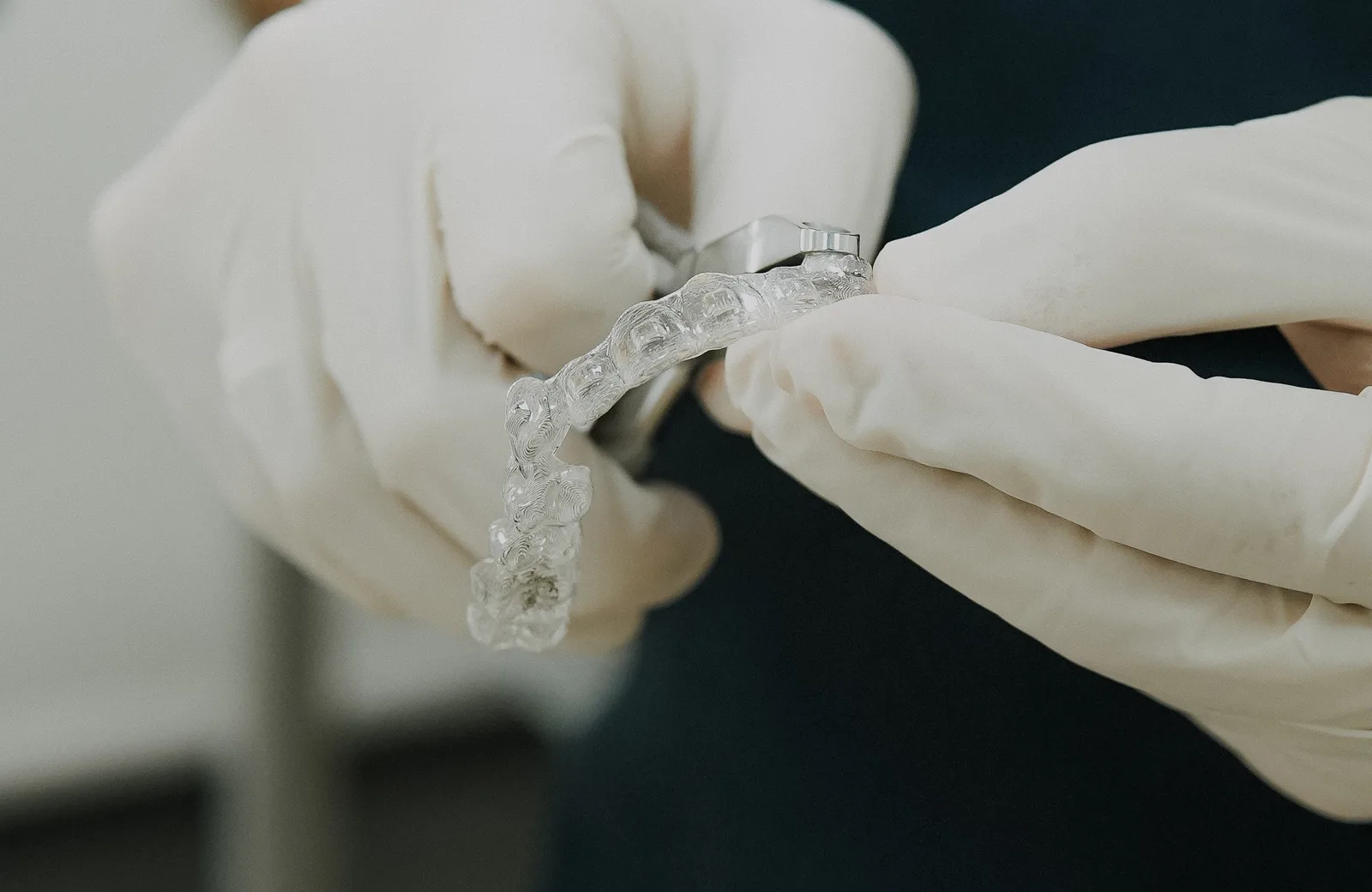
1. Occlusal Splints and Night Guards
Custom-made acrylic devices worn over teeth redistribute biting forces and prevent enamel wear. Studies show a 70% reduction in morning jaw pain within three months of consistent night-guard use.
2. Physical Therapy and Ultrasound
Targeted physiotherapy improves joint mobility and reduces inflammation. Ultrasound or low-level laser therapy can accelerate healing by boosting blood flow to the joint capsule.
3. Trigger-Point Injections or Botox
Botulinum toxin (Botox) injections temporarily relax overactive jaw muscles, reducing bruxism intensity by up to 60–80% in chronic cases. Effects typically last 3–6 months.
4. Orthodontic or Occlusal Adjustment
Correcting bite alignment with braces or reshaping enamel surfaces can resolve uneven stress on the TMJ.
5. Psychological and Behavioral Therapy
Biofeedback, mindfulness, and cognitive-behavioral therapy (CBT) effectively reduce stress-related clenching behaviors and improve sleep quality.
6. Surgical Intervention (Last Resort)
In severe cases involving joint degeneration or disc displacement, minimally invasive arthrocentesis or arthroscopy may be indicated. Open surgery is rare and reserved for structural deformities.
/ Lifestyle Adjustments for TMJ Relief
Lifestyle Adjustments to Prevent TMJ Flare-Ups
Sustainable improvement comes from lifestyle balance. Integrate these long-term strategies into your daily routine:
| Habit | Why It Helps |
|---|---|
| Avoid resting chin on your hand | Prevents jaw misalignment and strain. |
| Limit gum chewing and hard foods | Reduces repetitive motion stress. |
| Maintain good sleep hygiene | Minimizes nighttime clenching. |
| Manage stress through mindfulness | Lowers cortisol and muscle tension. |
| Stay hydrated | Keeps joint cartilage lubricated. |
| Regular dental check-ups | Detect early wear and prevent progression. |
The Science Behind At-Home TMJ Relief
Clinical literature supports conservative, non-surgical care as first-line treatment for TMJ and bruxism-related pain. A 2024 systematic review in the Journal of Oral Rehabilitation found that exercise therapy and splint use improved function and pain scores in 80% of patients within eight weeks. Another 2025 Cochrane Review confirmed that combining physical therapy, behavioral modification, and occlusal guards provided better outcomes than medication alone.
Key Takeaways
- TMJ and bruxism are closely linked. Clenching strains the jaw joint, while misaligned bites and stress amplify grinding.
- Gentle, dentist-approved exercises restore mobility and relieve pain without invasive treatment .
- Night guards, stress management, and posture correction are essential for long-term relief.
- Persistent or severe pain requires dental evaluation to rule out arthritis, disc displacement, or structural abnormalities.
- Early intervention prevents chronic inflammation and permanent joint damage.
/ FAQs
1. How long does it take for TMJ pain to heal?
Mild TMJ pain can improve within 2–4 weeks of consistent exercises and stress management. Chronic cases may take several months, depending on joint damage and grinding intensity.
2. Are TMJ exercises safe to do daily?
Yes, provided movements are gentle and pain-free. Overexertion can worsen inflammation, so focus on consistency rather than force.
3. Do night guards really help with jaw pain?
Absolutely. Custom night guards reduce clenching pressure by distributing bite forces evenly, protecting teeth and joints.
4. Can bruxism cause headaches or ear pain?
Yes. The temporalis and masseter muscles radiate pain to temples and ears, often mimicking migraines or ear infections.
5. When should I see a dentist or specialist?
If pain persists beyond two weeks, if your jaw locks or clicks painfully, or if you notice significant tooth wear or facial asymmetry.
Final Thoughts
TMJ disorders and bruxism can transform everyday activities, eating, talking, even smiling, into painful challenges. Fortunately, most cases respond remarkably well to self-care, targeted exercises, and professional dental guidance. By combining dentist-approved home techniques with lifestyle adjustments, you can relax overworked muscles, reduce inflammation, and regain comfortable movement.
Your jaw is one of the hardest-working joints in the body, give it the care it deserves. If pain persists, consult a TMJ-specialized dentist or physiotherapist to tailor a treatment plan that restores balance to both your bite and your life.
Let’s plan the right treatment together.
Free Assessment→- 1.Alqutaibi AY, Alhammadi MS, Hamadallah HH, Altarjami AA, Malosh OT, Aloufi AM, et al. Global prevalence of temporomandibular disorders: a systematic review and meta-analysis. J Oral Facial Pain Headache 2025;39:48-65. PubMed 41070533
- 2.Yao L, Sadeghirad B, Li M, Li J, Wang Q, Crandon HN, et al. Management of chronic pain secondary to temporomandibular disorders: a systematic review and network meta-analysis of randomised trials. BMJ 2023;383:e076226. PubMed 38101924