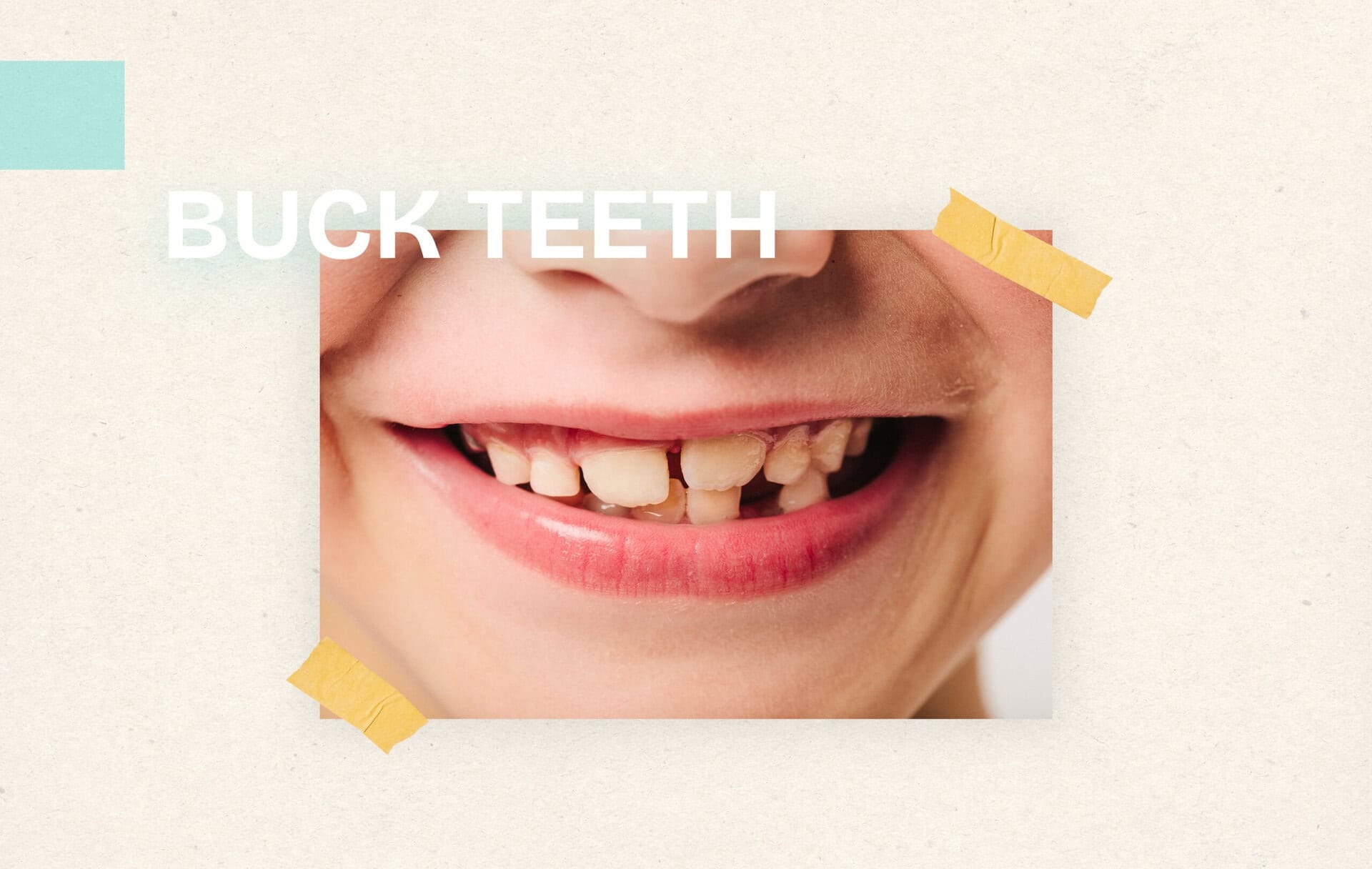
Buck teeth is the everyday term for upper front teeth that sit noticeably forward of the lower ones, described clinically as increased overjet and usually part of a Class II malocclusion. It matters beyond appearance because prominent incisors are more exposed to injury: in a review of 1,367 orthodontic patient records, an overjet above 3 mm carried an odds ratio of 1.66 for incisor trauma with adequate lip coverage and 2.03 when lip coverage was inadequate (PubMed 19169637). Correction uses fixed braces, clear aligners, growth-guiding functional appliances in children, and orthognathic surgery where the discrepancy is skeletal.
- 01Buck teeth means increased overjet, a horizontal measurement, and is not the same as an overbite, which describes vertical overlap; the two often occur together but are measured separately.
- 02Prominent incisors raise trauma risk measurably: across 1,367 patient records, an overjet above 3 mm gave odds ratios of 1.66 with adequate lip coverage and 2.03 with inadequate lip coverage, against a normal 0 to 3 mm overjet (PubMed 19169637).
- 03Early two-phase treatment reduces incisal trauma: in a Cochrane review of 27 randomised trials with 1,251 participants, new trauma affected 30 percent (51 of 171) of the late-treatment group versus 19 percent (31 of 161) treated early with a functional appliance, odds ratio 0.56 (PubMed 29534303).
- 04Early treatment does not produce a better final result: once both groups finished, final overjet differed by a mean of 0.21 mm and ANB by -0.02 degrees between early and late treatment (PubMed 29534303).
- 05In adolescents, removable functional appliances reduced final overjet by a mean of 4.62 mm and fixed functional appliances by 5.46 mm compared with no treatment (PubMed 29534303).
Buck teeth is a common dental term used to describe protruding front teeth, usually the upper incisors. Beyond appearance, buck teeth can affect oral health, speech, confidence, and facial harmony.
In this comprehensive guide, you’ll learn:
- What are buck teeth?
- What causes buck teeth?
- How to fix buck teeth
- How to get rid of buck teeth naturally or clinically
- Can braces fix buck teeth?
- Modern treatment options for all ages
/ Buck Teeth Meaning and Causes
What Are Buck Teeth?
Buck teeth refer to a condition where the upper front teeth protrude significantly forward compared to the lower teeth. In dentistry, this is known as:
- Increased overjet
- Class II malocclusion
- Protruding incisors
While mild buck teeth may be purely cosmetic, severe cases can cause:
- Speech difficulties
- Lip incompetence
- Mouth breathing
- Higher risk of tooth trauma
- Jaw discomfort
- Self-esteem issues
Buck Teeth vs Normal Overbite
It’s important to differentiate:
| Feature | Normal Bite | Buck Teeth |
|---|---|---|
| Upper teeth position | Slightly over lower teeth | Significantly forward |
| Facial balance | Harmonious | Lips may protrude |
| Function | Normal chewing | Speech issues possible |
| Trauma risk | Low | High |
Buck Teeth Emoji & Internet Culture
There is no official Unicode emoji for buck teeth. However, users often refer to:
- (big grin emoji)
- (grimace emoji)
- (nerd emoji)
These are commonly used to represent buck teeth humorously, but in real life, buck teeth deserve proper professional attention.
What Causes Buck Teeth?
Understanding what causes buck teeth is key to choosing the right treatment.
1. Genetics
The most common cause. Jaw size, tooth size, and bite patterns are inherited.
2. Thumb Sucking & Pacifier Use
Prolonged habits after age 3–4 can push front teeth forward.
3. Tongue Thrusting
Pushing the tongue against teeth during swallowing.
4. Mouth Breathing
Chronic nasal blockage changes jaw development.
5. Early Tooth Loss
Loss of baby teeth too early can shift alignment.
6. Small Lower Jaw
This creates a relative protrusion of upper teeth.
7. Large Upper Teeth
Disproportionate tooth size.
/ Buck Teeth Risks and Treatment Options
Are Buck Teeth Bad?
Buck teeth are not always medically dangerous, but they can cause:
- Increased cavity risk
- Gum problems
- Tooth wear
- Lip injuries
- Speech issues
- Jaw pain
- Low self-confidence
- Severe buck teeth also raise the risk of fractures during accidents.
How to Fix Buck Teeth
Many people ask how to fix buck teeth. Treatment depends on:
- Age
- Severity
- Jaw structure
- Patient goals
1. Braces (Most Common Solution)
Can braces fix buck teeth?
Yes! Braces are the gold standard.
How braces help:
- Move teeth backward
- Close gaps
- Align bite
- Improve facial profile
Types:
- Metal braces
- Ceramic braces
- Lingual braces
- Self-ligating braces
Treatment time: 12–30 months
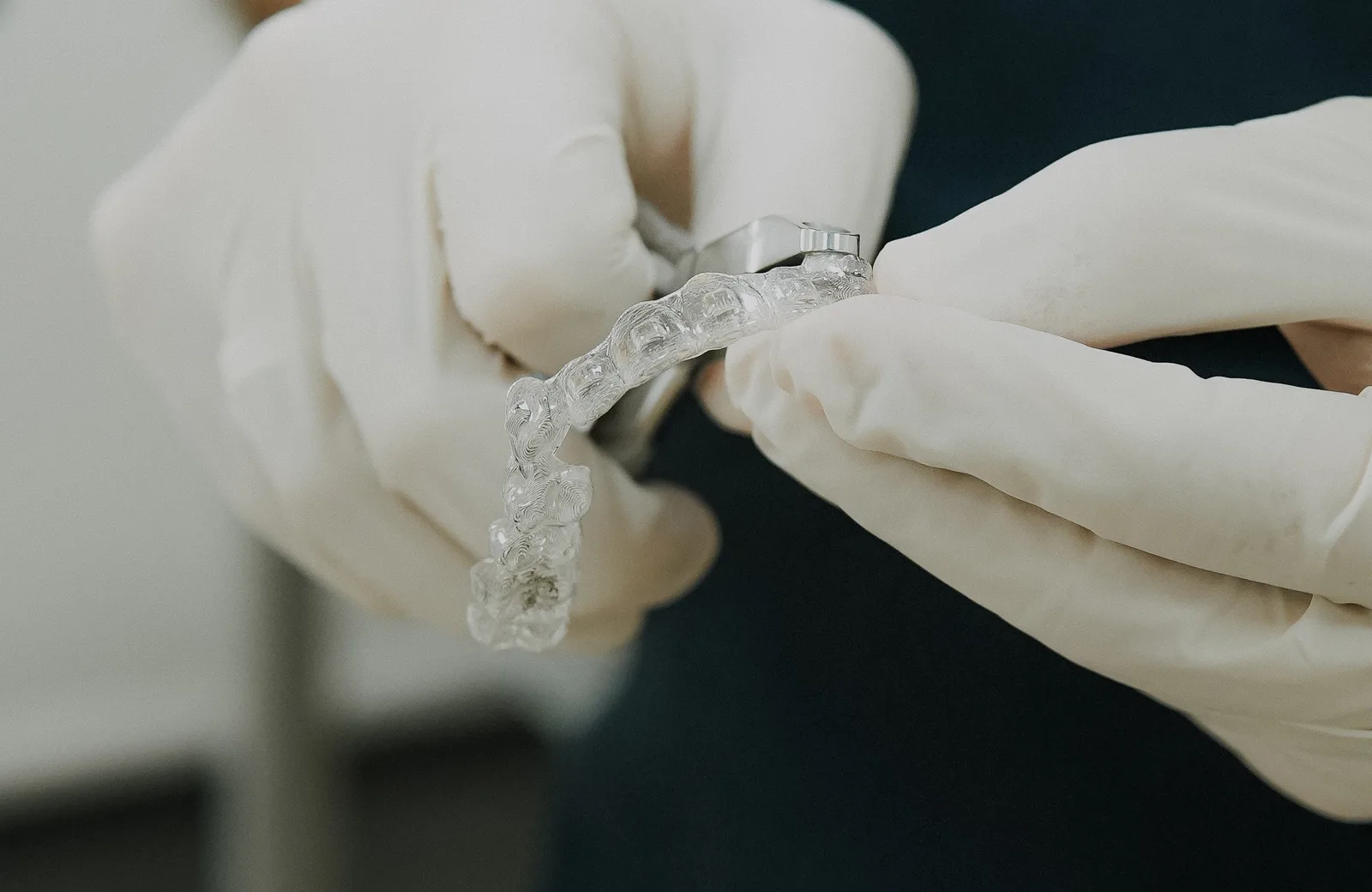
2. Clear Aligners ( Invisalign )
Perfect for adults seeking discreet treatment.
Benefits:
- Nearly invisible
- Removable
- Comfortable
- Digital planning
Works best for mild to moderate buck teeth.
3. Functional Appliances (Children & Teens)
Used during growth:
- Twin block
- Herbst appliance
- Headgear
These guide jaw development early.
4. Tooth Extraction (Severe Cases)
Sometimes necessary to:
- Create space
- Reduce protrusion
- Improve facial balance
Only recommended when clinically necessary.
5. Jaw Surgery ( Orthognathic Surgery )
For skeletal problems:
- Severe jaw mismatch
- Breathing issues
- Facial asymmetry
Usually combined with braces.
6. Cosmetic Dentistry (Mild Cases)
Not a true correction but aesthetic improvement:
- Veneers
- Bonding
- Crowns
⚠️ Does not fix bite problems.
/ Buck Teeth Correction and Treatment Options
How to Get Rid of Buck Teeth Naturally
Teeth cannot be moved into a new position naturally; that takes orthodontic treatment.
However, you CAN:
✔ Stop thumb sucking
✔ Improve tongue posture
✔ Treat mouth breathing
✔ Get early orthodontic evaluation
These prevent worsening but do not reverse buck teeth.
Can Braces Fix Buck Teeth?
Absolutely YES.
Braces:
- Apply controlled pressure
- Move teeth backward
- Correct bite relationship
- Improve facial profile
Success rate is extremely high when:
✔ Patient wears elastics
✔ Oral hygiene is good
✔ Follow-ups are regular
Buck Teeth Treatment by Age
Children (6–10)
- Habit correction
- Growth guidance
- Early appliances
Teenagers
- Braces
- Aligners
- Headgear
Adults
Braces
- Invisalign
- Surgery (if needed)
Buck Teeth Before and After
Patients often experience:
✔ Straighter smile
✔ Improved confidence
✔ Better speech
✔ Balanced profile
✔ Easier oral hygiene
Are Buck Teeth Genetic?
Yes, in most cases. You may inherit:
- Jaw size
- Tooth size
- Bite pattern
If parents had buck teeth, children should be evaluated early.
Buck Teeth and Speech Problems
Buck teeth can cause:
- Lisp
- Difficulty with “s” and “f” sounds
- Air leakage while speaking
Orthodontic correction often improves speech clarity.
Buck Teeth and Facial Appearance
Common facial changes:
- Protruding lips
- Short chin appearance
- Convex facial profile
Correcting buck teeth often:
✔ Sharpens jawline
✔ Balances face
✔ Improves lip seal
Buck Teeth and Oral Health Risks
Untreated buck teeth increase risk of:
- Cavities
- Gum disease
- Tooth fractures
- Enamel wear
Buck Teeth Cost
Prices depend on:
- Country
- Treatment type
- Duration
Average ranges:
- Braces: $3,000 – $7,000
- Invisalign: $4,000 – $6,500
- Surgery: $15,000+
/ Buck Teeth FAQs
What are buck teeth?
Buck teeth are protruding upper front teeth caused by genetics, habits, or jaw structure.
How to fix buck teeth?
Braces, aligners, functional appliances, or surgery depending on severity.
How to get rid of buck teeth naturally?
You can’t reverse naturally, but you can prevent worsening.
Can braces fix buck teeth?
Yes, braces are the most effective solution.
Are buck teeth permanent?
Without treatment, yes. Orthodontics can correct them.
/ Buck Teeth Prevention and Smile Impact
Buck teeth and overbite comparisons help separate protrusion from vertical overlap.
Buck Teeth vs Overbite
Buck teeth = protrusion
Overbite = vertical overlap
They often occur together but are not the same.
Buck Teeth Prevention
✔ Stop thumb sucking early
✔ Treat allergies
✔ Encourage nasal breathing
✔ Early orthodontic screening
✔ Regular dental checkups
Psychological Impact of Buck Teeth
Many patients report:
- Social anxiety
- Hiding smile
- Low confidence
- Teasing in childhood
After treatment:
✔ Higher self-esteem
✔ More smiling
✔ Better social life
Buck Teeth and Smiling
A buck teeth smile emoji may look funny, but in real life:
Your smile deserves confidence, not hiding.
Final Thoughts: Should You Fix Buck Teeth?
If you have buck teeth:
✔ Treatment is available
✔ Results are predictable
✔ Age is not a barrier
✔ Confidence improves dramatically
Modern orthodontics makes correction:
- Faster
- More comfortable
- More aesthetic
Key Takeaway
Buck teeth are common, treatable, and manageable.
With braces, aligners, or advanced orthodontic care:
You can achieve a straight, confident smile.
Let’s plan the right treatment together.
Free Assessment→- 1.Batista KB, Thiruvenkatachari B, Harrison JE, O'Brien KD. Orthodontic treatment for prominent upper front teeth (Class II malocclusion) in children and adolescents. Cochrane Database Syst Rev 2018;3:CD003452. PubMed 29534303
- 2.Bauss O, Freitag S, Röhling J, Rahman A. Influence of overjet and lip coverage on the prevalence and severity of incisor trauma. J Orofac Orthop 2008;69:402-10. PubMed 19169637