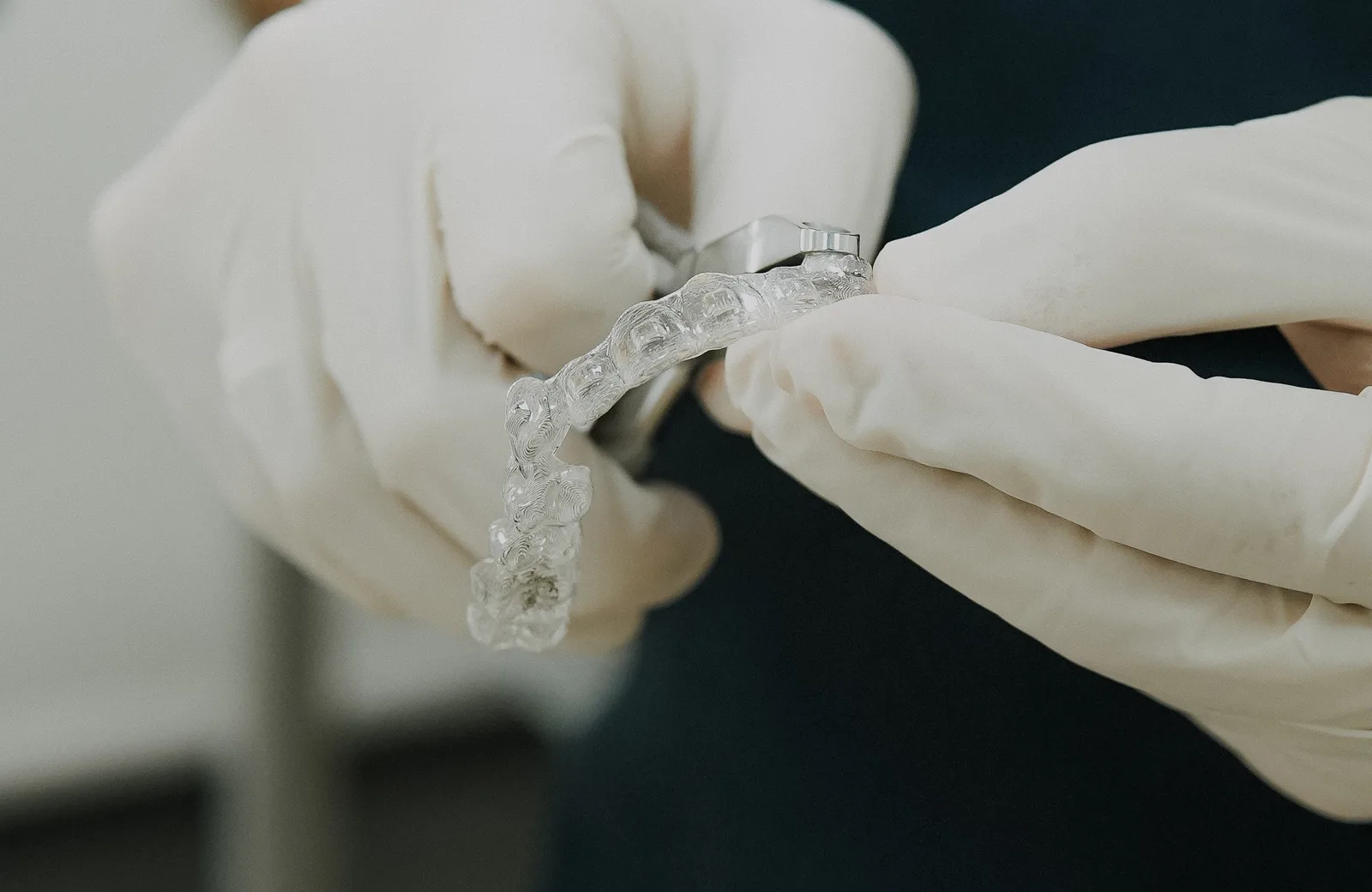
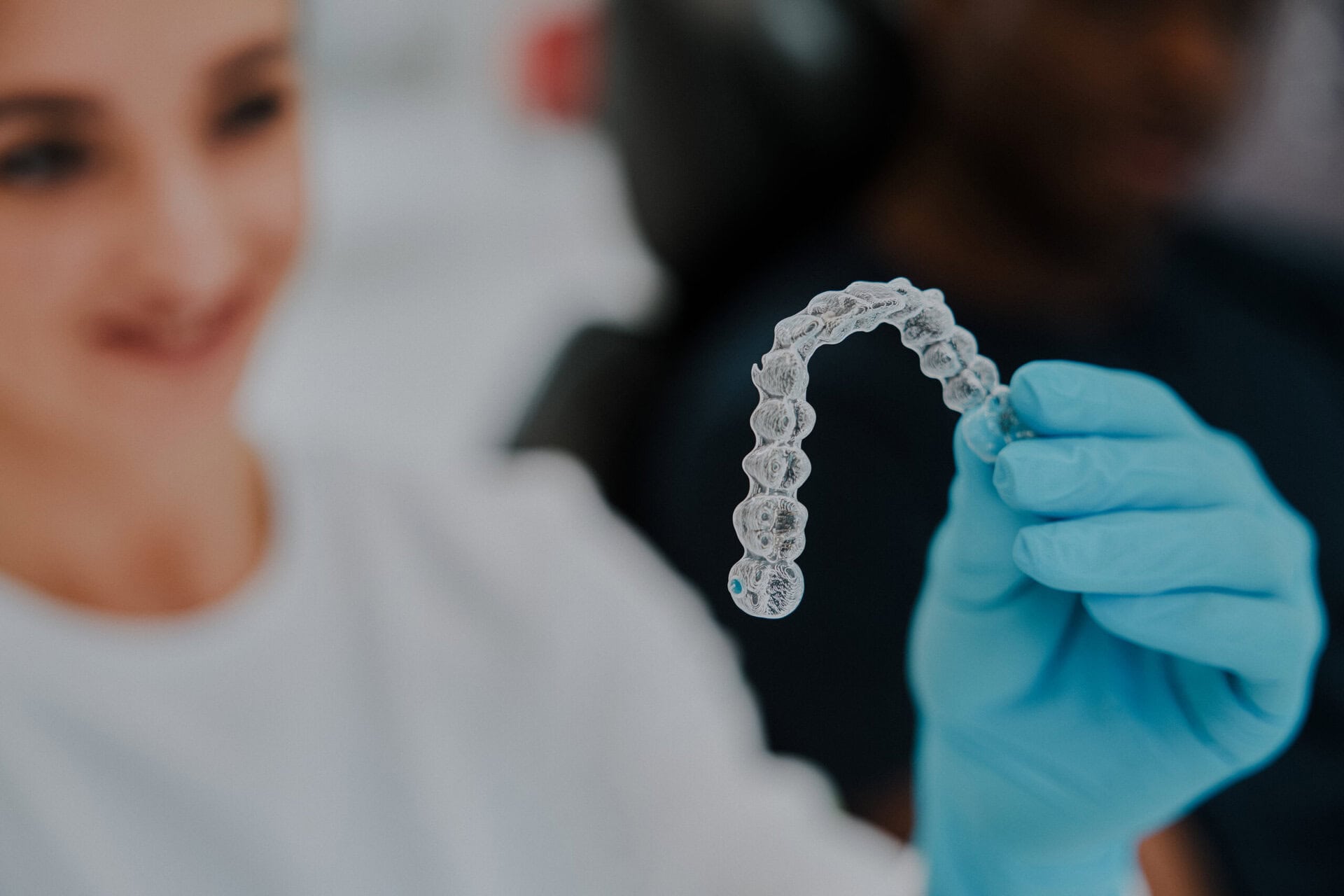
Clear braces are fixed ceramic or transparent brackets bonded to each tooth and linked by a tooth-coloured archwire, so they move teeth with the same continuous pressure as metal braces while staying far less visible. In the United States a full course typically runs $3,500 to $8,000, above metal braces because the brackets cost more to make. They are not low-maintenance: a meta-analysis of 57 studies covering 9,101 orthodontic patients put white spot lesion prevalence at 55.06 percent during treatment against 29.1 percent in untreated people (PubMed 39717964). Daily interdental cleaning and staining control decide how the teeth look on the day the brackets come off.
- 01Clear braces are fixed, clear aligners are removable. Brackets are bonded to the enamel and adjusted by the orthodontist every 4 to 8 weeks; aligners are taken out by the patient, which makes compliance part of the outcome.
- 02Enamel demineralisation is the real risk of any fixed appliance: white spot lesions were found in 55.06 percent of orthodontic patients across 42 studies versus 29.1 percent of untreated people, with roughly seven times the odds compared with no treatment (PubMed 39717964).
- 03For extraction cases fixed brackets still hold an edge. A review of 15 trials and 1,084 patients found no quality difference from aligners in non-extraction treatment, but superior movement control with fixed appliances where teeth were extracted (PubMed 41127933).
- 04In the United States clear braces are priced around $3,500 to $8,000, and the ceramic brackets are more fragile and harder to repair than metal, which can stretch treatment time if one chips.
- 05No retention method is proven better than another: a Cochrane review of 47 studies with 4,377 participants rated the evidence low to very low certainty and could draw no firm conclusion on one retainer over another (PubMed 37219527).
Many patients fear receiving orthodontic treatment due to the noticeable look of traditional metallic braces. However, clear braces are a discreet solution designed to straighten teeth with transparent or tooth-colored materials that blend naturally with your smile. As a result, this alternative has proven its place as one of the most requested braces for teens and adults who value aesthetics.

This short guide explores what clear braces are, their benefits, costs, maintenance tips, and what to expect during treatment to help you decide if they’re the right choice for you.
/ Clear Braces Basics and Eligibility
What Are Clear Braces?
Clear braces are orthodontic devices made from ceramic or transparent materials designed to straighten misaligned teeth while blending with your natural dentition. They work like traditional metal braces , but the brackets are tooth-coloured or transparent instead of metal. Therefore, clear braces are less noticeable than metal ones, though they are not the same as removable clear aligners.
How Do Clear Braces Work?
Clear braces work by applying consistent, gentle, and controlled pressure to teeth, gradually moving them into the desired position over time. Just like conventional braces, this orthodontic treatment also requires brackets bonded to each tooth and connected by a tooth-colored archwire to minimize visibility. Then, your specialist periodically adjusts this wire to guide your teeth into alignment.
Eligibility Criteria
This type of brace is ideal for patients seeking effective orthodontic treatment without the metallic appearance of traditional braces. Although they’re highly discreet, they still provide the same level of control and precision as standard metallic braces, making them suitable for mild to complex orthodontic cases.
/ Clear Braces Comparisons
Clear braces comparisons help distinguish fixed ceramic brackets from metal braces and removable clear aligners in everyday orthodontic treatment choices.
Clear Braces vs. Traditional Braces
While traditional metal braces are widely known for their durability and effectiveness, they can be very noticeable. Contrarily, clear braces provide similar orthodontic results with a less conspicuous appearance. Thus, they are often preferred by adults and professionals who want to correct their smile without drawing too much attention to the treatment.
On the other hand, clear braces may require more meticulous cleaning to prevent ceramic staining. Also, they can be slightly more fragile when compared to metal braces, which might influence treatment time if you need repairs or replacements.
Clear Braces vs. Clear Aligners
Clear braces are fixed and bonded to the teeth’s surface, while clear aligners, like Invisalign, are removable. Also, although aligners offer flexibility and comfort, they require strict compliance from the patient to obtain the expected results.
Additionally, clear braces provide constant and controlled pressure that adapts to almost every case, while clear aligners work best in mild to moderate cases. However, your orthodontist will recommend the best option based on your needs and expectations.
/ Clear Braces Candidacy and Cost Factors
Who Is a Good Candidate for Clear Braces?
Clear braces are suitable for most patients, including adults and teenagers with one or multiple of the following conditions:
- Crowded or crooked teeth
- Overbites
- Underbites
- Crossbite
- Openbites
- Gaps between teeth
- Misaligned dental arches
However, they may not be the best choice for people with severe bite conditions that require more aggressive corrections, or for those with staining habits like severe smoking or heavy coffee consumption without the appropriate cleaning.
Clear Braces Cost
The cost of clear braces varies depending on multiple factors, such as:
- The complexity of your case
- The length of the treatment
- Any additional dental procedure
- Your location
- The material used
- The expertise of the dental team
- The technology and equipment used
In the United States, the price of clear braces typically ranges from $3,500 to $8,000, while in Latin America, it may be lower due to differences in the healthcare system and overhead expenses.
Usually, dental insurance covers part of the cost if braces are deemed medically necessary. Also, while many orthodontic practices also offer payment plans to make the treatment more affordable, it is crucial to ask about all potential fees, exams, taxes, consultations, repairs, adjustments, and post-treatment retainers.
Main Factors Affecting the Cost of Clear Braces
Case Complexity
The more severe the condition, the higher the cost of the procedure. Also, highly complex misalignment may require longer treatments and more frequent adjustments to achieve the best results.
Orthodontist Experience
A highly experienced specialist will probably cost more than an inexperienced professional. However, the experience comes with more efficient and predictable results.
Bracket Material
Premium ceramic brackets typically cost more than standard metallic ones because they are less commonly produced and more expensive to make.
Additional Procedures
Brackets cannot be placed over decayed or damaged teeth. As a result, the specialist must deal with decay, gum disease, fractures, and every other dental issue before starting the procedure.
/ The Procedure of Getting Clear Braces
The procedure of getting clear braces moves from diagnosis to retention through scheduled orthodontic steps.
While it may have some variations, the process of getting clear braces typically involves:
- Initial Consultation : Your orthodontist evaluates your teeth, bite, soft tissues, and overall oral health to make a precise diagnosis. This phase also involves performing any additional dental procedures like root canals, fillings, and extractions.
- Treatment Planning : With the help of multiple exams like X-rays, photographs, and dental impressions (digital or standard), the specialist creates a custom treatment plan designed for your needs and expectations.
- Bracket Bonding : Ceramic brackets are attached to each tooth using a specialized adhesive. Then, the archwire is threaded through the ceramic brackets and secured with elastic bands.
- Periodic Adjustments : Every 4–8 weeks, you will attend your checkup visit to allow your orthodontist to adjust the wire in your brackets and guide your teeth into the proper position.
- Treatment Completion: Once your teeth are aligned, the specialist removes the braces and gives you a retainer to maintain the results.
/ Clear Braces Care and Key Considerations
How to Clean Teeth with Braces
Oral hygiene is essential while wearing clear braces to prevent staining and maintain gum health. Here you have some practical tips to implement in your home routine:
- Brush after every meal with a soft-bristle toothbrush.
- Use the appropriate technique by tilting your toothbrush to reach the gumline and all the food trapped in the brackets.
- Floss daily using a floss threader or orthodontic floss to remove plaque between teeth and under wires.
- Use interdental brushes wherever possible to clean tight spaces.
- Rinse with an antibacterial mouthwash to reduce plaque and bacteria.
Also, avoid sticky, hard, or prone-to-staining foods, such as coffee, red wine, curry, and dark sodas. If you cannot avoid them, rinse and brush as soon as possible.
Advantages of Clear Braces
- They are aesthetically pleasing, providing a less noticeable treatment than metal braces.
- They are effective for multiple cases, allowing professionals to treat a wide range of orthodontic conditions.
- They significantly improve self-confidence and self-esteem.
- They are a customizable option, as they’re available in clear and tooth-colored wires and brackets.
Potential Drawbacks of Clear Braces
- They are considerably more expensive than metal braces.
- They are more fragile and prone to chipping.
- They have a higher risk of staining, requiring diligent hygiene to avoid discoloration.
- Unlike traditional metal options, they are harder to repair, which may delay treatment progress.
/ Frequently Asked Questions About Clear Braces
Q. How much do clear braces cost?
In the U.S., they can range from $3,500 to $8,000. However, the cost may be lower in other regions and even between states.
Q. Are clear braces as effective as metal braces?
Yes, they can be as effective as metal braces for most cases. Yet, they require careful maintenance to avoid damage or staining.
Q. What foods should I avoid with clear braces?
Avoid sticky, hard, or chewy food like caramels, nuts, chewing gum, and popcorn. Avoiding staining foods and drinks can also help reduce the chances of staining while extending the life of your brackets.
Q. How long will I need to wear my retainer after the treatment?
Most patients need to wear their retainers full-time for the first months and then transition to nighttime use indefinitely. These retainers help maintain your results and prevent the famous orthodontic relapse.
Q. What happens if I don’t use my retainers?
Skipping orthodontic retainers makes your teeth relapse to their original positions. Therefore, periodic checkups and patient compliance are essential to achieve and keep great results.
The Takeaway
Clear braces are an excellent solution for those who want the effectiveness of conventional treatment without the metallic look. While they typically require a higher level of care to prevent staining and damage, they provide great results that also boost confidence by providing a discreet appearance. As a result, many patients with complex orthodontic cases opt for this alternative to transform their smiles.
Let’s plan the right treatment together.
Free Assessment→- 1.Hussain U, Wahab A, Kamran MA, Alnazeh AA, Almoammar S. Prevalence, incidence and risk factors of white spot lesions associated with orthodontic treatment: a systematic review and meta-analysis. Orthod Craniofac Res. 2025;28(2):379-399. doi:10.1111/ocr.12888
- 2.Alhafi ZM, Hajeer MY, Alam MK, Jaber ST. Quality and stability of orthodontic treatment outcomes with clear aligners versus fixed appliances: a systematic review and meta-analysis. Eur J Orthod. 2025;47(6):cjaf091. doi:10.1093/ejo/cjaf091
- 3.Martin C, Littlewood SJ, Millett DT, Doubleday B, Bearn D, Worthington HV. Retention procedures for stabilising tooth position after treatment with orthodontic braces. Cochrane Database Syst Rev. 2023;5(5):CD002283. doi:10.1002/14651858.CD002283.pub5