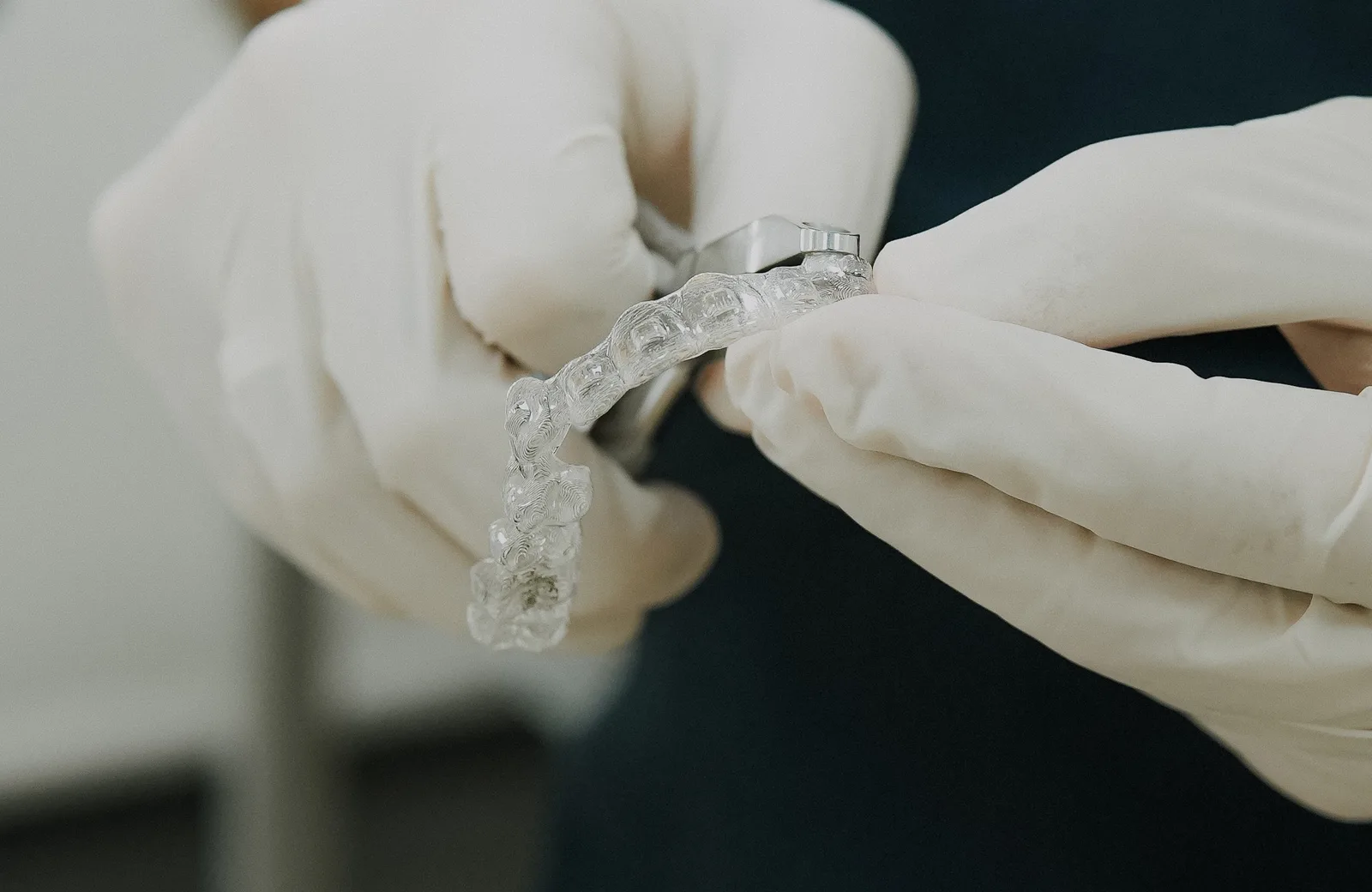
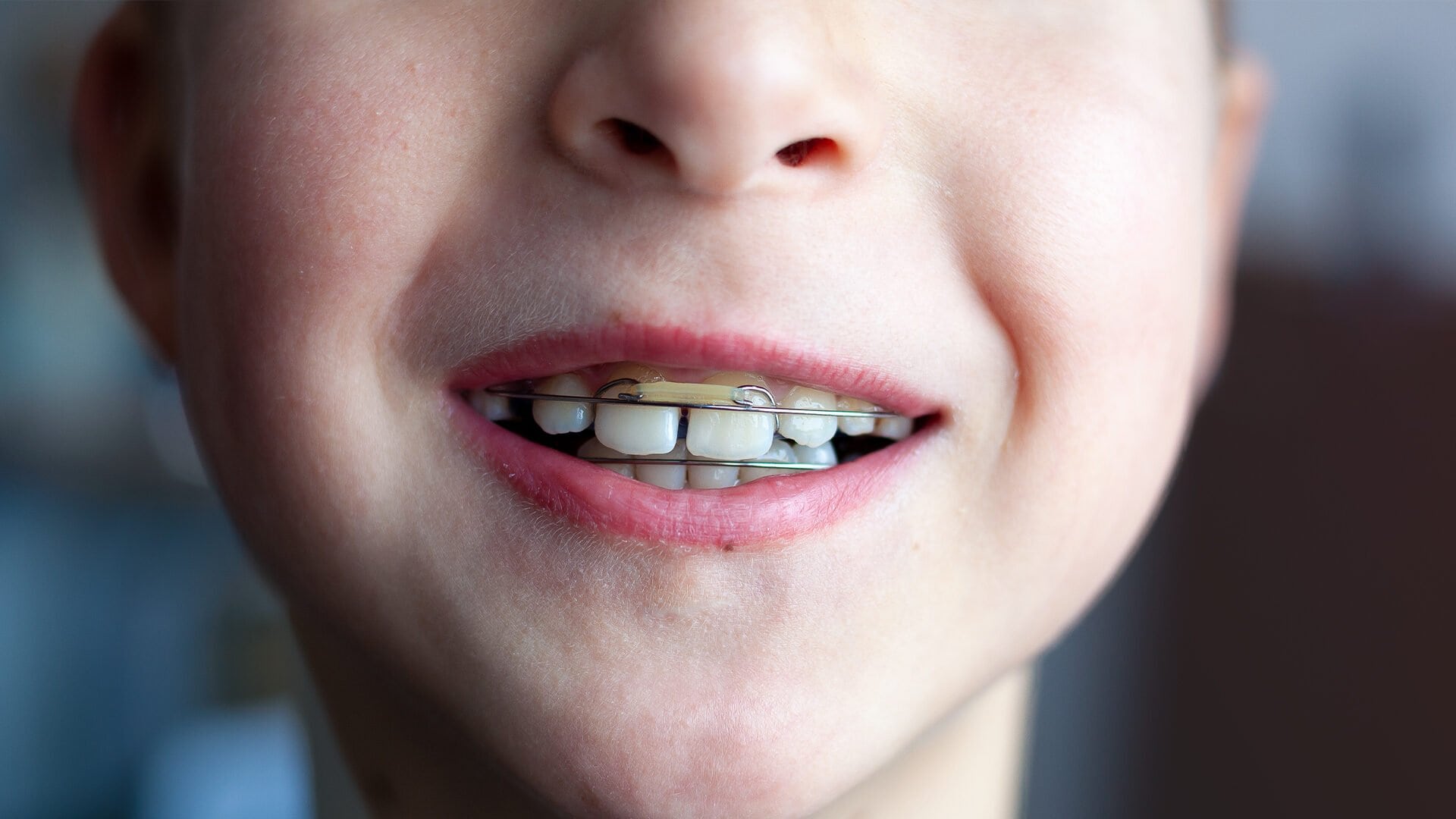
A retainer is a fixed wire bonded behind the front teeth or a removable plate worn after braces, and its job is to hold the corrected tooth positions while bone and periodontal fibres reorganise around them. Skipping retention has a measured cost: in a two-year randomised trial of 66 patients, relapse appeared in 68.2% of those wearing only a removable retainer, in 36.4% with a round bonded wire and in 13.6% with a rectangular bonded wire (PubMed 38424224). A Cochrane review of 47 trials and 4,377 participants rated the evidence low certainty, so no single retainer type is proven best.
- 01A retainer stabilises tooth position after braces, holding the teeth in place while the periodontal fibres and bone that would pull them back reorganise.
- 02In a two-year randomised trial, relapse incidence was 68.2% with removable retainers alone against 13.6% with a rectangular bonded lingual wire (PubMed 38424224).
- 03Most post-treatment movement happens early: in a 104-patient trial Little's Irregularity Index rose 0.52 mm with vacuum-formed and 0.45 mm with bonded retainers, mainly within the first 6 months (PubMed 31665279).
- 04Relapse is measured with Little's Irregularity Index, and Cochrane treats a 1 mm change as the minimum clinically important difference (PubMed 37219527).
- 05Cochrane pooled 47 randomised trials with 4,377 participants and graded the evidence low to very low certainty, so no retainer type has been shown superior (PubMed 37219527).
Why Teeth Move After Braces Come Off
Teeth that have just been straightened are in a new position that the surrounding tissues have not yet accepted, and without a retainer they tend to drift back. Orthodontic treatment moves teeth slowly through the jawbone with controlled forces. The periodontal ligament, the gum fibres, the lips and cheeks and the tongue were all adapted to the old arrangement, and for months after the braces come off they keep pulling toward it. The bone around the roots is also still remodelling, so the teeth are more mobile in the first period after debonding than they will be later.
This return toward the original position is called relapse. It can be small, such as a lower front tooth rotating slightly out of line, or large enough to reopen spaces or crowding that the treatment corrected. Relapse affects appearance first, but it can also change how the teeth meet when you bite and chew, and in some cases a second course of orthodontic treatment becomes necessary.
A retainer is the appliance that holds the corrected positions while the tissues reorganise around them. It does no active work of its own and simply keeps the teeth where the braces put them. For that reason the retention phase is planned as part of orthodontic treatment from the start and discussed before the braces go on. A clinical review argues that because orthodontics cannot predict which patients will relapse, how much, or when, every patient should be treated as having a high potential to relapse and long-term retention is advocated (PubMed 28297088). The same review notes that some tooth movement also comes from normal age changes, which continue whether or not a person ever had braces (PubMed 28297088).
What the Trials Show About Relapse
The size of the problem has been measured. In a two-year randomised trial of 66 patients aged 11 to 18, relapse of the lower front teeth appeared in 68.2% of those who wore only a removable vacuum-formed retainer, in 36.4% of those with a round bonded wire and in 13.6% of those with a rectangular bonded wire (PubMed 38424224). The mean severity of that relapse was small, 0.7 mm in the removable-retainer group and 0.1 mm in the rectangular wire group (PubMed 38424224). The same trial found that the distance between the lower canines narrowed in 68.2% of patients without a bonded wire (PubMed 38424224).
Timing matters as much as the retainer type. A randomised trial of 104 adolescents compared a vacuum-formed retainer with a wire bonded from canine to canine in the lower arch and found that irregularity of the front teeth increased by 0.52 mm and 0.45 mm respectively, mainly in the first 6 months after debonding (PubMed 31665279). The authors concluded that the two retainers had the same retentive capacity at 6 and 18 months and that the changes after treatment were generally small (PubMed 31665279).
Relapse in these studies is usually measured with Little's Irregularity Index, which adds up how far the contact points of the lower front teeth have moved apart. The Cochrane review of retention treats a change of 1 mm on this index as the smallest difference that matters clinically (PubMed 37219527). Many of the differences between retainers in the trials sit below that line, so a statistically clear difference does not always mean a visible one. The consistent message across the trials is that the first months carry most of the movement, and that wearing some form of retainer during that period is what keeps the result.
Fixed and Removable Retainers
There are two families of retainer, and each has a different trade-off.
Fixed retainer
A fixed or lingual retainer is a thin wire bonded to the inner surfaces of the front teeth, most often the lower canines and incisors, with dental adhesive. The patient cannot remove it, so it works without depending on daily compliance, and it is not visible from the front. The cost is cleaning: plaque collects around the wire and the bonding points, and floss has to be threaded under the wire or interdental brushes used between the teeth. A wire can also detach from one tooth without the patient noticing, which is why fixed retainers are checked at regular reviews.
Removable retainer
Removable retainers are taken out for eating and cleaning. The Hawley retainer combines a metal wire across the front teeth with an acrylic plate; it is adjustable and durable but more visible. The clear vacuum-formed retainer, often called an Essix retainer, is a thin plastic shell that covers the teeth; it is barely noticeable and comfortable, but it is more prone to cracking and wear. Because removable retainers only work while they are in the mouth, their effect depends on the patient wearing them as prescribed.
Some patients receive both: a bonded wire on the lower teeth and a removable retainer on the upper teeth, or a combination in the same arch. The choice follows the original problem that was treated, how well the patient keeps the teeth clean and how reliably they will wear a removable appliance.
How the Retainer Types Compare
No retainer type has been shown to be superior overall. The Cochrane review of retention pooled 47 randomised trials with 4,377 participants and rated the evidence low to very low certainty, concluding that firm conclusions about one approach over another cannot be drawn (PubMed 37219527). Most comparisons in that review rest on a single trial at high risk of bias, and most trials followed patients for less than a year (PubMed 37219527).
Within that uncertainty, the individual comparisons show trade-offs. In one trial, clear plastic retainers worn full-time in the lower arch gave no clinically significant stability benefit over fixed retainers, but they carried a higher risk of retainer failure (RR 3.42) together with less gum bleeding (PubMed 37219527). Fibre-reinforced composite retainers and conventional multistrand wires had similar survival at 12 months across 7 studies with 1,337 participants (PubMed 37219527). Clear plastic and Hawley retainers gave similar stability in one 30-participant trial, while Hawley retainers failed less often but were less comfortable (PubMed 37219527).
The two-year trial cited earlier favoured a rectangular bonded wire, with the lowest relapse incidence of the three groups, and found no significant difference in biofilm, calculus or gingivitis between the appliances (PubMed 38424224). Taken together, the evidence supports choosing the retainer case by case: a bonded wire where the risk of relapse is high or compliance is uncertain, a removable retainer where hygiene around a wire would be difficult, and often a combination of the two.
How Long a Retainer Is Worn
Wear time is set for each patient. A common routine is full-time wear for the first 6 to 12 months, then nights only, then a few nights a week in the following years. The evidence supports being strict early: in the 104-patient trial most of the relapse happened in the first 6 months after the braces came off (PubMed 31665279). The same trial reported that a part-time wear regimen was not associated with increased relapse (PubMed 31665279), and Cochrane found no stability difference between part-time and full-time Hawley wear in one 52-participant study (PubMed 37219527).
For many patients the retention phase has no planned end date. Because relapse cannot be predicted for an individual, long-term retention is advocated, and this commitment belongs in the conversation before treatment begins (PubMed 28297088). Adults have particular reasons for a long retention phase. A review of retention in adult orthodontics describes it as often lifelong and states that follow-up studies show no guarantee of long-term stability after tooth movement in adults without a retention phase planned for the specific problem and treatment (PubMed 8886547). In adults, retention can also include restorative or periodontal measures alongside the retainer itself (PubMed 8886547).
Stopping early lets small movements accumulate, even if the whole result is seldom lost. If a removable retainer starts to feel tight after a few nights out, the teeth have already begun to move, and wearing it consistently again or contacting the orthodontist is the right step.
Retainer Lifespan, Cleaning and Check-ups
Retainers wear out, break and get lost, and their lifespan has been measured. In patient records covering 591 retainers from 309 patients, median survival before repair, replacement or loss was 1604 days for lingual fixed retainers, 1529 days for Hawley retainers and 105 days for vacuum-formed retainers (PubMed 29370399). The reasons differed by type: most Hawley failures were losses (52.0%), most fixed retainer failures were debonds (63.5%) and fracture was the most common cause for vacuum-formed retainers (43.5%) (PubMed 29370399). A clear removable retainer should therefore be expected to need replacement more often than the other types.
Cleaning is part of wearing a retainer. Removable retainers are rinsed and brushed gently with a soft brush and lukewarm water, cleaned regularly with a retainer cleaning tablet, and stored in their case when out of the mouth. Hot water and direct sun can distort the plastic, and a retainer wrapped in a napkin is easily thrown away. Fixed retainers are cleaned with floss threaders or interdental brushes under and around the wire, and calculus that builds up behind the lower front teeth is removed at professional cleaning appointments.
Regular check-ups, usually every six months, let the orthodontist see whether a wire has detached, a removable retainer still fits and any movement has started. A detached wire found early can be re-bonded before the teeth have time to shift. New retainers can be made from an intraoral scan, which records the tooth positions digitally and allows a replacement to be produced from the same record if the original is lost.
Let’s plan the right treatment together.
Free Assessment→- 1.Martin C, Littlewood SJ, Millett DT, Doubleday B, Bearn D, Worthington HV, et al. Retention procedures for stabilising tooth position after treatment with orthodontic braces. Cochrane Database Syst Rev 2023;5:CD002283. PubMed 37219527
- 2.Kanizaj Ugrin S, Špalj S. Comparison of efficacy of thermoplastic retainer with round and rectangular bonded lingual wire retainer in the mandible two years after orthodontic treatment: a randomised controlled trial. Clin Oral Investig 2024;28:183. PubMed 38424224
- 3.Krämer A, Sjöström M, Hallman M, Feldmann I. Vacuum-formed retainer versus bonded retainer for dental stabilization in the mandible-a randomized controlled trial. Part I: retentive capacity 6 and 18 months after orthodontic treatment. Eur J Orthod 2020;42:551-558. PubMed 31665279
- 4.Littlewood SJ, Kandasamy S, Huang G. Retention and relapse in clinical practice. Aust Dent J 2017;62 Suppl 1:51-57. PubMed 28297088
- 5.Kahl-Nieke B. Retention and stability considerations for adult patients. Dent Clin North Am 1996;40:961-94. PubMed 8886547
- 6.Jin C, Bennani F, Gray A, Farella M, Mei L. Survival analysis of orthodontic retainers. Eur J Orthod 2018;40:531-536. PubMed 29370399