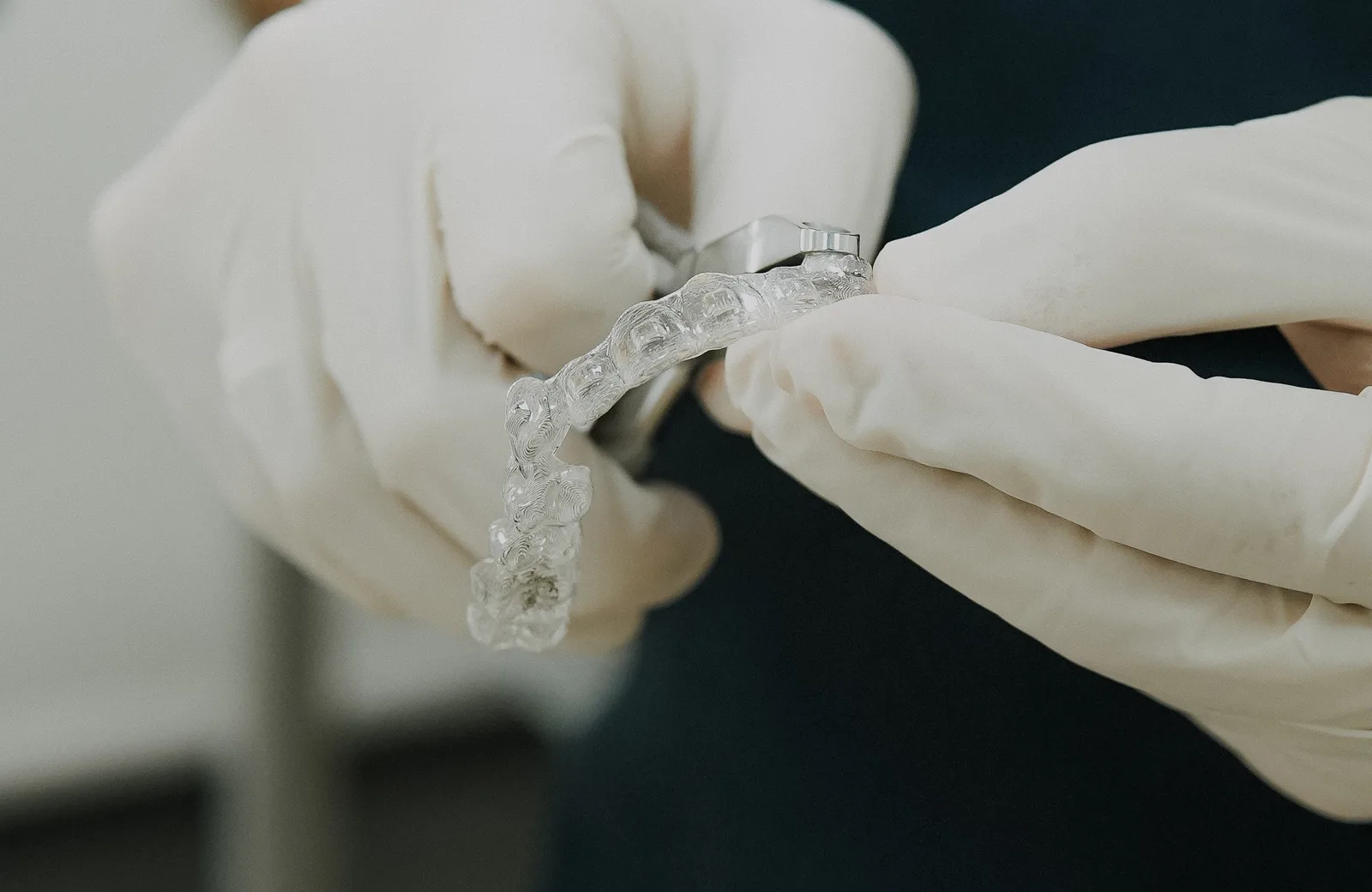
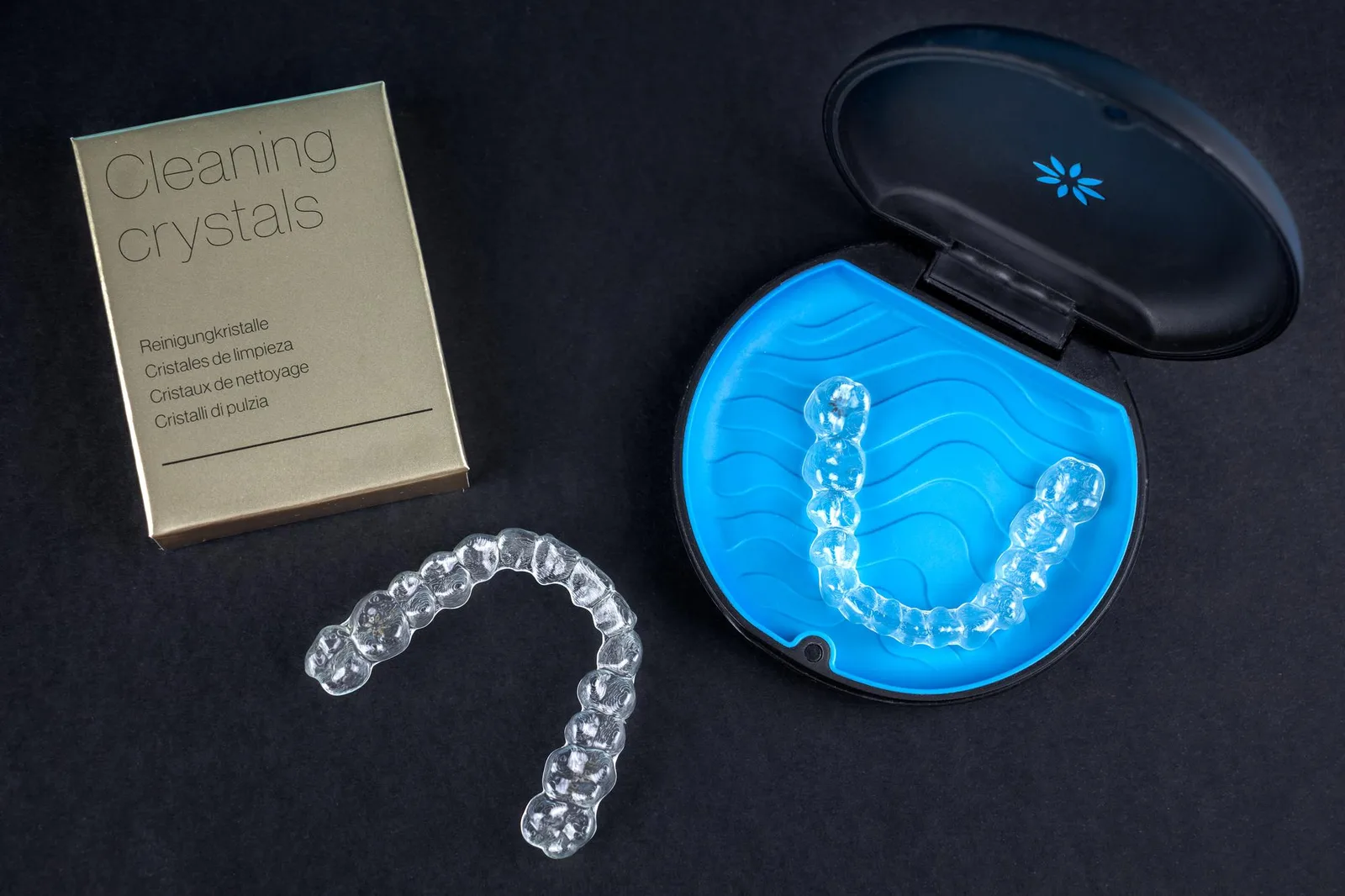
Invisalign is a branded clear-aligner system made by Align Technology. At Mosdent, treatment begins with an orthodontic assessment, digital scanning and a ClinCheck plan, followed by monitored aligner use and refinement if needed. Treatment is planned over 6 to 24 months at the clinic, but suitability depends on the complexity of the bite and consistent wear of 20 to 22 hours daily. In non-extraction cases a 2025 meta-analysis of 15 trials found no significant difference in duration between clear aligners and fixed braces, and individual cases can differ considerably (PubMed 41127933).
Many people researching clear aligners first come across the name Invisalign. The two practical questions are usually what the brand means and how treatment is managed in a reliable clinical setting. This guide explains the system, the Invisalign experience at Mosdent in Istanbul, the significance of our orthodontist's 2025 case-volume award, and the limitations of clear-aligner treatment. Our clear aligner treatment page covers the treatment basics, while our article on braces versus clear aligners provides a broader comparison.
Invisalign and Mosdent case-volume award
Invisalign is a clear-aligner brand made by the US-based company Align Technology. The name combines "invisible" and "align". In everyday clinical language, the treatment is generally called clear-aligner treatment.
Treatment uses a series of custom-made, removable aligners. Each aligner is designed to move the teeth by a planned small step. As the series progresses, the teeth are guided towards their intended positions. Invisalign is not the only clear-aligner system available, so a treatment described simply as "clear aligners" is not automatically Invisalign. We discuss the differences between systems in our guide to clear-aligner brands.
You may also see several technology names associated with the system. ClinCheck is the software used to plan tooth movement digitally. iTero refers to an intraoral scanner, SmartTrack is the aligner material, and Vivera refers to Invisalign-branded retainers used after active treatment. These are all associated with Align Technology.
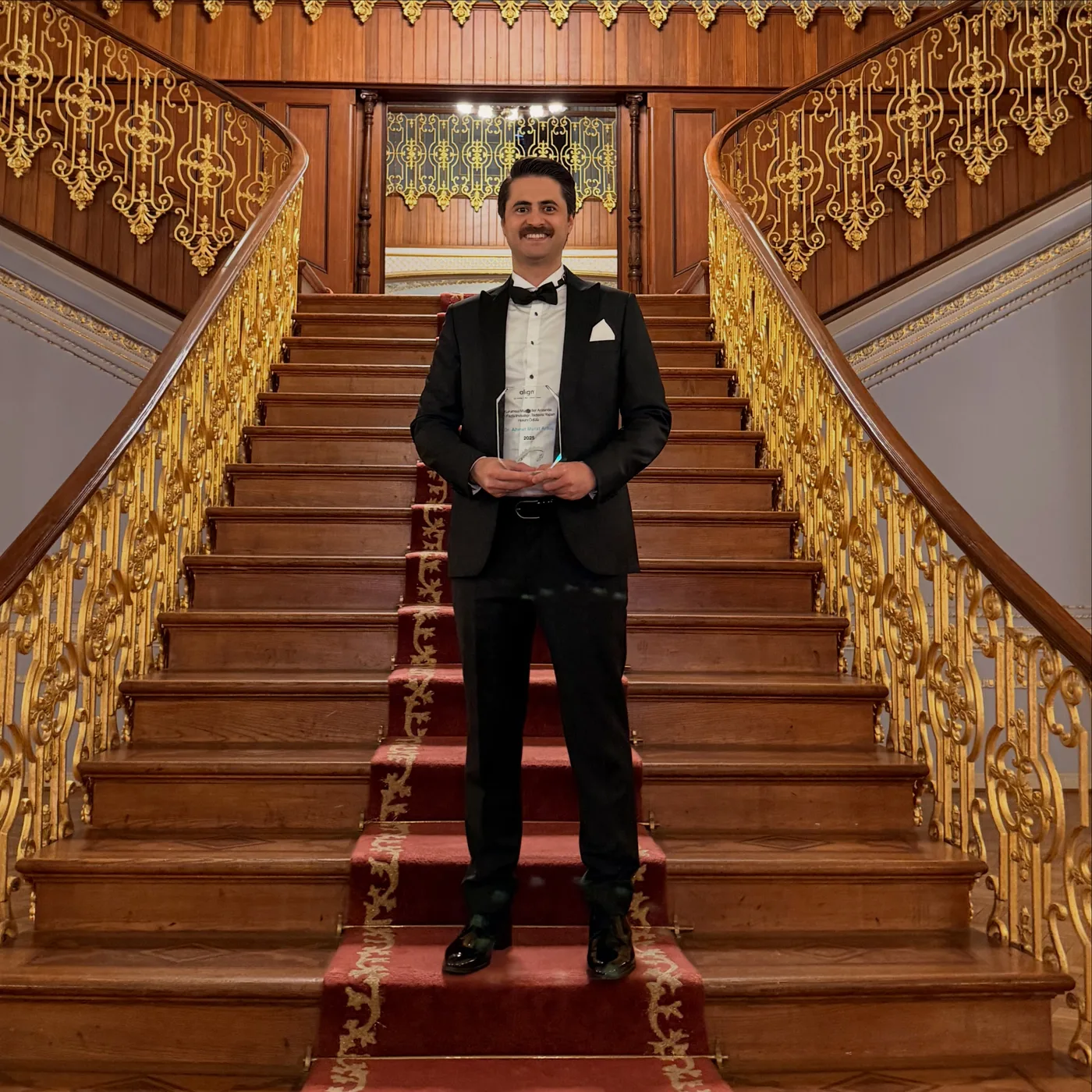
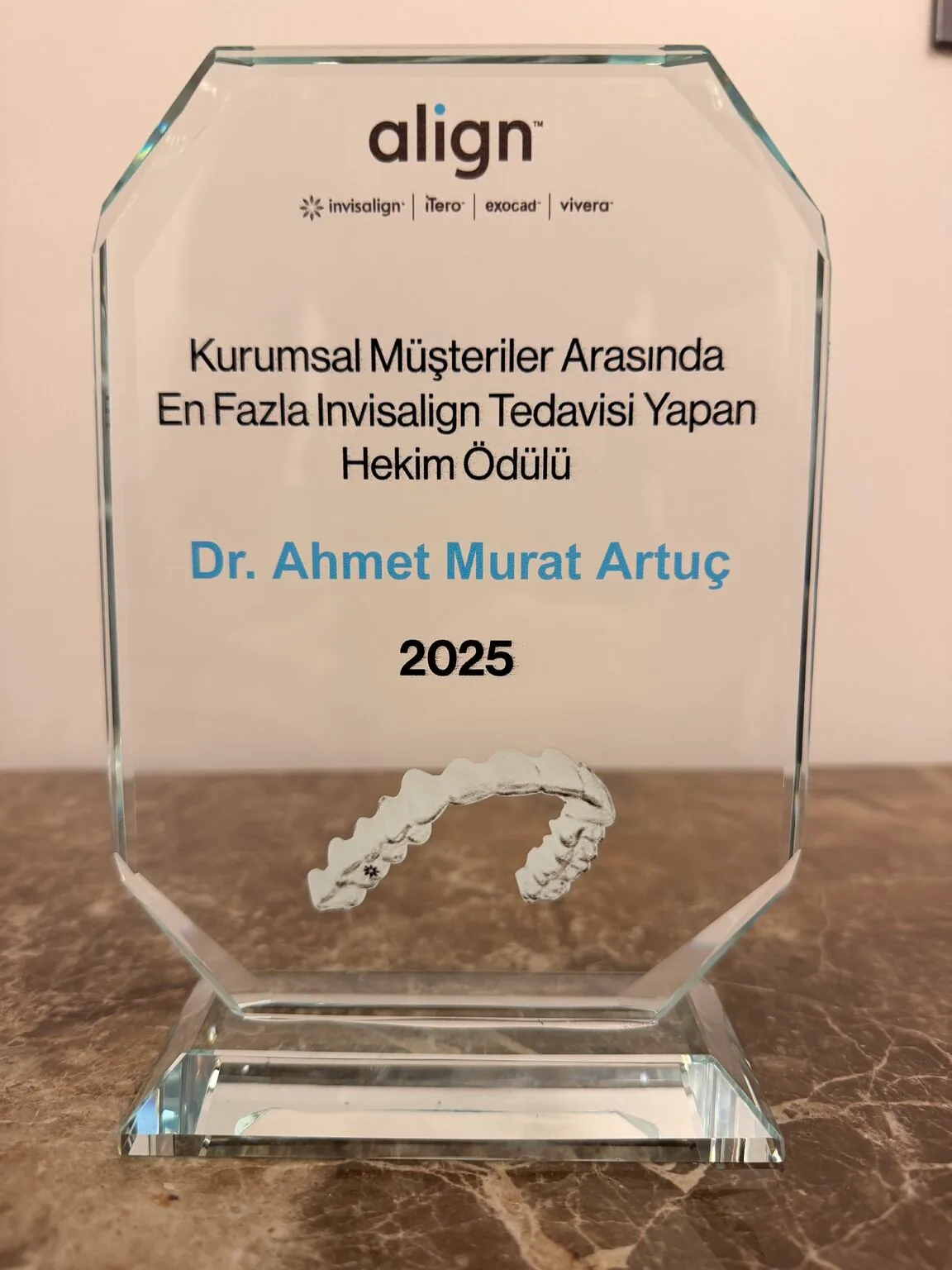
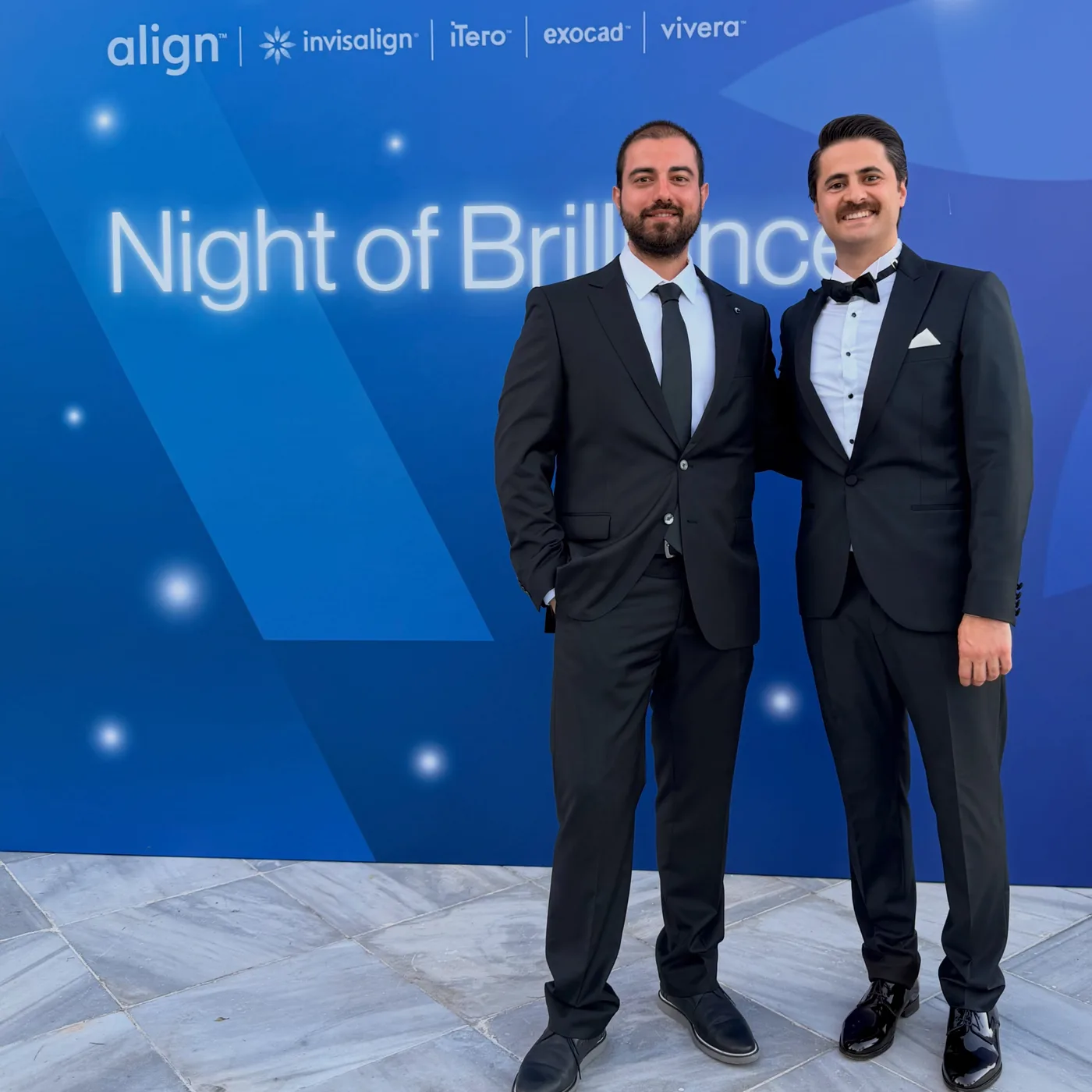
At Align Technology's Night of Brilliance 2026 event, Mosdent orthodontist Dr Ahmet Murat Artuç, PhD received the award for the highest number of Invisalign treatments completed among corporate customers during 2025. The cases included in this recognition were planned and managed under the Mosdent name. Dr Artuç attended the event with Dr Enes Yusuf Gönül, PhD, also part of our orthodontic team.
The meaning of the Mosdent Invisalign award
The Mosdent Invisalign award is a case-volume award, not a ranking of treatment outcomes or a claim that one clinic is suitable for every patient. Case volume is still relevant because clear-aligner plans do not always match tooth movement exactly in practice. A prospective study following 401 front teeth in 37 patients found average accuracy of planned movement of 41% (PubMed 19121497). This does not mean that treatment normally stops unfinished. In many cases, further aligners, known as refinement aligners, are planned after a review.
Recognising when movement is falling behind, deciding when further aligners are needed, and assessing the use of attachments or interproximal reduction all require clinical judgement. Experience with many cases gives an orthodontic team more opportunities to assess these situations. At Mosdent, Dr Artuç is an internationally certified Invisalign provider and has managed more than 1,200 clear-aligner cases. Dr Gönül has more than 1,500 cases of orthodontic experience and completed doctoral research comparing clear aligners produced by direct three-dimensional printing and thermoforming. His research on the bond strength of composites used for clear-aligner attachments has also been published in an international peer-reviewed journal (PubMed 37080356).
The Invisalign process at Mosdent
Treatment starts with an orthodontic examination, not with a decision to order aligners. The dentists at Mosdent assess the bite, tooth and jaw structure, and the condition of the teeth and gums. If needed, the assessment can be supported by imaging available within the center.
When clear aligners are considered suitable, digital scans are taken and the proposed tooth movements are arranged in the ClinCheck software. This allows patients to see a digital plan showing how the teeth are intended to move. The simulation is a plan rather than a promise, which is why clinical reviews remain an essential part of treatment.
Once the aligners have been manufactured and received, the first aligner is fitted under clinical supervision. Some patients need small, tooth-coloured attachments to help the aligners grip particular teeth. Aligners should normally be worn for 20 to 22 hours a day and removed for eating and brushing. Each aligner is generally used for about two weeks.
Reviews take place at regular intervals. The orthodontic team compares the planned movements with the movements that have occurred and orders refinement aligners if required. At Mosdent, treatment is planned over 6 to 24 months, although complexity and compliance have a major effect. A 2025 meta-analysis of 15 trials found no significant difference in duration between clear aligners and fixed braces in non-extraction cases (PubMed 41127933); an earlier review that pooled three studies had found aligner treatment 6.31 months shorter, and individual cases can differ considerably (PubMed 30674307).
Retention follows active treatment. Teeth can tend to move back towards their previous positions, so retainers are part of the overall treatment plan. These may include Invisalign Vivera retainers or another retainer arrangement selected by the orthodontist.
Living with clear aligners in a multi-specialty center
Clear aligners affect daily routines and orthodontic coordination.
The practical advantages are that aligners are difficult to notice from a distance, and there are no brackets or wires rubbing against the lips and cheeks. They are removed for meals, so patients do not have the same food restrictions associated with fixed braces. Brushing and interdental cleaning are also carried out with the aligners removed.
The main challenge is consistency. The aligners need to be in the mouth for 20 to 22 hours each day to follow the planned sequence. A feeling of pressure or tightness is common when a new aligner is first inserted and often settles within a few days. Water is recommended while aligners are being worn. Sugary or acidic drinks can become trapped between the aligner and teeth, while hot drinks may affect the shape of the plastic.
A common practical problem is putting an aligner in a tissue and forgetting where it was left. Carrying the case helps reduce the risk of loss.
Clear-aligner treatment lasts for months, and other dental needs may arise during that time. Existing decay and gum problems should be addressed before treatment begins. During treatment, a filling, wisdom tooth issue or gum concern may need attention.
As an oral and dental health center, Mosdent can coordinate orthodontics with restorative dentistry, periodontology and oral surgery within the same organisation. For example, if decay is identified on a molar during treatment, the filling can be planned in communication with the orthodontic team so that aligner fit and the treatment schedule can be reviewed together. Any minor aesthetic adjustment needed after orthodontic treatment can also be assessed within the same center.
Invisalign suitability and cost factors
Suitability for Invisalign depends on the clinical problem, not only on the brand. A systematic review of 22 studies found that evidence-based recommendations for Invisalign were mainly limited to adults with mild to moderate, non-extraction malocclusions. Evidence was more limited for closing extraction spaces and bodily expansion of the dental arch (PubMed 30264270).
Clear aligners may be appropriate for some mild or moderate crowding, spacing and bite concerns. More severe skeletal problems or cases requiring large, complex tooth movements may be more predictable with fixed braces or a combined plan. If clear aligners are not the right option, the dentists at Mosdent will explain why. Our braces treatment page describes that alternative, and our guide to orthodontic treatment after the age of 30 discusses adult treatment.
The cost of Invisalign depends on the clinical assessment and the treatment plan rather than on the aligner brand alone. Factors may include the complexity of tooth movement, the expected treatment duration, the number of aligners, attachments, refinement sets, scans, reviews and retention after active treatment. Any preparatory dental work, such as treating decay or gum disease, may also affect the overall plan.
International patients should ask which stages are included in a quotation, whether refinement aligners and retainers are covered, and how follow-up is organised. You can review our transparent price list and discuss the details during an assessment.
The first step is an examination. If clear aligners are suitable, our orthodontic team can explain the reasons and the proposed sequence. If braces or another approach is more appropriate, that should be explained just as clearly. Appointments can be requested through our contact page, and the orthodontists can be reviewed on our doctors page.
Let's plan the right treatment together.
Free Assessment→- 1.Invisalign Türkiye official website, invisalign.com.tr (22 million+ patients figure, footnoted as data on file at Align Technology as of 30 September 2025; the information that Invisalign, ClinCheck, iTero, SmartForce, SmartTrack and Vivera are registered trademarks of Align Technology, Inc. is from the page footer), https://www.invisalign.com.tr/
- 2.Ke Y, Zhu Y, Zhu M. A comparison of treatment effectiveness between clear aligner and fixed appliance therapies. BMC Oral Health 2019;19:24. PubMed 30674307, https://pubmed.ncbi.nlm.nih.gov/30674307/
- 3.Alhafi ZM, Hajeer MY, Alam MK, Jaber ST. Quality and stability of orthodontic treatment outcomes with clear aligners versus fixed appliances: a systematic review and meta-analysis. Eur J Orthod 2025;47(6):cjaf091. PubMed 41127933
- 4.Kravitz ND, Kusnoto B, BeGole E, Obrez A, Agran B. How well does Invisalign work? A prospective clinical study evaluating the efficacy of tooth movement with Invisalign. Am J Orthod Dentofacial Orthop 2009;135:27-35. PubMed 19121497, https://pubmed.ncbi.nlm.nih.gov/19121497/
- 5.Papadimitriou A, Mousoulea S, Gkantidis N, Kloukos D. Clinical effectiveness of Invisalign® orthodontic treatment: a systematic review. Prog Orthod 2018;19:37. PubMed 30264270, https://pubmed.ncbi.nlm.nih.gov/30264270/
- 6.Kirçelli BH, Kılınç DD, Karaman A, Sadry S, Gönül EY, Gögen H. Comparison of the bond strength of five different composites used in the production of clear aligner attachments. J Stomatol Oral Maxillofac Surg 2023;124(6):101481. PubMed 37080356, https://pubmed.ncbi.nlm.nih.gov/37080356/
- 7.Align Technology award plaque: award for the most Invisalign treatments among corporate customers, Dr Ahmet Murat Artuç, 2025 (Invisalign Night of Brilliance 2026 ceremony; photograph of the plaque). The award is in the corporate customer category; the Invisalign account is opened in the doctor's name and invoiced to Mosdent.
- 8.Mosdent doctor profile, Dr Ahmet Murat Artuç, PhD: 1200+ clear aligner cases.
- 9.Mosdent doctor profile, Dr Enes Yusuf Gönül, PhD: 1500+ cases.