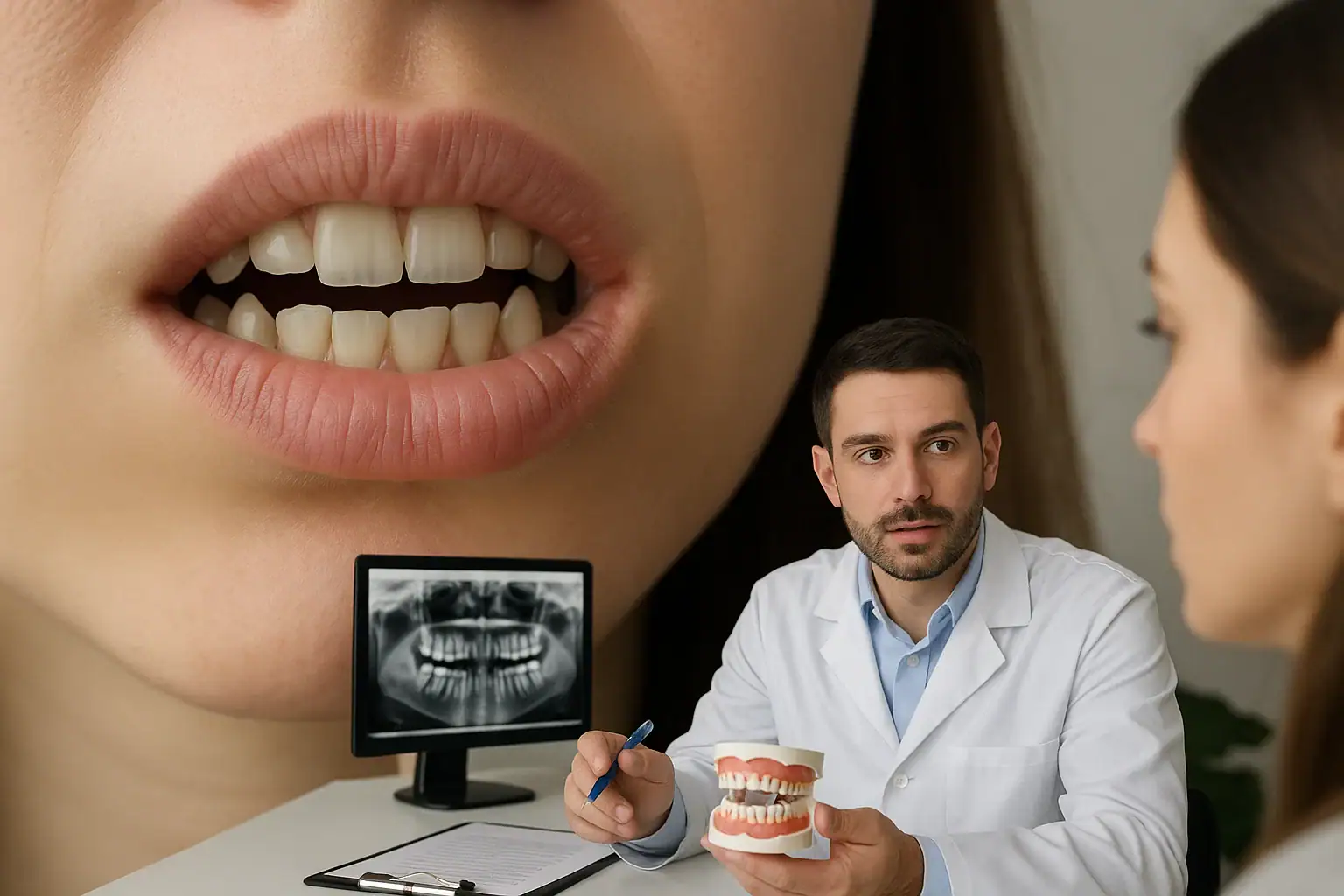
An open bite is a malocclusion in which the upper and lower teeth fail to contact when the mouth is closed, leaving a vertical gap that is anterior in most cases and posterior in a minority. Cause and treatment follow the same split: dental open bites follow oral habits or eruption problems, skeletal ones follow jaw growth. In a meta-analysis of 14 studies, clear aligner therapy closed adult anterior open bite by a mean 2.76 mm (95% CI 2.23-3.28), an effect driven by incisor extrusion rather than molar intrusion (PubMed 39445659). Relapse is the recurring limit rather than the exception.
- 01Anterior open bite means the front teeth do not meet while the back teeth occlude; posterior open bite is the reverse, and the two carry different treatment paths.
- 02Clear aligner therapy corrected adult anterior open bite by a mean 2.76 mm (95% CI 2.23-3.28), achieved mainly through maxillary and mandibular incisor extrusion of about 0.85 mm each, with no significant molar intrusion across 12 pooled studies (PubMed 39445659).
- 03Molar intrusion with skeletal anchorage leaves measurable relapse: pooled overbite relapse of 1.23 mm (95% CI 0.81-1.64) at a mean 2.5 years, with about 12% relapse of maxillary and 27.2% of mandibular molar intrusion (PubMed 32888097).
- 04Sucking habits are a modifiable risk factor: a meta-analysis of 33 studies found a higher risk of anterior open bite with longer habits, and daily pacifier use carried an odds ratio of 10.22 (95% CI 5.36-19.49) in the 3 studies that assessed it (PubMed 40619361).
- 05Treatment time depends on severity, age and method; as a general reference, comprehensive treatment with fixed appliances averaged 19.9 months across 22 prospective studies (PubMed 26926017).
/ Introduction to Open Bite
A perfect bite ensures optimal chewing, speaking, and facial aesthetics. However, some individuals experience a misalignment known as an open bite, where the upper and lower teeth do not meet when the mouth is closed. This malocclusion can cause functional, aesthetic, and even emotional challenges if not addressed.
In this comprehensive guide, we’ll explore everything you need to know about open bite teeth, including the types of open bite, causes, symptoms, treatment options, and answers to common questions like “How to fix an open bite?” or “Can Invisalign fix open bite?” Whether you’re dealing with a mild misalignment or a more complex case, this article is your go-to resource.
Definition of Open Bite
An open bite is a type of dental malocclusion where the upper and lower teeth do not touch when the mouth is fully closed. Instead of overlapping as they should, a gap is visible between the upper and lower front or back teeth.
What Does an Open Bite Look Like?
People with an open bite often display the following traits:
- Visible space between front teeth when biting down
- Difficulty with pronunciation (especially with “s” or “th” sounds)
- Challenges with chewing or biting into food
- Aesthetic concerns due to improper smile line
Clinical Insight: Dentists often notice a flattening of the smile arc and asymmetry in lip posture in patients with open bite.
/ Types and Causes of Open Bite
1. Anterior Open Bite
An anterior open bite occurs when the front upper and lower teeth do not make contact when the back teeth are closed together. It’s the most common type and is often caused by habits like thumb-sucking or tongue thrusting.
Tip: Anterior open bite can severely affect speech development in children, especially when not addressed before the age of 7.
2. Posterior Open Bite
A posterior open bite is less common and occurs when the back teeth do not touch, while the front teeth may close normally. This can lead to chewing difficulties and uneven jaw stress.
3. Skeletal vs. Dental Open Bite
- Skeletal Open Bite : Caused by abnormal jaw growth and usually requires orthognathic (jaw) surgery. These cases are often genetically driven and may be diagnosed during adolescence.
- Dental Open Bite : Caused by habits or tooth misalignment and is typically treatable with orthodontics, especially if caught early.
Several factors may contribute to the development of an open bite:
1. Thumb-Sucking and Pacifier Use
Prolonged thumb-sucking or pacifier use beyond age 3–4 can apply pressure on developing teeth, pushing them out of alignment and causing an anterior open bite.
Parent Alert: Orthodontic pacifiers have not been shown to prevent bite problems better than conventional ones (PubMed 30054865).
2. Tongue Thrusting
When a person pushes the tongue against the front teeth during swallowing or speaking, it can interfere with proper tooth eruption and alignment.
Tongue posture is controlled by both neuromuscular coordination and habit, making behavioral therapy essential in some cases.
3. Genetics
Open bite can run in families and be the result of inherited jawbone structures or dental arch shapes. If parents or siblings have open bite issues, early evaluation in children is recommended.
4. Temporomandibular Joint (TMJ) Disorders
Some TMJ issues can affect bite alignment, leading to posterior open bite in certain cases. Patients often experience jaw clicking, facial pain, or difficulty opening the mouth fully.
5. Abnormal Eruption of Teeth
When teeth do not erupt properly, gaps may appear between upper and lower arches, especially in mixed dentition stages in children.
/ Open Bite Symptoms and Treatment Options
Open bite symptoms can guide treatment planning.
Common Symptoms
- Incomplete closure of the mouth
- Lisping or speech difficulties
- Inability to bite into sandwiches, apples, or similar foods
- Mouth breathing
- Jaw discomfort or strain
- Narrow smile or asymmetric facial appearance
Long-Term Complications
If left untreated, an open bite can lead to:
- Excessive wear on certain teeth
- Gum recession or periodontal issues
- Poor oral function and digestion
- Self-esteem or psychological distress
- Risk of worsening misalignment over time
- Chronic jaw pain or TMJ dysfunction
Important: An untreated open bite can also alter muscle tone in the cheeks and lips, leading to aesthetic imbalances in facial symmetry.
1. Orthodontic Treatment (Braces)
Traditional braces are highly effective in treating most cases of dental open bite. They gradually reposition the teeth using brackets and wires. Rubber bands may also be used to help pull the teeth into proper alignment.
Success Rate: Orthodontic treatment alone can correct over 80% of dental-origin open bites when started before adulthood.
2. Clear Aligners (Invisalign)
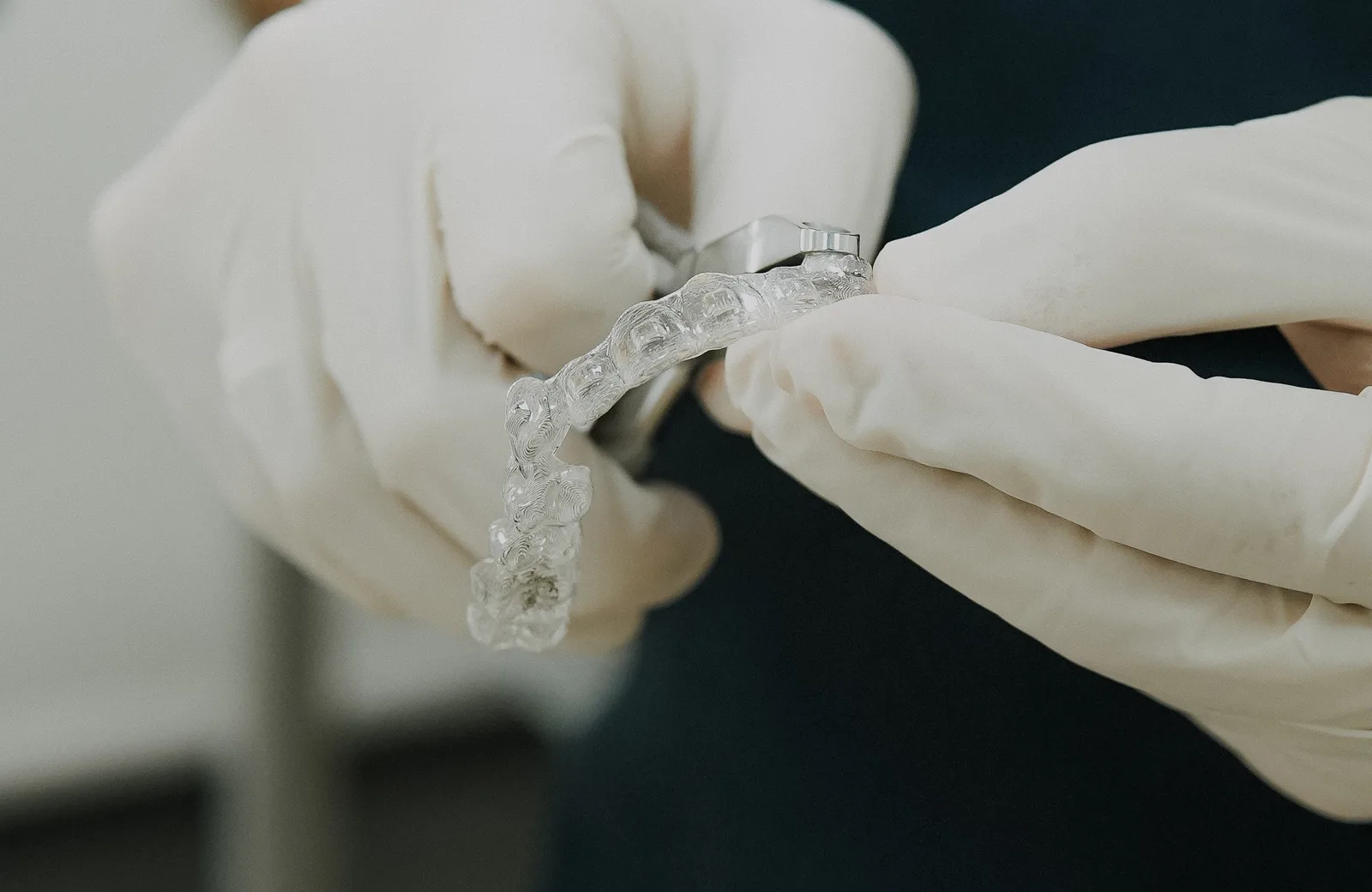
Yes, Invisalign can fix open bite in many cases. Clear aligners use customized trays to shift teeth over time. Invisalign is most effective for mild to moderate open bites and is a popular choice for adults due to its discreet appearance.
Aligners also help retrain tongue posture when paired with myofunctional exercises.
3. Orthognathic (Jaw) Surgery
For skeletal open bites, surgery is often required to reposition the upper or lower jaw. This is usually combined with orthodontic treatment and is recommended in severe cases or when orthodontics alone is insufficient.
4. Myofunctional Therapy
This therapy focuses on correcting tongue posture and breathing patterns. It may help prevent the recurrence of open bite after orthodontic treatment, especially in cases caused by tongue thrusting or mouth breathing.
5. Habit-Breaking Appliances
Appliances like tongue cribs or thumb-sucking guards can be used in children to break harmful oral habits before they affect bite development.
These are especially effective between ages 4–8 when the dental arches are still developing.
/ Open Bite Treatment Considerations
How to Fix Open Bite Naturally
Many people wonder how to fix open bite naturally without braces or surgery. While it’s not always possible, mild cases caused by habits may respond to:
- Eliminating oral habits (thumb-sucking, pacifiers)
- Myofunctional therapy
- Tongue exercises and breathing correction
- Avoiding soft diets that don’t stimulate proper jaw function
- Posture awareness to ensure proper head and neck alignment
Caution: "Natural" methods may help prevent progression but are unlikely to correct moderate-to-severe open bites without professional intervention.
Open Bite in Children vs. Adults
Children
In children, open bites are often temporary and related to habits. Early intervention can prevent the need for complex treatment later. Pediatric dentists monitor bite development closely and may refer to orthodontists around age 7.
Adults
In adults, treatment may take longer and sometimes require more invasive methods, such as surgery or long-term orthodontics. However, options like Invisalign have made treatment more appealing and accessible.
How Long Does Open Bite Treatment Take?
Treatment duration varies depending on severity, age, and the chosen method:
Published data give a general reference rather than an open-bite figure: comprehensive treatment with fixed appliances averaged 19.9 months across 22 prospective studies (PubMed 26926017). Surgical plans add the operation and its recovery, and your own timeline is set after examination and records.
Note: Treatment times may extend if relapse prevention (e.g. retainers, exercises) is not followed post-treatment.
Open Bite vs. Other Malocclusions
Understanding the differences between bite issues is crucial for proper diagnosis and treatment.
| Malocclusion | Description | Treatment |
|---|---|---|
| Open Bite | Upper and lower teeth do not touch | Braces, Invisalign, surgery |
| Overbite | Upper teeth excessively overlap lower | Braces or aligners |
| Underbite | Lower teeth extend past upper | Braces, surgery |
| Crossbite | Upper teeth bite inside lower teeth | Expanders, braces |
/ Frequently Asked Questions (FAQs)
What is an open bite?
An open bite is a dental condition where the upper and lower teeth do not make contact when the mouth is closed.
Can Invisalign fix open bite?
Yes, Invisalign can correct many cases of anterior open bite, particularly those not caused by skeletal abnormalities.
How to fix an open bite?
Treatment options include braces, clear aligners (like Invisalign), jaw surgery, and myofunctional therapy.
How to fix open bite naturally?
While it may not be suitable for all cases, stopping harmful habits, practicing tongue posture correction, and early intervention may help.
What causes an open bite?
Causes include thumb-sucking, tongue thrusting, genetics, improper tooth eruption, and skeletal growth patterns.
Conclusion
An open bite is a functional issue as well as a cosmetic one. It can affect speech, nutrition, and confidence. Fortunately, with advances in orthodontics and behavioral therapies, most open bites are fully correctable.
Whether you're exploring how to fix an open bite or wondering if Invisalign can fix open bite, the first step is professional evaluation. Your dentist or orthodontist can tailor a personalized treatment plan to restore your bite, function, and smile aesthetics.
Pro Tip: Don’t wait for symptoms to worsen. Early treatment is more effective, less invasive, and often more affordable.
Let’s plan the right treatment together.
Free Assessment→- 1.Correa E, Michelogiannakis D, Barmak AB, Rossouw PE, Javed F. Efficacy of Clear Aligner Therapy for the Treatment of Anterior Open Bite in Adults: A Systematic Review and Meta-Analysis. Orthod Craniofac Res 2025;28:261-270. PubMed 39445659
- 2.González Espinosa D, de Oliveira Moreira PE, da Sousa AS, Flores-Mir C, Normando D. Stability of anterior open bite treatment with molar intrusion using skeletal anchorage: a systematic review and meta-analysis. Prog Orthod 2020;21:35. PubMed 32888097
- 3.Gao C, Wang M, He H, Lei H, Mei L. Association between Non-nutritive sucking habits and Anterior open bite: A systematic review and meta-analysis. BMC Oral Health 2025;25:1124. PubMed 40619361
- 4.Tsichlaki A, Chin SY, Pandis N, Fleming PS. How long does treatment with fixed orthodontic appliances last? A systematic review. Am J Orthod Dentofacial Orthop 2016;149:308-18. PubMed 26926017
- 5.Medeiros R, Ximenes M, Massignan C, Flores-Mir C, Vieira R, Porporatti AL, et al. Malocclusion prevention through the usage of an orthodontic pacifier compared to a conventional pacifier: a systematic review. Eur Arch Paediatr Dent 2018;19:287-295. PubMed 30054865