
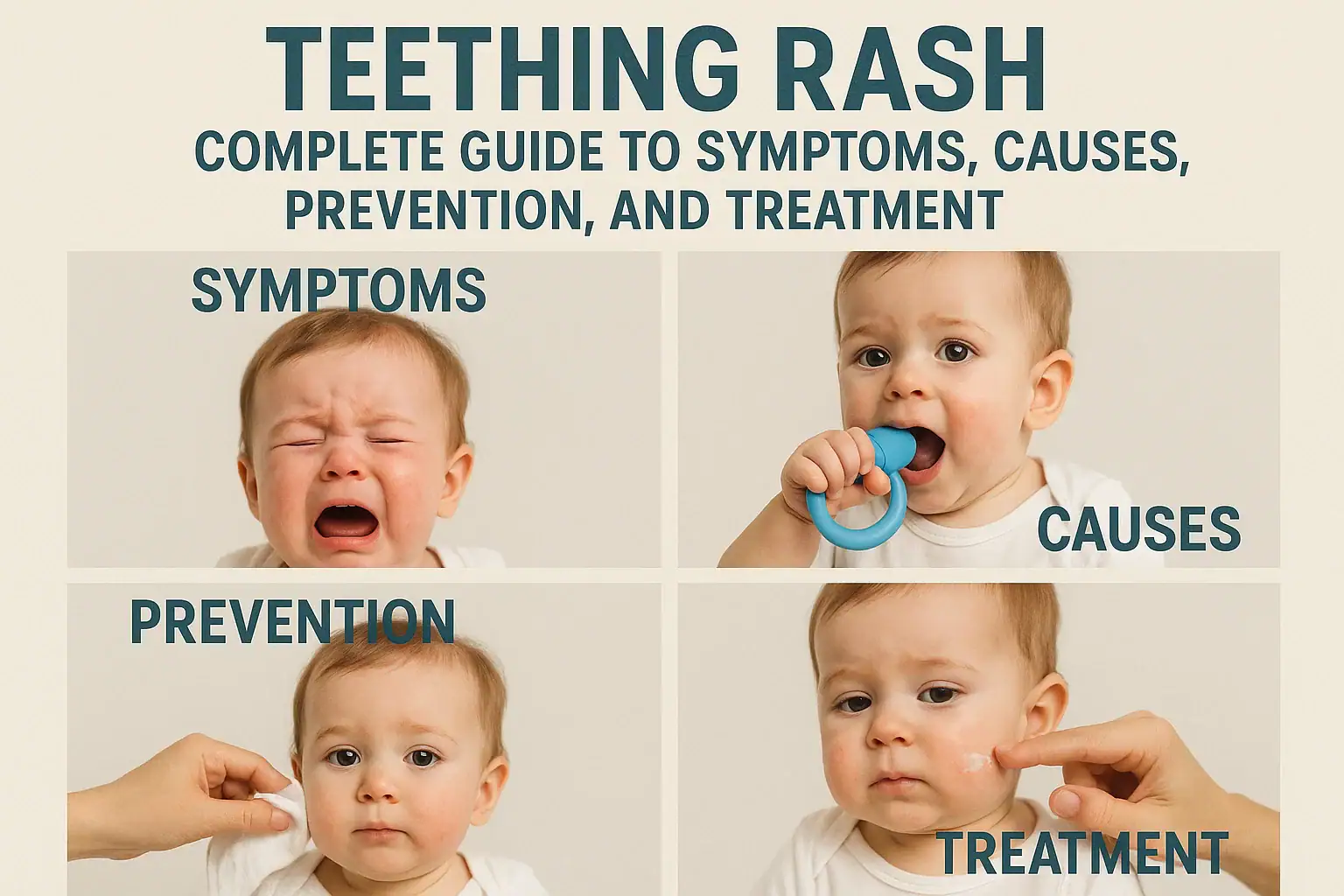
Teething rash is skin irritation on a baby's cheeks, chin, neck folds or chest caused by saliva sitting on the skin while primary teeth erupt, not by the teeth themselves. In a prospective study of 125 infants covering 19,422 child-days and 475 tooth eruptions, facial rash was one of the symptoms significantly associated with tooth emergence, and symptoms clustered in an eight-day window running from four days before eruption to three days after (PubMed 10742315). With barrier cream, frequent bib changes and skin kept dry, most episodes settle within one to two weeks. Oozing, spreading rash or fever needs a doctor.
- 01Teething rash is a saliva contact irritation rather than a tooth disease: the trigger is drool resting on the cheeks, chin, neck folds and the chest above a wet bib.
- 02Symptoms cluster tightly around eruption. In 125 prospectively followed infants they were significantly more frequent only in an eight-day window, from four days before a tooth emerged to three days after (PubMed 10742315).
- 03Drooling is common but not universal: a meta-analysis of 16 studies and 3,506 children aged 0 to 36 months reported drooling in 55.72%, gingival irritation in 86.81% and irritability in 68.19% (PubMed 26908659).
- 04No single teething symptom is a reliable marker. In the same prospective cohort, no symptom occurred in more than 35% of teething infants (PubMed 10742315).
- 05High fever is not a teething sign: fever over 102 degrees Fahrenheit was not significantly associated with tooth emergence, so it needs its own explanation (PubMed 10742315).
/ Teething Rash Overview and Symptom Patterns
Introduction: What Is a Teething Rash?
Teething rash, often referred to as a "drool rash," is a common skin reaction that many babies experience when their teeth begin to erupt. As infants start teething, their bodies respond in a variety of ways excessive drooling, chewing on objects, fussiness, and sometimes, the development of red, irritated patches on their cheeks, chin, neck, or chest. These symptoms are often harmless but can be uncomfortable and concerning for parents.
Understanding the nature of teething rash, its causes, and effective ways to prevent and treat it can help caregivers manage this phase with confidence.
What Causes Teething Rash?
The primary cause of teething rash is excessive drooling, which occurs due to increased saliva production during teething. When this saliva constantly comes into contact with a baby’s sensitive skin, it can break down the protective barrier and lead to inflammation, redness, and irritation.
Other contributing factors include:
- Constant rubbing of saliva-soaked objects on the skin (e.g., hands, toys, blankets)
- Sensitivity to food particles trapped in the saliva
- Friction caused by bibs or clothing
- Increased local skin sensitivity or irritation related to discomfort and excessive drooling
Where Does Teething Rash Appear?
Teething rash can show up in several areas, most commonly:
- Face : Especially on the cheeks and around the mouth
- Chin : Where drool collects during sleep or while sucking
- Neck folds : Moisture can get trapped in skin folds
- Chest : If drool drips down and stays on the clothing or bib
Symptoms of a Teething Rash
Recognizing a teething rash is crucial for proper care. Common symptoms include:
- Red, blotchy patches of skin
- Bumpy or slightly raised texture
- Peeling or dry skin in the affected areas
- Mild discomfort or itchiness
- Moist appearance if drool is persistent
While teething rash is usually mild, parents should monitor symptoms for signs of infection or worsening.
/ Teething Rash Concerns and Duration
Teething rash questions often focus on where irritation appears and how long it may last.
Can Teething Cause a Rash?
Yes. Excess drooling associated with teething can absolutely cause a skin rash. While teething doesn’t directly cause skin conditions, the behaviors and physiological changes during teething particularly drool and the frequent contact with wet hands or objects can irritate the skin and create rashes.
Does Teething Cause Diaper Rash?
While not directly connected, teething can lead to changes in bowel movements due to swallowed saliva, and this in turn may irritate the skin in the diaper area. However, teething does not cause diaper rash in every child. The rash in this case is typically due to a combination of acidity in the stool and increased bowel movement frequency.
Can Teething Cause a Skin Rash on the Face?
Absolutely. The cheeks and mouth area are the most common sites for teething rash due to constant exposure to drool. Repeated wiping of the face and contact with saliva-saturated pacifiers or toys can also contribute to facial rash.
How Long Does Teething Rash Last?
Teething rashes can be intermittent and may last for several days or even weeks, depending on:
- The severity of drooling
- Skin sensitivity
- How quickly teeth are erupting
- Effectiveness of care and preventive measures
If properly managed, rashes usually resolve within a week or two.
/ Prevention and Barrier Creams for Teething Rash
Preventing teething rash involves minimizing skin exposure to drool and maintaining good hygiene. Here are key strategies:
1. Keep the Skin Dry
- Use soft, absorbent bibs and change them frequently
- Pat (don’t rub) the skin dry often, especially after drooling or feeding
2. Apply Barrier Creams
- Use petroleum jelly or zinc oxide-based creams around the mouth, chin, and neck
- These create a protective barrier against moisture
3. Choose Breathable Clothing
- Avoid tight collars and synthetic fabrics
- Use soft cotton clothes that allow airflow
4. Wipe Gently with Warm Water
- Avoid baby wipes with alcohol or fragrance
- Use a clean damp cloth to gently cleanse the area
5. Keep Teething Toys Clean
- Disinfect toys and pacifiers regularly to avoid additional skin irritation from bacteria
Best Barrier Creams for Teething Rash
Using a barrier cream can protect your baby’s skin from excess moisture and irritation. Top choices include:
- Aquaphor Baby Healing Ointment
- Desitin Daily Defense
- Weleda Baby Calendula Face Cream
- Mustela Hydra Bébé Facial Cream
Apply the cream 2–3 times a day or after cleaning the face, especially before naps or bedtime.
/ Doctor Guidance and Home Remedies for Teething Rash
When to Call a Doctor
Most teething rashes are mild and respond well to home care. However, contact your pediatrician if:
- Rash becomes bright red, swollen, or starts oozing pus
- Your child develops a fever
- Rash spreads to other parts of the body
- The rash doesn't improve within a few days of treatment
These signs could indicate a secondary infection or another underlying skin condition.
The rash is a skin problem, but the teeth arriving underneath still need checking. Eruption timing, the first dental visit and early decay in milk teeth are handled by our paediatric dental care team, and the full list sits under paediatric dentistry.
Teething Rash vs Other Rashes
It's important to differentiate teething rash from other common baby skin conditions:
| Condition | Location | Appearance | Causes |
|---|---|---|---|
| Teething Rash | Face, chin, neck | Red, blotchy, moist | Drooling during teething |
| Eczema | Cheeks, joints | Dry, scaly, itchy | Allergens or irritants |
| Heat Rash | Neck, armpits, back | Tiny red bumps | Overheating and sweat |
| Contact Dermatitis | Where skin touches irritants | Red, itchy, with possible blisters | Allergens in products or fabrics |
Understanding the difference ensures correct treatment and faster relief.
Natural Remedies for Teething Rash
In addition to barrier creams, some parents prefer natural methods:
- Breast milk : Known for its antibacterial and anti-inflammatory properties
- Coconut oil : Moisturizes and soothes irritated skin
- Chamomile tea : Apply cooled tea with a cotton pad to calm the skin
- Oatmeal bath : Helps reduce itchiness and inflammation
Always test a small area of your baby’s skin first to check for allergies.
/ FAQs About Teething Rash
Can teething cause a rash on the body?
Typically no. Teething rash is limited to areas exposed to drool, like the face and chest. If a body-wide rash appears, consult a doctor.
Should I stop using pacifiers or teething toys?
Not necessarily. Just ensure they’re clean and dry, and avoid letting wet objects rest on the baby’s skin for long periods.
What if the rash is around the mouth and smells bad?
This could be a yeast infection. If there’s a foul odor or white patches, consult your pediatrician. White patches inside the mouth that do not rub off easily suggest oral thrush, and the NHS advises seeing a GP if a baby under 4 months has signs of it. White patches inside the mouth that do not rub off easily suggest oral thrush, and the NHS advises seeing a GP if a baby under 4 months has signs of it.
Conclusion: Managing Teething Rash Effectively
Teething is a significant developmental milestone, and while it brings discomfort, it also paves the way for your child’s beautiful smile. Teething rash is a manageable side effect, one that, with the right information and care, doesn’t have to cause unnecessary stress.
By staying attentive to symptoms, keeping your baby’s skin clean and dry, and using gentle barrier creams, you can greatly reduce the impact of teething rash. Always consult with a pediatrician if you’re unsure about any skin changes or if the condition seems to worsen.
With proactive care, your little one can navigate the teething stage comfortably and confidently, rash-free and smiling.
Let’s plan the right treatment together.
Free Assessment→- 1.Macknin ML, Piedmonte M, Jacobs J, Skibinski C. Symptoms associated with infant teething: a prospective study. Pediatrics 2000;105:747-52. PubMed 10742315
- 2.Massignan C, Cardoso M, Porporatti AL, Aydinoz S, Canto Gde L, Mezzomo LA, et al. Signs and Symptoms of Primary Tooth Eruption: A Meta-analysis. Pediatrics 2016;137:e20153501. PubMed 26908659
- 3.NHS. Oral thrush (mouth thrush). Page last reviewed 5 June 2023.