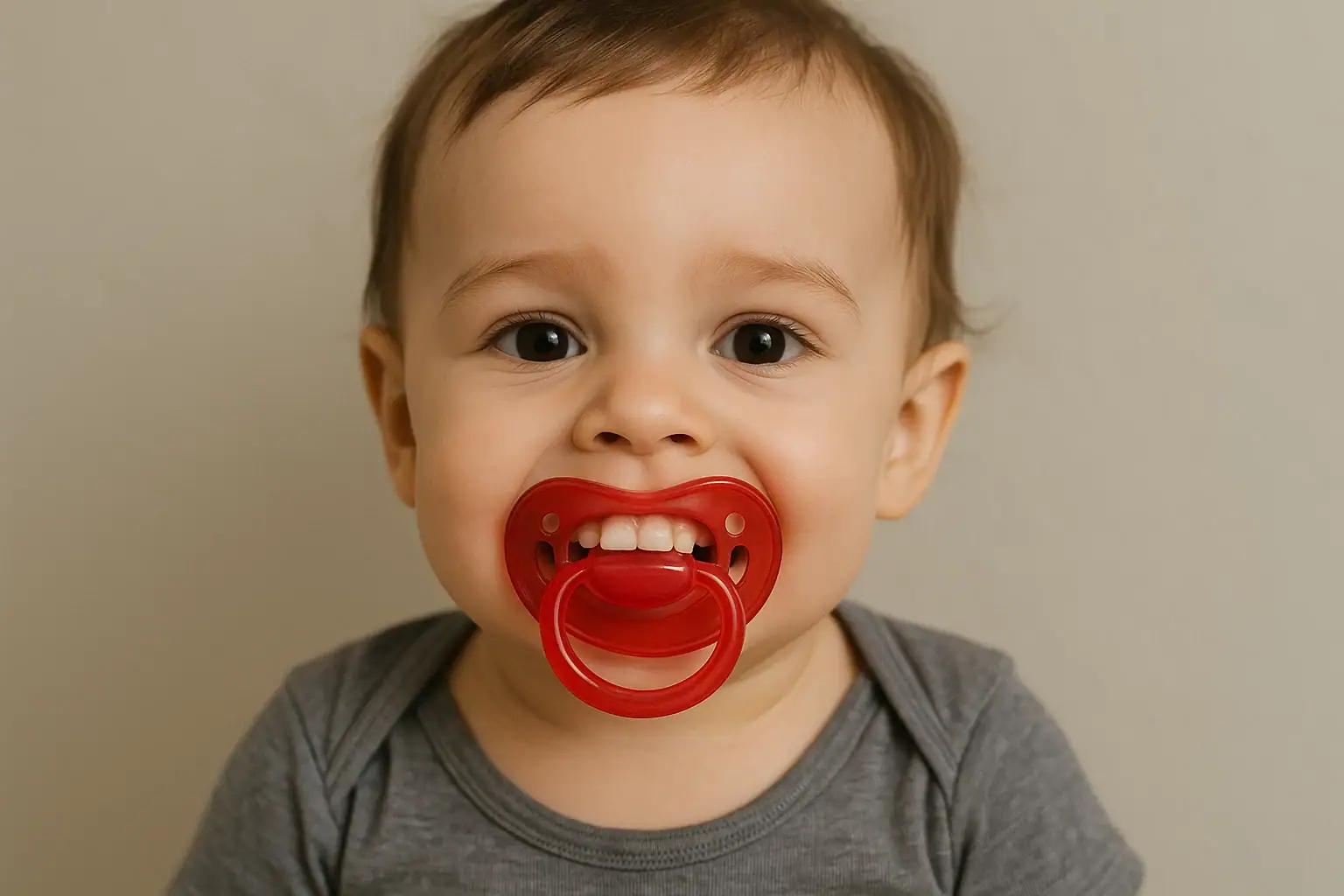
Pacifier teeth is the informal name for the bite changes that follow prolonged non-nutritive sucking: an anterior open bite, proclined upper front teeth and a narrowed palate. The risk tracks with how long and how often the habit continues rather than with the pacifier itself. In a meta-analysis of 33 studies, the three studies that measured daily pacifier use gave a pooled odds ratio of 10.22 for anterior open bite (95% CI 5.36 to 19.49), and longer habits carried greater risk than shorter ones (PubMed 40619361). Short, intermittent use in the first six months is generally treated as harmless, with weaning aimed at age two and at the latest three.
- 01Pacifier teeth is an informal name for a pattern of anterior open bite, proclined upper incisors and a narrowed palate that follows non-nutritive sucking.
- 02Daily pacifier use was linked to anterior open bite at a pooled odds ratio of 10.22 (95% CI 5.36 to 19.49) in the three studies that measured it, and in the 33-study meta-analysis longer habits carried more risk than shorter ones (PubMed 40619361).
- 03The open bite often improves once the habit stops: 5 studies in children aged 4 to 12 reported 50% to 100% self-correction, although the certainty of that evidence was rated very low (PubMed 37080715).
- 04Orthodontic-shaped teats are marketed as the safer option, but a review that screened 1,041 records and pooled 3 comparative studies found no significant difference between orthodontic and conventional teats in their effect on the stomatognathic system (PubMed 27191883).
- 05Duration drives the risk more than the pacifier itself, which is why weaning is usually aimed at age two and at the latest three.
What Pacifier Teeth Means
Pacifier teeth is an informal name for the bite changes that can follow long or frequent pacifier use. It describes a pattern and is not a formal diagnosis. The typical signs are an anterior open bite, where the front teeth do not touch when the back teeth are closed, upper front teeth that tilt forward, and a narrower, higher palate. Some children also show crooked teeth or delayed eruption.
Pacifiers comfort many infants and help them settle for sleep or during fussy moments, and short use in the first months of life is widely regarded as harmless. The concern starts when the habit continues well beyond the toddler years. At that stage the teeth and jaws are growing quickly, and a pacifier held between them for many hours a day acts like a small, constant appliance. The lips and tongue also adapt to the object in the mouth, and those muscle patterns can keep pushing on the teeth.
Both primary and permanent teeth can be affected. Changes in the baby teeth often improve once the habit ends, while changes that persist as the permanent front teeth come in are more likely to need treatment. What matters most is how long and how often the pacifier is used, and the pacifier itself is only the vehicle for that exposure. Parents who understand this can keep the comfort a pacifier offers in infancy while limiting the risk that comes with a long habit.
How Long and How Often Matter
Pacifiers apply repeated pressure to developing jaws and teeth, and the effect depends on dose. Research measures that dose in three ways, namely whether a child ever used a pacifier, for how long and whether the use was daily. In a meta-analysis that pooled the three studies measuring daily pacifier use, the odds ratio for anterior open bite was 10.22, with a 95% CI of 5.36 to 19.49 (PubMed 40619361). Across the thirty three studies in the same meta-analysis, children with longer sucking habits had a greater risk of open bite than those with shorter habits (PubMed 40619361).
A practical timeline follows from this risk gradient. From 0 to 6 months, use is generally safe, especially when it is intermittent. From 6 to 24 months it is still acceptable, but moderation matters. After 24 months the risk of dental effects rises, and beyond 36 months the risk of lasting changes in the bite becomes significant.
Other factors shape the outcome. Intensity, meaning how often and how vigorously the child sucks, adds to duration. Genetics and the natural pattern of jaw growth play a part, so two children with the same habit can end up with different bites. Thumb and finger sucking work through the same mechanism and belong in the same conversation, and they can be harder to stop because the thumb is always available.
Teething, Pacifier Design and Hygiene
A teething pacifier gives an infant something to chew on and applies counter-pressure to sore gums, so it can bring some relief during teething. When choosing one, look for a ventilated shield that lets air circulate around the mouth, BPA-free material and a soft silicone nipple. Many parents are also drawn to the orthodontic shaped nipple, which is flatter and marketed as gentler on developing teeth.
The evidence for that marketing claim is thin. A review that screened 1,041 records and pooled three comparative studies found no significant difference between orthodontic and conventional nipples in their effect on the mouth and jaw system (PubMed 27191883). A better-designed pacifier can still be a sensible choice for comfort and hygiene, but it does not remove the risk that comes with a long daily habit. Duration and frequency stay the main levers.
Cleaning matters as much as design. The NHS lists sterilising dummies regularly among the ways to help prevent oral thrush, a fungal infection that is common in babies. Replace pacifiers that are cracked, sticky or worn, never dip them in sugar or honey, and avoid cleaning them in your own mouth, which passes bacteria to the child. Keeping a few clean spares makes it easier to swap one out when it falls on the floor.
Weaning Step by Step
The target for stopping is age two and the limit is age three, which matches the point where the risk curve begins to rise. Setting a stop date in advance helps the whole family work toward it. Until then, limit use to specific times such as naps and bedtime, and keep the pacifier out of the mouth during active play and while the child is talking.
Gradual reduction usually works more smoothly than stopping all at once. A common sequence moves from all-day use to naps only, then to nights only, then to no pacifier at all. At each stage, offer an alternative source of comfort such as a soft toy, a teething ring, a favourite blanket or soothing music at bedtime. Praise and small rewards for pacifier-free days reinforce the change, and a simple chart where the child marks each success can make progress visible.
Long pacifier use is often tied to emotional comfort, so weaning addresses feelings as well as teeth. Introduce comfort objects gradually, keep routines calm and predictable, and expect a few difficult nights. Tantrums and setbacks are normal and do not mean the plan has failed. If the habit persists despite consistent effort, or if weaning causes marked distress, a pediatrician or child psychologist can help.
When the Bite Has Already Changed
The encouraging finding is that many bite changes improve once the habit stops. A systematic review that screened over 3100 studies included 5 in children aged 4 to 12 and found that anterior open bite often corrected itself after the sucking habit ended, with improvement ranging from 50 to 100% (PubMed 37080715). The authors rated the quality of that evidence as very low, and they could not say after what age self-correction becomes unlikely (PubMed 37080715). Stopping the habit is therefore the first step, followed by a period of observation.
If the bite does not settle, early treatment can make a significant difference. An orthodontic evaluation is usually timed around age 7, when the first permanent incisors and molars are in place and an open bite or a narrow palate can be measured instead of estimated. Treatment options depend on age and on the structure of the jaws. A palatal expander widens a narrow upper arch, and braces or clear aligners correct tooth position in older children. Behavioural support helps prevent relapse into pacifier or thumb sucking, because a habit that returns can undo the correction.
Treatment is planned around the child's growth. Some problems are easier to guide while the jaws are still developing, while others are better left until more permanent teeth have come through.
When to See a Pediatric Dentist
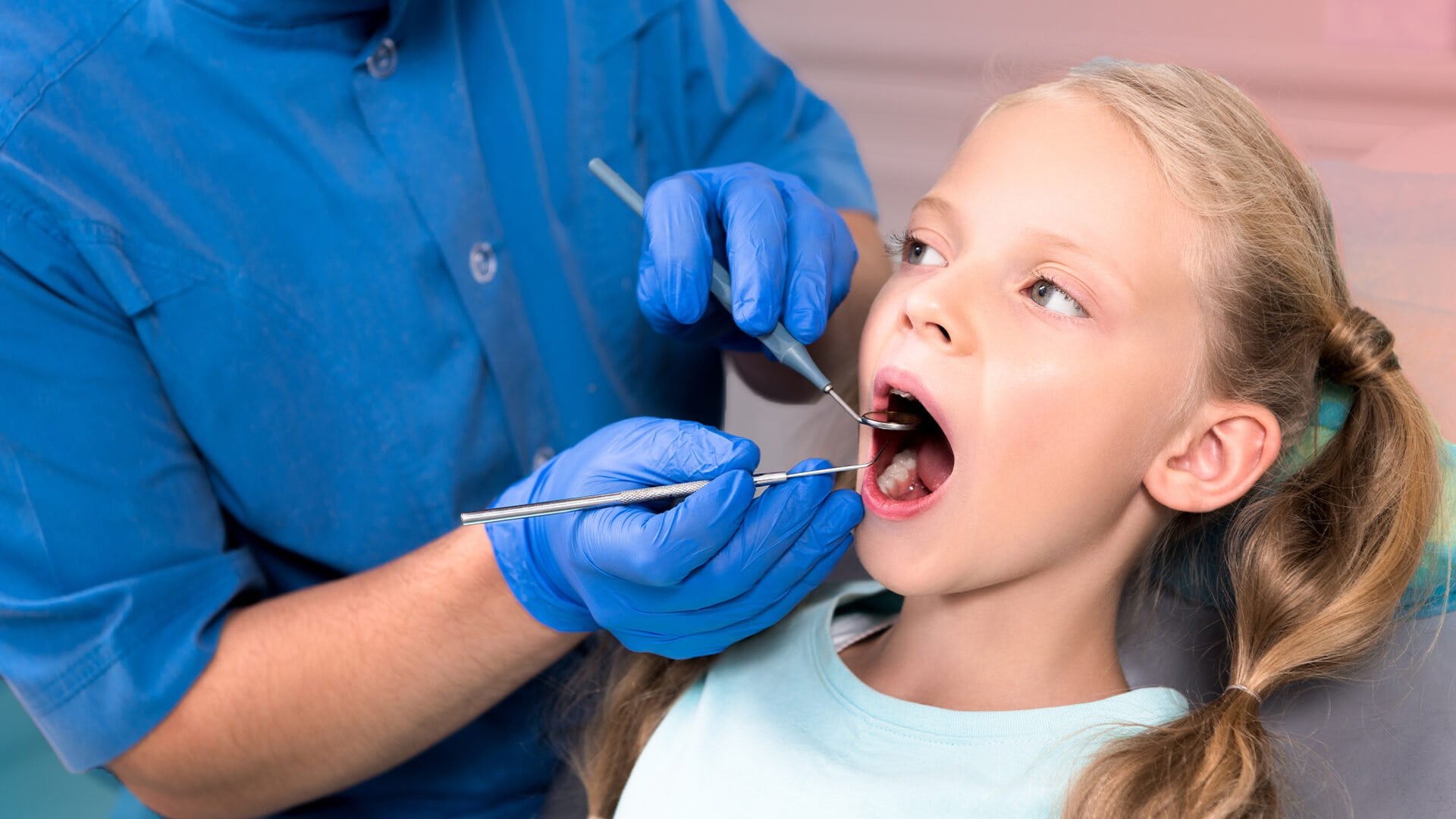
A first general dental check-up at around age 1 is the baseline for every child, whether or not they use a pacifier. At that visit the dentist can look at how the baby teeth are coming in, discuss feeding and pacifier habits, and give advice on cleaning. Regular visits after that make it easier to notice small changes early.
Book a visit sooner if you notice that the front teeth do not meet when your child bites together, that the upper front teeth are pushing forward, that the roof of the mouth looks narrow or that speech sounds are changing. Lisping on certain sounds can accompany an open bite, because the tongue rests forward in the gap. These signs are worth assessing even if the pacifier has already been given up, since the dentist can then judge whether the bite is correcting on its own.
Pacifiers can be a helpful tool for parents when used with limits. Choosing a well-designed and clean pacifier, keeping use short and occasional, setting a clear stop date and asking for dental advice when concerns arise together protect the child's bite while keeping the comfort a pacifier offers in the early months. A pediatric dentist can give advice tailored to your child's age, habit and dental development.
Let's plan the right treatment together.
Free Assessment→- 1.Gao C, Wang M, He H, Lei H, Mei L. Association between Non-nutritive sucking habits and Anterior open bite: A systematic review and meta-analysis. BMC Oral Health 2025;25:1124. PubMed 40619361
- 2.Adriano LZ, Derech CD, Massignan C, Flores-Mir C, Porporatti AL, Canto GL, et al. Anterior open bite self-correction after cessation of non-nutritive sucking habits: a systematic review. Eur J Orthod 2023;45:235-243. PubMed 37080715
- 3.Corrêa Cde C, Bueno Mda R, Lauris JR, Berretin-Felix G. Interference of conventional and orthodontic nipples in system stomatognatic: systematic review. Codas 2016;28:182-9. PubMed 27191883
- 4.NHS. Oral thrush (mouth thrush). Page last reviewed 5 June 2023.