
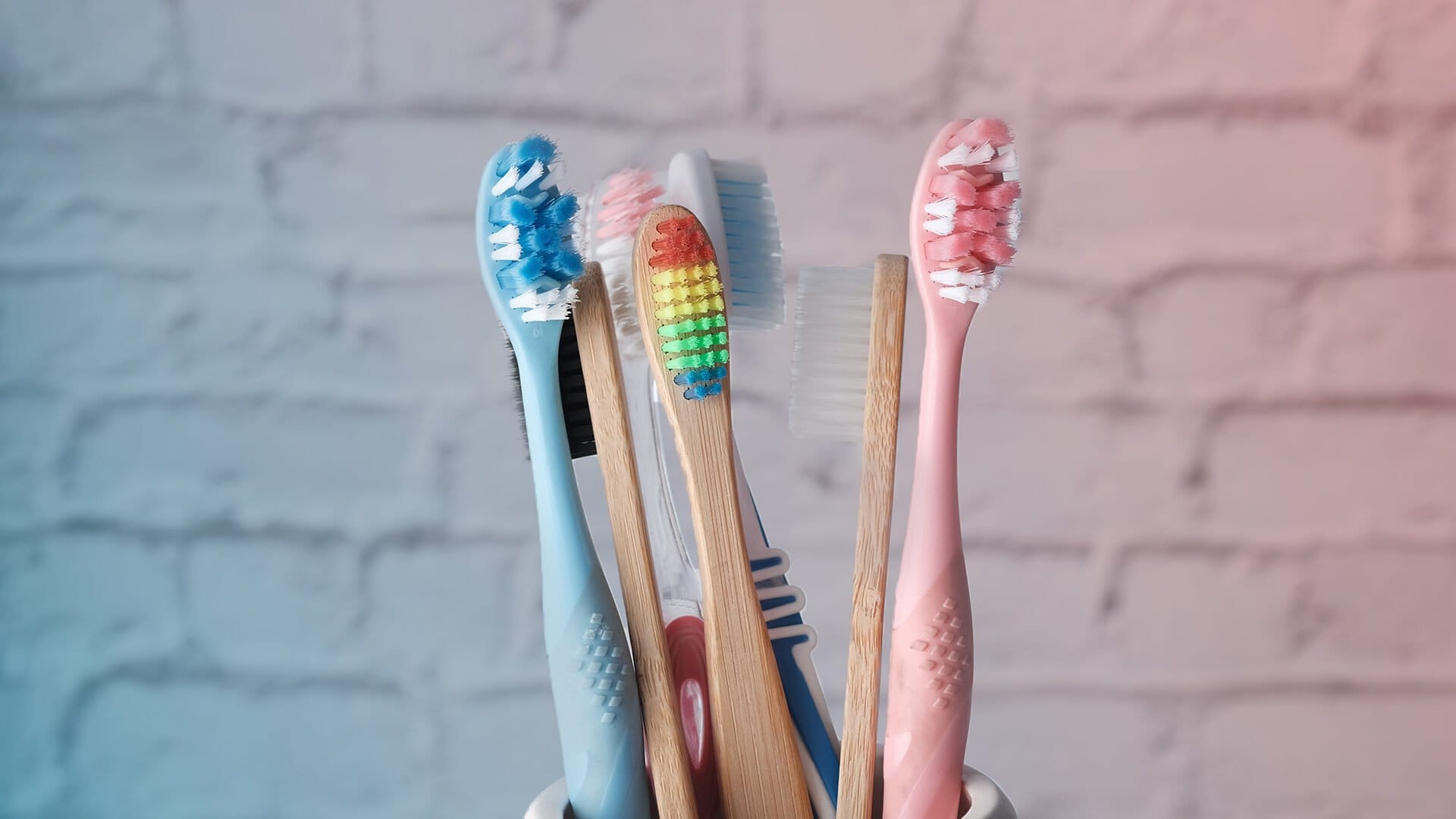
Choosing the right toothbrush comes down to four decisions: bristle hardness, head size, handle grip, and manual versus powered. Soft bristles suit sensitive or receding gums, medium suits healthy gums, and hard bristles risk abrading enamel when pressure is heavy. A smaller head reaches the back molars. On the manual versus powered question, a Cochrane review of 51 trials with 4,624 participants found powered brushes reduced plaque by 11% in the short term and 21% long term, and gingivitis by 6% and 11% (PubMed 24934383). Replace any brush every 3 to 4 months.
- 01Bristle hardness is the first decision: soft for sensitive or receding gums, medium for healthy gums, hard only with light pressure because it can damage enamel and gum tissue.
- 02Powered brushes measurably outperform manual ones: 11% less plaque short term and 21% long term, 6% and 11% less gingivitis, across 51 trials with 4,624 participants (PubMed 24934383).
- 03Replace the brush every 3 to 4 months, earlier if the bristles deform, and always after an illness.
- 04Brushing lasts at least 2 minutes, with sweeping strokes from gum to tooth on outer surfaces, gentle circles on inner surfaces and back-and-forth strokes on chewing surfaces.
- 05The paste matters as much as the brush: a Cochrane review of 96 trials found fluoride toothpaste reduces caries increment compared with non-fluoride toothpaste (PubMed 30829399).
Oral and dental health is a part of our overall health. Choosing the right toothbrushes is very important to keep our teeth clean and healthy. Although there are many different types of toothbrush on the market, the type of brush that suits everyone's needs may be different. So, how should we choose the right toothbrush? The answer comes down to three things: the bristles, the size of the head and the handle.
/ Factors to Consider When Choosing a Toothbrush
Hardness of the Bristles
When choosing a toothbrush, the hardness of the bristles is one of the most important factors. There are three basic hardness levels:
- Soft-bristled brushes: Ideal for people with gum sensitivity and those prone to gum disease.
- Medium-hard bristle brushes: Generally suitable for individuals with healthy gums.
- Hard-bristled brushes: Generally preferred by individuals with high tartar formation. However, applying too much pressure can damage tooth enamel.
Size of the Brush Head
The size of the brush head should be suitable for your mouth structure.
- Smaller heads can be preferred for children, while medium or large heads can be preferred for adults.
- Overly large brush heads may not be suitable for cleaning the molars behind.
Handle Design and Ease of Use
The handle of the toothbrush should be ergonomic and have a non-slip structure. Thick and easy-to-grip handles should be preferred especially for children.
Manual or Electric?
When choosing a toothbrush, it is also important to decide between manual and electric brushes:
- Manual toothbrushes: Provide effective cleaning when used with the right technique.
- Electric toothbrushes: More effective in cleaning plaque and more suitable for people with limited mobility.
Arrangement of the Bristles
The arrangement of the bristles in toothbrushes also affects cleaning performance.
- Crossed or rounded bristles provide effective cleaning by reaching better between the teeth.
- Soft and rounded bristles do not damage tooth enamel.
/ Toothbrush Selection for Different Needs and Proper Use
Which Toothbrush is Suitable for Who?
Which toothbrush is suitable for whom depends on personal oral health and needs. Here are some suggestions:
For Those with Sensitive Gums
Soft-bristled brushes are recommended for people with sensitive gums. These brushes provide gentle cleaning without damaging the gums.
For Those with Braces
Individuals undergoing orthodontic treatment should prefer special orthodontic toothbrushes. These brushes minimize plaque accumulation between brackets and wires.
For Children
Small-headed and soft-bristled brushes are designed to fit children's teeth. In addition, fun designs encourage children to brush their teeth.
For Elderly Individuals
Electric toothbrushes are recommended for elderly individuals. These brushes provide more effective and easy cleaning for individuals with reduced mobility.
For Those With Intense Plaque Accumulation
Electric or medium-hard bristle toothbrushes can be effective in reducing plaque accumulation. However, hard brushes should be used carefully, otherwise they can damage tooth enamel.
For Those Using Dentures
Specially designed large-headed, soft-bristled brushes should be preferred for cleaning dentures.
For Those With Receding Gum
People with receding gums should use brushes with ultra-soft bristles. This way, they irritate the gums less.
How Often Should We Change Our Toothbrush?
It is recommended that you change your toothbrush every 3-4 months. However;
- If the bristles show early deformation, they can be changed earlier.
- After having an illness, you should use a new brush to get rid of germs.
Proper Tooth Brushing Techniques
Brushing Duration
You should brush your teeth for at least 2 minutes.
Brushing Direction
- Outer surfaces: Sweeping motion from gum to tooth.
- Inner surfaces: Gentle brushing with circular motions.
- Chewing surfaces: Cleaning with back and forth motions.
Tongue Cleaning
Don't forget to clean your tongue along with brushing your teeth. You can use special tongue cleaners to prevent bacterial accumulation.
Toothpaste Selection
When choosing your toothbrush, you should also pay attention to the content of the toothpaste you use. Pastes containing fluoride help prevent cavities.
/ Frequently Asked Questions
Are Electric Toothbrushes Really Better?
Yes, when used correctly, electric toothbrushes can remove more plaque than manual toothbrushes.
Do Hard Brushes Clean Teeth Better?
No. Hard brushes can damage tooth enamel and gums.
How to Store a Proper Toothbrush?
Store your toothbrush upright in the open air and avoid contact with other people's brushes.
As a result, you can protect your dental health and provide more effective oral hygiene by choosing the right toothbrush for your needs!
Let’s plan the right treatment together.
Free Assessment→- 1.Yaacob M, Worthington HV, Deacon SA, et al. Powered versus manual toothbrushing for oral health. Cochrane Database Syst Rev. 2014;(6):CD002281. PMID 24934383
- 2.Walsh T, Worthington HV, Glenny AM, Marinho VC, Jeroncic A. Fluoride toothpastes of different concentrations for preventing dental caries. Cochrane Database Syst Rev. 2019;3:CD007868. PMID 30829399