
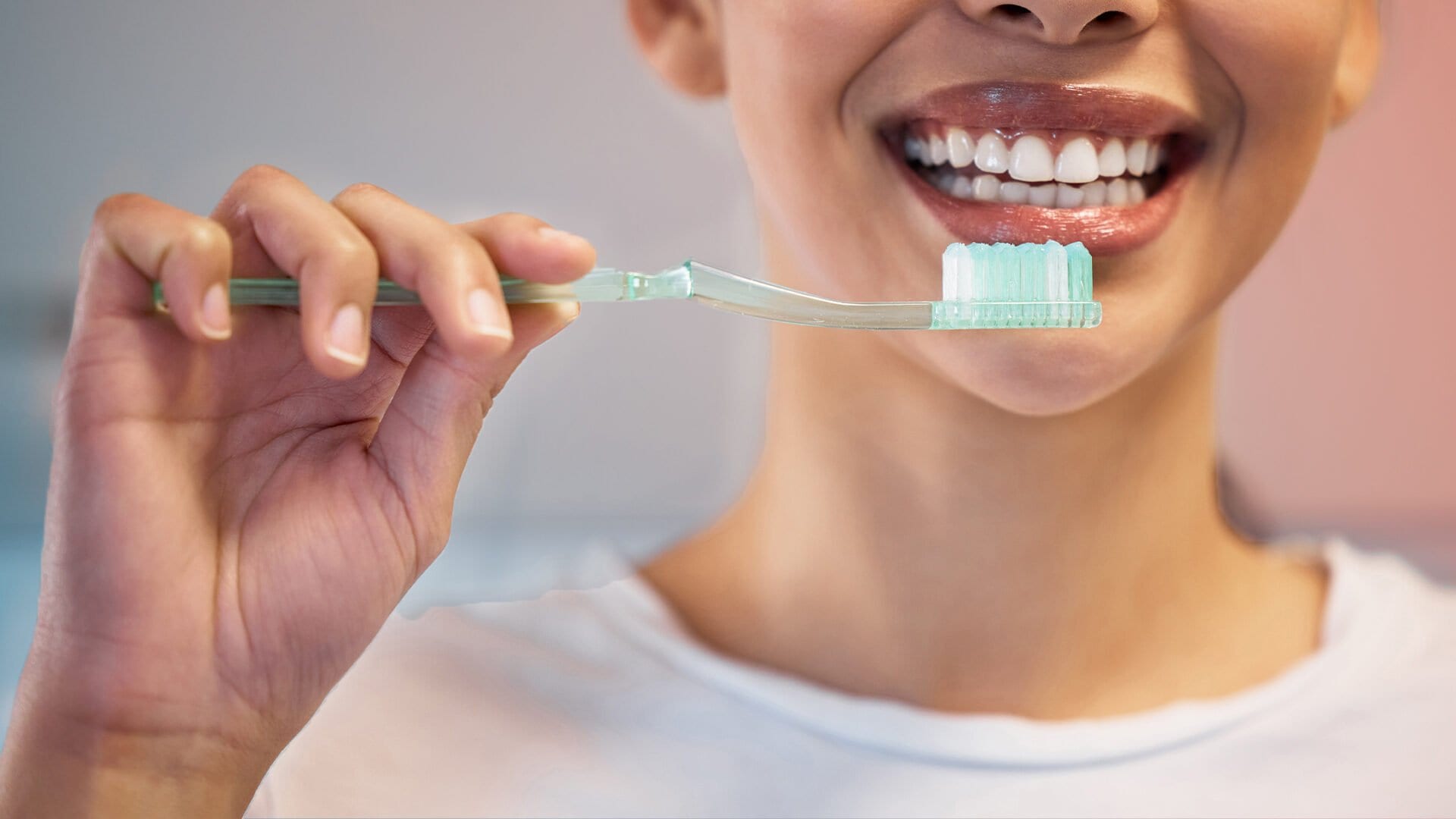
Overbrushing means brushing with excessive force, hard bristles or an abrasive paste, and over years it can thin enamel and expose the dentin underneath, which is naturally yellow and shifts the color of the whole tooth. Bristle hardness has the clearest evidence: a systematic review of 13 controlled trials reported that hard-bristle brushes produced more gingival lesions than medium and soft ones (PubMed 30152076), while a review of 18 papers on brushing and gum recession concluded the data are inconclusive, with 8 studies finding an association and 2 finding none (PubMed 17953693). The routine that protects color is brushing twice a day for 2 to 3 minutes with light pressure and a soft brush.
- 01The colour change comes from exposure of the yellowish dentine beneath the hard white enamel, and every micron of enamel lost or every millimetre of gum recession lets more of it show through.
- 02Bristle hardness is the part with the clearest evidence. Across 13 controlled trials, hard-bristle toothbrushes produced more gingival lesions than medium and soft brushes, and soft or extra-soft brushes were judged safer (PubMed 30152076).
- 03Brushing frequency is a weaker suspect than the headlines suggest: of 18 papers reviewed, 8 reported a positive association with recession and 2 found none, and the authors called the overall evidence inconclusive (PubMed 17953693).
- 04The routine that protects colour is brushing twice a day for 2 to 3 minutes with light pressure and circular motions, and rinsing with water after an acidic meal; a fixed waiting time before brushing is not well supported, since a survey of 3187 young European adults found no evidence that waiting after breakfast changed tooth wear (PubMed 24004965).
- 05Brushing harder is not a whitening method. A Cochrane review of 71 trials found home bleaching agents whiten teeth over 2 weeks to 6 months but at low to very low certainty, with tooth sensitivity and oral irritation the most common side effects (PubMed 30562408).
How Overbrushing Changes the Colour of Teeth
Overbrushing can make teeth look yellower, and it does so indirectly. Overbrushing means brushing with too much force, with hard bristles or with a strongly abrasive paste. Brushing often is a separate matter: twice a day with light pressure is the routine that keeps teeth clean. The damage comes from how hard and with what the teeth are brushed.
The colour change follows from the structure of the tooth. Enamel, the outer layer, is hard, translucent and close to white. It protects the tooth from temperature, acids and bacteria. Beneath it lies dentin, which is naturally yellowish. What you see as the colour of a tooth is a blend of the two, with the dentin showing through the enamel. When enamel is thick, the tooth looks lighter. When it thins, more of the yellow dentin shows through and the whole tooth reads as darker and yellower.
Heavy scrubbing contributes to this thinning over years, especially when enamel has already been softened by acidic food and drink. It also pushes the gum margin back. As the gum recedes, the root surface is exposed, and roots are covered with a thin layer of cementum over dentin, which is also yellow. The result is teeth that look longer, more yellow near the gumline and often more sensitive.
This change is gradual and brushing harder does not reverse it. More force only speeds up the wear that caused it.
Bristle Hardness and Brushing Force
Bristle hardness is the part of overbrushing with the clearest evidence. A systematic review searched for controlled trials comparing manual toothbrushes that differed in bristle stiffness or bristle end shape, and included thirteen studies from 1,945 records initially retrieved (PubMed 30152076). Across these trials, hard-bristle toothbrushes produced more gingival lesions than medium and soft brushes (PubMed 30152076). The authors concluded that soft and extra-soft toothbrushes tend to be safer, and that soft tissue injuries were similar for tapered and end-rounded bristles (PubMed 30152076). In practice, stiffness matters more than the shape of the bristle tip.
Brushing force interacts with the state of the enamel. A laboratory study brushed sound enamel and enamel briefly softened by acid at loads ranging from 1.5 N to 4.5 N (PubMed 17658454). Abrasion of the acid-softened enamel was about fourfold higher than abrasion of sound enamel, and on the softened surfaces the loss was significantly influenced by the brushing load (PubMed 17658454). On sound enamel, brushing force made little difference to the final result (PubMed 17658454). The work was done in the laboratory, and it still explains why heavy pressure is most harmful right after acidic food and drink.
For daily use, a soft or extra-soft brush with a small head reaches all surfaces without scratching the gum. Holding the brush with the fingertips, the way you would hold a pen, naturally limits the force. Frayed or splayed bristles are a sign that the brush has been pressed too hard.
Gum Recession and Exposed Roots
Hard scrubbing can also affect the gums. When the gum margin is repeatedly pushed and irritated, it can recede, exposing the root surface. The root has no enamel covering, so it is both more sensitive and more yellow than the crown of the tooth. Exposed roots are also more vulnerable to decay, and untreated recession can progress.
The evidence linking brushing to recession is less clear than for bristle hardness. A systematic review read the full texts of 29 papers and found 18 eligible for inclusion (PubMed 17953693). Of the observational studies, eight reported a positive association between toothbrushing frequency and recession, while two found no relationship (PubMed 17953693). Other potential risk factors identified were brushing duration, brushing force, how often the brush was changed, bristle hardness and brushing technique (PubMed 17953693). The authors concluded that the data to support or refute the association between toothbrushing and gum recession are inconclusive (PubMed 17953693). Frequency on its own is therefore a weaker suspect than the headlines suggest, and the way the brush is used deserves more attention.
Hard scrubbing can injure the soft tissue as well. The NHS lists damaging your gums with a toothbrush among the common causes of mouth ulcers. For people who get canker sores, small injuries like this are a known trigger. A soft brush and gentle technique reduce both recession risk and these small wounds.
Other Causes of Yellowing Teeth
Overbrushing is only one of several reasons teeth become yellow, and it often acts together with the others.
Food and drink are a common source. Coffee, tea and red wine carry pigments that stain the tooth surface over time. Acidic food and drink such as citrus fruits and fizzy drinks soften enamel and make it easier to wear away, which is why their effect combines with heavy brushing.
Smoking stains the surface of the teeth and, over time, the discoloration becomes harder to remove with ordinary cleaning. Smoking also harms gum health, which adds the risk of recession. Alcohol can contribute to staining in a similar way, especially coloured drinks.
Genetics play a part. Some people naturally have thinner or more translucent enamel, so their dentin shows through more easily and their teeth look more yellow even with good care. These teeth also tend to be more sensitive.
Poor oral hygiene works in the opposite direction from overbrushing. Plaque left on the teeth builds up along the gumline, takes on stains and can harden into tartar, which is yellow to brown. Plaque acids also damage enamel over time. This is why the goal is thorough, gentle brushing that removes plaque completely without scrubbing the enamel.
Age brings its own change. Enamel slowly wears over decades and dentin becomes thicker and darker, so teeth gradually look more yellow even in people who brush correctly.
A Gentle Brushing Routine
The routine that protects tooth colour is simple. Brush twice a day, morning and evening, for 2 to 3 minutes each time. Shorter brushing tends to leave plaque along the gumline, which itself causes discoloration over time. Longer or more frequent brushing with heavy pressure adds wear without adding cleaning.
Use a soft-bristled brush and hold it at a slight angle to the gumline. Move it in small circular motions with light pressure, covering the outer, inner and chewing surfaces of every tooth. Long horizontal scrubbing strokes along the gumline are the movement most likely to wear the neck of the tooth and push the gum back. If you use an electric toothbrush, let the brush head do the work and guide it slowly from tooth to tooth.
Toothpaste choice matters too. A fluoride toothpaste strengthens enamel against acid. Whitening toothpastes usually remove surface stains with stronger abrasives; they can be used from time to time, but daily long-term use can add to enamel wear. People with sensitivity may prefer a toothpaste formulated for sensitive teeth.
After brushing, spit out the excess toothpaste and avoid rinsing heavily with water, so that some fluoride stays on the teeth. A mouthwash can be used at another time of day to add a further cleaning step. Change the brush when the bristles start to splay, since worn bristles clean less well and tempt you to press harder.
Timing Brushing Around Meals
When you brush matters as much as how. Acidic food and drink, such as citrus fruits, juices, fizzy drinks, coffee, tea and red wine, temporarily soften the enamel surface. Brushing in that window removes more mineral than it would from sound enamel, as the laboratory work on acid-softened enamel shows.
A fixed waiting time before brushing is not well supported: a survey of 3187 young European adults found no evidence that waiting after breakfast before brushing changed the degree of tooth wear (PubMed 24004965). Rinsing with water immediately after the meal helps clear the acid and food debris, and brushing later still removes the plaque while the enamel has had time to recover. Chewing sugar-free gum can also increase saliva flow, which helps neutralise acids.
Morning brushing can be planned around this. If breakfast includes orange juice or coffee, brushing before breakfast and rinsing with water afterwards avoids brushing on freshly softened enamel. Evening brushing should be the last thing before sleep, after the final meal or drink of the day.
People with reflux or frequent vomiting face repeated acid exposure from the stomach. For them, rinsing with water after an episode and delaying brushing is especially useful, and discussing enamel protection with a dentist is worthwhile.
Whitening Without Extra Scrubbing
Brushing harder does not whiten teeth. Brushing removes plaque and surface film, but it cannot lighten the colour of the tooth itself, and extra abrasion makes the yellow dentin more visible over time.
Whitening products that act chemically work differently. A Cochrane review included 71 trials of home-based whitening products (PubMed 30562408). In 26 studies with 1398 participants comparing a bleaching agent with placebo, the products whitened teeth over a short period, from 2 weeks to 6 months, although the certainty of the evidence was low to very low (PubMed 30562408). Tooth sensitivity and oral irritation were the side effects reported most often. Comparisons between different bleaching products varied too widely to draw reliable conclusions.
This is why teeth whitening is planned with a dentist. The dentist first identifies the cause of the colour change. Surface stains from coffee, tea or smoking often respond to professional cleaning. Yellowing from thin enamel or exposed roots behaves differently, and existing fillings and crowns keep their colour when the natural teeth around them are bleached. Sensitivity, existing restorations and gum condition also shape the choice of method.
At a check-up, signs of overbrushing such as worn areas at the necks of the teeth, receding gums and sensitivity can be spotted early. The dentist can then adjust your technique and brush choice before the wear progresses.
Let’s plan the right treatment together.
Free Assessment→- 1.Ranzan N, Muniz FWMG, Rösing CK. Are bristle stiffness and bristle end-shape related to adverse effects on soft tissues during toothbrushing? A systematic review. Int Dent J. 2019;69(3):171-182. doi:10.1111/idj.12421. PubMed 30152076
- 2.Rajapakse PS, McCracken GI, Gwynnett E, Steen ND, Guentsch A, Heasman PA. Does tooth brushing influence the development and progression of non-inflammatory gingival recession? A systematic review. J Clin Periodontol. 2007;34(12):1046-1061. doi:10.1111/j.1600-051X.2007.01149.x. PubMed 17953693
- 3.Eachempati P, Kumbargere Nagraj S, Kiran Kumar Krishanappa S, Gupta P, Yaylali IE. Home-based chemically-induced whitening (bleaching) of teeth in adults. Cochrane Database Syst Rev. 2018;12(12):CD006202. doi:10.1002/14651858.CD006202.pub2. PubMed 30562408
- 4.NHS. Mouth ulcers. Page last reviewed 11 March 2024.
- 5.Staines K, Greenwood M. Aphthous ulcers (recurrent). BMJ Clin Evid. 2015;2015:1303. PubMed 25720501
- 6.Wiegand A, Köwing L, Attin T. Impact of brushing force on abrasion of acid-softened and sound enamel. Arch Oral Biol 2007;52:1043-7. PubMed 17658454
- 7.Bartlett DW, Lussi A, West NX, Bouchard P, Sanz M, Bourgeois D. Prevalence of tooth wear on buccal and lingual surfaces and possible risk factors in young European adults. J Dent 2013;41:1007-13. PubMed 24004965
- 8.Alkhatib MN, Holt RD, Bedi R. Smoking and tooth discolouration: findings from a national cross-sectional study. BMC Public Health. 2005;5:27. doi:10.1186/1471-2458-5-27. PubMed 15790389