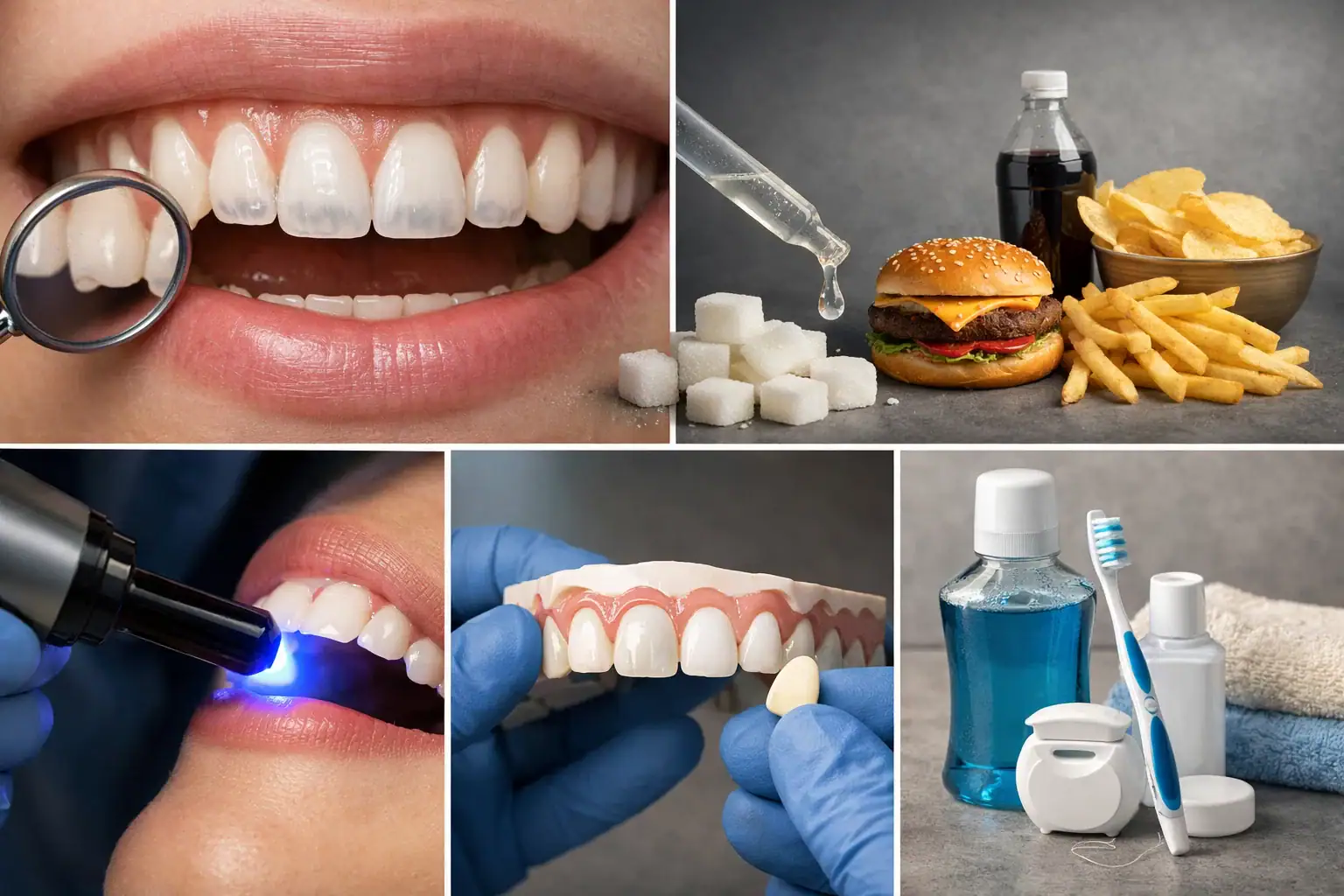
Teeth look transparent at the biting edges when enamel thins enough for light to pass through it instead of reflecting off it, letting the yellower dentin underneath read through. Erosive wear is the usual driver and it is common rather than rare: among 3,187 European adults aged 18 to 35 examined with the BEWE index, 29% showed signs of tooth wear, with the most severe score recorded in 3.3% (PubMed 24004965). Lost enamel does not regrow. Treatment means rebuilding the edge with composite bonding, covering the front with ceramic veneers, or full coverage where the tooth is also fractured.
- 01Transparency is a thickness sign rather than a stain: as enamel thins, light transmits instead of reflecting and the yellow dentin below starts to show through.
- 02Erosive wear is widespread in young adults: among 3,187 examined adults aged 18-35 across seven European countries, the highest BEWE score was 2 in 26.1% and 3 in 3.3%, with 29% showing signs of tooth wear overall (PubMed 24004965).
- 03The risk list is measured, not guessed: heartburn or acid reflux, repeated vomiting, rural residence, electric toothbrushing and snoring were the significant risk factors, and fresh fruit and juice intake was positively associated with wear (PubMed 24004965).
- 04Age alone does not explain it. Slight translucency at the incisal edges is normal with age, but marked transparency in a young or middle-aged adult points to erosion, grinding or acid exposure instead.
- 05Ceramic coverage has long-term numbers: laminate veneers pooled at 96.13% survival for feldspathic, 93.70% for leucite-reinforced and 96.81% for lithium disilicate at 10.4 years across 29 studies (PubMed 39523553).
/ Translucent Teeth Meaning and Early Warning Signs
Introduction: Why Are My Teeth Turning Transparent?
If you’ve noticed that the edges of your teeth look clear or glass-like, you’re not alone. Transparent or translucent teeth are not just a cosmetic issue; they often indicate underlying enamel damage or mineral loss.
Healthy teeth should appear opaque and slightly glossy. When teeth start to look transparent, especially at the tips or edges, it usually means that the enamel is thinning. Since enamel is the outer protective layer of the tooth, any damage to it can affect both appearance and long-term dental health .
What Does It Mean When Teeth Become Transparent?
Transparent teeth also referred to as translucent teeth occur when the enamel becomes thin enough that the underlying dentin begins to show through. Dentin is naturally yellowish, and when enamel wears away, teeth may appear:
- Clear at the edges
- Grayish or bluish in tone
- More sensitive to temperature
Key Difference: Enamel vs. Dentin
- Enamel : The hard, white, outer layer of the tooth
- Dentin : The softer, yellow layer beneath enamel
When enamel thins, light passes through it instead of reflecting off it, creating a transparent appearance.
Is It Normal for Teeth to Become Transparent?
No. Teeth becoming transparent is not considered normal, especially in young or middle-aged adults. While slight translucency at the incisal edges can be natural with age, noticeable transparency often signals:
- Enamel erosion
- Acid exposure
- Nutritional deficiencies
- Improper oral hygiene habits
Ignoring the issue can lead to tooth sensitivity, chipping, cavities, and even tooth fractures.
/ Main Causes of Transparent Teeth
1. Enamel Erosion (The Most Common Cause)
Enamel erosion occurs when acids wear away the tooth surface. Once enamel is lost, it cannot regenerate naturally. The reason is biological: enamel lacks the ability to regenerate because the ameloblasts, the cells that formed it, are absent, which is also one of the clearest answers to the question of whether teeth are bones. The reason is biological: enamel lacks the ability to regenerate because the ameloblasts, the cells that formed it, are absent, which is also one of the clearest answers to the question of whether teeth are bones.
Common causes of enamel erosion include:
- Frequent consumption of acidic foods and drinks
- Acid reflux (GERD)
- Eating disorders (bulimia, anorexia)
- Excessive citrus intake
2. Acidic Foods and Beverages
Regular exposure to acids is one of the biggest contributors to translucent teeth.
High-risk items include:
- Soda (including diet soda)
- Energy drinks
- Citrus fruits
- Vinegar-based foods
- Wine
When acids repeatedly attack enamel, it becomes thin and transparent over time.
3. Overbrushing or Incorrect Brushing Technique
Brushing your teeth too hard or using a hard-bristled toothbrush can mechanically wear away enamel.
Signs include:
- Transparent tooth edges
- Gum recession
- Increased tooth sensitivity
Use a soft-bristled brush and gentle, circular motions.
4. Teeth Grinding (Bruxism)
Grinding or clenching your teeth especially at night causes excessive mechanical wear.
Bruxism can lead to:
- Flattened teeth
- Transparent edges
- Microcracks in enamel
Many people grind their teeth unknowingly while sleeping.
5. Aging and Natural Wear
As we age, enamel naturally thins due to years of use. While this process is gradual, poor oral habits can accelerate it significantly.
However, severe transparency is not just an aging issue and should be evaluated by a dentist.
6. Genetics and Enamel Hypoplasia
Some individuals are born with weaker or thinner enamel due to genetic conditions like enamel hypoplasia.
Symptoms may include:
- Naturally translucent teeth
- White or yellow spots
- Increased decay risk
7. Frequent Teeth Whitening
Excessive use of whitening products especially over the counter kits can weaken enamel.
Over-whitening may cause:
- Increased transparency
- Tooth sensitivity
- Enamel dehydration
/ Risks of Transparent Teeth and Professional Treatment Options
Are Transparent Teeth Dangerous?
Yes, transparent teeth can be a warning sign of serious dental problems.
If left untreated, enamel loss can lead to:
- Chronic tooth sensitivity
- Cracks and fractures
- Increased cavity risk
- Tooth discoloration
- Shortened tooth lifespan
Early intervention is key.
1. Dental Bonding
Dental bonding uses tooth colored composite resin to restore lost enamel and improve appearance.
Benefits:
- Quick and minimally invasive
- Affordable compared to veneers
- Immediate aesthetic improvement
Best for mild to moderate transparency.
2. Porcelain Veneers
Porcelain veneers are thin shells placed over the front of teeth to:
- Mask transparency
- Restore tooth shape
- Improve color and symmetry
They are ideal for advanced cases where aesthetics are a priority.
3. Zirconia or Ceramic Crowns
For severe enamel loss, crowns may be necessary.
Crowns:
- Fully cover the tooth
- Protect weak structures
- Restore strength and function
Often recommended when transparency is accompanied by fractures or decay.
Which of these you need depends on how much enamel is left, which is a measurement rather than a preference. The conservative end sits under restorative dentistry, where composite bonding is built directly on the tooth in a single visit; once full coverage is unavoidable the case moves into prosthodontics.
4. Enamel Remineralization Treatments
While enamel cannot fully regrow, remineralization therapies can strengthen remaining enamel.
Professional options include:
- Fluoride varnishes
- CPP-ACP treatments
- Medical-grade remineralizing gels
/ Transparent Teeth Management and Prevention
Can Transparent Teeth Be Fixed Naturally?
Natural methods for transparent teeth can slow progression, but they cannot fully reverse enamel loss.
Helpful At-Home Practices
- Use fluoride toothpaste
- Switch to a soft toothbrush
- Avoid acidic foods
- Rinse with water after acidic drinks
- Wait 30 minutes before brushing after acid exposure
Remineralizing Toothpastes
Look for ingredients like:
- Fluoride
- Hydroxyapatite
- Calcium phosphate
These help strengthen enamel and reduce sensitivity.
How to Prevent Teeth from Becoming Transparent
1. Modify Your Diet
Reduce:
- Soda and acidic drinks
- Sugary snacks
- Citrus overconsumption
Increase:
- Dairy products
- Leafy greens
- Water intake
2. Protect Against Acid Reflux
If you suffer from GERD:
- Seek medical treatment
- Avoid brushing immediately after reflux episodes
- Rinse with water or baking soda solution
3. Address Teeth Grinding
- Wear a custom night guard
- Reduce stress
- Avoid caffeine before bed
4. Limit Whitening Treatments
- Avoid frequent DIY whitening
- Choose dentist-supervised treatments
- Focus on enamel health first
When Should You See a Dentist?
You should consult a dentist if you notice:
- Increasing tooth transparency
- Sensitivity to hot or cold
- Chipping or cracking
- Color changes
Early diagnosis allows for conservative treatments rather than extensive restorations.
Transparent Teeth Before and After Treatment
Patients who undergo professional treatment often experience:
- Improved tooth color
- Restored opacity
- Reduced sensitivity
- Enhanced smile aesthetics
Modern dentistry offers highly natural-looking solutions.
/ Frequently Asked Questions (FAQ)
Why are my teeth transparent at the edges?
This is usually caused by enamel thinning due to erosion, grinding, or acid exposure.
Can transparent teeth turn white again?
Yes, with treatments like bonding, veneers, or crowns.
Is tooth transparency permanent?
Enamel loss is permanent, but its appearance can be corrected.
Do transparent teeth mean decay?
Not always, but they do increase the risk of decay if untreated.
Final Thoughts: Don’t Ignore Transparent Teeth
Transparent teeth are more than a cosmetic issue. They are a sign that your enamel needs attention. With early diagnosis, proper care, and modern dental treatments, it is possible to restore both function and beauty.
If you are noticing changes in your teeth’s appearance, consulting an experienced dental professional is the first step toward protecting your smile for the future.
Let’s plan the right treatment together.
Free Assessment→- 1.Bartlett DW, Lussi A, West NX, Bouchard P, Sanz M, Bourgeois D. Prevalence of tooth wear on buccal and lingual surfaces and possible risk factors in young European adults. J Dent 2013;41:1007-13. PubMed 24004965
- 2.Klein P, Spitznagel FA, Zembic A, Prott LS, Pieralli S, Bongaerts B, et al. Survival and Complication Rates of Feldspathic, Leucite-Reinforced, Lithium Disilicate and Zirconia Ceramic Laminate Veneers: A Systematic Review and Meta-Analysis. J Esthet Restor Dent 2025;37:601-619. PubMed 39523553
- 3.Sedek EM, Holiel AA. Next-Generation Strategies for Enamel Repair and Regeneration: Advances in Biomaterials and Translational Challenges. Tissue Eng Regen Med. 2025;22(6):771-789.