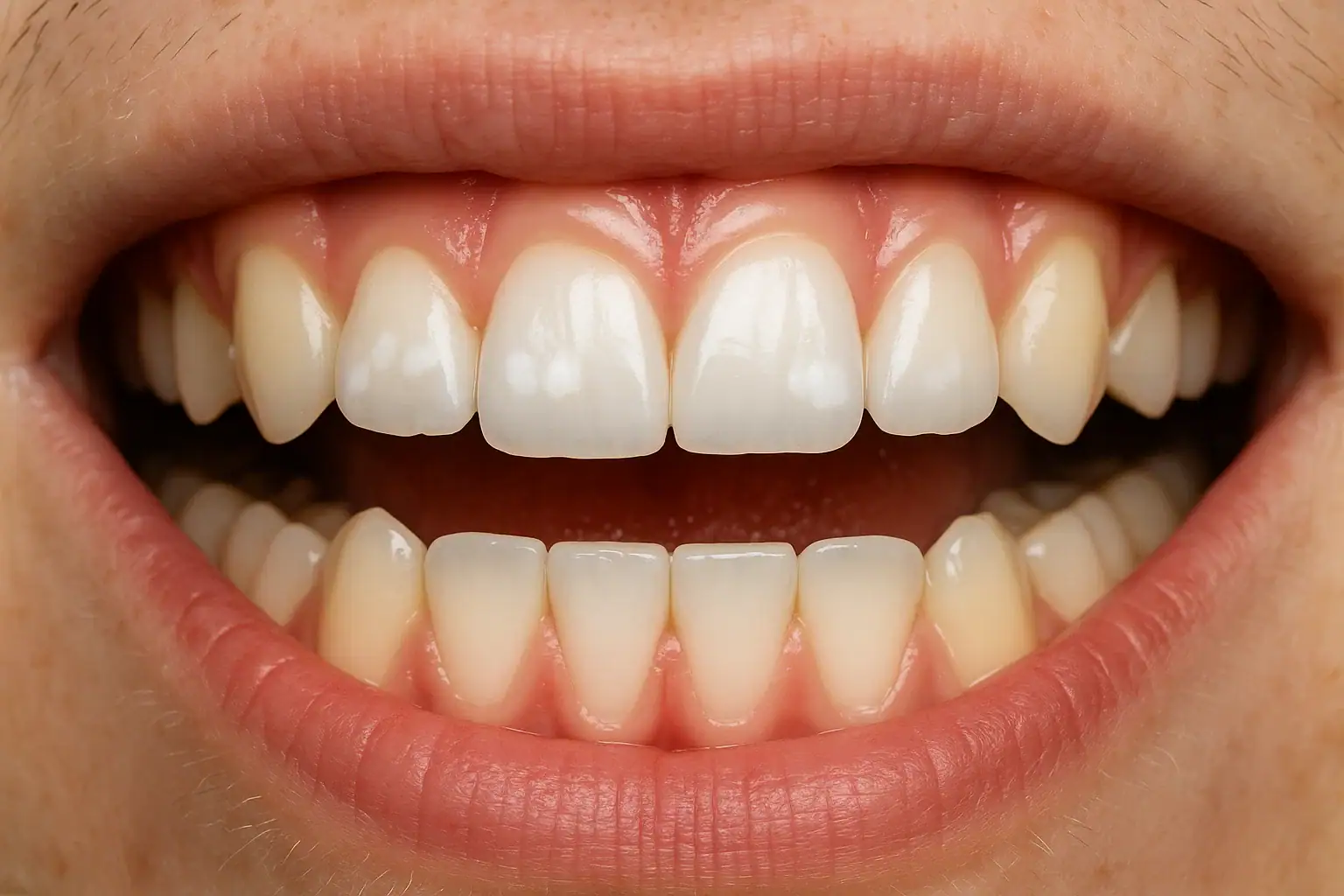
White spots on teeth are chalky, opaque patches in the enamel caused by demineralisation, dental fluorosis or enamel hypoplasia, and their reversibility depends entirely on which of the three it is. Early demineralised lesions often respond to fluoride and calcium-phosphate remineralisation; established structural defects do not. For masking, resin infiltration outperformed both no treatment and fluoride varnish in a meta-analysis of 11 studies covering 1,834 teeth in 413 patients (PubMed 34106348). Whitening does not remove a white spot and can make it temporarily more visible before the surrounding shade evens out.
- 01Three mechanisms produce a white spot and they are not interchangeable: demineralisation (acid pulling minerals out of formed enamel), fluorosis (excess fluoride while the tooth is forming, typically before age eight), and enamel hypoplasia (too little enamel laid down in the first place).
- 02Resin infiltration showed significantly greater optical improvement than untreated lesions (SMD 1.24; 95% CI 0.59-1.88) and than fluoride varnish (MD 4.76; 95% CI 0.74-8.78), pooled from 11 studies with 1,834 affected teeth in 413 patients (PubMed 34106348).
- 03Bleaching before resin infiltration added nothing in fluorosis cases: the masking effect was no different with or without prior bleaching (MD -0.30; 95% CI -0.98 to 0.39) (PubMed 34106348).
- 04White spots after braces are a plaque problem rather than a bracket problem: in a systematic review of 14 studies, plaque accumulation was significantly lower with clear aligners than with fixed appliances (SMD -1.58; p=0.002), alongside lower reported white spot lesion incidence (PubMed 37635207).
- 05Whitening is a colour-blending tool here, not a removal tool. It can make an existing white spot stand out more before the surrounding enamel lightens, which is why it is done under dental supervision rather than with an over-the-counter kit.
/ Causes of White Spots on Teeth
Introduction: What Are White Spots on Teeth?
White spots on teeth are small, chalky patches that appear on the surface of tooth enamel. While they might seem like minor cosmetic issues, they can signal underlying dental problems such as demineralization, fluorosis, or enamel hypoplasia. Understanding their causes and treatment options is essential for maintaining a healthy and attractive smile.
Why Do I Have White Spots on My Teeth?
1. Enamel Hypoplasia
This developmental defect results in thinner or poorly formed enamel, often due to malnutrition, illness during infancy, or genetic disorders.
2. Dental Fluorosis
Excess fluoride during early tooth development can cause white or brown patches. This commonly affects children under the age of eight.
3. Demineralization from Poor Oral Hygiene
When plaque accumulates around braces or the gumline, acids can leach minerals from the enamel, leaving white lesions.
4. Dietary Acids and Sugars
Frequent consumption of soda, candy, and acidic foods erodes enamel and promotes the formation of white spots.
5. Dry Mouth (Xerostomia)
Lack of saliva reduces enamel protection, making teeth more vulnerable to demineralization and discoloration.
6. Genetic Factors
Some individuals are predisposed to weaker enamel due to inherited conditions.
7. Medications and Medical Treatments
Certain antibiotics (like tetracycline) and treatments such as chemotherapy can interfere with enamel formation.
Are White Spots Reversible?
Yes, if caught early. Remineralization treatments like fluoride applications and calcium-phosphate pastes can often reverse minor damage. However, severe white spots caused by hypoplasia or fluorosis may require cosmetic treatment like Icon infiltration or veneers.
/ Treatment Options for White Spots on Teeth
How to Get Rid of White Spots on Teeth
1. Remineralization Treatments
- Fluoride Applications
Applied by dentists or found in toothpaste and mouth rinses, fluoride helps restore lost minerals.
- Calcium and Phosphate-Based Products
These products, such as CPP-ACP pastes, support natural enamel repair.
2. Microabrasion
A minimally invasive procedure that removes a thin layer of enamel to reduce or eliminate surface white spots.
3. Teeth Whitening
While it may make white spots more visible temporarily, whitening can even out tooth color in the long term.
4. Resin Infiltration (Icon)
This procedure fills porous enamel with a transparent resin, masking white spots and halting progression.
5. Veneers or Composite Bonding
In cases of deep or resistant discoloration, cosmetic procedures can fully cover the affected areas.
How to Remove White Spots on Teeth at Home
1. Maintain Excellent Oral Hygiene
Brush twice daily with fluoride toothpaste and floss regularly to prevent plaque buildup and enamel erosion.
2. Use Remineralizing Toothpaste
Toothpastes containing nano-hydroxyapatite or calcium phosphate help rebuild enamel.
3. Rinse with Mouthwash
Choose alcohol-free mouthwashes with fluoride to support daily enamel protection.
4. Avoid Acidic and Sugary Foods
Limit soda, candy, and citrus to prevent further demineralization.
Natural Remedies to Minimize White Spots
While not a substitute for professional care, these remedies may offer mild benefits:
- Oil Pulling: Swishing coconut oil may reduce bacteria and plaque.
- Baking Soda Paste: Gently neutralizes acids and cleans the teeth (use sparingly).
- Green Tea Rinse: Offers antioxidant benefits that support enamel strength.
/ White Spots on Teeth Treatment
Are White Spots on Teeth Harmful?
White spots are often cosmetic but can be early indicators of tooth decay . If left untreated, they may lead to cavities or further enamel erosion.
White Spots After Braces: Why Do They Appear?
Braces make cleaning difficult. If plaque isn’t properly removed around brackets, demineralization can occur, leaving behind white spots once the braces are removed.
Can Whitening Toothpaste Help White Spots?
Whitening toothpaste may help blend color differences slightly but won’t remove white spots. In some cases, it may make them more prominent.
Professional vs. At-Home Treatment Options
| Treatment Method | Effectiveness | Invasiveness | Best For |
|---|---|---|---|
| Remineralizing Paste | Moderate | Non-invasive | Mild white spots |
| Fluoride Varnish | Moderate | Non-invasive | General enamel support |
| Microabrasion | High | Minimally invasive | Surface-level spots |
| Icon Infiltration | Very High | Minimally invasive | Braces-related white lesions |
| Whitening | Moderate | Non-invasive | Color blending |
| Veneers/ Bonding | Very High | Invasive | Deep, permanent discoloration |
How to Prevent White Spots on Teeth
1. Monitor Fluoride Intake
Avoid swallowing toothpaste and use only a pea-sized amount for children.
2. Improve Brushing Technique
Use electric toothbrushes and interdental brushes, especially if you have braces.
3. Regular Dental Checkups
Professional cleanings help detect early signs and prevent enamel damage.
4. Maintain a Healthy Diet
Incorporate calcium-rich foods like dairy, leafy greens, and almonds.
5. Stay Hydrated
Drink plenty of water to stimulate saliva production and wash away acids.
Best Dental Products for White Spot Prevention
Toothpastes:
- Sensodyne Pronamel
- MI Paste Plus
Mouthwashes:
- ACT Fluoride Rinse
- Listerine Total Care (Alcohol-free)
These help strengthen enamel and support remineralization.
/ Frequently Asked Questions (FAQs)
What causes white spots on teeth?
White spots can stem from demineralization, fluorosis, hypoplasia, or poor oral hygiene, especially around braces.
How to get rid of white spots on teeth?
Use fluoride, remineralizing pastes, or consult your dentist for Icon, microabrasion, or cosmetic options.
How do I remove white spots on teeth naturally?
Brush with remineralizing toothpaste, avoid acidic foods, and stay hydrated. Natural methods are supportive but not definitive.
Are white spots permanent?
Not always. Early-stage spots can often be reversed. Others may require cosmetic correction.
Is it safe to whiten teeth with white spots?
Yes, but do it under dental supervision. Whitening may temporarily highlight the spots before they blend in.
Psychological Effects and Conclusion on White Spots
Psychological and Social Effects of White Spots on Teeth
White spots can affect more than just your appearance. They can lead to:
- Low self-esteem
- Social anxiety
- Reduced confidence in smiling or speaking
Addressing them improves dental health and emotional well-being.
Conclusion: Don’t Ignore White Spots
White spots on teeth are early warnings that should not be overlooked. Whether due to poor oral hygiene, dietary choices, or developmental conditions, understanding the root cause is the first step toward treatment. With modern options ranging from remineralization to cosmetic dentistry, achieving a healthier, spot-free smile is entirely possible.
Let’s plan the right treatment together.
Free Assessment→- 1.Bourouni S, Dritsas K, Kloukos D, Wierichs RJ. Efficacy of resin infiltration to mask post-orthodontic or non-post-orthodontic white spot lesions or fluorosis: a systematic review and meta-analysis. Clin Oral Investig. 2021;25(8):4711-4719. doi:10.1007/s00784-021-03931-7
- 2.Raghavan S, Abu Alhaija ES, Duggal MS, Narasimhan S, Al-Maweri SA. White spot lesions, plaque accumulation and salivary caries-associated bacteria in clear aligners compared to fixed orthodontic treatment. A systematic review and meta-analysis. BMC Oral Health. 2023;23(1):599. doi:10.1186/s12903-023-03257-8