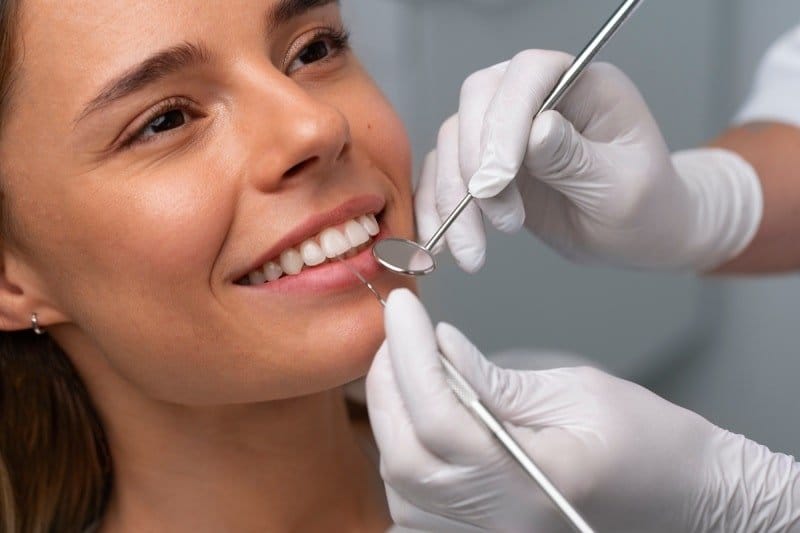
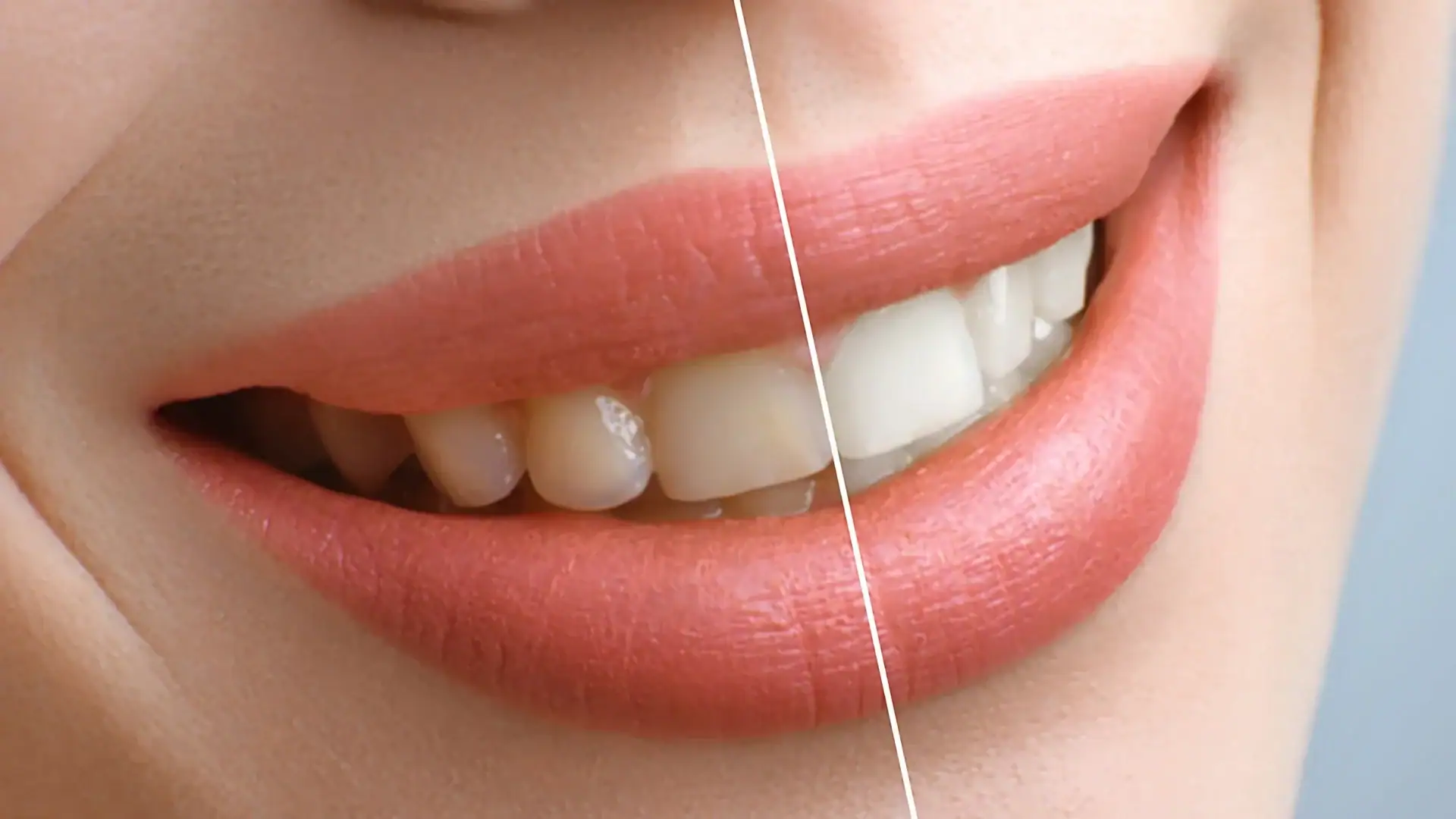
Teeth whitening is the chemical lightening of tooth colour by hydrogen or carbamide peroxide, which breaks down pigment held inside enamel and dentine rather than scrubbing stain off the surface. Concentration decides comfort more than result: across 25 randomised trials, low and medium concentration hydrogen peroxide carried on average 33% lower risk of bleaching sensitivity than high concentration gel (risk ratio 0.67, 95% CI 0.51 to 0.86) with no meaningful difference in colour change (PubMed 33068711). The effect is not permanent, and diet, smoking and hygiene decide how quickly the shade drifts back.
- 01Whitening and stain removal are different jobs: peroxide gels change the colour inside the tooth, while whitening pastes, pens and abrasive home remedies act only on surface stain and cannot touch intrinsic discolouration such as childhood tetracycline staining.
- 02Lower concentration in-office gel is the comfort lever: 33% lower risk of bleaching sensitivity (risk ratio 0.67, 95% CI 0.51 to 0.86) with equal colour change across 25 randomised trials (PubMed 33068711).
- 03Over-the-counter strips versus dentist-supervised home bleaching, pooled from 20 randomised trials: supervised bleaching produced greater colour change on spectrophotometry (standardised mean difference -0.50), while strips carried lower sensitivity risk (risk ratio 0.78, 95% CI 0.65 to 0.93) (PubMed 33215202).
- 04That colour advantage came with a caveat the authors stated plainly: the difference measured by spectrophotometer was not detectable by the unaided eye, and shade guide scores did not differ between the two groups (PubMed 33215202).
- 05Sensitivity after bleaching is the commonest side effect and is temporary, which is why the comparisons above are reported as risk of sensitivity rather than as damage.
A bright, white smile can transform your appearance and boost your confidence. It's no wonder that teeth whitening has become a popular choice for many seeking to enhance their grin. But before you compare whitening options, it's essential to understand what causes tooth discolouration in the first place.
Whether it's coffee stains, ageing, or other factors affecting your enamel, knowing the root cause can help you choose the right approach for achieving that radiant smile.
/ Tooth Discoloration Causes and Whitening Techniques
Common Causes of Tooth Discoloration
Tooth discolouration can happen for a variety of reasons. One common culprit is dietary choices. Beverages like coffee, tea, and red wine can leave stubborn stains on your enamel.
Another factor is tobacco use. Smoking or chewing tobacco harms your health and also leads to yellowing teeth over time.
Ageing plays a significant role as well. As we age, the outer layer of enamel wears away, revealing the darker dentin underneath.
Certain medications can contribute, too. For instance, tetracycline antibiotics taken during childhood might lead to irreversible discolouration later in life.
Poor oral hygiene cannot be overlooked. Neglecting regular brushing and flossing allows plaque buildup that may eventually cause yellowing or brown spots on your teeth. Understanding these factors is crucial in tackling tooth discolouration effectively!
Effective Teeth Whitening Techniques
Regarding effective teeth whitening, several techniques can brighten your smile. Professional treatments offered by dentists often yield the quickest results. These methods can include in-office bleaching or custom take-home kits.
Over-the-counter whitening strips and toothpaste are popular options for those seeking a more DIY approach. They are convenient and generally easy to use. Just be sure to follow the instructions carefully for optimal results.
Natural remedies occupy a narrower place than their popularity suggests. Baking soda mixed with water is a mild abrasive that lifts some of the surface film, and it is intrinsically low in abrasivity because it is softer than enamel and dentine (PubMed 29056187). Activated charcoal is the one to treat with care: a review of charcoal dentifrices found insufficient clinical and laboratory data to substantiate their safety and efficacy claims (PubMed 28599961), and in a laboratory test brushing with charcoal toothpowder produced no colour change while it roughened the enamel surface (PubMed 39769703).
Consider trying LED light devices, too; many claim enhanced effects when used alongside whitening gels. Finding the proper technique depends on your goals and sensitivity levels. Always choose what feels best for you!
/ Maintaining White Teeth and Whitening Longevity
Tips for Maintaining White Teeth
Maintaining white teeth requires a few simple habits. First, regular brushing is essential. Use fluoride toothpaste and brush at least twice daily. This helps remove surface stains and keeps your enamel strong.
Flossing should not be overlooked. It cleans between teeth where brushes can't reach, preventing plaque buildup that can lead to discolouration.
Be mindful of what you eat and drink. Beverages like coffee, red wine, and tea can stain your teeth over time. If you indulge, rinse your mouth with water afterwards to minimize staining effects.
Don't forget about dental check-ups! Professional cleanings every six months help keep your smile bright and healthy.
Consider using a whitening toothpaste occasionally for an extra boost in brightness without harsh chemicals. These small changes create lasting results for a radiant smile you'll love to show off.
How Long Does Teeth Whitening Last?
The longevity of teeth whitening results can vary significantly. Typically, you can expect your bright smile to last anywhere from six months to two years.
Several factors influence this duration. Your dietary choices play a crucial role. Consuming staining foods and beverages like coffee, red wine, or berries can diminish the effects faster than anticipated.
Oral hygiene habits are equally important. Regular brushing and flossing help maintain whiteness by removing surface stains.
Additionally, some individuals may have naturally more porous enamel, which could lead to quicker fading of results.
Regular touch-ups will extend that brilliant shine if you notice it starting to fade. Many people opt for maintenance treatments every few months for optimal brightness.
Understanding these elements allows you to enjoy your pearly whites longer while making informed choices.
/ Things to Consider Before Trying Teeth Whitening
Before embarking on your teeth whitening journey, it's essential to consider a few key factors. First, assess the current state of your dental health . If you have cavities or gum disease, it's best to address these issues with your dentist before attempting whitening.
Next, think about the type of whitening product you wish to use. Options range from over-the-counter strips and gels to professional treatments offered by dentists. Each comes with its own set of benefits and potential side effects.
Consider how sensitive your teeth are as well. Some people experience discomfort during or after whitening treatments, especially if they already have sensitivity issues. It is worth discussing this with a professional who can guide you toward options that minimize discomfort.
Also, remember that not all discolouration is treatable through standard whitening processes. Factors like intrinsic stains caused by trauma may require alternative approaches for effective treatment.
Weigh the cost versus benefit ratio of each method available to you. Professional treatments might be pricier but could provide quicker results than at-home solutions that may take longer and yield less noticeable outcomes.
Considering these factors will help ensure that your teeth whitening efforts are safe and tailored specifically for your needs. The goal is not just whiter teeth but healthier ones, too!
Let’s plan the right treatment together.
Free Assessment→- 1.Maran BM, Matos TP, de Castro ADS, Vochikovski L, Amadori AL, Loguercio AD, et al. In-office bleaching with low/medium vs. high concentrate hydrogen peroxide: A systematic review and meta-analysis. J Dent 2020;103:103499. PubMed 33068711
- 2.da Rosa G, Maran BM, Schmitt VL, Loguercio AD, Reis A, Naufel FS. Effectiveness of Whitening Strips Use Compared With Supervised Dental Bleaching: A Systematic Review and Meta-analysis. Oper Dent 2020;45:E289-E307. PubMed 33215202
- 3.Hara AT, Turssi CP. Baking soda as an abrasive in toothpastes: Mechanism of action and safety and effectiveness considerations. J Am Dent Assoc 2017;148:S27-S33. PubMed 29056187
- 4.Brooks JK, Bashirelahi N, Reynolds MA. Charcoal and charcoal-based dentifrices: A literature review. J Am Dent Assoc 2017;148:661-670. PubMed 28599961
- 5.Cutrim EAC, Penha KJS, Silva PBD, Carvalho EM, Silva MG, Kugelmeier CL, et al. Optical, Mechanical, and Chemical Impact of Brushing with Activated Charcoal Toothpowder and Toothpaste on Dental Enamel: An In Vitro Evaluation. Materials (Basel) 2024;17. PubMed 39769703