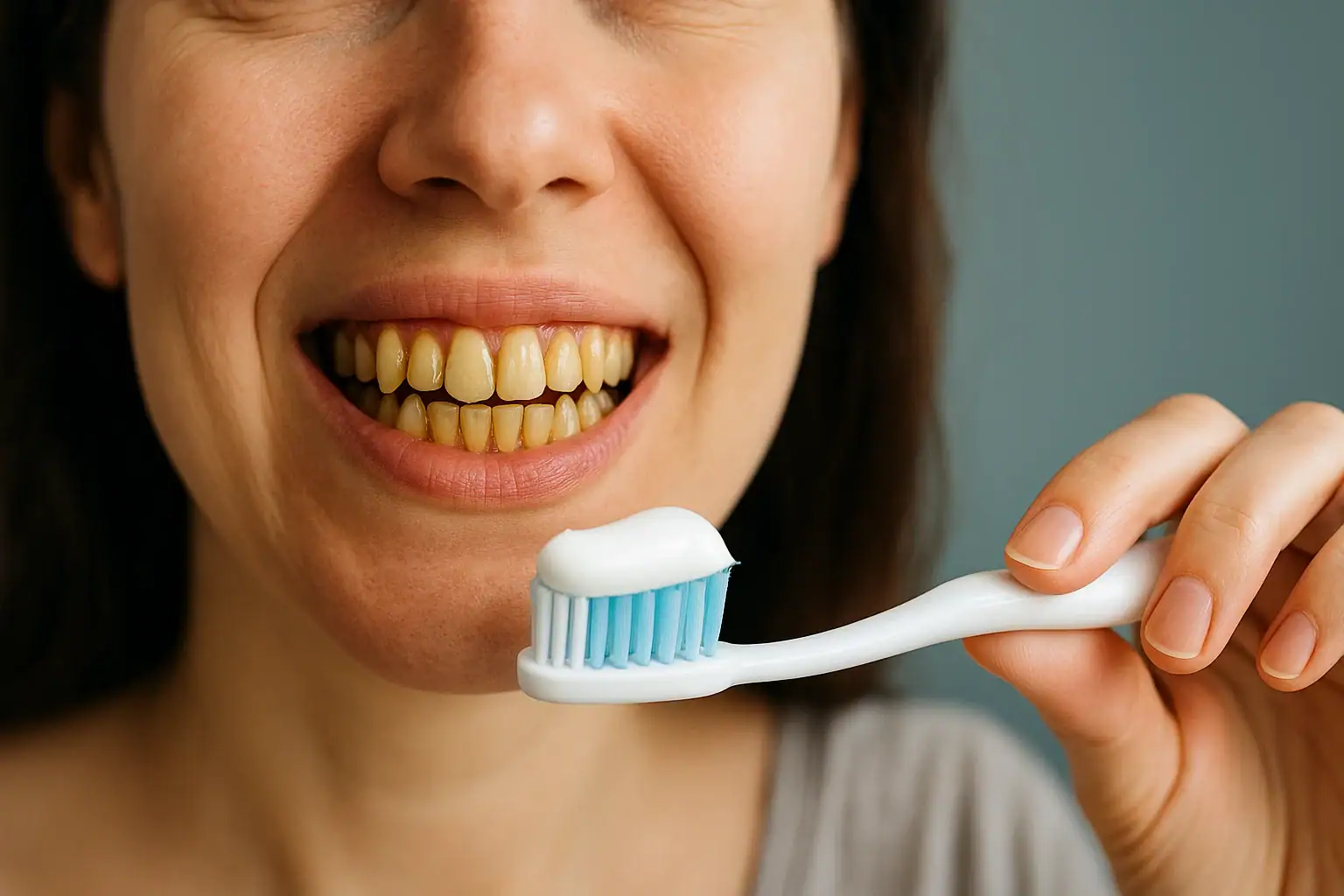
Teeth turn yellow for two distinct reasons, surface stain on the enamel or yellow dentin showing through thinning enamel, and telling them apart decides the fix. Extrinsic staining is pigment deposited on the enamel surface by coffee, tea, red wine, curry, soy sauce and tobacco, and it responds to cleaning and bleaching. Intrinsic yellowing appears as enamel thins with age and lets the naturally yellow dentin show through, so scrubbing harder makes it worse. A Cochrane review of 71 randomised trials found home bleaching agents whitened teeth compared with placebo over periods of 2 weeks to 6 months, but rated that evidence low to very low certainty, with sensitivity and gum irritation the commonest side effects (PubMed 30562408).
- 01Extrinsic stains sit on the enamel surface and come from pigments in coffee, tea, wine, curry, soy sauce and tobacco; intrinsic yellowing comes from thinning enamel exposing dentin.
- 02Daily brushing removes fresh plaque but not deep stains, and a hard-bristled brush or an abrasive paste speeds the enamel wear that makes teeth look more yellow.
- 03Whitening toothpastes act on surface stains only; the Cochrane review of 71 randomised trials on home bleaching reported whitening over 2 weeks to 6 months at low to very low certainty (PubMed 30562408).
- 04Saliva buffers acid and rinses away pigment, so reduced saliva flow raises both the staining risk and the decay risk.
- 05Discoloration that keeps worsening despite good hygiene, or teeth that feel thin, sensitive or painful, is a reason for a dental exam rather than another whitening product.
Yellow teeth are a common cosmetic concern that affects millions of people worldwide. Despite regular brushing and dental care, many individuals still notice a yellowish tint on their teeth, prompting them to ask: "Why are my teeth yellow even when I brush every day?" This comprehensive guide will explore the causes of yellow teeth, how to get rid of them, what to avoid, and how to maintain a bright, healthy smile.
/ Causes of Yellow Teeth
1. Dietary Habits
- Foods and drinks like coffee, tea, red wine, curry, and soy sauce are known to stain enamel.
- Acidic foods can erode enamel, making teeth more susceptible to discoloration.
2. Poor Oral Hygiene
- Infrequent brushing or flossing allows plaque and tartar buildup, which can appear yellow.
3. Genetics and Natural Tooth Color
- Some individuals naturally have a thicker dentin layer, giving teeth a yellowish hue.
4. Aging
- Enamel wears down over time, revealing the naturally yellow dentin beneath.
5. Smoking and Tobacco Use
- Nicotine and tar cause significant yellow or brown stains on the teeth.
6. Medications and Fluorosis
- Certain antibiotics and high fluoride exposure during development can discolor teeth.
Yellow Teeth and Stained Teeth
- Yellow teeth are usually due to intrinsic factors like aging or dentin exposure.
- Stained teeth result from extrinsic factors such as food and drink pigments.
- Knowing the difference helps determine whether whitening or restoration is needed.
Yellow Teeth Despite Daily Brushing
- Brushing alone may not remove deep stains or reverse enamel erosion.
- Using a hard-bristled toothbrush or abrasive toothpaste can wear enamel faster.
- Brushing technique and frequency matter more than just daily brushing.
/ Whitening Options for Yellow Teeth
1. Professional Dental Cleaning
- Removes plaque, tartar, and superficial stains.
2. Teeth Whitening Treatments
- In-office whitening: Uses high-concentration bleaching agents for instant results.
- At-home kits: Dentist-supervised options include trays, gels, or LED devices.
3. Natural Remedies (With Caution)
- Baking soda, activated charcoal and oil pulling act on surface film at most; a review of charcoal dentifrices found insufficient clinical and laboratory data to substantiate their safety and efficacy claims and advised caution (PubMed 28599961).
4. Dental Veneers or Bonding
- For permanent discoloration, cosmetic options like veneers can mask yellow teeth.
Whitening Toothpastes
- Designed to remove surface stains, not intrinsic discoloration.
- Some contain abrasives that can cause enamel wear over time.
- For best results, use products with hydrogen peroxide or those approved by the ADA.
Foods and Habits to Avoid
1. Staining Foods and Beverages
- Coffee, tea, wine, dark sodas, berries, and tomato sauces
2. Poor Oral Hygiene
- Not brushing twice daily or skipping flossing
3. Smoking or Chewing Tobacco
- One of the most damaging habits for tooth color
Tips for Preventing Yellow Teeth
- Brush with fluoride toothpaste twice a day using a soft-bristle brush
- Floss daily to remove plaque between teeth
- Rinse your mouth with water after consuming staining foods
- Use a straw when drinking pigmented beverages
- Visit the dentist regularly for cleanings and check-ups
/ Yellow Teeth Over Time
The Psychological Impact of Yellow Teeth
- Yellow teeth can lead to reduced self-confidence and hesitation in social settings.
- Some people report smiling less in photos or avoiding public speaking.
- Addressing the issue can improve overall well-being and social confidence.
Yellow Teeth in Children and Adolescents
- Causes may include excessive fluoride, poor oral hygiene, or congenital enamel conditions.
- Early intervention and pediatric dental check-ups are key.
- Teaching proper brushing habits from a young age is crucial.
How Diet Influences Tooth Color Over Time
- Acidic foods weaken enamel, making teeth more prone to yellowing.
- Calcium-rich foods help strengthen enamel and protect against erosion.
- Drinking water after meals can help wash away staining particles.
At-Home Whitening Products: Pros and Cons
- Whitening strips and gels can offer mild improvements, but misuse may harm enamel.
- Toothpastes with whitening agents may offer limited results over time.
How Certain Medical Conditions Affect Tooth Color
- Conditions like celiac disease, acid reflux, or eating disorders can erode enamel and darken teeth. A 2026 meta-analysis of 22 observational studies found both enamel defects (relative risk 2.49) and recurrent aphthous ulcers (relative risk 2.45) more often in people with celiac disease, so these oral signs can help flag the condition early. A 2026 meta-analysis of 22 observational studies found both enamel defects (relative risk 2.49) and recurrent aphthous ulcers (relative risk 2.45) more often in people with celiac disease, so these oral signs can help flag the condition early.
- Chronic dry mouth (xerostomia) leads to reduced saliva, making it harder to neutralize acids and rinse away stains.
The Role of Saliva in Preventing Tooth Discoloration
- Saliva naturally washes away food particles and buffers acid levels in the mouth.
- Decreased saliva production can increase the likelihood of tooth yellowing.
- Staying hydrated and using sugar-free gum can help stimulate saliva.
When to See a Dentist About Yellow Teeth
- Discoloration continues or worsens despite good hygiene.
- Teeth feel sensitive, thin, or painful.
- Professional diagnosis can reveal underlying problems requiring targeted treatment.
/ FAQs: Yellow Teeth
Why are my teeth yellow?
Enamel thinning, staining foods, poor oral hygiene, smoking, and genetics can contribute to yellow teeth.
How to get rid of yellow teeth?
Professional whitening, cleanings, and avoiding staining foods are the most effective.
Why are my teeth yellow when I brush them every day?
Brushing alone may not address deep stains or underlying causes like enamel loss.
Can I whiten my teeth at home?
Yes, using dentist-recommended home kits or mild natural remedies.
While yellow teeth can be frustrating, understanding the root causes and adopting the right habits can lead to a noticeably whiter smile. From professional treatments to daily care strategies, there are many ways to fight discoloration. If brushing alone isn’t working, it may be time to consult your dentist for a personalized solution to restore your confident, bright smile.
Let’s plan the right treatment together.
Free Assessment→- 1.Eachempati P, Kumbargere Nagraj S, Kiran Kumar Krishanappa S, Gupta P, Yaylali IE. Home-based chemically-induced whitening (bleaching) of teeth in adults. Cochrane Database Syst Rev 2018;12:CD006202. PubMed 30562408
- 2.Zhao Y, Feng W. Relative risk of oral manifestations with celiac disease: a systematic review and meta-analysis. BMC Gastroenterol. 2026;26(1):343.
- 3.Brooks JK, Bashirelahi N, Reynolds MA. Charcoal and charcoal-based dentifrices: A literature review. J Am Dent Assoc 2017;148:661-670. PubMed 28599961