
Restorative & General
Composite fillings, aesthetic fillings, bonding, radiology
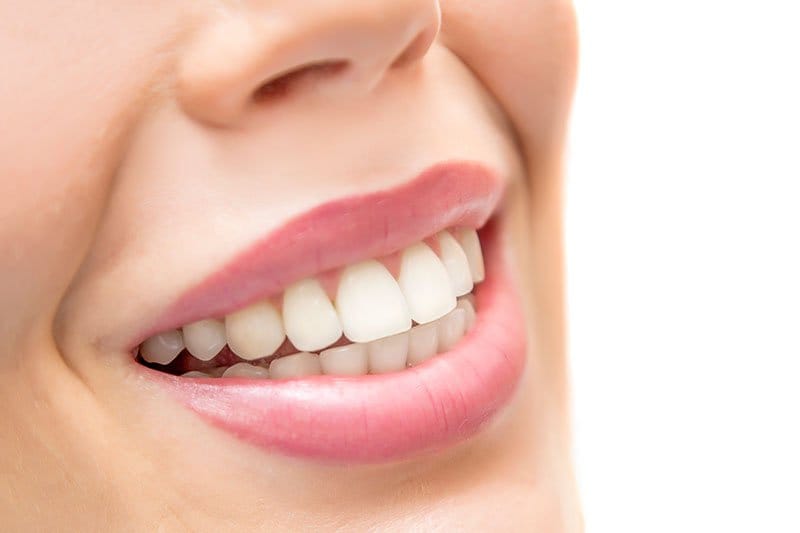
Bonding
Bonding adds tooth-coloured resin composite to the tooth in layers and light-cures it, correcting small fractures, gaps and shape faults in one session.
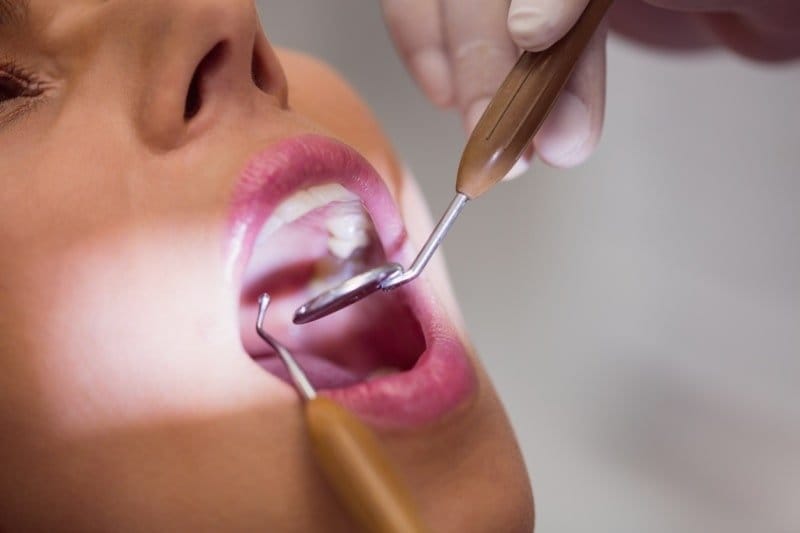
Composite Filling
A composite filling restores tooth lost to decay or fracture with tooth-coloured resin composite, layered and light-cured in one session, with no mercury.

Dental Radiology
Dental radiology images the roots, bone and impacted teeth an examination cannot show; periapical, panoramic or CBCT imaging follows the clinical question.
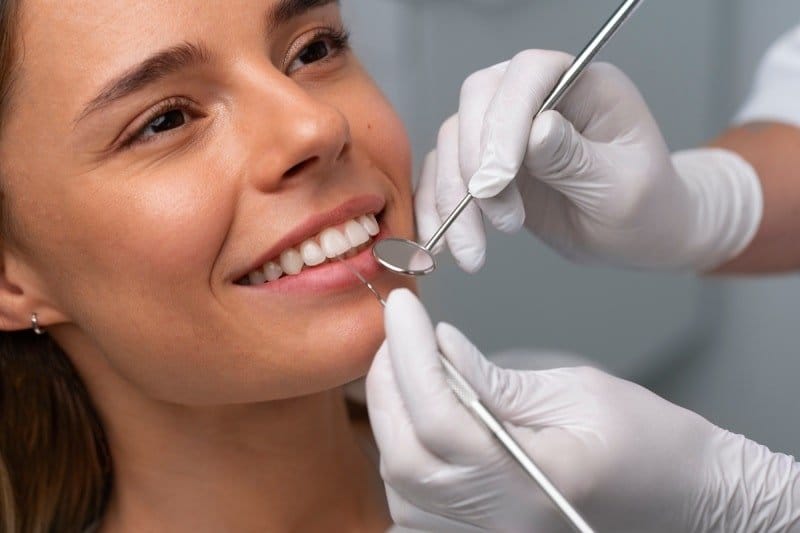
Aesthetic Filling
An aesthetic filling restores tooth lost to decay or fracture with tooth-coloured composite resin, layered and light-cured, usually in a single session.
The restorative decision follows how much tooth structure has been lost. A small fracture, gap or shape irregularity on the surface points to bonding; a cavity remaining after decay has been cleaned points to a composite or aesthetic filling; and dental radiology sits ahead of both as the measurement step. In a meta-analysis of five randomised trials, directly placed posterior composite restorations failed significantly less often than laboratory-made indirect composite restorations (risk ratio 0.61, 95% CI 0.47 to 0.79), with the level of evidence rated very low (PubMed 39122602). In this section the more elaborate method is not the longer-lasting one.
- 01Bonding and fillings use the same material for different jobs. Bonding adds composite to the tooth surface to correct shape and close gaps without drilling, while a filling closes the cavity left after decay has been removed. Which of the two applies is the first question, and it is answered at examination, not on a price list.
- 02Annual failure rates across five randomised trials ranged from 0% to 5.4% for direct composite restorations and from 0% to 15.5% for indirect ones, with fracture and chipping the most frequent failures, followed by caries (PubMed 39122602, evidence rated very low).
- 03Patient and cavity matter as much as material. In an individual participant data analysis pooling 2,816 restorations from twelve long-term studies, failure risk rose significantly in high caries risk individuals and with each additional restored surface (PubMed 25048250). A quote for a filling that ignores caries risk is quoting only half the picture.
- 04Dental radiology is not a treatment; it is the measurement step that comes before a restorative decision. CBCT carries no single fixed dose figure: a review of 23 studies identified 13 factors that change the effective dose, including field of view diameter and height, kV, mA and exposure time (PubMed 30006685). Ask which field of view is planned before agreeing to a scan abroad.
- 1.Tennert C, Maliakal C, Suarèz Machado L, Jaeggi T, Meyer-Lueckel H, Wierichs RJ. Longevity of posterior direct versus indirect composite restorations: a systematic review and meta-analysis. Dent Mater 2024;40(11):e95-e101. PubMed 39122602
- 2.Opdam NJ, van de Sande FH, Bronkhorst E, Cenci MS, Bottenberg P, Pallesen U et al. Longevity of posterior composite restorations: a systematic review and meta-analysis. J Dent Res 2014;93(10):943-949. PubMed 25048250
- 3.da Silva Moura W, Chiqueto K, Pithon GM, Neves LS, Castro R, Henriques JFC. Factors influencing the effective dose associated with CBCT: a systematic review. Clin Oral Investig 2019;23(3):1319-1330. PubMed 30006685