
Prosthodontics & Crowns
Zirconia, E-max, porcelain crowns, veneers, bridges, dentures
Crown materials compared: the prosthetics guide
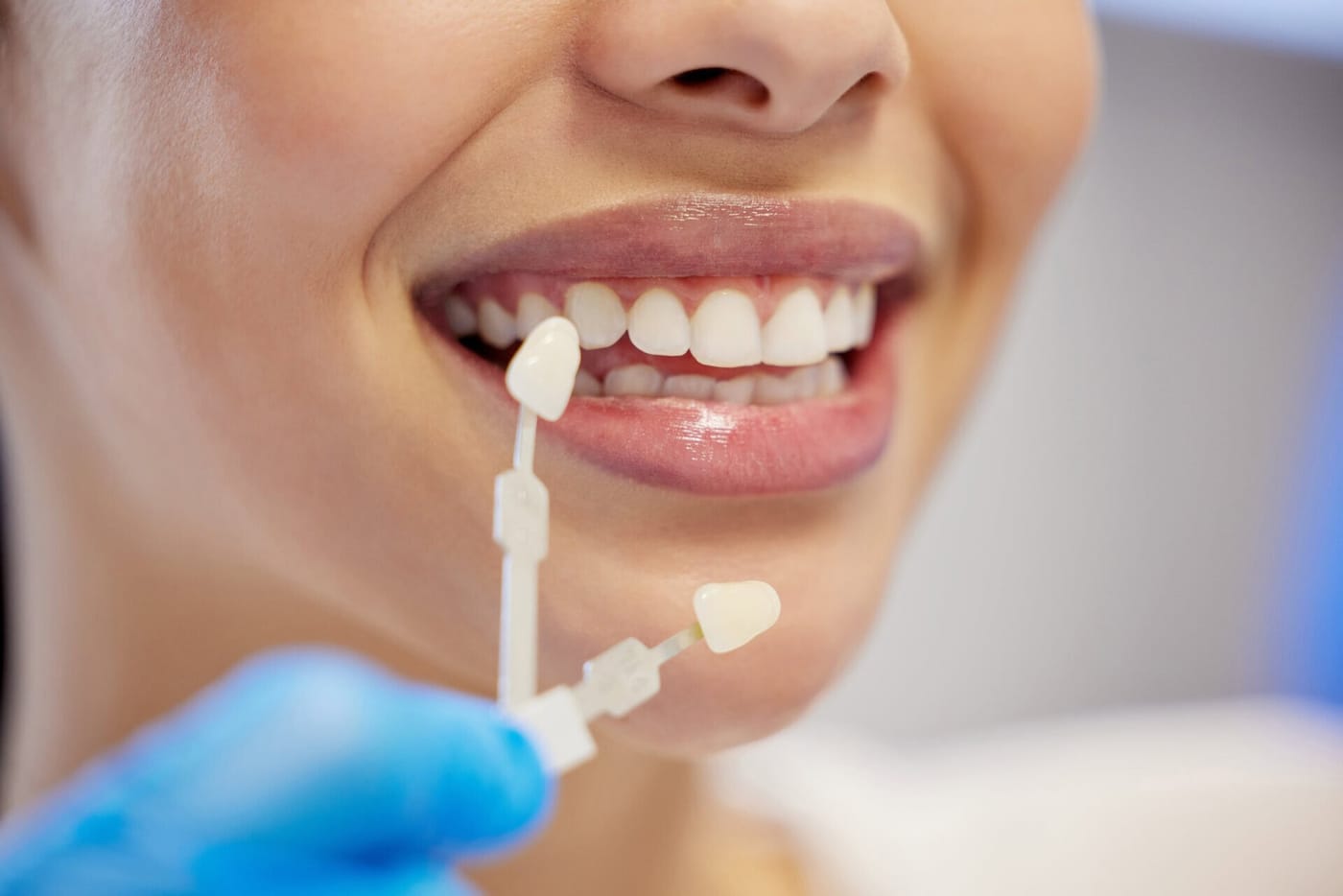
Zirconium Crown
Zirconia crowns and bridges: metal-free full-coverage restorations, custom-made per tooth from a digital impression and milled in-house.
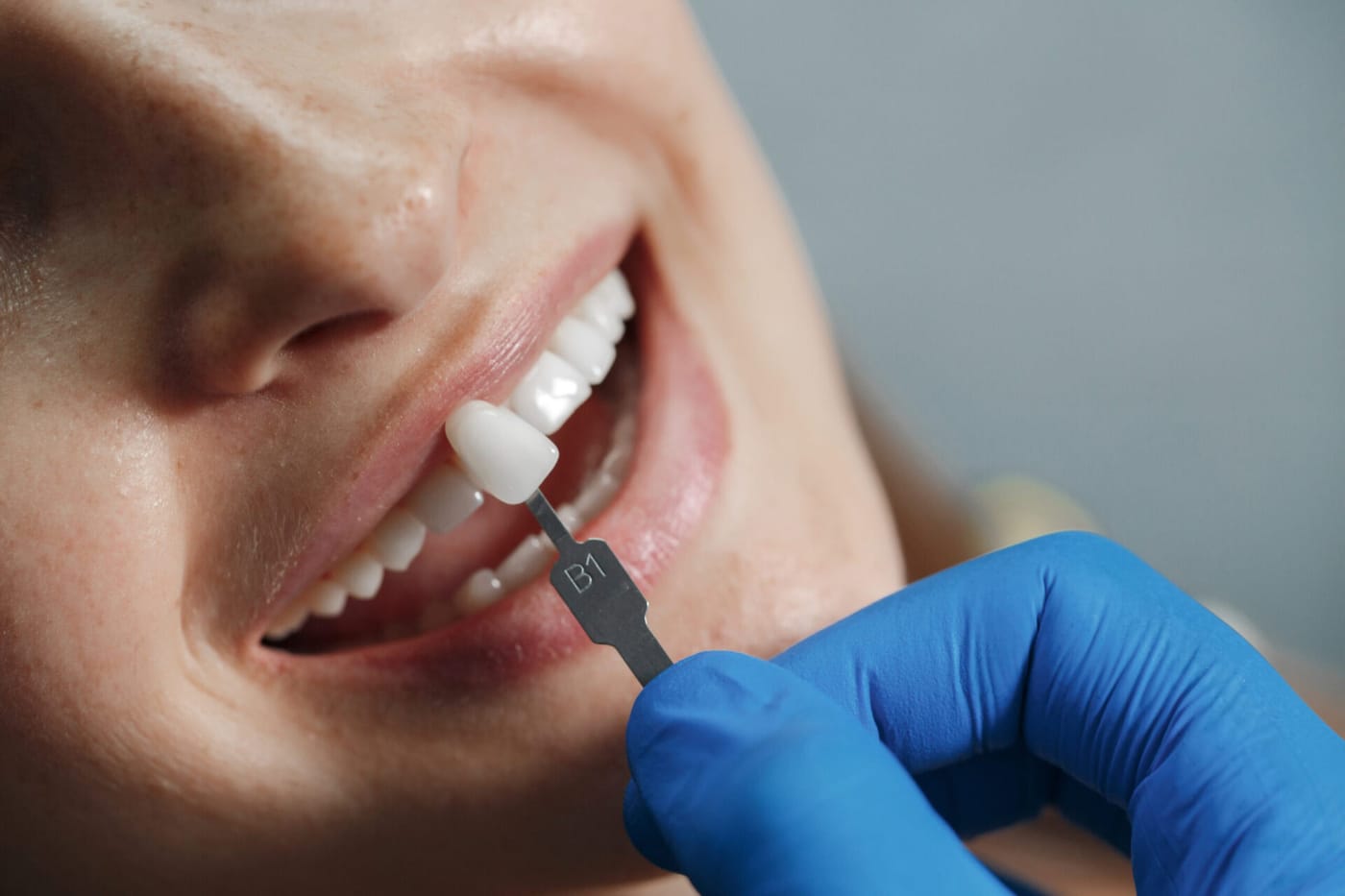
Porcelain Crown
A porcelain crown in its classic form is metal-ceramic, with porcelain fired in layers over an alloy coping; it is a common choice for posterior bridges.
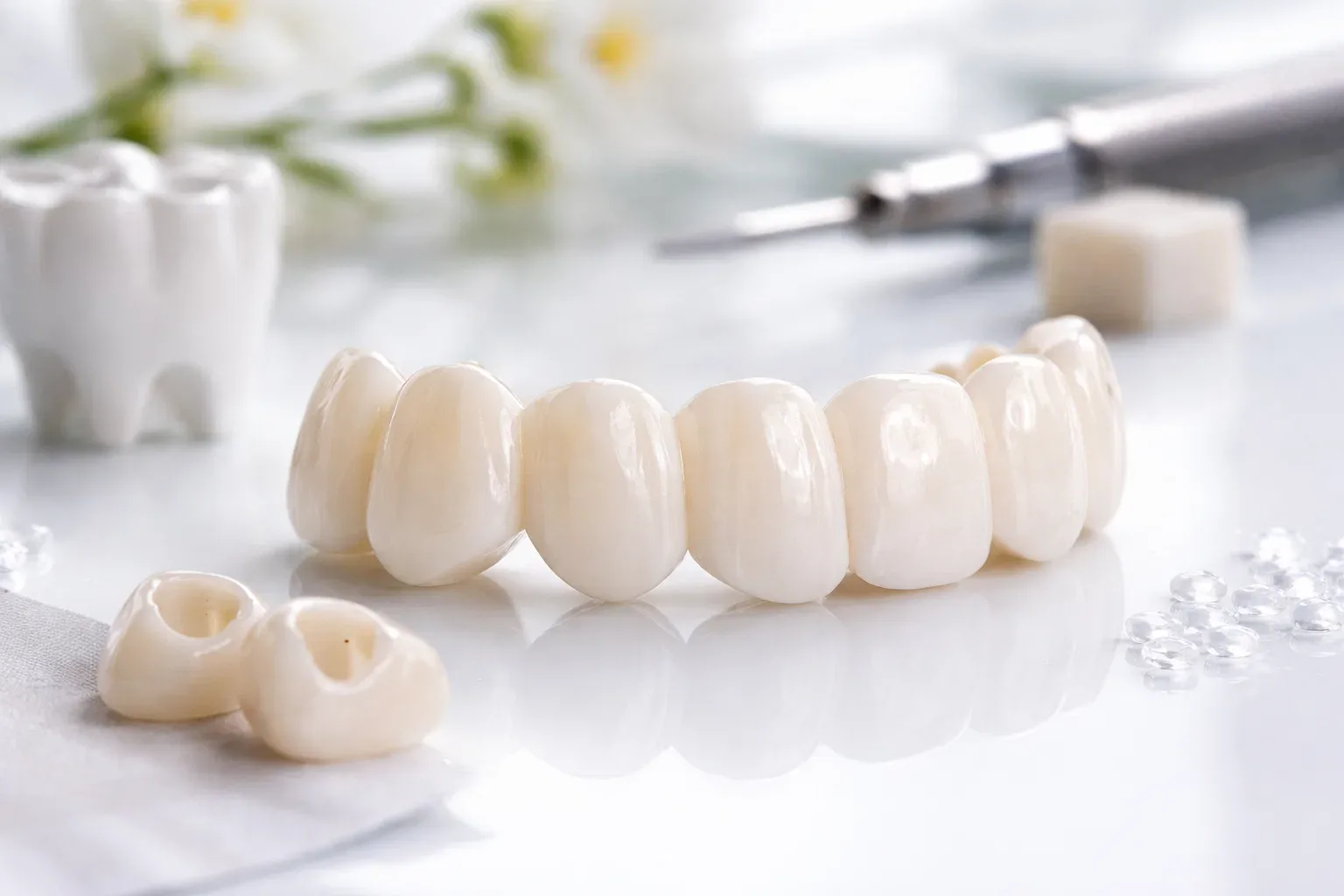
Dental Bridge
A dental bridge fills the gap of a missing tooth with a fixed false tooth held by the teeth or implants on either side, and you do not take it out.
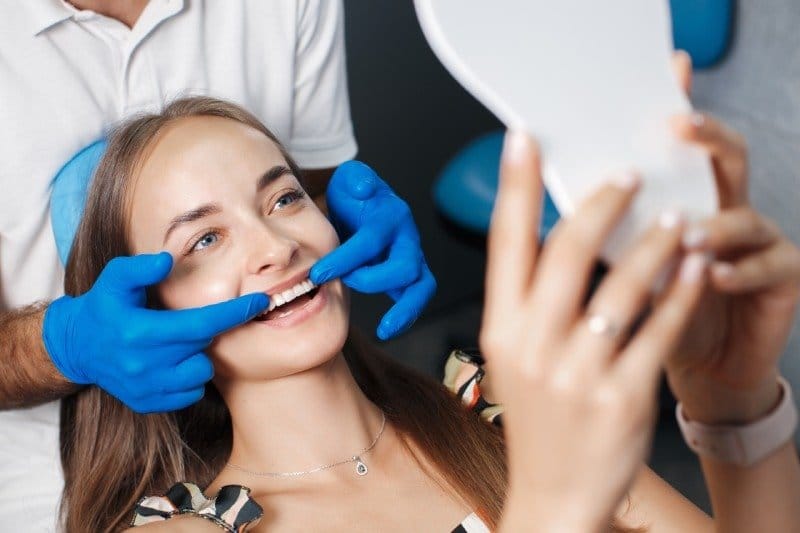
E-max Restoration
E-max veneers and crowns: lithium disilicate glass-ceramic with enamel-like translucence, placed as a veneer, a full crown or an onlay.
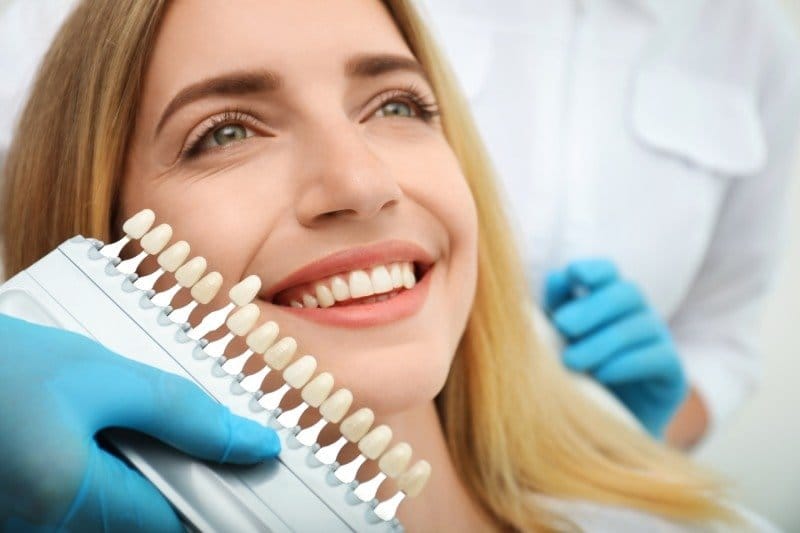
Laminate Veneer
A laminate veneer is a thin ceramic layer bonded to the front surface of the tooth after 0.3-0.5 mm preparation, used to correct colour, shape and gaps.
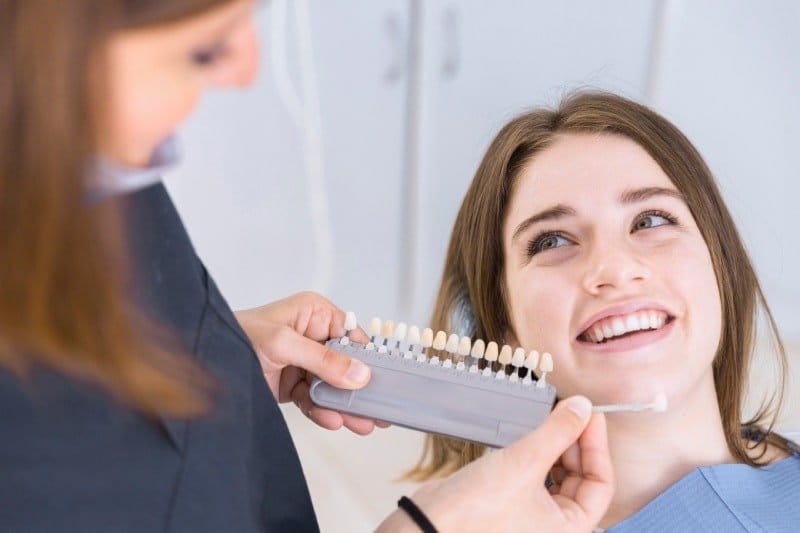
Prepless Veneer
No-prep veneers: 0.2-0.3 mm porcelain bonded straight onto enamel, with no tooth structure removed and nothing to undo later.
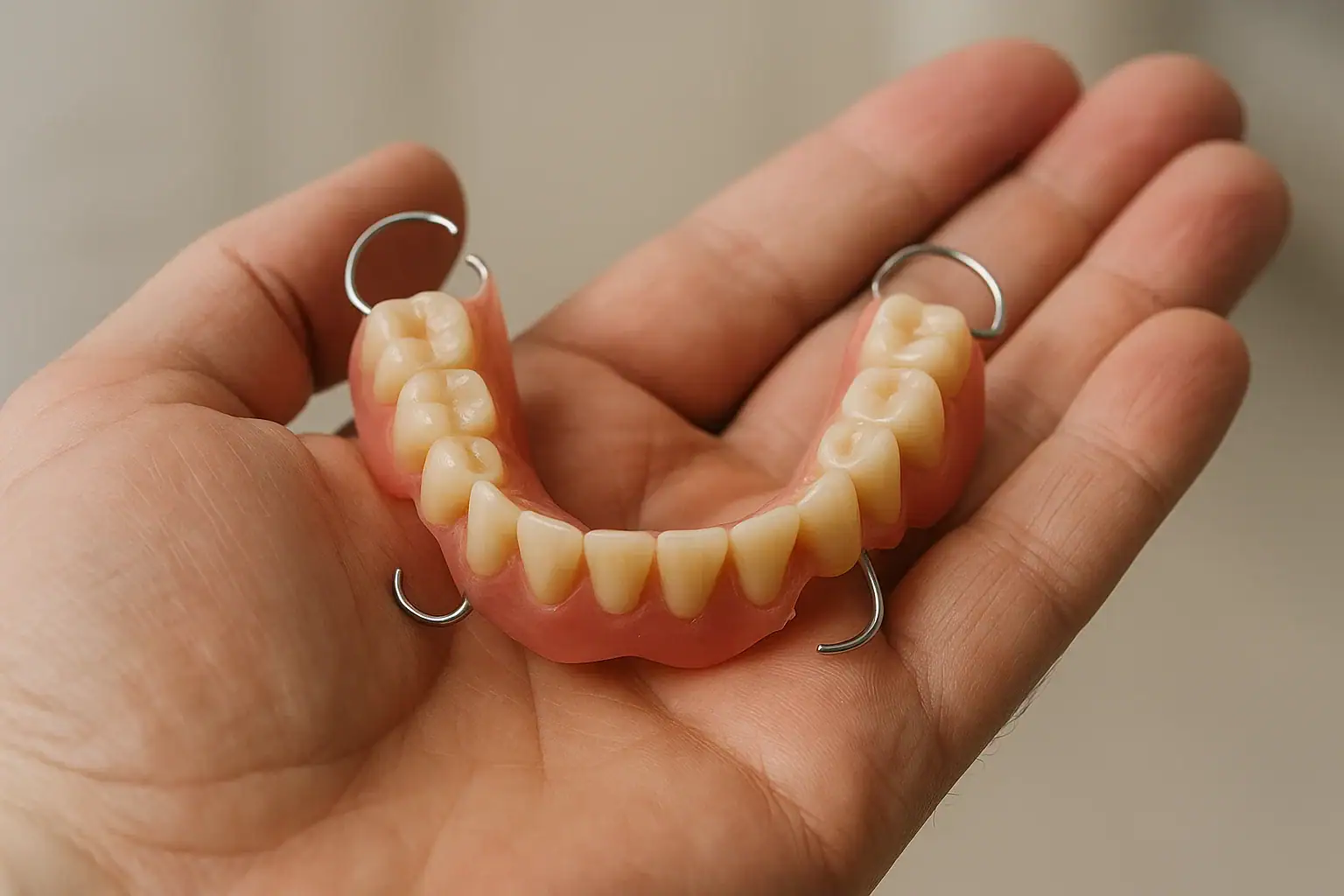
Dentures
Dentures are removable prostheses for missing teeth: complete dentures for a toothless jaw, partials held by your own teeth, or dentures clipped to implants.
The prosthodontics decision closes on two questions: how much of the tooth is covered, and which ceramic the restoration is made from. Full coverage is served here by zirconia crowns, E-max and metal-ceramic porcelain crowns, while front-surface coverage is served by laminate veneers and prepless laminates. The gap between the two has been measured: in gravimetric laboratory testing, laminate veneer preparations removed roughly 3% to 30% of coronal tooth structure by weight against 63% to 72% for complete-coverage crown preparations (PubMed 12070513). Technique is settled first and material second, and both are confirmed at examination before a written quote is issued.
- 01Technique and material are separate axes and do not belong in the same column. A laminate veneer is a restoration type, usually made from lithium disilicate or feldspathic ceramic; zirconia and lithium disilicate are materials. A quote that lists "laminate, E-max, zirconia" as three alternatives is mixing the two axes, because E-max laminate veneers exist.
- 02On the veneer side the margin decides the outcome. In 580 porcelain laminate veneers placed in 66 patients and followed for up to 12 years, survival was 99% where the preparation stayed within enamel and 94% where only the margins were in enamel, while veneers bonded into dentine were roughly ten times more likely to fail (PubMed 23342345).
- 03On the crown side the materials sit in a narrow band. A meta-analysis of 64 studies put five-year survival of tooth-supported single crowns at 98.5% for monolithic lithium disilicate, 97.1% for metal-ceramic and 96.8% for monolithic zirconia (PubMed 41489982).
- 04Zirconia is a family, not one material. Across 78 laboratory studies, mean flexural strength was 803 MPa for 4Y-PSZ against 570 MPa for 5Y-PSZ, so translucency is bought with strength (PubMed 40738693). A quote that says only "zirconia" has not yet told you the grade or whether the crown is monolithic or layered.
- 05Prepless laminates are the one reversible option in this section: a 0.2-0.3 mm porcelain leaf is bonded without cutting the tooth surface, placing it at the least invasive end of the technique axis.
- 1.Edelhoff D, Sorensen JA. Tooth structure removal associated with various preparation designs for anterior teeth. J Prosthet Dent 2002;87(5):503-509. PubMed 12070513
- 2.Gurel G, Sesma N, Calamita MA, Coachman C, Morimoto S. Influence of enamel preservation on failure rates of porcelain laminate veneers. Int J Periodontics Restorative Dent 2013;33(1):31-39. PubMed 23342345
- 3.Pjetursson BE, Pitta J, Balet A, Bjarnadottir GR, Sailer I, Romandini P. A systematic review and meta-analysis evaluating the survival, failure, and complication rates of metal-ceramic, veneered, and monolithic all-ceramic tooth-supported single crowns, Part 1. Int J Prosthodont 2026;39(3):308-324. PubMed 41489982
- 4.Bernauer SA, Lirgg NM, Ioannidis A, Zitzmann NU, Rohr N. Flexural strength of translucent zirconia for single crowns and fixed dental prostheses, a systematic review. J Prosthodont Res 2026;70(2):173-182. PubMed 40738693