
TMJ & Bruxism
Bruxism, night guards, occlusal splints, TMD therapy

Bruxism Treatment
Bruxism treatment aims to limit the tooth wear and muscle pain caused by clenching or grinding; it starts with a night guard, adding botox in some cases.
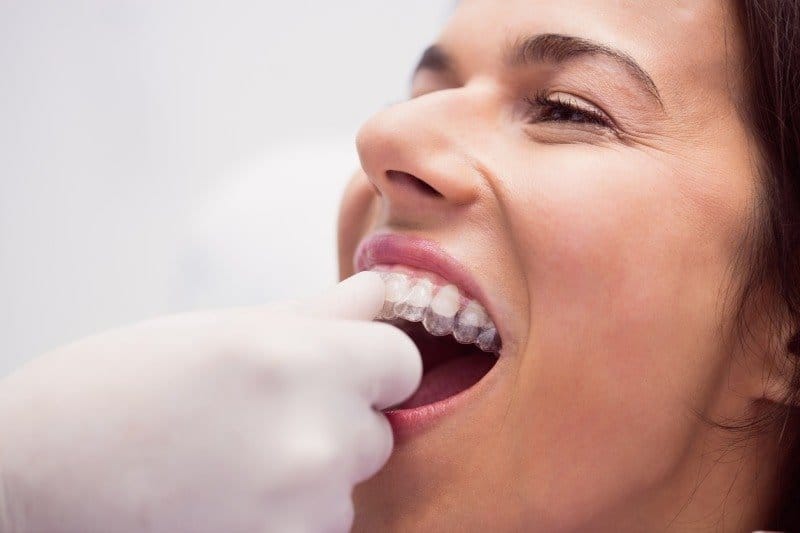
Night Guard
A night guard is a hard acrylic appliance made to an impression of your teeth; worn in sleep, it covers them and spreads the load of clenching and grinding.
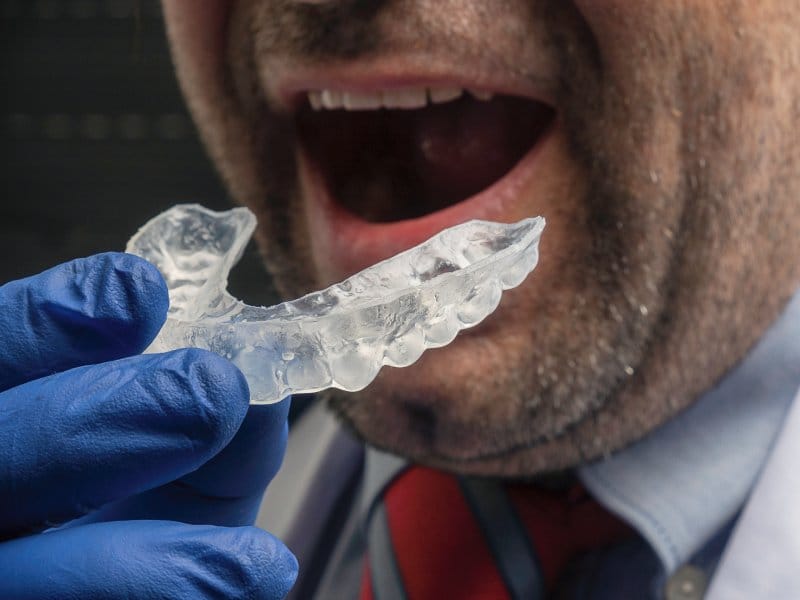
Joint Splint
A joint splint is a hard acrylic full-coverage intraoral appliance used for jaw joint and chewing muscle complaints, custom-made from an impression.

TMJ Treatment
TMJ treatment manages temporomandibular disorders (TMD), which cause pain, joint noise and restricted movement in the jaw joint and chewing muscles.
The first split is the source of the complaint: clenching habit or the joint itself. A meta-analysis of 94 studies covering 49,163 individuals reported self-reported awake bruxism in 25.9% of the general population (95% CI 22.2% to 29.9%), rising to 50.0% among people with temporomandibular disorders (PubMed 40716827). Night guards, occlusal splints, bruxism treatment and TMJ treatment are separate interventions. Appliances are built to manage wear and bite load, while pain arising inside the joint widens the plan to muscle assessment and imaging, with conservative steps taken first.
- 01The evidence for splint therapy is weak, and a clinic should say so. A Cochrane review of 57 studies and 2,846 participants found no demonstrated difference between a full hard stabilisation splint and placebo for self-reported joint pain when chewing, and rated the certainty of evidence very low for every comparison and outcome assessed (PubMed 39282765).
- 02In the same review, a splint reduced muscle pain when chewing compared with no treatment (mean difference -1.97, 95% CI -2.37 to -1.57), but the finding comes from a single study of 84 participants at very low certainty (PubMed 39282765).
- 03In sleep bruxism, appliance therapy tends to reduce the number of events without one splint type outperforming another. In a systematic review of 11 studies in adults diagnosed by polysomnography or electromyography, stabilisation splints showed no significant difference against other splint types (PubMed 35356038).
- 04A night guard and an occlusal splint are not interchangeable. A night guard is built to protect tooth surfaces from wear and to spread bite load; an occlusal splint aims at jaw position and joint loading. Which one applies follows from the source of the complaint. Ask which of the two a written quote is pricing.
- 1.Singh BP, Singh N, Jayaraman S, Kirubakaran R, Joseph S, Muthu MS, Jivnani H, Hua F. Occlusal interventions for managing temporomandibular disorders. Cochrane Database Syst Rev 2024;9:CD012850. PubMed 39282765
- 2.Minakuchi H, Fujisawa M, Abe Y, Iida T, Oki K, Okura K, Tanabe N, Nishiyama A. Managements of sleep bruxism in adult: a systematic review. Jpn Dent Sci Rev 2022;58:124-136. PubMed 35356038
- 3.Stanisic N, Saracutu OI, Colonna A, Wu W, Manfredini D, Häggman-Henrikson B. Awake bruxism prevalence across populations: a systematic review and meta-analysis. J Evid Based Dent Pract 2025;25(3):102171. PubMed 40716827