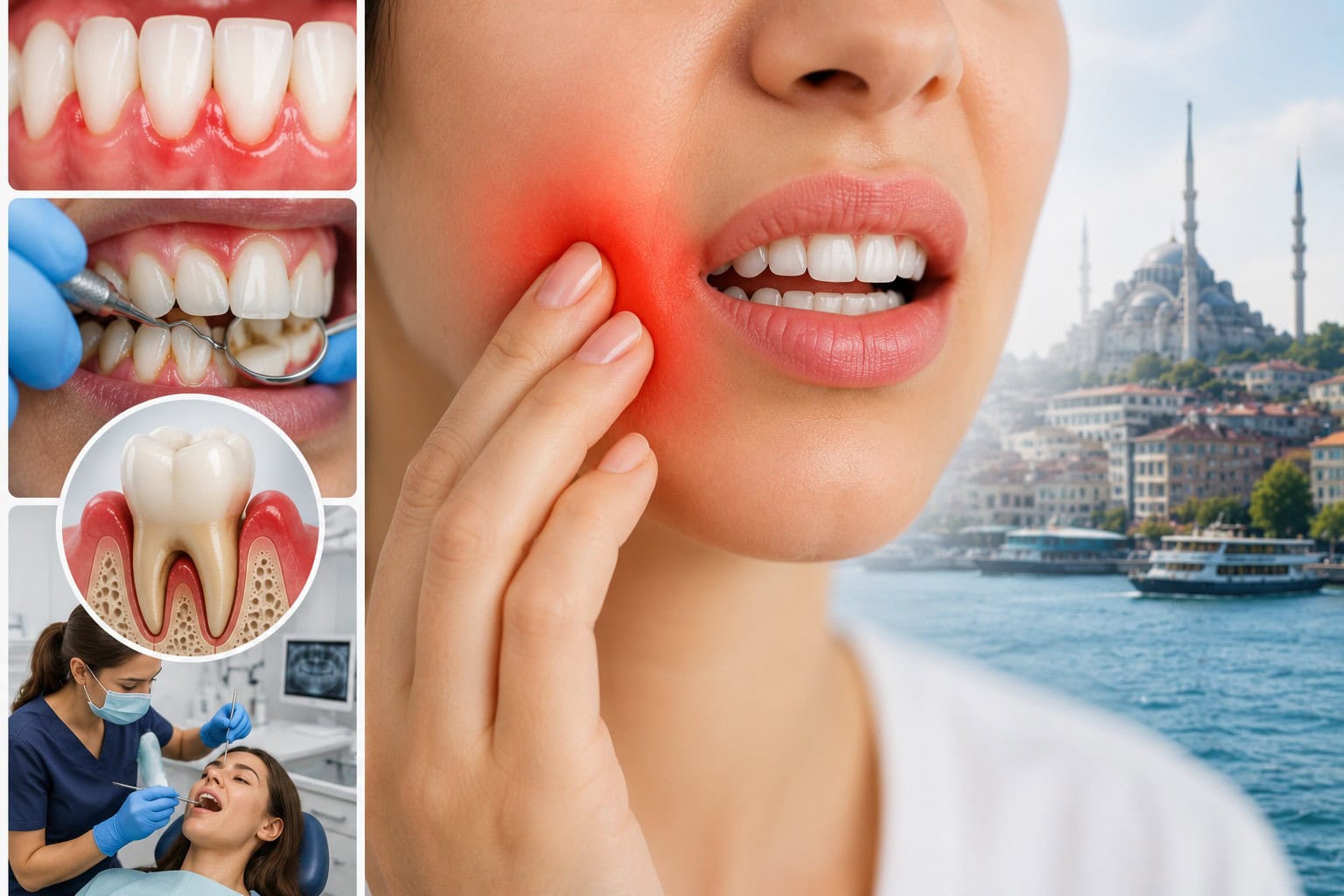
Gingival recession is the migration of the gum margin away from the crown, exposing root surface that has cementum rather than enamel to protect it. In NHANES III, which examined 9,689 people aged 30 to 90, 22.5% of United States adults aged 30 and over had at least one surface with 3 mm or more of recession, an estimated 23.8 million people, and prevalence, extent and severity all rose with age (PubMed 10052768). Tissue already lost does not regrow on its own; treatment stops the progression, reduces sensitivity and pocket depth, and covers exposed roots surgically where indicated.
- 01Recession is measured rather than estimated: NHANES III found 22.5% of adults aged 30 and over with at least one surface showing 3 mm or more of recession, roughly 23.8 million people (PubMed 10052768).
- 02Reversal and stabilisation are different claims. Inflammation, pocket depth, sensitivity and appearance can improve; lost gum and bone tissue does not regenerate spontaneously.
- 03For a single recession defect, a subepithelial connective tissue graft with a coronally advanced flap ranked first for complete root coverage, mean root coverage and keratinised tissue gain at 6 and 12 months in a network meta-analysis of 38 trials, 830 patients and 1,265 defects (PubMed 35451068).
- 04The causes are cumulative rather than singular: periodontal disease, aggressive brushing, thin tissue biotype, tobacco and vaping, bruxism, a misaligned bite and oral piercings each remove a little more support.
- 05Exposed root is covered by thin cementum, not enamel, which is why root caries and cold sensitivity follow recession so reliably.
Receding gums do not grow back on their own, whatever a natural cure or a fast solution promises. While certain treatments and habits can stop receding gums, improve gum health, and prevent further tissue loss, it's important to understand that once gum tissue has receded significantly, it cannot fully regenerate naturally . Instead, a combination of clinical treatments, preventive strategies, and lifestyle modifications can restore overall gum stability and oral health.
According to the National Health and Nutrition Examination Survey (NHANES III), nearly 22.5% of adults over the age of 30 in the United States have at least one tooth affected by gingival recession. This makes receding gums one of the most common, and most misunderstood, oral health issues today.
If you are asking questions like:
/ Receding Gums and Their Early Signs
What Are Receding Gums? Why Does It Matter?
Receding gums, also called gingival recession, occur when the gum tissue surrounding the teeth pulls away or wears down, exposing more of the tooth or its root. Although many people initially focus on the cosmetic aspect, gum recession can significantly impact oral function, sensitivity, bone support, and long-term dental stability.
How Healthy Gums Look
Healthy gums:
- Fit tightly around the teeth
- Cover the roots entirely
- Have a light pink color (may vary by individual)
- Provide strong structural support
How Receding Gums Look
Receding gums often appear as:
- Longer-looking teeth
- Visible root surfaces
- Notches at the gumline
- Gaps between gums and teeth
Dental professionals often use Miller’s Classification to measure the severity of recession.
Early Signs You May Have Receding Gums
Early detection is the key to successful receding gums treatment. Watch for:
- Tooth sensitivity
- Longer appearance of teeth
- Notches or grooves near the gumline
- Visible tooth roots
- Gum inflammation or bleeding
- Shifting teeth or changes in alignment
If you notice these signs, home care alone is not enough: while it plays a role, professional diagnosis is essential.
Why Receding Gums Matter: More Than a Cosmetic Issue
Receding gums affect far more than your smile. Here’s how:
1. Increased Risk of Root Caries
Exposed roots lack enamel and are covered by thin cementum, making them prone to rapid cavities.
2. Tooth Sensitivity
Hot, cold, acidic, or sweet foods can trigger pain due to exposed dentin.
3. Aesthetic Concerns
Teeth may appear uneven, longer, or spaced apart impacting confidence.
4. Gum & Bone Loss Leading to Mobility
Advanced gum recession often leads to bone deterioration, causing:
- tooth mobility
- tooth loss
- changes in bite
- functional issues with chewing
Addressing gum recession early prevents more complex dental problems in the future.
/ Causes of Receding Gums and Reversal Limits
Why Are My Gums Receding? (Top Causes Explained)
Below are the primary culprits:
1. Periodontal Disease: The #1 Cause
Bacterial plaque leads to inflammation and destruction of gum tissue and bone.
2. Aggressive Brushing
Brushing too hard or using a hard-bristle brush wears down the gumline.
3. Genetic Factors
Thin gum tissue or weak connective tissue can run in families.
4. Tobacco Use & Vaping
Both reduce blood flow and impair healing.
5. Bruxism (Teeth Grinding)
Excessive force on the teeth gradually leads to gum recession.
6. Misaligned Bite
Improper bite distribution puts pressure on certain teeth.
7. Oral Piercings
Tongue or lip piercings frequently cause localized recession.
Understanding these causes is crucial when asking:
“How to stop receding gums?”
Because eliminating contributing factors is often the first step in stabilizing the condition.
Can Receding Gums Be Reversed?
Short answer:
Mild inflammation-based recession can improve.
Significant tissue loss cannot naturally grow back, but it can be treated.
What CAN Improve?
- Gum inflammation
- Pocket depth
- Sensitivity
- Gum stability
- Aesthetic appearance
- Progression can STOP
What CANNOT Regenerate Naturally?
- Lost gum tissue
- Lost bone tissue
- Severe root exposure
This is why receding gums treatment requires a combination of professional intervention and home care.
/ Professional Treatments for Receding Gums
How to Fix Receding Gums (Effective Professional Treatments)
No home remedy regrows lost gum tissue; clinical treatment is what produces a lasting result.
Non-Surgical Treatments
1. Scaling & Root Planing
Deep cleaning removes plaque and bacteria below the gumline, helping gums reattach.
2. Local Antimicrobial Therapy
Dentists place antibacterial medication into periodontal pockets to reduce infection.
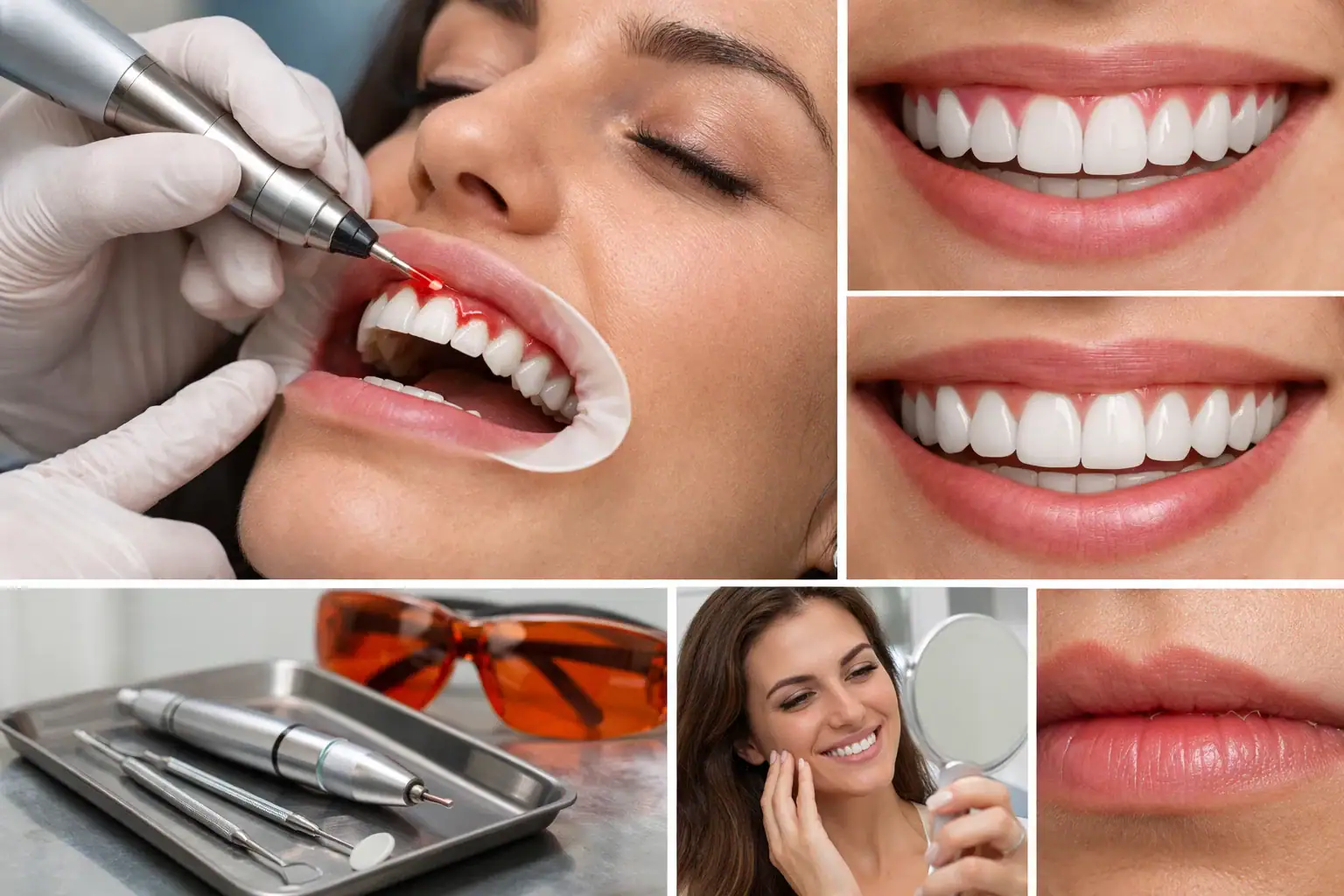
3. Laser Therapy (LANAP®)
This FDA-approved laser technique removes bacteria and stimulates tissue regeneration with less discomfort.
Surgical & Regenerative Treatments
When recession is more severe, the following treatments offer predictable, long-term results.
1. Connective Tissue Grafts
The most successful grafting method, tissue is taken from the palate and attached to cover roots.
2. Free Gingival Grafts
Used to increase tissue thickness, especially in patients with genetically thin gums.
3. Pinhole Surgical Technique (PST)
A minimally invasive method where gums are repositioned through a tiny opening, no grafts, no sutures.
4. Guided Tissue Regeneration
Used when bone loss is present to restore periodontal structures.
5. Bite Adjustment or Orthodontics
Fixing misalignments reduces excessive pressure on specific teeth, helping prevent future recession.
/ Receding Gums Treatment and Home Care
Receding Gums Treatment at Home: What Actually Works
While home care cannot “reverse” gum recession, it can dramatically support healing.
1. Use a Soft-Bristle Brush & Bass Technique
Gentle brushing prevents further damage.
2. Switch to Desensitizing Toothpaste
Stannous fluoride strengthens exposed root surfaces.
3. Use Antibacterial Mouthwash
Reduces plaque and bleeding.
4. Wear a Night Guard for Bruxism
Prevents stress on teeth and gums.
5. Quit Tobacco
Improves blood flow and gum healing.
6. Maintain Diabetes Control
Uncontrolled blood glucose worsens gum disease .
These steps support your clinical treatment and help stop receding gums from getting worse.
How to Stop Receding Gums (Prevention Checklist)
To prevent gum recession from progressing, dental experts recommend:
- Brush twice daily (gently)
- Floss once daily
- Avoid overly acidic foods
- Get regular dental cleanings
- Maintain a nutrient-rich diet
- Avoid smoking or vaping
- Perform monthly gum self-checks
- Correct grinding/clenching habits
When to See a Specialist for Receding Gums
If symptoms persist, you may need to see a periodontist, a gum specialist.
Seek specialist care if you notice:
- bleeding gums
- persistent recession
- loose teeth
- deep periodontal pockets
- exposed roots
- bone loss on X-rays
Important Questions to Ask:
- What receding gums treatment do you recommend for my case?
- Can this condition be stabilized long-term?
- Do I need grafting or can I benefit from the Pinhole Surgical Technique?
- How soon should treatment begin?
- What results should I expect?
Final Thoughts: Take Control of Your Gum Health Today
Gum recession is a progressive condition, ignoring it leads to:
- sensitivity
- root decay
- bone loss
- tooth loss
The good news?
With early detection, professional treatment, and consistent home care, you can:
✔ Stop recession
✔ Strengthen gum health
✔ Improve comfort & sensitivity
✔ Protect your teeth long-term
✔ Restore aesthetics
If you’ve ever wondered “I healed my receding gums, how?”, the truth is this:
Healing means stopping progression, strengthening gum tissue, and restoring function and comfort, not magically regrowing lost gums.
Taking action today is the best investment in your long-term oral health.
Let’s plan the right treatment together.
Free Assessment→- 1.Albandar JM, Kingman A. Gingival recession, gingival bleeding, and dental calculus in adults 30 years of age and older in the United States, 1988-1994. J Periodontol 1999;70:30-43. PubMed 10052768
- 2.Chambrone L, Botelho J, Machado V, Mascarenhas P, Mendes JJ, Avila-Ortiz G. Does the subepithelial connective tissue graft in conjunction with a coronally advanced flap remain as the gold standard therapy for the treatment of single gingival recession defects? A systematic review and network meta-analysis. J Periodontol 2022;93:1336-1352. PubMed 35451068