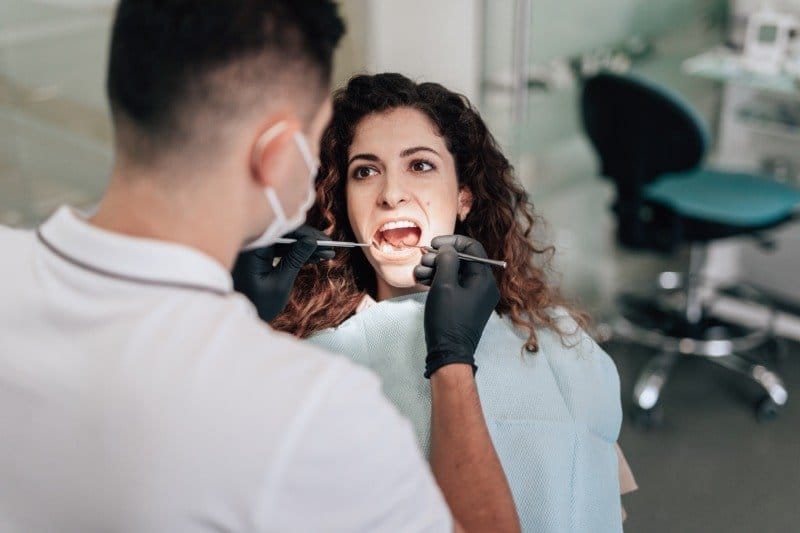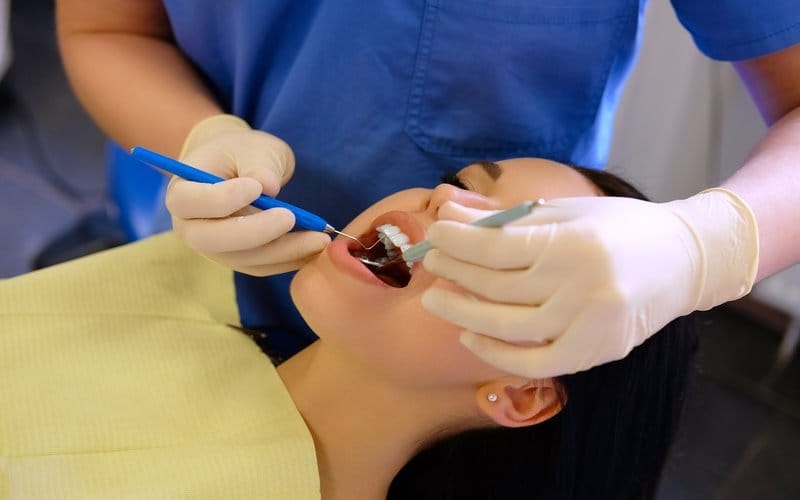
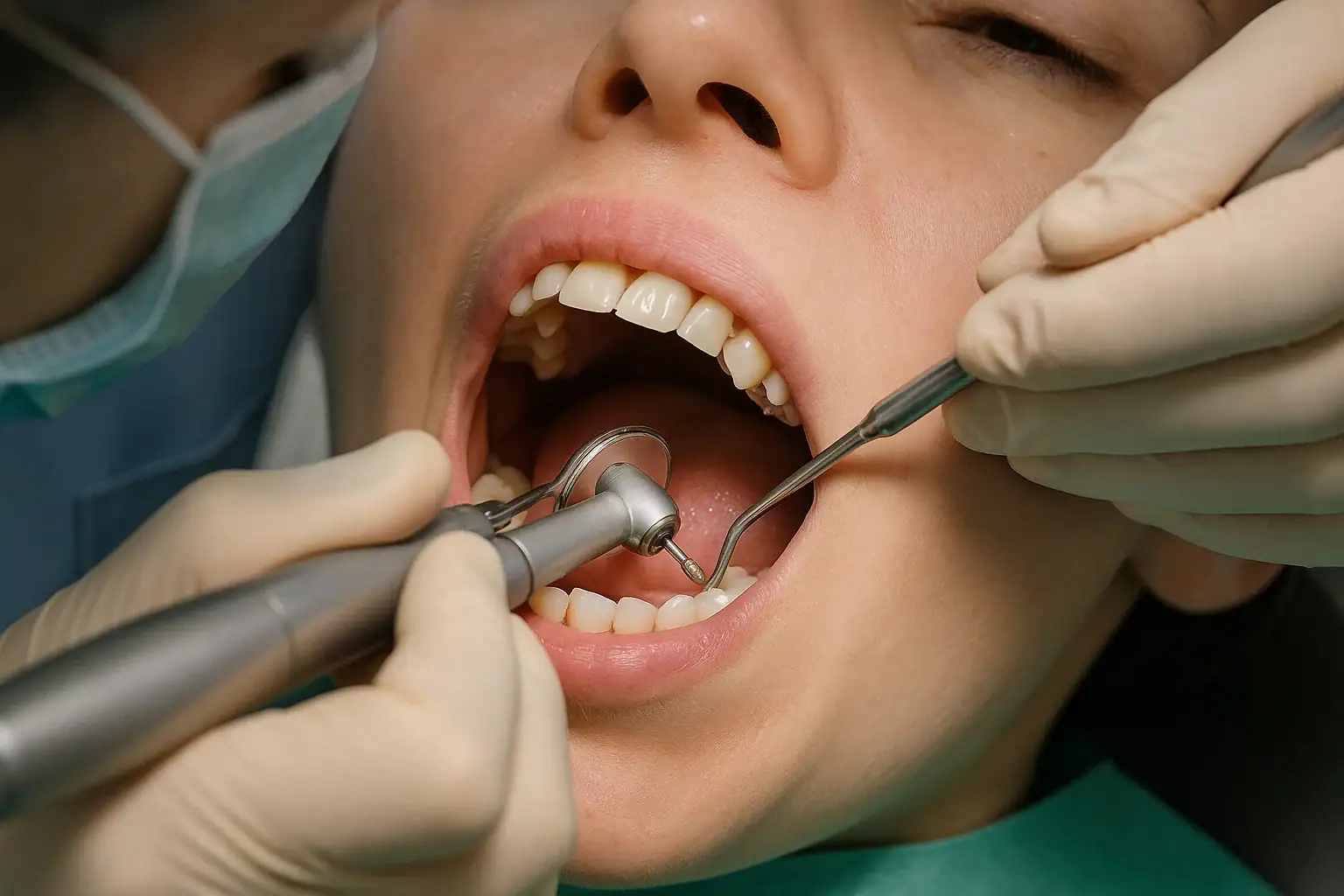
Tooth cavity treatment is the removal or arrest of a carious lesion and the rebuilding of the lost tooth structure, and the option is chosen by how deep the decay has reached: fluoride for initial demineralisation, a filling once the enamel has cavitated, root canal therapy when the pulp is infected, a crown when the remaining tooth is too weak to carry load, and extraction only when the tooth cannot be saved. Prevention is measurable: in a Cochrane review of 22 trials with 12,455 randomised children and adolescents, fluoride varnish cut caries increment by 43 percent in permanent teeth (PubMed 23846772).
- 01Treatment follows the stage, not the symptom: initial demineralisation, enamel decay, dentine involvement, pulp infection and abscess each call for a different intervention, and pain usually arrives only at the later stages.
- 02Fluoride varnish reduced caries increment by 43 percent (95 percent CI 30 to 57) in permanent teeth and 37 percent (95 percent CI 24 to 51) in primary teeth, pooled across 22 trials and 12,455 randomised participants (PubMed 23846772).
- 03Once enamel has cavitated the lesion does not reverse on its own, which is why detecting decay early changes the treatment itself and not just the timing.
- 04Untreated caries in permanent teeth is barely moving globally: the age-standardised prevalence went from 26,593.58 per 100,000 in 1990 to 25,625.53 per 100,000 in 2019, with the peak in the 20 to 24 age group (PubMed 38871071).
- 05Bayesian projections from the same analysis predict a significant upward trend in global age-standardised prevalence for both sexes between 2020 and 2049 (PubMed 38871071).
Tooth cavities, also known as dental caries or tooth decay, are among the most common oral health issues worldwide. If left untreated, cavities can lead to severe pain, infection, and even tooth loss.
/ Tooth Cavity Causes and Early Detection
What Is a Tooth Cavity?
A cavity is a permanently damaged area on the surface of a tooth that develops into tiny holes or openings. Cavities are caused by a combination of factors, including bacteria in the mouth, frequent snacking, sugary drinks, and poor oral hygiene.
Causes of Tooth Cavities
- Plaque buildup from bacteria
- High-sugar and acidic diets
- Inadequate brushing and flossing
- Dry mouth and low saliva production
Early Signs of a Cavity You Shouldn’t Ignore
- Sensitivity to hot or cold
- Visible holes or pits
- Tooth discoloration
- Pain when eating sweet or hard foods
Stages of Cavity Progression
- Initial demineralization
- Enamel decay
- Dentin involvement
- Pulp infection
- Formation of abscess
Recognizing the stage of decay is essential for selecting the proper treatment.
Tooth Cavity Treatment Options
1. Fluoride Treatments
Effective in the very early stages by helping to remineralize enamel.
2. Dental Fillings
Used when decay has progressed beyond the earliest stage. Types include amalgam, composite, and gold fillings.
3. Root Canal Therapy
Needed if decay reaches the tooth pulp, causing infection.
4. Dental Crowns
Recommended for extensive decay that weakens the tooth structure.
5. Tooth Extraction
Reserved for cases where the tooth is severely damaged and cannot be saved.
Innovative Technologies in Cavity Detection
Modern dental practices use digital X-rays, laser fluorescence devices like DIAGNOdent, and intraoral cameras to detect cavities more accurately and earlier. These tools help reduce invasive procedures by identifying decay in its earliest stage.
Sealants as a Preventive Option
Sealants are protective coatings applied to the chewing surfaces of molars. They are especially effective in children but are increasingly recommended for cavity-prone adults as well.
/ Tooth Cavity Prevention and Treatment Planning
Impact of Lifestyle on Cavity Risk
- Smoking and Alcohol : Can reduce saliva production and impair gum health.
- Teeth Grinding (Bruxism) : Causes enamel wear.
- Stress : Linked to poor oral habits and dry mouth.
Natural Remedies: Helpful or Harmful?
- Oil pulling : Claimed to reduce bacteria but lacks sufficient clinical support.
- Clove oil : Provides temporary relief for toothache.
- Fluoride-free toothpaste : May not offer enough protection against cavities.
Always consult your dentist before relying on natural remedies.
At-Home Prevention Tips
- Brush with fluoride toothpaste twice daily
- Floss at least once per day
- Limit sugary and acidic foods and drinks
- Use mouthwash containing antibacterial properties
- Chew sugar-free gum to stimulate saliva
Dietary Habits and Cavity Prevention
- Avoid frequent snacking between meals
- Choose water over sugary drinks
- Incorporate calcium-rich foods like cheese, milk, and leafy greens
Cavity Treatment in Children vs Adults
- Children: Pediatric fillings, sealants, fluoride varnishes
- Adults: Root canals, crowns , or fillings depending on the damage
What to Expect During a Filling Procedure
- Numbing the area with local anesthesia
- Removing decayed tooth material
- Cleaning and filling the cavity
- Polishing and bite adjustment
Cost of Cavity Treatment
Costs vary depending on the type of treatment:
- Fillings : $50–$300
- Crowns : $500–$2,500
- Root canals : $300–$2,000
Dental insurance often helps cover a portion of the cost.
/ Tooth Cavity Treatment Aftercare
Post-Treatment Care
- Avoid sticky or hard foods for 24 hours
- Resume oral hygiene gently around treated area
- Report any pain or sensitivity lasting more than a few days
When to See a Dentist
- Persistent tooth pain
- Visible pits or discoloration
- Swelling or pus near the gums
FAQs
What is the best treatment for tooth cavity? Fillings are the most common treatment, but early-stage cavities may respond to fluoride therapy.
Can a cavity go away on its own? No. Once enamel is damaged, it needs professional treatment to avoid worsening.
What happens if a cavity is left untreated? Untreated cavities can lead to infection, tooth loss, and systemic health issues.
Are home remedies effective for cavities? Home remedies can relieve symptoms but do not replace professional treatment.
Is cavity treatment painful? With modern anesthesia, most treatments are virtually pain-free.
How can I prevent cavities naturally? Good oral hygiene, a low-sugar diet, and routine dental checkups are the most effective ways.
Tooth cavity treatment has come a long way, with modern methods offering fast, effective, and pain-free solutions. Whether you suspect a cavity or want to protect your teeth from future decay, understanding your options is key to maintaining optimal oral health.
Let’s plan the right treatment together.
Free Assessment→- 1.Marinho VC, Worthington HV, Walsh T, Clarkson JE. Fluoride varnishes for preventing dental caries in children and adolescents. Cochrane Database Syst Rev 2013;2013:CD002279. PubMed 23846772
- 2.Sun R, Xu X, Dong Y, Li J, Guan W, Huang Y, et al. Global and regional trends in prevalence of untreated caries in permanent teeth: Age-period-cohort analysis from 1990 to 2019 and projections until 2049. J Dent 2024;147:105122. PubMed 38871071