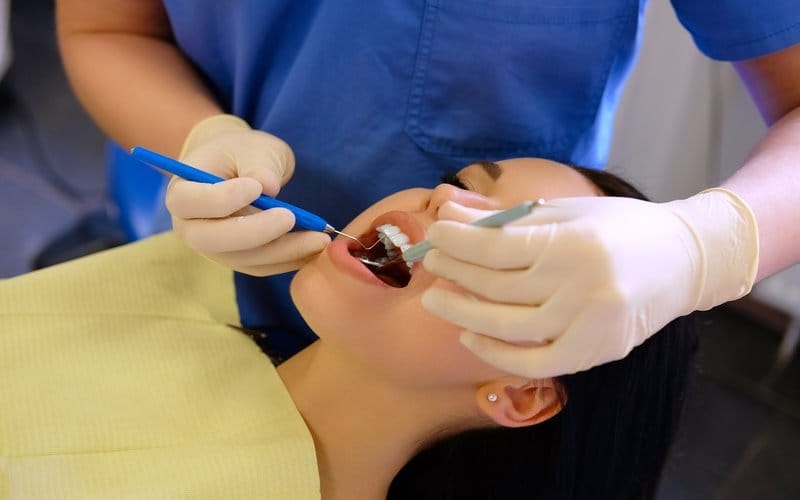

Root canal treatment for an inflamed tooth removes the infected pulp, the nerve and vessel tissue inside the tooth, disinfects and shapes the canal system, then seals it with gutta-percha so bacteria cannot re-enter; the crown of the tooth is afterwards rebuilt with a filling or a crown. It is the alternative to extraction when deep decay, a crack after trauma, incomplete earlier treatment or an abscess is associated with inflammation or infection of the pulp. Pooled data from 42 longitudinal studies give a success rate of 92.6% under loose radiographic criteria and 82.0% under strict criteria (PubMed 35334111).
- 01Inflammation reaches the pulp through deep untreated decay, cracks and fractures after trauma or incomplete earlier treatment; an existing abscess usually indicates that infection has spread beyond the pulp; the warning signs are lingering pain, darkening of the tooth and swelling.
- 02Success rates depend on the criterion used: 92.6% when the periapical lesion shrinks and 82.0% when it must resolve completely, pooled from 42 longitudinal clinical studies (PubMed 35334111).
- 03Tooth survival is the other half of the picture: 86% at 2 to 3 years, 93% at 4 to 5 years and 87% at 8 to 10 years after non-surgical root canal treatment, across 14 studies (PubMed 20158529).
- 04Rebuilding the tooth is part of the treatment, not an extra: crown restoration afterwards was the most influential factor improving long-term tooth survival in the same review (PubMed 20158529).
Dental health is an important part of our general health, and problems with our teeth can seriously affect our quality of life. In particular, inflammations and infections in the teeth can lead to pain, tooth loss, and serious health problems if left untreated. The most effective method at this point is root canal treatment .
/ Root Canal Treatment and Reasons in Inflamed Teeth
What is Root Canal Treatment?
Root canal treatment is the process of removing infected or damaged nerve and vascular tissue inside the tooth, cleaning the inner structure of the tooth, and filling it with special filling materials. Thanks to this treatment, it is possible to protect the tooth and regain its function.
What are the reasons for root canal treatment in inflamed teeth?
- Deep cavities and untreated decayed teeth
- Cracks and fractures in the tooth due to trauma
- Previous incorrect or incomplete treatments
- Long-term and persistent pain
- Discoloration and darkening of the tooth
- Abscesses and swellings
- Sensitivity and pain while eating
Root Canal Treatment Process in Inflamed Teeth
Examination of the Tooth and X-Ray
First of all, your dentist will perform a detailed examination to understand the extent of the problem in your tooth. X-rays are taken to determine the extent of the inflammation at the root tip and the status of infection.
Applying Local Anesthesia
In order to prevent pain during root canal treatment in inflamed teeth, the area is numbed with local anesthesia.
Opening the Tooth and Cleaning the Inflamed Tissue
A small hole is opened on the tooth and the infected pulp tissue (nerves and vessels) inside the tooth is removed. In this way, the inflammation inside the tooth is completely cleaned.
Shaping and Cleaning the Canal
After the infected tissue is removed, the canal structure is cleaned and widened with special tools. The canals are disinfected during this process.
Filling the Canals
The canals that are emptied after cleaning are filled with a biocompatible material called gutta-percha. In this way, the canals are completely closed against bacterial entry.
Restoration of the Tooth
The upper part of the tooth whose root canal treatment is completed is restored with durable filling materials or porcelain crowns. This allows the tooth to return to its normal function.
/ Materials, Success Factors, Care, Prices, and Alternatives
Root canal treatment in inflamed teeth involves specific materials, success factors, advantages, care, prices, and alternatives.
What are the Materials Used in Root Canal Treatment?
- Gutta-percha
- Disinfectant solutions
- Root canal files
- Dental fillings or porcelain crowns
- Intracanal filling pastes
Factors Affecting the Success Rate in Root Canal Treatment
- The experience and expertise of the dentist
- The quality of the materials used
- The patient's attention to oral hygiene
- The level of infection in the tooth and its spread
- The complexity of the anatomical structure of the tooth
Advantages of Root Canal Treatment in Inflamed Teeth
- It saves you from losing your tooth.
- Pain and sensitivity are completely eliminated.
- Prevents the spread of inflammation throughout the body.
- Allows the tooth to regain its functions.
- Protects the natural tooth appearance aesthetically.
- Prevents speech and chewing problems that may occur due to tooth loss.
After Root Canal Treatment Care for Inflamed Teeth
It is important to protect your teeth well after root canal treatment:
- Perform regular oral and dental care.
- Avoid hard foods.
- Go to your dentist for regular check-ups.
- Stay away from extremely hot or cold foods in the first days.
- Use the medications recommended by your dentist regularly.
What Determines Root Canal Treatment Prices?
- The condition and location of the tooth to be treated
- How many sessions are required
- The quality and type of materials to be used
- The dentist's degree of expertise and clinical standards
- The high-tech devices used during treatment
Are There Alternatives to Root Canal Treatment?
The alternative to root canal treatment is usually tooth extraction. However, since it requires implant or bridge treatment after tooth extraction, it can be more challenging in terms of cost and process.
/ Frequently Asked Questions
Is Root Canal Treatment a Painful Procedure?
Local anesthesia is applied during root canal treatment on infected teeth and no pain is felt during the procedure. There may be slight sensitivity for a few days after the treatment, but this is temporary.
Will My Tooth Become Inflamed Again After Root Canal Treatment?
If root canal treatment is done correctly, the success rate is over 95%. However, if hygiene is not taken care of, there may be a risk of re-infection.
What Happens If Root Canal Treatment Is Not Performed?
Untreated infected teeth can lead to serious infections, tooth loss and damage to surrounding tissues. It can also cause serious problems that threaten general health.
Root canal treatment for infected teeth is critical to maintaining dental health and extending the life of natural teeth. For a healthy smile, pay attention to your oral health and have your dentist check you up regularly.
Let’s plan the right treatment together.
Free Assessment→- 1.Burns LE, Kim J, Wu Y, Alzwaideh R, McGowan R, Sigurdsson A. Outcomes of primary root canal therapy: An updated systematic review of longitudinal clinical studies published between 2003 and 2020. Int Endod J 2022;55:714-731. PubMed 35334111
- 2.Ng YL, Mann V, Gulabivala K. Tooth survival following non-surgical root canal treatment: a systematic review of the literature. Int Endod J 2010;43:171-89. PubMed 20158529