
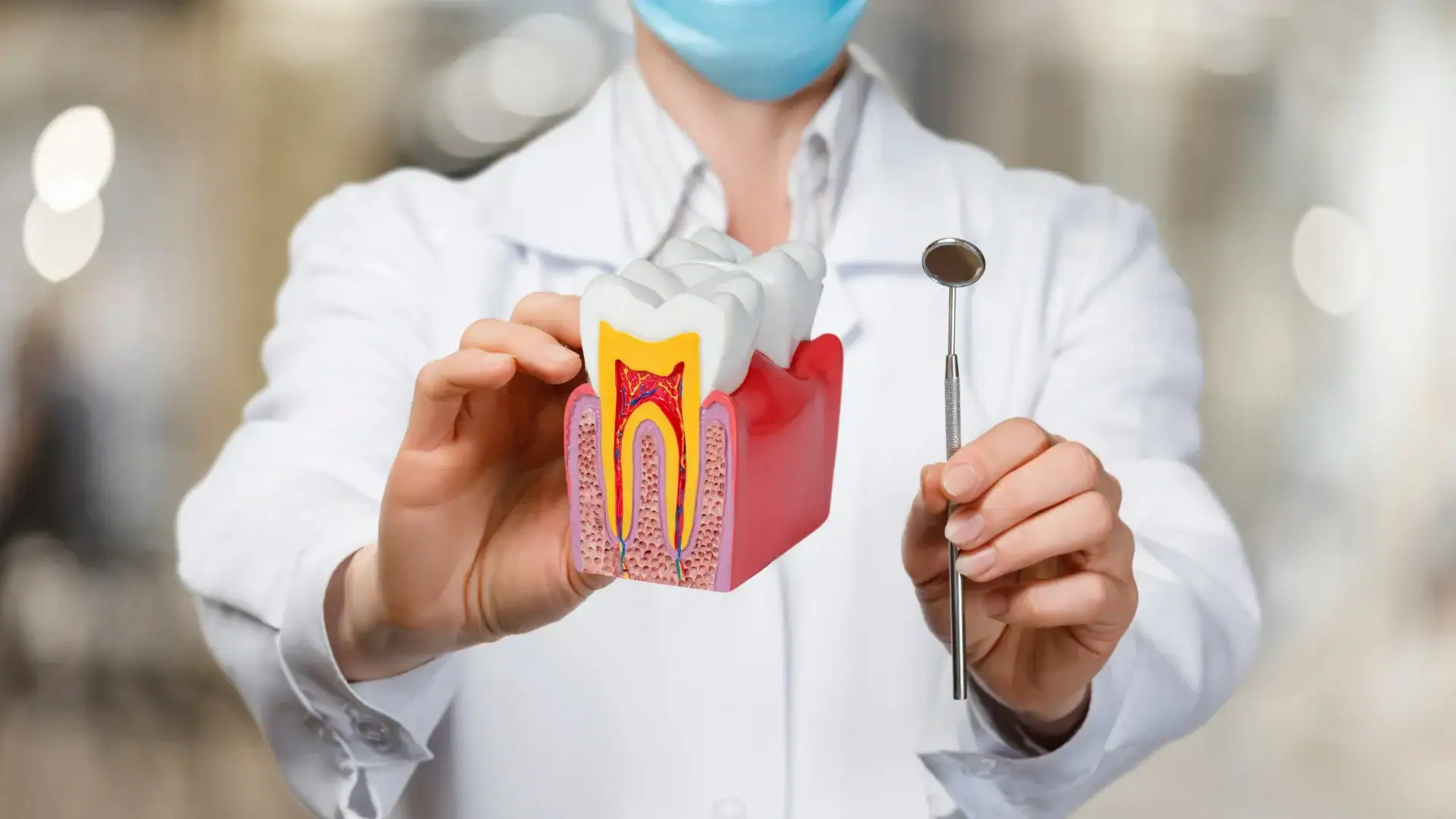
Root canal treatment removes inflamed or infected pulp from inside a tooth, cleans and shapes the canal system, then fills and seals it so the natural tooth is kept instead of extracted. It is a retention procedure, and retention is what the data measure: in a meta-analysis of endodontically treated cracked teeth, pooled tooth survival at 60 months was 84.1% (95% CI 72.3-91.5%) (PubMed 31797172). Where a first treatment does not heal, non-surgical retreatment succeeded in 71% of cases under strict radiographic criteria at 1-3 years and 77% at 4-5 years (PubMed 38145805).
- 01A root canal treats the pulp, the tissue inside the tooth that contains nerves, blood vessels and connective tissue; the outer tooth structure is kept, which is the whole purpose of the procedure.
- 02Survival, not perfection, is the outcome to look at: pooled tooth survival of endodontically treated cracked teeth was 84.1% (95% CI 72.3-91.5%) at 60 months across four studies (PubMed 31797172).
- 03A first treatment that does not heal is not the end of the tooth: non-surgical retreatment succeeded in 71% (95% CI 66-76%) of cases under strict criteria at 1-3 years and 87% under loose criteria (PubMed 38145805).
- 04Prognosis is case-specific: pre-existing periapical radiolucency, lesions larger than 5 mm, higher initial PAI score, multiple-visit protocols, and mandibular or molar teeth all lowered retreatment success in the same analysis.
- 05Post-treatment soreness is expected and partly technique-dependent: across 17 trials, rotary instrumentation produced a significantly lower incidence of postoperative pain than hand files (RR 0.32, p=0.0005) (PubMed 29516592).
Root canal treatment often gets a bad rap. Many people fear the procedure, associating it with pain and discomfort. However, there's much more to this dental process than meets the eye. Understanding what a root canal involves can help alleviate anxiety and showcase its importance in maintaining oral health.
When your tooth is damaged or infected, ignoring the problem isn't an option. This is where root canal treatment steps in as a hero, working to save your natural tooth from extraction. Curious about how it all works? Let's explore the ins and outs of root canals, what they are, when they are required, their benefits, and what patients can expect during the process!
/ Root Canal Treatment and When It Is Necessary
What is Root Canal Treatment?
Root canal treatment is a dental procedure designed to address issues within a tooth's pulp. The pulp contains nerves, blood vessels, and connective tissue. When this area becomes infected or inflamed due to decay or injury, it can cause significant pain and discomfort.
A dentist removes the damaged pulp during the procedure to save the tooth from further complications. After cleaning the infection, they fill and seal the cavity with unique materials.
This treatment alleviates pain and helps preserve your natural tooth structure. You maintain bite function and prevent other teeth from shifting by opting for a root canal instead of extraction. It's an essential solution for safeguarding both oral health and overall well-being.
When is a Root Canal Treatment Necessary?
Root canal treatment becomes necessary when the pulp inside a tooth gets infected. This infection can occur due to deep decay, cracks, or trauma.
If you experience persistent pain in a tooth, it could be an indicator of trouble. Swelling and sensitivity to hot or cold temperatures are signs of something being wrong.
Sometimes, an abscess may form at the root of the tooth. This pocket of pus indicates severe infection and requires prompt attention.
You might not always feel pain at first. However, if X-rays reveal dark spots around your tooth roots, it's time for evaluation by a dentist.
Ignoring these symptoms can lead to more severe complications. Timely intervention can save the affected tooth and alleviate discomfort effectively.
/ Benefits of Root Canal Treatment
Root canal treatment offers numerous advantages for dental health. One of the most significant benefits is pain relief. Many patients experience severe discomfort due to infected or damaged teeth. A root canal effectively eliminates this pain by addressing the source.
Another critical benefit is tooth preservation. Instead of extracting a compromised tooth, a root canal allows you to keep your natural tooth intact. This helps maintain proper alignment and function within your mouth.
Moreover, undergoing this procedure can enhance overall oral health. Removing bacteria and infection from the pulp reduces the risk of further complications that could affect adjacent teeth or gums.
Additionally, many people find recovery time relatively quick compared to other dental procedures. Most return to normal activities shortly after treatment without extensive downtime.
With proper aftercare, teeth treated with root canals can last for many years: a systematic review found that 86% to 93% of root filled teeth survived over two to ten years (PubMed 20158529).
/ Preparation and Steps of a Root Canal Treatment
Preparation for the Procedure
Preparing for a root canal can feel overwhelming, but it doesn't have to be. Start by discussing any concerns with your dentist . They will guide you through the process and address your questions.
On the day of your appointment, avoid eating anything heavy right before. A light meal is sufficient if you're feeling nervous about treatment. It's also wise to arrange for someone to drive you home afterwards, especially if sedation is used.
Dressing comfortably will help ease anxiety as well. Loose clothing allows you to relax during the procedure.
Most importantly, try to stay calm. Deep breathing or listening to music can help soothe pre-treatment jitters. Remember that this step is essential for preserving your tooth and oral health.
Steps of a Root Canal Treatment
The root canal treatment begins with an initial consultation. Your dentist will assess the tooth and take the necessary X-rays to evaluate its condition.
Once everything is set, local anaesthesia is applied to numb the area. This ensures you remain comfortable throughout the process.
Next, a small opening is made in the crown of the tooth. This allows access to the pulp chamber and root canals where infection occurs.
Using specialized tools, your dentist removes damaged or infected tissue. Thorough cleaning of these spaces follows to eliminate bacteria and debris.
After cleaning, shaping materials are placed inside the canals to prevent future infections. A temporary filling closes the opening until a permanent restoration can be done later.
Each step focuses on preserving as much natural tooth structure as possible while ensuring optimal healing.
/ Recovery and Aftercare
Recovery after a root canal is typically smooth and manageable. Most patients experience some discomfort, but this can often be controlled with over-the-counter pain relievers recommended by your dentist.
It is essential to follow any specific aftercare instructions provided during your appointment. These may include avoiding hard or chewy foods for a few days to let the treated tooth settle and heal properly. Staying hydrated and maintaining good oral hygiene habits will also aid in recovery.
In the initial days following the procedure, you might notice some swelling or sensitivity around the area, this is normal. However, you must contact your dental provider immediately if you experience severe pain, excessive swelling, or signs of infection, such as fever or drainage from the site.
Regular check-ups are essential, too. They help ensure that healing progresses as expected and that no complications arise post-treatment.
By taking these steps seriously, most individuals return to their regular activities quickly while enjoying relief from previous dental issues caused by infected pulp tissue. A successful root canal can lead to restored tooth function and significantly improve overall oral health moving forward.
Let’s plan the right treatment together.
Free Assessment→- 1.Leong DJX, de Souza NN, Sultana R, Yap AU. Outcomes of endodontically treated cracked teeth: a systematic review and meta-analysis. Clin Oral Investig 2020;24:465-473. PubMed 31797172
- 2.Olivieri JG, Encinas M, Nathani T, Miró Q, Duran-Sindreu F. Outcome of root canal retreatment filled with gutta-percha techniques: A systematic review and meta-analysis. J Dent 2024;142:104809. PubMed 38145805
- 3.Sun C, Sun J, Tan M, Hu B, Gao X, Song J. Pain after root canal treatment with different instruments: A systematic review and meta-analysis. Oral Dis 2018;24:908-919. PubMed 29516592
- 4.Ng YL, Mann V, Gulabivala K. Tooth survival following non-surgical root canal treatment: a systematic review of the literature. Int Endod J 2010;43:171-89. PubMed 20158529