Impacted wisdom tooth removal usually involves local anaesthetic, gum access, removal of a small amount of bone, and sometimes sectioning the tooth. In a prospective study of 201 patients, swelling was most often reported on the first two days after surgery and had eased markedly by day five (PubMed 10555792). Most patients gradually resume normal activities within several days, although pain can take longer to settle. The exact plan depends on the tooth position, imaging, health, and treatment choice.
Why an impacted wisdom tooth may need removal
Wisdom teeth are the last teeth at the back of the mouth. When there is not enough room for them to erupt, they may remain partly or completely covered by gum or bone. A partially erupted tooth can leave a pocket that is difficult to clean. Over time, this may contribute to repeated inflammation, decay, or pressure on the neighbouring tooth.
Removal is generally the standard treatment when an impacted wisdom tooth is painful, infected, decayed, or damaging an adjacent tooth. However, a wisdom tooth that has no symptoms and no signs of disease may not need immediate removal. A 2020 Cochrane review found insufficient evidence to decide between removing these teeth and monitoring them, so the choice should be based on examination, imaging, and the patient's preferences. A tooth that is monitored still needs regular review (PubMed 32368796).
Before surgery: scans and planning
Planning for impacted wisdom tooth removal begins before the procedure. A panoramic X-ray can show the tooth's position and angle. If the roots of a lower wisdom tooth appear close to the canal carrying the nerve that supplies sensation to the lower lip, three-dimensional imaging may be recommended. This can clarify whether the roots are actually close to the nerve and can influence the surgical approach.
The scan may also help the dentists at Mosdent decide whether a coronectomy is appropriate. During a coronectomy, the crown of the tooth is removed while roots that are very close to the nerve are intentionally left in place. This option is considered only when the clinical findings and imaging support it.
The dental team will also review medicines, general health, and anaesthetic options. The procedure may be carried out with local anaesthetic alone or with sedation. Sedation can be useful for patients with significant anxiety and may make it difficult to remember the procedure, but the surgical steps themselves are not necessarily different. Patients having local anaesthetic can usually leave independently. Anyone having sedation needs an accompanying adult and must not drive that day. Our general treatment information is available on the impacted wisdom tooth removal page.
The day of impacted wisdom tooth removal
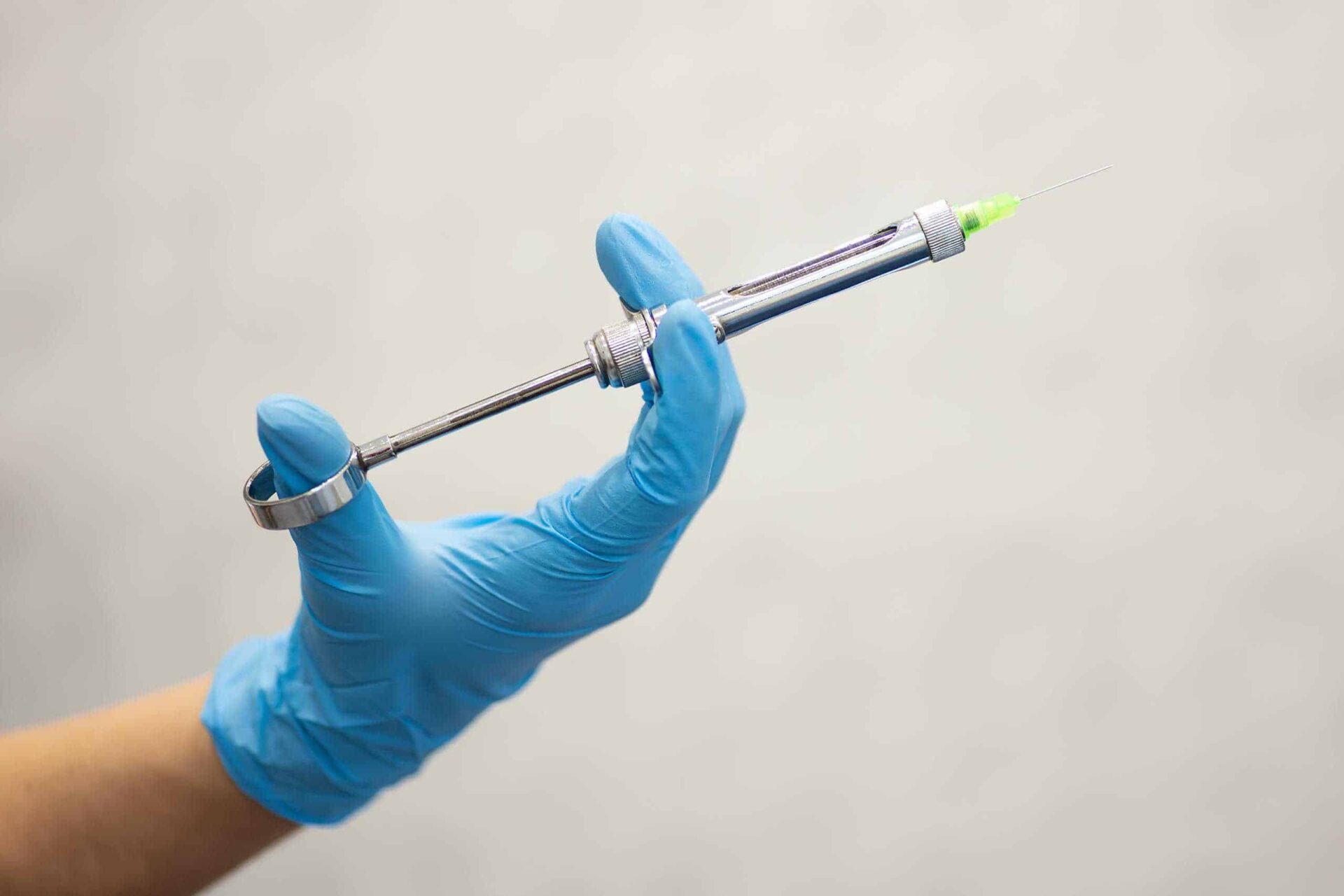
The area around the impacted wisdom tooth is numbed with local anaesthetic before surgery begins. The injection may cause a short-lived sting. During the operation, pressure, pushing, and vibration are normal sensations, but sharp pain should not be expected once the area is fully numb.
For a completely impacted tooth, the gum is opened and a small amount of bone covering the tooth may be removed. The tooth is often divided into sections before it is taken out. This is not a sign that something has gone wrong. Sectioning can allow the tooth to be removed while limiting contact with surrounding bone and the adjacent tooth. The area is then cleaned, the gum may be closed with stitches, and gauze is placed to help control bleeding.
In a multicentre series of 630 patients having all four wisdom teeth removed, the median operation time was 30 minutes (PubMed 12730831). Removing one impacted tooth will often take less time in the chair, including preparation, although depth, angle, and root shape can make the procedure shorter or longer.
Surgical planning choices: multiple teeth and nerve proximity
The number of wisdom teeth removed at once is a planning decision. There is no single correct approach. Removing the upper and lower wisdom teeth on the same side in one appointment is common. It means one anaesthetic and one recovery period, while the other side can usually be used for chewing. All four teeth can also be removed in one session when this is suitable. The 630-patient recovery study involved patients who had all four removed at once, and most quality-of-life measures improved within the first five days (PubMed 12730831).
The trade-off is that both sides may feel tender during the early recovery period, which can make eating more inconvenient. The decision is made according to the teeth's difficulty, the patient's schedule and anxiety, and the preferred recovery plan. Combining treatment into one appointment may also be practical when sedation is being used.
The roots of a lower wisdom tooth can be close to the nerve inside the jaw. If removing the entire tooth would carry a significant risk, a coronectomy may reduce that risk by removing the crown and retaining the roots. A meta-analysis of 34 studies involving 4,477 patients and 7,115 teeth found lower rates of inferior alveolar nerve injury and lingual nerve injury with coronectomy than with complete removal. It also reported a procedure-specific failure rate of 2.79% and further surgery in 3.63% of cases (PubMed 39956152).
Nerve-related complications should be discussed clearly, but permanent injury is uncommon. A review of 27 studies reported permanent lingual nerve damage after standard removal in 0.18% of cases. A technique involving additional retraction on the tongue side increased the risk of temporary injury, so it is not used routinely (PubMed 36848347). The important point is that nerve proximity should be assessed on imaging and used to guide the technique.
Recovery timeline after impacted wisdom tooth removal
Recovery after impacted wisdom tooth removal is usually described by stages.
First 24 hours
The blood clot in the socket is essential to healing. During the first day, avoid spitting, vigorous rinsing, drinking through a straw, or sucking at the area. Mild oozing can continue and is usually managed with gauze pressure. Use a cold pack on the outside of the cheek intermittently, and choose soft, lukewarm foods and drinks. Avoid hot food and drinks initially.
Continue brushing the other teeth from the first day, but keep the brush away from the extraction site. Do not rinse during the first 24 hours unless the treating team gives different instructions.
Days two to four
Swelling, mild bruising, and limited mouth opening are usually most noticeable in the first two days: in a diary study of 201 patients, 53% reported swelling on day 1 and 61% on day 2, falling to 10% by day 5 (PubMed 10555792). This can be a normal response to surgery rather than evidence that the wound is worsening.
After the first 24 hours, gentle rinsing may be advised. It should be gentle because forceful rinsing can disturb the clot. In the 630-patient study, chewing, speaking, and daily activity generally recovered within the first five days, while pain was slower to settle (PubMed 12730831).
The first week and beyond
Many patients return gradually to their usual diet by the end of the first week. Stitches are often removed at around one week when they are not dissolvable. The socket continues to fill and close beneath the gum over the following weeks and months, but this does not usually limit normal daily activity. Avoid smoking during the early healing period. Read our guide to smoking after tooth extraction for more detail.
Pain, dry socket, and swelling
Pain, dry socket, and swelling are part of recovery monitoring after impacted wisdom tooth removal. A Cochrane review involving 2,241 participants found that 400 mg ibuprofen was more likely to provide substantial pain relief over the first six hours than 1,000 mg paracetamol. Combining the two medicines performed better than either medicine alone (PubMed 24338830). This evidence does not replace an individual prescription. Stomach, kidney, and heart conditions, as well as blood-thinning medicines, can affect which pain relief is appropriate. Follow the plan provided by our dentists.
Dry socket occurs when the clot is lost too early. Typical symptoms are pain that becomes much worse two or three days after surgery, pain spreading towards the ear or temple, and a bad taste. The socket can be cleaned and dressed at the clinic, often improving over several days. Chlorhexidine reduced dry socket risk by about half in a meta-analysis, although it should only be used as advised by the treating team (PubMed 28189661). Preventive antibiotics are not automatically required. Their use depends on the patient's health and the clinical situation (PubMed 37612199). A broken jaw is a far rarer complication: a survey covering about 750,000 extractions recorded 37 mandibular fractures, an incidence of 0.0049%, most of them in patients older than 25, and such a break is then treated as a jaw fracture (PubMed 11815913). A broken jaw is a far rarer complication: a survey covering about 750,000 extractions recorded 37 mandibular fractures, an incidence of 0.0049%, most of them in patients older than 25, and such a break is then treated as a jaw fracture (PubMed 11815913).
Intermittent cold application during the first days after surgery can reduce swelling, pain, and restricted mouth opening. A review found intermittent application appeared more useful than continuous cooling, although differences between studies mean the findings should be interpreted cautiously (PubMed 30869171). Place the cold pack over a thin cloth rather than directly on the skin.
Clinic contact and cost factors
Contact the surgical team if pain is increasing after the third day, bleeding does not settle with gauze pressure, swelling is progressively making swallowing or opening the mouth more difficult, or fever develops. Ongoing numbness in the lip or tongue after the anaesthetic should also be reported. The key distinction is the direction of change. Normal recovery gradually improves, while a complication may cause symptoms to worsen after an initial improvement. You can contact Mosdent through our contact page or review the dentists at Mosdent.
The cost of impacted wisdom tooth removal depends on how many teeth are treated, whether they are partly or fully covered by bone, the complexity of the roots, and the imaging needed for safe planning. It may also vary according to local anaesthetic or sedation, the use of a coronectomy, surgical time, and follow-up requirements. International patients should also ask what is included in the treatment plan and whether additional imaging or review is billed separately. See our price list for current treatment information.
Let's plan the right treatment together.
Free Assessment→- 1.Ghaeminia H, Nienhuijs ME, Toedtling V, Perry J, Tummers M, Hoppenreijs TJ ve ark. Surgical removal versus retention for the management of asymptomatic disease-free impacted wisdom teeth. Cochrane Database Syst Rev. 2020;5(5):CD003879. PubMed 32368796
- 2.White RP Jr, Shugars DA, Shafer DM, Laskin DM, Buckley MJ, Phillips C. Recovery after third molar surgery: clinical and health-related quality of life outcomes. J Oral Maxillofac Surg. 2003;61(5):535-544. PubMed 12730831
- 3.Kang FW, Yuan XR, Li GC, Yang YFZ, Zhang XM, Hou GY. Coronectomy in Lower Third Molar Surgery: A Systematic Review and Meta-Analysis. J Oral Maxillofac Surg. 2025;83(5):601-615. PubMed 39956152
- 4.Lee J, Feng B, Park JS, Foo M, Kruger E. Incidence of lingual nerve damage following surgical extraction of mandibular third molars with lingual flap retraction: A systematic review and meta-analysis. PLoS One. 2023;18(2):e0282185. PubMed 36848347
- 5.Bailey E, Worthington HV, van Wijk A, Yates JM, Coulthard P, Afzal Z. Ibuprofen and/or paracetamol (acetaminophen) for pain relief after surgical removal of lower wisdom teeth. Cochrane Database Syst Rev. 2013;2013(12):CD004624. PubMed 24338830
- 6.Rodríguez Sánchez F, Rodríguez Andrés C, Arteagoitia Calvo I. Does Chlorhexidine Prevent Alveolar Osteitis After Third Molar Extractions? Systematic Review and Meta-Analysis. J Oral Maxillofac Surg. 2017;75(5):901-914. PubMed 28189661
- 7.Camps-Font O, Sábado-Bundó H, Toledano-Serrabona J, Valmaseda-de-la-Rosa N, Figueiredo R, Valmaseda-Castellón E. Antibiotic prophylaxis in the prevention of dry socket and surgical site infection after lower third molar extraction: a network meta-analysis. Int J Oral Maxillofac Surg. 2024;53(1):57-67. PubMed 37612199
- 8.Larsen MK, Kofod T, Starch-Jensen T. Therapeutic efficacy of cryotherapy on facial swelling, pain, trismus and quality of life after surgical removal of mandibular third molars: A systematic review. J Oral Rehabil. 2019;46(6):563-573. PubMed 30869171
- 9.Libersa P, Roze D, Cachart T, Libersa JC. Immediate and late mandibular fractures after third molar removal. J Oral Maxillofac Surg. 2002;60(2):163-5; discussion 165-6. PubMed 11815913
- 10.Conrad SM, Blakey GH, Shugars DA, Marciani RD, Phillips C, White RP Jr. Patients' perception of recovery after third molar surgery. J Oral Maxillofac Surg 1999;57:1288-94; discussion 1295-6. PubMed 10555792