
Jaw Fracture Treatment
Jaw fracture treatment depends on displacement: minimally displaced, stable fractures are held with wires or elastics, displaced ones with plates and screws.
- Urgent intervention
- Maxillofacial surgical experience
- Plate fixation
First consultation free · same-day reply · no price pressure
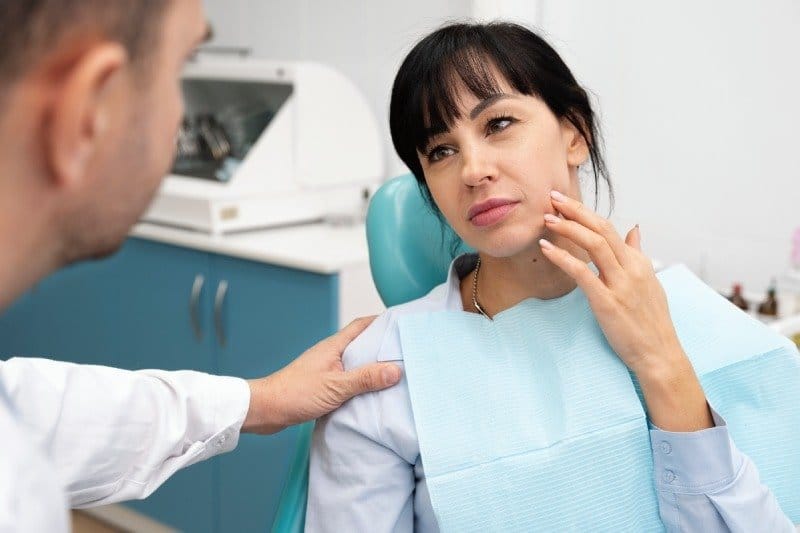
A jaw fracture is a break in the continuity of the lower or upper jaw after trauma, and it is an emergency assessed in hours rather than days. Treatment depends on how far the bone ends have moved: minimally displaced, stable fractures can be held with wires or elastics between the jaws, while displaced fractures need open reduction with plates and screws. For a lower jaw fracture, operating through the mouth or through the skin did not significantly change infection: pooling 1,317 patients across 11 comparative studies, the pooled relative risk was 0.94 (95% CI 0.63-1.39) (PubMed 38336352).
- 01This is trauma care, so it is not something to schedule around a flight. Across 37 studies and 27,994 patients in the Middle East and North Africa, the mandible was the most common fracture site, road traffic accidents the leading cause followed by falls, and the male to female ratio 4.5 to 1 (PubMed 34286698).
- 02Resorbable plates and titanium plates perform alike on the recorded outcomes. In 455 patients treated with resorbable implants across 18 studies, overall complications reached 19.8%, infection 6.8%, dehiscence 6.2% and non-union 1.1%; a direct comparison of 7 studies found adverse events in 18.0% of resorbable and 18.3% of metallic cases (PubMed 31592391).
- 03No antibiotic regimen has been shown superior. Reviewing 16 studies and 3,285 patients, of which 7 were randomised trials, the choice, timing and duration of antibiotics varied widely with substantial heterogeneity (P = 0.02, I2 = 69%) and no intervention came out ahead (PubMed 34711441).
- 04Treatment decisions for condylar fractures are made separately from those for the rest of the mandible. Combining 9 of 17 studies, closed reduction outperformed open reduction on maximum interincisal opening (SMD 0.80), laterotrusion (0.36) and protrusion (0.42), with the authors flagging heterogeneity and signs of publication bias (PubMed 38911430).
- 05Intermaxillary fixation means temporarily binding the jaws together with wires or elastics; it is a distinct method from plating the fracture itself. A written plan should name which one is intended, since the two differ in operating time, diet and follow-up.
/ How is Jaw Fracture Treatment Performed?
Jaw fracture, which occurs due to various causes such as a fall, a work accident or a traffic accident, is a problem that needs to be treated urgently and negatively affects a person's life. A jaw fracture with symptoms such as pain, swelling, difficulty chewing, and bleeding in the mouth can cause facial swelling when it occurs in the upper jaw.
A jaw fracture, which can be defined as a fracture of one or more of the bones that make up the jawbone, can also occur without any known cause. A stress fracture caused by grinding teeth for a long time or clenching the jaw is the most common type of jaw fracture that occurs without a known cause.
It is possible to treat a jaw fracture with different techniques. Resting the jaw with a strap or wire is often a preferred method to ensure that the jaw area remains motionless during the healing process. After the jawbone treatment is applied, the pain can be reduced and the patient's comfort can be increased with the help of different painkillers.
In case of an infection in a jaw fracture, antibiotic therapy should be started. Surgical intervention may be required, especially if the bones are significantly displaced, an infection occurs, or if the expected recovery cannot be achieved after a few weeks of healing.
| At a glance | |
|---|---|
| Duration | Case-dependent |
| Warranty | · |
| Materials Used | Maxillofacial surgical plates |
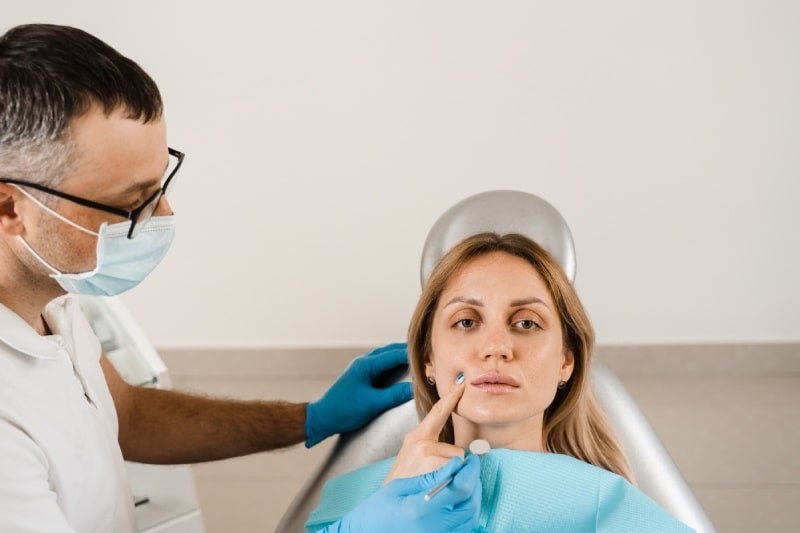
Treatment Process
- 01Examination & Imaging: Oral and jaw assessment with X-rays confirms the fracture and its extent.
- 02Anaesthesia: Local or, where needed, general anaesthesia is given for pain control.
- 03Stabilisation: Fractured bones are repositioned and held with plates, screws or wires, then monitored.
/ Jaw Fracture Diagnosis and Stabilization
The most commonly used treatment for a jaw fracture is to splint the jaw and wait for the jaw to heal by prescribing painkillers. At this stage, if the fracture is displaced, an X-ray can be performed to determine whether there is a fracture in the jaw or whether there is a problem with jaw bone resorption. If there is severe pain on the face or the mouth cannot be opened properly, an orthodontist or an oral surgeon should be consulted without delay.
Before starting treatment for a jaw fracture, the mouth and jaw are examined to determine whether there is a fracture. If there is a fracture in the jaw, it is necessary to decide whether surgery is necessary. At this stage, an X-ray is usually taken to determine whether the jaw fracture needs time to heal on its own. The purpose of jaw fracture treatment is to correct the jaw fracture and keep it in place until it heals. For this, a screw can be inserted into the bone or a screw plate can be used to stabilize the fracture site.
/ Jaw Fracture Treatment Duration and Symptoms
Jaw fracture treatment takes an average of 4 weeks. The healing process may vary depending on the size of the jaw fracture and the damage it causes for each patient. Depending on this, it can last up to 8 weeks.
The first treatment of the patient after the examination begins with anesthesia, so it is possible to prevent the patient from experiencing pain. In cases where the patient's teeth do not meet each other, the necessary treatment is performed. The patient is treated without any pain under the effect of anesthesia. Depending on the condition of the damage caused to the jaw, the bones are first put back in place. In case of bone loss, it may be necessary to add metal parts or bone. The jaw is connected through the use of wire.
The symptoms that may be caused by a jaw fracture can be listed as follows:
- A jaw fracture can cause increased pain, especially with the movement of the jaw.
- Significant swelling and bruising may occur in the area where the jaw fracture occurs, on the jaw or on the face.
- A jaw fracture can cause dislocation of the jaw bones and a significant asymmetry in the face. Shape differences may occur between the two sides of the face.
- Due to the fracture, there may be restriction in jaw movement, difficulty opening and closing the jaw.
/ Jaw Fracture Healing Time and Oral Care
The recovery time of a jaw fracture may vary depending on the patient's age, general health status, which bone region the fracture is located in, how many fragments the fracture is and similar elements. This period usually ranges from 4 to 8 weeks. The full recovery process is usually completed within 6 months.
In case of jaw fracture, oral care should be performed in a complete manner and due attention should be paid to oral hygiene. In addition to brushing your teeth regularly, it is also recommended to gargle. In order to prevent a possible infection, all the recommendations of the doctor must be fulfilled completely. In this way, it may be possible to experience a fast and healthy recovery process.
If abnormal swelling occurs in the area where the fracture is located after the first 7 days, it is necessary to consult a doctor. In case of possible bleeding, it is also important to go to the doctor without moving the fracture site. Patients should not move the jaw fracture area during the treatment process, and should also fully comply with all the recommendations of their doctors.
/ Things to Be Considered in Jaw Fractures
There are many different points that need to be considered in order for the treatment of jaw fracture to be successful and for the process to proceed correctly. In order to experience a fast and healthy recovery process, it is necessary to regularly use antibiotics and pain reliever-derived medications prescribed by the doctor. It is important for patients to follow a nutrition program in which liquid and soft foods are predominant throughout the healing process, and to take care not to chew.
One of the most important issues in the healing process is to ensure the best oral hygiene. It should be cleaned with a soft brush and mouthwash should be used, taking care not to damage the periphery of the applied wires. An ice compress should be made to reduce the swelling within the first 24 hours following the surgical operation. In this context, the ice bag is kept in the area for 10 minutes and removed for 10 minutes. The swelling should start to go down within the first 4 to 7 days. It is necessary to consult a doctor, as the swelling may start to increase instead of going down, which may be a harbinger of infection.
/ Incision Care and Recovery Restrictions in Jaw Fractures
Maintaining the incision site correctly and regularly is important both to ensure infection control and to prevent scarring. Due to the stitches in the mouth, the inside of the mouth should be lightly brushed and antiseptic mouthwash should be used. The bandage should not be removed until the stitches inside the mouth are removed. After the sutures are removed, the incision area should be cleaned with soapy water or peroxide and topical antibiotics should be applied. Staying away from the sun's rays and using sunscreen creams for the 6-month period following the surgery is extremely important to prevent scarring.
Due to the general anesthesia applied during the operation, it is recommended to avoid tasks that require attention for the first 24 hours. In addition, care should be taken not to use alcohol and cigarettes until the treatment is completed. The wires, which are one of the extremely important elements of the treatment, may loosen over time, and when they become excessively loose, there may be a need for intervention.
/ Prices for Jaw Fracture Treatment
Fractures may occur in one or more places of the jawbone as a result of traumatic events such as falls, blows and accidents. Due to a jaw fracture, symptoms such as swelling, pain, bruising, difficulty chewing and speaking may occur.
Prices for jaw fracture treatment may vary depending on many different factors. The first of these factors is the location and type of fracture. It is possible for a jaw fracture to be single-sided or double-sided, simple or complicated. Complicated fractures can cause fragmentation or displacement of bone fragments, which can affect the course of treatment and, accordingly, their price. In addition, the severity of the fracture, the expertise and experience of the doctor performing the treatment, and the pricing policy of the clinic where the treatment is performed can also be listed among the elements that have an impact on the prices of jaw fracture treatment.
In order to determine the prices of jaw fracture treatment, oral and dental examination of the patient should be performed first. However, jaw fracture surgery prices can be determined after patient-specific treatment planning.
- 1.Jaber MA, AlQahtani F, Bishawi K, Kuriadom ST. Patterns of Maxillofacial Injuries in the Middle East and North Africa: A Systematic Review. Int Dent J 2021;71:292-299. PubMed 34286698
- 2.Shah A, Perez-Otero S, Tran D, Aponte HA, Oh C, Agrawal N. Infection Rates of an Intraoral Versus Extraoral Approach to Mandibular Fracture Repairs are Equal: A Systematic Review and Meta-Analysis. J Oral Maxillofac Surg 2024;82:449-460. PubMed 38336352
- 3.Chocron Y, Azzi AJ, Cugno S. Resorbable Implants for Mandibular Fracture Fixation: A Systematic Review and Meta-Analysis. Plast Reconstr Surg Glob Open 2019;7:e2384. PubMed 31592391
- 4.Dawoud BES, Kent S, Henry A, Wareing J, Chaudry H, Kyzas P, et al. Use of antibiotics in traumatic mandibular fractures: a systematic review and meta-analysis. Br J Oral Maxillofac Surg 2021;59:1140-1147. PubMed 34711441
- 5.Shobha ES, Nainoor N, Prashanth NT, Rangan V, Malick R, Shetty S. Comparative Evaluation of Open Reduction with Internal Fixation Against Closed Reduction Methods for Condylar Fracture Management: A Systematic Review and Meta- analysis. J Maxillofac Oral Surg 2024;23:475-487. PubMed 38911430

Who is this treatment for?
- Pain increasing with jaw movement
- Significant swelling and bruising on the jaw or face
- Significant facial asymmetry and differences in facial shape
- Difficulty opening and closing the mouth
- Difficulty chewing and bleeding in the mouth
- Significant displacement of the jaw bones
- No expected recovery after several weeks of healing
Doctors specialising in this treatment


Frequently asked
01Does a jaw fracture always require surgery?+
Minimally displaced or stable fractures can be managed with intermaxillary fixation (wiring or elastics); displaced fractures require plate-and-screw fixation. A jaw fracture is the breaking of one or more of the bones forming the jaw, and the pattern of that break decides the approach.
02What does the recovery process involve?+
A soft diet is followed for the first 4-6 weeks; swelling subsides substantially within 2-3 weeks. Complete bone healing takes 8-12 weeks.
Oral Surgery
Bone Graft (Membrane)
A bone graft rebuilds deficient jawbone with graft material, in most cases under a barrier membrane, so an implant can be placed, usually 4-6 months later.
Explore→02Maxillofacial Surgery
Maxillofacial surgery treats the facial skeleton beyond the teeth: jaw fractures, orthognathic correction, jaw cysts and tumours, and TMJ surgery.
Explore→03Sedation & General Anaesthesia
Sedation and general anaesthesia change consciousness, not the dental work: conscious sedation leaves the patient responsive, general anaesthesia does not.
Explore→04Implant
A dental implant is a titanium screw replacing a lost tooth root; it usually fuses with bone in 3-6 months, then a zirconium or porcelain crown is fitted.
Explore→05Wisdom Tooth Extraction
Wisdom tooth extraction removes a third molar at the back of the jaw under local anaesthesia, sectioning it if impacted; not every wisdom tooth must come out.
Explore→06Oral & Maxillofacial Surgery
Oral and dental surgery, a four-year dental specialty in Turkey, covers impacted tooth removal, implant placement, root-end resection and jaw fracture repair.
Explore→Speak with your doctor about this treatment.
Not sure which treatment fits? Tell us what’s wrong →