
Maxillofacial Surgery
Maxillofacial surgery treats the facial skeleton beyond the teeth: jaw fractures, orthognathic correction, jaw cysts and tumours, and TMJ surgery.
- Comprehensive maxillofacial treatment
- Reconstructive surgery
- Multidisciplinary approach
First consultation free · same-day reply · no price pressure
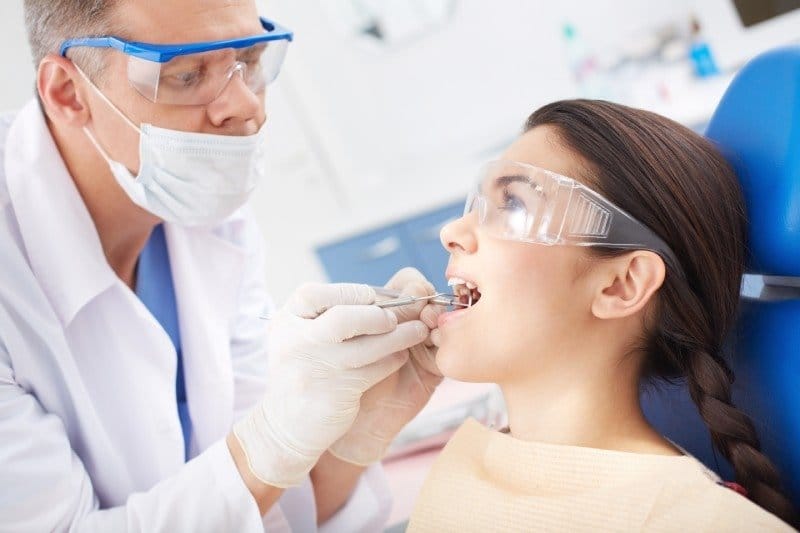
Maxillofacial surgery treats the facial skeleton, going beyond the tooth and its supporting bone: jaw fractures, orthognathic correction, cysts and tumours of the jaws, temporomandibular joint surgery and salivary gland disease. The title does not map onto one qualification. Under Turkish Law 1219, oral and maxillofacial surgery is a five-year medical specialty in Schedule 1, open to medical graduates, while oral and dental surgery is a separate four-year dental specialty heading the nine-entry Schedule 2. Before travelling for any of these operations, ask which of the two registers your named surgeon is on, because that defines the legal scope of what they may perform.
- 01Dentoalveolar surgery and craniofacial surgery are different scopes. The first addresses the tooth and the bone holding it; the second addresses the position, integrity and pathology of the jaw and facial bones. Maxillofacial surgery sits mostly in the second group, which is why theatre facilities and an anaesthesia team are part of the question.
- 02Jaw cyst treatment includes surveillance, and quotes should say for how long. Across 5 case series and 323 odontogenic keratocyst lesions, recurrence ranged from 7% to 28% depending on the method used, with the risk of bias too high to name a single best technique (PubMed 24815763).
- 03Facial trauma has a measured pattern in this region. A review of 37 studies and 27,994 patients across the Middle East and North Africa found the mandible to be the most common fracture site, road traffic accidents the leading cause followed by falls, and a male to female ratio of 4.5 to 1 (PubMed 34286698).
- 04Where orthognathic surgery is indicated for sleep apnoea, the outcome is quantified. Pooling 31 studies and 1,597 patients, maxillomandibular advancement lowered the apnoea-hypopnoea index by 41.87 events per hour and the Epworth sleepiness score by 8.69 points, with no major complications or deaths reported (PubMed 39764681).
- 05The anaesthesia carries its own measured risk band, separate from the surgery. Over 3,742,068 dental procedures under deep sedation or general anaesthesia in Ontario between 1996 and 2015, 3 deaths were recorded, an adjusted rate of 0.8 per million cases and 0.25 per million for serious injury (PubMed 31545669).
/ How Maxillofacial Treatment Is Planned and What It Covers
Maxillofacial surgery, in other words oral and maxillofacial surgery, is the field that deals with the diagnosis and treatment of diseases affecting the mouth, jaw, face and neck. Diseases, disorders and injuries in the hard and soft tissues of the mouth, teeth and jaw area that occur in all age groups and methods for their diagnosis and correction are within the scope of oral and maxillofacial surgery.
Treatment of complex dental problems and medical conditions related to the mouth, teeth, jaw and face is performed within the scope of oral and maxillofacial surgery. Oral and maxillofacial surgery focuses mainly on facial reconstructive surgery, facial trauma surgery and dental procedures involving the jawbone, such as wisdom tooth extractions and dental implants.
There are many different types of maxillofacial treatments. The most common types of maxillofacial treatment are listed below:
Implant Treatment
It is applied to correct one or more missing teeth. Implants, which are artificial tooth roots, support the restoration of the missing tooth while helping to stop or prevent jawbone loss.
The suitability of implant treatment is determined by a detailed examination and evaluation process. Teeth and gums are thoroughly examined. The assessment of bone density and quantity is very important for the success of implant treatment. X-rays and CT scans can be used to ensure that there is sufficient bone structure for the implants to be placed and to determine exactly where the implants should be placed.
| At a glance | |
|---|---|
| Duration | Case-dependent |
| Warranty | · |
| Materials Used | Full operating theatre sets |
Treatment Process
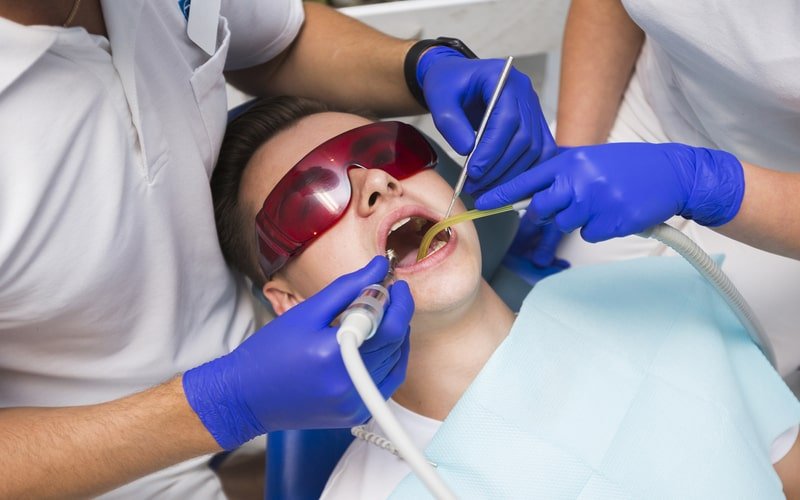
- 01Consultation & Diagnosis: Clinical exam plus X-ray/CT assess the bone and define the surgical plan.
- 02Surgical Procedure: Implant placement, simple or surgical tooth extraction is carried out.
- 03Cyst / Tumour Treatment: Where needed, enucleation or marsupialisation treats the lesion, followed by aftercare.
/ Tooth Extraction in Maxillofacial Treatment
The process of completely removing one or more teeth from the mouth is called tooth extraction. Although permanent teeth are intended to survive for life, tooth extraction may become necessary for some reasons. Tooth extractions can be simple or surgical. How the tooth extraction will be performed is determined by the shape, size, current condition and position of the tooth in the mouth. Extraction of teeth that appear above the gums and that the dentist can remove in one piece is called simple extraction.
Surgical extraction is a more complicated process. Surgical extraction involves the removal of gum tissue, bone or both, and the tooth may need to be removed in pieces. Since wisdom teeth are impacted in many people, they are the last teeth to erupt and usually the first teeth to be extracted.
In cases where tooth extraction is necessary, the patient is first consulted. Depending on the amount of bone, tooth or both to be removed, the patient may be asked to stop taking certain medications for a while before the procedure. Before the extraction, a dental x-ray is taken to evaluate the curvature and angle of the tooth root. After anesthesia is administered, the procedure begins.
In cases where the tooth is hidden under the gum tissue or bone, it may be necessary to cut the gum or remove the obstructing bone area. Stitches or additional procedures may be needed to control bleeding after extraction. The dentist or surgeon places a thick layer of gauze over the extraction site. The patient is asked to bite on it to absorb the blood and start the clotting process.
/ Cyst and Tumor Treatments in the Mouth Area
Sacs filled with air, liquid or semi-liquid/solid matter are called cysts; abnormal tissue masses are called tumors. One of the most important areas of oral and maxillofacial surgery is known as odontogenic cysts and tumors. Clinical and radiological examination and biopsy are used to diagnose cysts and tumors in the oral region.
Odontogenic cysts can be seen due to reasons such as progressive tooth and gum infections, impacted teeth, incompletely extracted and remaining roots, traumas, some developmental anomalies, incomplete and incorrectly applied treatments and genetic factors.
Enucleation and marsupialization methods are used in the treatment of cysts in the oral region. Enucleation is the complete removal of the cyst in a single session. In such cases, the infected root, tooth or impacted tooth that is thought to be the cause of the cyst is also removed simultaneously. In cases where the location and size of the cyst does not allow it to be removed in a single session, a marsupialization procedure is used. This procedure reduces the pressure inside the cyst and shrinks it. Once the cyst cavity is reduced, the cyst is completely removed with the enucleation procedure.
It is usually possible to treat benign tumors arising from the tooth and surrounding tissues under clinical conditions. For the treatment of malignant tumors, patients are referred to the relevant specialties.
/ Suitability and Advantages of Maxillofacial Treatment
Maxillofacial treatments;
- People who have difficulty chewing, swallowing or biting food
- Tooth embedded in the palate or complicated teeth that need to be extracted
- Chronic jaw or jaw joint pain
- Fractures in the jaw and face
- Excessive wear and tear of the teeth
- People with problems such as difficulty speaking, loud breathing and snoring due to abnormal shape and size of the mouth opening
- Cystic and tumor-like formations in the jaw
- Infection in the mouth, jaw and face
- Deformities that cause aesthetic and functional disorders in the mouth, jaw and face
- Soft tissue diseases in the oral region
- Intra-osseous lesions of dental origin
- Cleft palate and cleft lip
- It can be applied to people who have bone necrosis in the jaw due to chemotherapy and radiotherapy.
Maxillofacial treatment includes surgical procedures to treat many different conditions related to the teeth, jaw, mouth and face. There are different options for aesthetic corrections within the scope of oral and maxillofacial surgery. With dental implant and maxillofacial surgery procedures, new teeth can be made to replace tooth loss due to various reasons. At the same time, a more aesthetic smile can be achieved by correcting the jaw structure.
Maxillofacial treatments can treat severe tooth decay, fractures or other dental problems. The treatment can help to reduce pain, optimize chewing function and improve overall oral health.
Some people may have jaw anomalies, either congenital or due to accidents. It is possible to correct such problems with oral and maxillofacial surgery procedures. Dental implant treatment helps to eliminate tooth deficiencies that negatively affect daily life and can cause aesthetic concerns. Thus, it is possible to provide the patient with a similar appearance and function to natural teeth.
In addition to those listed above, it is possible to improve the general health status and quality of life of patients by applying maxillofacial treatment, that is, oral and maxillofacial surgery treatments in many different situations.
/ Things to Consider Before and Early After Maxillofacial Treatment
- Maxillofacial treatments are aimed directly at the disease. Depending on the treatment to be applied, local anesthesia, general anesthesia or conscious sedation may be preferred.
- If the patient has a chronic disease or regularly used medication, he/she should inform his/her doctor before oral and maxillofacial surgery treatment.
- X-ray records taken during the treatment process, the tests given and the medications used should be shared with the doctor.
- Especially in jaw surgeries, anesthetic drugs with significant effects on the respiratory and circulatory system are used. For this reason, support from physicians specialized in different fields can be obtained for consultation when needed.
- If the oral and maxillofacial surgery procedure will be performed under local anesthesia, you should go to the operation on a full stomach unless otherwise instructed by the doctor.
- Oral hygiene is very important before surgery. Therefore, teeth should be brushed before coming to the surgery.
- Maxillofacial treatments performed under local anesthesia usually include procedures such as extraction of impacted teeth. Postoperative wound care in accordance with the surgeon's recommendations is important for a fast and healthy healing process.
/ Recovery Instructions and Prices After Maxillofacial Treatment
- After the surgery, the sterile gauze pack placed in the surgical site should be bitten and held tightly for 30 minutes.
- After 30 minutes, the gauze pack can be removed. There may be slight bleeding after the first pack is removed. Bleeding may increase if blood accumulates in the mouth and is spat out or if the wound is pressed with the tongue. In such a case, the blood can be swallowed gently or gently transferred out of the corner of the mouth. If there is severe bleeding after the first gauze pack has been removed, a second pack may be needed.
- You can start eating 2 hours after the surgery and gargling and brushing your teeth 1 day later. However, a light nutrition program should be preferred, food should not be eaten with the surgical site, and consumption of very cold, very hot, acidic and excessively spicy foods should be avoided.
- Smoking should be avoided for 1 week after surgery as it may cause the risk of developing an infection called "alveolitis" in the surgical site.
Maxillofacial Treatment Prices
Maxillofacial treatment prices may vary depending on factors such as the scope of the treatment to be applied, the complexity of the procedure, the experience of the doctor who will perform the application and the price policy of the clinic where the application will be performed.
- 1.Law 1219 on the Practice of Medicine and its Branches, Schedules 1 and 2 (Turkish specialty registers and training durations). Legislation Information System
- 2.Antonoglou GN, Sándor GK, Koidou VP, Papageorgiou SN. Non-syndromic and syndromic keratocystic odontogenic tumors: systematic review and meta-analysis of recurrences. J Craniomaxillofac Surg 2014;42:e364-71. PubMed 24815763
- 3.Jaber MA, AlQahtani F, Bishawi K, Kuriadom ST. Patterns of Maxillofacial Injuries in the Middle East and North Africa: A Systematic Review. Int Dent J 2021;71:292-299. PubMed 34286698
- 4.Walker A, Kassir MF, Sama V, Nguyen SA, Abdelwahab M. Maxillomandibular Advancement Safety and Effectiveness in Obstructive Sleep Apnea: Systematic Review and Meta-Analysis. Otolaryngol Head Neck Surg 2025;172:1142-1154. PubMed 39764681
- 5.El-Mowafy A, Yarascavitch C, Haji H, Quiñonez C, Haas DA. Mortality and Morbidity in Office-Based General Anesthesia for Dentistry in Ontario. Anesth Prog 2019;66:141-150. PubMed 31545669
- 6.Oginni FO, Alasseri N, Ogundana OM, Famurewa BA, Pogrel A, Al-Moraissi EA. An evidence-based surgical algorithm for management of odontogenic keratocyst. Oral Maxillofac Surg 2023;27:201-212. PubMed 35476304

Who is this treatment for?
- Difficulty chewing, swallowing or biting food
- Teeth embedded in the palate or complicated teeth requiring extraction
- Chronic jaw or jaw joint pain
- Fractures in the jaw and face area
- Cystic or tumor-like formations in the jaw
- Infections in the mouth, jaw and face area
- Cleft palate and cleft lip
Doctors specialising in this treatment

Frequently asked
01What conditions does maxillofacial surgery address?+
Facial fractures, tumours, congenital anomalies (cleft palate/lip), temporomandibular joint disorders, and salivary gland pathologies are the main areas of expertise. Sleep-disordered breathing is one measurable example: pooling 31 studies and 1,597 patients, maxillomandibular advancement lowered the apnoea-hypopnoea index by 41.87 events per hour.
02How is treatment planned?+
Detailed pre-operative planning uses CBCT and panoramic X-rays; complex cases benefit from 3D models and virtual surgical planning.
Oral Surgery
Sedation & General Anaesthesia
Sedation and general anaesthesia change consciousness, not the dental work: conscious sedation leaves the patient responsive, general anaesthesia does not.
Explore→02Implant
A dental implant is a titanium screw replacing a lost tooth root; it usually fuses with bone in 3-6 months, then a zirconium or porcelain crown is fitted.
Explore→03Wisdom Tooth Extraction
Wisdom tooth extraction removes a third molar at the back of the jaw under local anaesthesia, sectioning it if impacted; not every wisdom tooth must come out.
Explore→04Oral & Maxillofacial Surgery
Oral and dental surgery, a four-year dental specialty in Turkey, covers impacted tooth removal, implant placement, root-end resection and jaw fracture repair.
Explore→05Jaw Correction
Jaw correction (orthognathic) surgery cuts and repositions one or both jaws at bone level to correct skeletal discrepancies that tooth movement cannot close.
Explore→06Jaw Fracture Treatment
Jaw fracture treatment depends on displacement: minimally displaced, stable fractures are held with wires or elastics, displaced ones with plates and screws.
Explore→Speak with your doctor about this treatment.
Not sure which treatment fits? Tell us what’s wrong →