A light-cured composite filling is hardened before the appointment ends, so the main reason to delay eating is numbness. Wait until normal feeling returns, usually after a few hours, to avoid biting your cheek, lip or tongue. Smoking will not normally dislodge a permanent filling, but it can permanently stain composite, especially in visible teeth (PubMed 36602255).
After a filling: eating and early instructions
After a dental filling, most patients ask three practical questions: When can I eat? Can I smoke? Is this sensitivity normal? Advice about these questions is often confused with instructions given after a tooth extraction, although the mouth is left in a very different condition. A filling does not create an extraction wound or require protection of a blood clot.
This guide focuses on permanent composite fillings. For an overview of the procedures themselves, see our pages about aesthetic fillings and composite fillings.
With a modern light-cured composite filling, the material is hardened when the dentist applies the curing light. By the end of the appointment, the restoration is ready to withstand normal chewing. The main reason to wait is usually the local anaesthetic, not the filling.
While the lip, cheek or tongue is numb, it is easy to bite the soft tissues without noticing. The practical rule is to wait until normal feeling has returned before chewing. For many patients, this takes a few hours. Once the numbness has worn off, there is usually no special list of foods that must be avoided. During the first day or two, however, avoiding extremely hard foods and very hot or cold drinks may help if the tooth feels sensitive.
A temporary filling is different. Temporary material may be placed between root canal appointments and is not intended to function like a permanent restoration. In that situation, follow the specific eating instructions given by the dentists at Mosdent. You can read more about root canal treatment.
Early sensitivity and filling pain after a filling
Filling pain and sensitivity after treatment can vary by trigger and timing.
Mild sensitivity during the first few days can occur, particularly after a deep cavity has been cleaned. Cold water, hot tea or sweet foods may cause a brief sensation that stops soon after the trigger is removed. The gum around the tooth may also feel slightly tender because bands, wedges or other instruments can touch it during treatment.
There is no general reason to stop cleaning between the teeth. Floss carefully and notice whether it catches, shreds or leaves fibres at the filling edge. Persistent catching may mean that the contact or margin needs checking.
Short, mild sensitivity to hot or cold can be expected for a few days after treatment. This does not automatically mean the filling was placed incorrectly. A review of 16 randomised clinical trials found no difference in postoperative sensitivity or other clinical outcomes between conventional layered composite placement and bulk-fill techniques (PubMed 32785019). A further meta-analysis of posterior restorations reported a similar result (PubMed 35031879).
Pain when biting in one precise spot is different. It can indicate that the filling is slightly high in the bite. A short adjustment appointment often resolves this, so it is better to contact the clinic rather than continue chewing on a painful tooth.
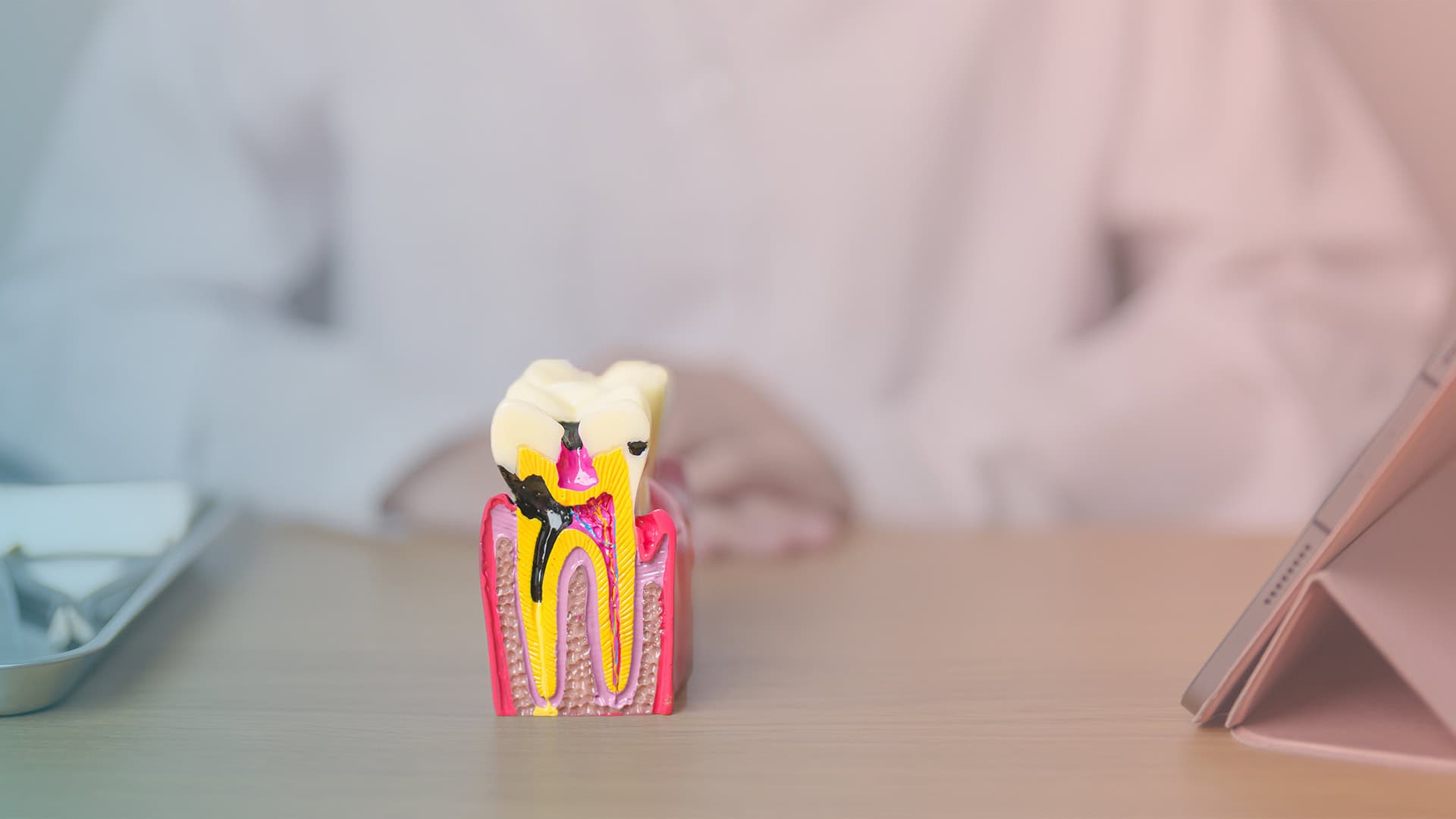
Pain that becomes stronger instead of settling, starts without a trigger, wakes you at night or feels throbbing needs reassessment. In these cases, the issue may involve the tooth's inner tissues rather than the filling itself. This is more relevant when the original decay was deep, and root canal treatment may need to be considered.
Smoking after a dental filling
For a permanent filling, there is no extraction-style mechanical waiting period. A filling does not leave an open socket, and smoking will not normally make a properly placed permanent composite restoration fall out. The more measurable concern is colour.
A systematic review of 13 laboratory studies found that conventional cigarette smoke caused irreversible colour change in composite restorations. The review found less colour change with electronic cigarettes and heated tobacco products, and suggested that some of this change may be reduced by polishing or bleaching, but the evidence for those products was limited (PubMed 36602255).
One laboratory experiment exposed composite discs to the equivalent of 20 cigarettes per day for three weeks. The average colour difference was 27.1 in the cigarette-smoke group and 3.9 in the heated-tobacco-aerosol group. These are laboratory measurements, not a direct prediction of what will happen in every mouth, and the study received partial tobacco-industry funding (PubMed 29251454). A colour difference around 2.7 is often discussed as a clinical acceptability threshold, which helps explain why a large laboratory difference would be visible rather than trivial (PubMed 32891404).
The practical conclusion is straightforward. Smoking is not normally a reason to delay chewing after a permanent filling, but it matters for the appearance of composite, particularly on front teeth. Once composite has become stained, whitening gel does not simply restore the original colour. Polishing or surface replacement may be needed. Smoking also affects the gums and general oral health, which can indirectly shorten the useful life of a filling because the restoration depends on the health of the surrounding tooth and tissues.
Aesthetic filling and composite filling
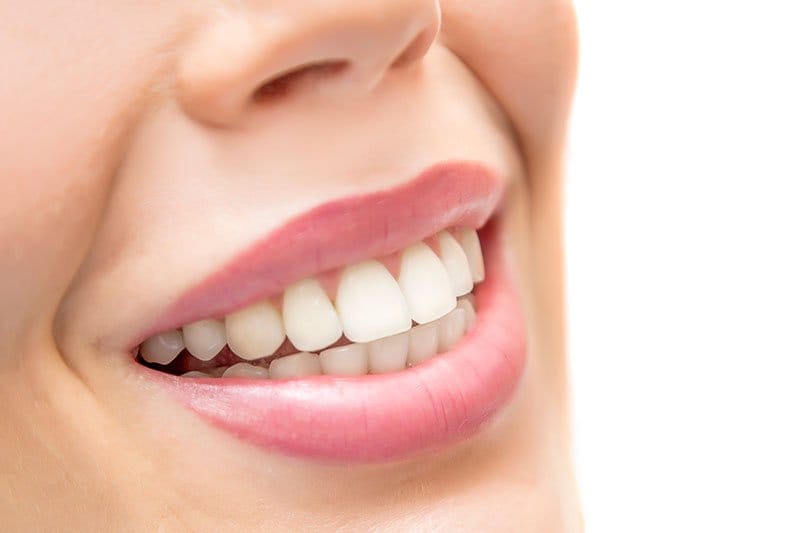
In practice, these are not two different materials. "Aesthetic filling" describes a tooth-coloured composite restoration used where appearance matters, often in the front teeth. Composite is the material. Aesthetic filling is the way the treatment is described when colour, shape and surface detail are especially important. It is not a separate material category.
In a visible tooth, composite is not necessarily placed as one flat shade. Natural enamel and dentine have different levels of colour and translucency, so the dentists at Mosdent may use layers with different shades and consistencies. The surface is shaped to reflect the texture and contours of the neighbouring teeth, then polished to produce a natural-looking reflection. The technique matters. One clinical review reported more marginal staining when enamel was only etched and bonded without bevel preparation, while bevelled enamel margins reduced changes in form (PubMed 25773188).
The same review found a median 10-year success rate of 95% for Class III anterior restorations and 90% for Class IV restorations involving the incisal edge (PubMed 25773188). Another review found annual failure rates between 0% and 4.1% for anterior restorations. Restorations placed because of decay or fracture more often failed through fracture, while those placed for aesthetic reasons more often developed colour or shape concerns (PubMed 26303655).
If substantial tooth structure has been lost, a direct filling may not be the most suitable option. Partial ceramic restorations are a separate planning decision, and one review reported a three-year survival rate of 93.7% for lithium disilicate restorations in posterior teeth (PubMed 39558793). Adding composite to an otherwise sound tooth for a cosmetic change is usually called bonding. See our bonding guide for the distinction.
Filling cost factors and longevity
The cost of a filling depends on the tooth and the work required, rather than on the word "aesthetic" alone. Factors include the size and depth of the cavity, the number of surfaces involved, whether the tooth is visible when smiling, the number of shades and layers needed, and whether an old restoration must be removed. A consultation may also identify the need for bite adjustment, gum management, repair, or a different restoration altogether.
For international patients, the treatment plan may also involve an examination, diagnostic imaging and appointment scheduling around travel. Our dentists can explain which elements are clinically necessary before treatment begins. See our transparent price list for current treatment information.
There is no single reliable number of years for every composite filling. In a systematic review of posterior composite restorations in adults, the failure rate was 1.55 per 100 restoration-years, with recurrent decay the most common biological cause. Recurrent decay was more often reported after the third year (PubMed 26003655). In a large practice-based study, annual failure rates ranged from 2.3% to 7.9%, with higher risk for molars, multi-surface fillings and root-filled teeth (PubMed 26790901).
Regular brushing, cleaning between the teeth and routine examinations help reduce the risk of decay returning at the edge. A sound amalgam filling does not generally need removal simply because it is grey. A decision to replace it should consider leakage, recurrent decay, fracture and appearance in the context of the individual tooth. If you have concerns after treatment, contact Mosdent or learn more about our dentists.
Let's plan the right treatment together.
Free Assessment→- 1.Paolone G, Pavan F, Mandurino M, Baldani S, Guglielmi PC, Scotti N, et al. Color stability of resin-based composites exposed to smoke. A systematic review. J Esthet Restor Dent 2023;35(2):309-321. PubMed 36602255, https://pubmed.ncbi.nlm.nih.gov/36602255/
- 2.Zhao X, Zanetti F, Majeed S, Pan J, Malmstrom H, Peitsch MC, et al. Effects of cigarette smoking on color stability of dental resin composites. Am J Dent 2017;30(6):316-322. PubMed 29251454, https://pubmed.ncbi.nlm.nih.gov/29251454/ (the study was partly funded by Philip Morris International; cited only for its laboratory colour measurements)
- 3.Arbildo-Vega HI, Lapinska B, Panda S, Lamas-Lara C, Khan AS, Lukomska-Szymanska M. Clinical effectiveness of bulk-fill and conventional resin composite restorations: systematic review and meta-analysis. Polymers (Basel) 2020;12(8):1786. PubMed 32785019, https://pubmed.ncbi.nlm.nih.gov/32785019/
- 4.Kunz PVM, Wambier LM, Kaizer MDR, Correr GM, Reis A, Gonzaga CC. Is the clinical performance of composite resin restorations in posterior teeth similar if restored with incremental or bulk-filling techniques? A systematic review and meta-analysis. Clin Oral Investig 2022;26(3):2281-2297. PubMed 35031879, https://pubmed.ncbi.nlm.nih.gov/35031879/
- 5.Heintze SD, Rousson V, Hickel R. Clinical effectiveness of direct anterior restorations - a meta-analysis. Dent Mater 2015;31:481-95. PubMed 25773188, https://pubmed.ncbi.nlm.nih.gov/25773188/
- 6.Demarco FF, Collares K, Coelho-de-Souza FH, Correa MB, Cenci MS, Moraes RR, et al. Anterior composite restorations: A systematic review on long-term survival and reasons for failure. Dent Mater 2015;31:1214-24. PubMed 26303655, https://pubmed.ncbi.nlm.nih.gov/26303655/
- 7.Ástvaldsdóttir Á, Dagerhamn J, van Dijken JW, Naimi-Akbar A, Sandborgh-Englund G, Tranæus S, et al. Longevity of posterior resin composite restorations in adults - A systematic review. J Dent 2015;43:934-54. PubMed 26003655, https://pubmed.ncbi.nlm.nih.gov/26003655/
- 8.Laske M, Opdam NJ, Bronkhorst EM, Braspenning JC, Huysmans MC. Longevity of direct restorations in Dutch dental practices. Descriptive study out of a practice based research network. J Dent 2016. PubMed 26790901, https://pubmed.ncbi.nlm.nih.gov/26790901/
- 9.Mendes LT, Pedrotti D, Casagrande L, Lenzi TL. Risk of failure of repaired versus replaced defective direct restorations in permanent teeth: a systematic review and meta-analysis. Clin Oral Investig 2022;26:4917-4927. PubMed 35362754, https://pubmed.ncbi.nlm.nih.gov/35362754/
- 10.Morais Sampaio GA, Rangel Peixoto L, Vasconcelos Neves G, Nascimento Barbosa DD. Effect of mouthwashes on color stability of composite resins: A systematic review. J Prosthet Dent 2021;126:386-392. PubMed 32891404, https://pubmed.ncbi.nlm.nih.gov/32891404/
- 11.Prott LS, et al. Survival and complications of partial coverage restorations on posterior teeth - a systematic review and meta-analysis. J Esthet Restor Dent 2025;37:620-641. PubMed 39558793, https://pubmed.ncbi.nlm.nih.gov/39558793/
- 12.Worthington HV, Khangura S, Seal K, Mierzwinski-Urban M, Veitz-Keenan A, Sahrmann P, et al. Direct composite resin fillings versus amalgam fillings for permanent posterior teeth. Cochrane Database Syst Rev 2021;8:CD005620. PubMed 34387873, https://pubmed.ncbi.nlm.nih.gov/34387873/