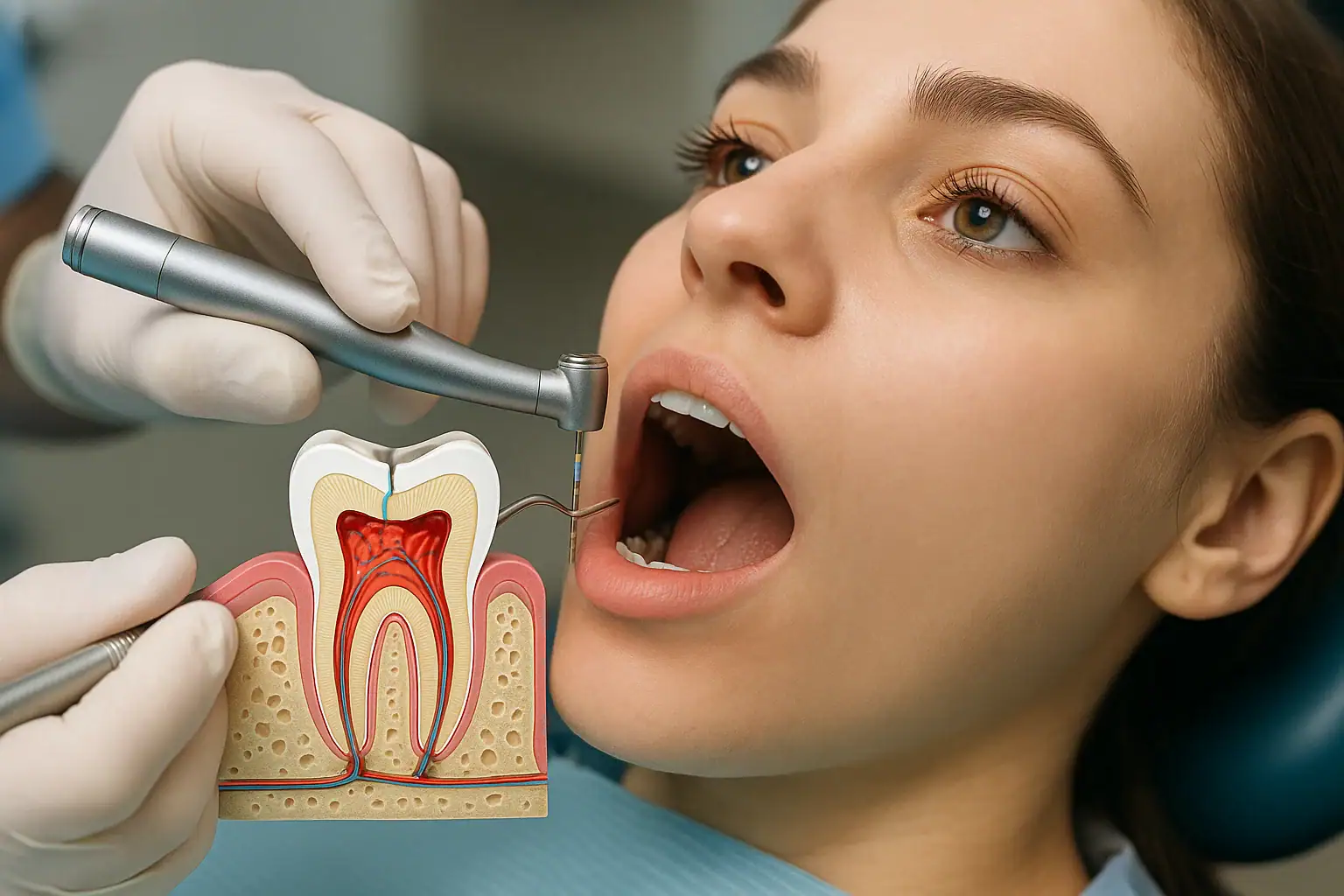
A root canal is the endodontic procedure that removes infected or inflamed pulp, the nerve and blood vessel tissue inside a tooth, then cleans, shapes and fills the canal system with gutta-percha so the natural tooth can stay in the mouth. Chair time runs about 30 to 45 minutes for a single-canal front tooth and 60 to 90 minutes or more for a molar with three or four canals. Pooled results from 42 longitudinal clinical studies put the success rate of primary root canal therapy at 92.6% under loose radiographic criteria and 82.0% under strict criteria (PubMed 35334111).
- 01Root canal treatment removes the pulp, not the tooth: the canal is cleaned, shaped and sealed with gutta-percha, and the crown of the tooth is then rebuilt with a filling or a crown.
- 02Success depends on how it is measured: 92.6% (95% CI 90.5-94.8) under loose criteria, meaning a shrinking periapical lesion, against 82.0% (95% CI 79.3-84.8) under strict criteria, meaning complete resolution, pooled from 42 studies (PubMed 35334111).
- 03Survival is a different number from success: pooled tooth survival after non-surgical root canal treatment was 86% at 2 to 3 years, 93% at 4 to 5 years and 87% at 8 to 10 years across 14 studies (PubMed 20158529).
- 04A crown restoration after treatment was the strongest of four factors that significantly improved tooth survival in the same review, which is why molars are crowned rather than left with a filling (PubMed 20158529).
/ Root Canal Basics and Symptoms
Introduction: Demystifying the Root Canal
When people hear the words “root canal,” they often associate it with pain and discomfort. However, modern dental techniques have turned this once dreaded procedure into a relatively straightforward and pain relieving solution. A root canal is not something to fear. It is a highly effective treatment designed to save your natural tooth and eliminate pain caused by infection or decay.
What Is a Root Canal?
A root canal is a dental procedure used to treat infection or inflammation in the pulp of a tooth. The pulp is the innermost part that contains nerves and blood vessels. When damaged, it can cause intense pain and lead to abscess formation if untreated.
Key Root Canal Terminology
- Pulp chamber : The central cavity in the tooth containing nerves and vessels.
- Root canals : The narrow, tunnel-like extensions of the pulp into the roots.
- Endodontics : The dental specialty that focuses on root canal therapy.
Signs You May Need a Root Canal
Early diagnosis can save your tooth. Common symptoms include:
- Persistent tooth pain (especially when chewing)
- Swollen or tender gums
- Darkening or discoloration of the tooth
- A small pimple-like bump on the gum (dental abscess)
- Lingering sensitivity to hot or cold, even after the source is removed
- Cracked or chipped teeth exposing the pulp
/ Root Canal Procedure Explained
Root Canal Procedure Explained
What Happens During a Root Canal?
- Initial Consultation and X-Rays
Diagnostic imaging helps visualize the infection’s extent.
- Anesthesia
A local anesthetic is administered to numb the tooth and surrounding tissue.
- Access and Cleaning
The dentist drills an opening and uses rotary instruments and irrigants to clean the canals.
- Shaping and Filling
The empty canals are shaped and filled with gutta-percha, a rubber-like material.
- Sealing the Tooth
A temporary or permanent seal is placed to protect the inner structure.
- Crown Placement (if needed)
Especially in molars, a dental crown may be necessary to restore function and prevent fracture.
How Long Does a Root Canal Take?
- Anterior Teeth (1 canal): ~30–45 minutes
- Premolars (1-2 canals): ~45–60 minutes
- Molars (3-4 canals): ~60–90+ minutes
If retreatment is necessary or if the infection is complex, treatment time can extend over 2–3 visits.
Root Canal Pain: Myth vs. Reality
Before the Procedure
Pain is usually caused by the infection itself, not the treatment. Root canal therapy relieves pain, it doesn’t cause it.
During the Procedure
Local anesthesia means you feel pressure rather than pain.
After the Procedure
Mild soreness or jaw stiffness is common and can be managed with:
- Ibuprofen or acetaminophen
- Cold compresses
- Soft foods for a few days
Severe pain may indicate complications, see your dentist immediately if discomfort worsens.
/ Root Canal Cost and Insurance Coverage
How Much Does a Root Canal Cost?
Cost Breakdown (USA Estimates):
| Tooth Type | Cost (No Crown) | Cost (With Crown) |
|---|---|---|
| Front Tooth | $300–$1,500 | $800–$2,500 |
| Premolar | $400–$1,800 | $1,000–$2,800 |
| Molar | $500–$2,000+ | $1,200–$3,500 |
Additional Cost Factors:
- Emergency procedures
- Retreatment or post/core buildup
- Location (urban areas = higher costs)
- Dentist’s experience and clinic technology
Does Insurance Cover Root Canal Treatment?
Most dental insurance plans cover 50–80% of root canal procedures depending on your policy. Patients without insurance may consider:
- Dental payment plans
- Health savings accounts (HSAs)
- Discount dental plans or dental schools
Risks and Complications of a Root Canal
Though root canals have a success rate over 95%, some risks include:
- Reinfection (due to missed canals or leakage)
- Fracture of tooth without crown
- Allergic reaction to materials (rare)
Root Canal Retreatment
If a root canal fails, it can often be retreated. In more complex cases, an apicoectomy (surgical root-end resection) may be required.
Alternatives to Root Canal Therapy
- Tooth Extraction + Implant: Expensive and involves surgery.
- Bridge : May require removal of healthy tooth structure from neighboring teeth.
- Partial Denture: Removable and less stable.
Preserving your natural tooth through root canal therapy is often the best long-term solution for functionality and aesthetics.
Aftercare and Recovery Tips
- Avoid chewing on the treated tooth until fully restored.
- Maintain good oral hygiene: brush, floss, rinse with antiseptic mouthwash.
- Attend follow-up appointments and get your crown placed promptly.
- Avoid smoking and excessive alcohol to promote healing.
Long-Term Prognosis
With proper care, root canal-treated teeth can last for many years; pooled tooth survival was 87% at 8 to 10 years across 14 studies (PubMed 20158529). Key success factors:
- Prompt restoration with a crown
- Good oral hygiene habits
- Regular dental checkups
/ Frequently Asked Questions (FAQs)
What is a root canal?
A root canal is a treatment to remove infected or damaged pulp from inside the tooth and preserve the natural tooth structure.
How long does a root canal take?
Typically, 30–90 minutes depending on the tooth and complexity.
How much does a root canal cost?
Anywhere from $300 to $2,000+ based on the tooth type and restoration needs.
Do root canals hurt?
No. Under local anesthesia you feel pressure rather than pain. Most people feel relief from previous pain.
What happens if you don’t get a root canal?
The infection can spread to surrounding tissues and bone, leading to an abscess, severe pain, and potential tooth loss.
Is a crown always necessary?
While not always mandatory, a crown is highly recommended, especially for molars, to protect the treated tooth from fracture.
Conclusion: Root Canal Treatment Saves Smiles
Despite its reputation, the root canal procedure is one of dentistry’s most effective and essential treatments. It relieves pain, saves natural teeth, and avoids the need for implants or bridges. Understanding the root canal process, potential costs, duration, and post-care tips empowers patients to make informed decisions.
If you’re experiencing persistent tooth pain or sensitivity, consult your dentist. Early intervention can mean the difference between saving or losing a tooth.
Let’s plan the right treatment together.
Free Assessment→- 1.Burns LE, Kim J, Wu Y, Alzwaideh R, McGowan R, Sigurdsson A. Outcomes of primary root canal therapy: An updated systematic review of longitudinal clinical studies published between 2003 and 2020. Int Endod J 2022;55:714-731. PubMed 35334111
- 2.Ng YL, Mann V, Gulabivala K. Tooth survival following non-surgical root canal treatment: a systematic review of the literature. Int Endod J 2010;43:171-89. PubMed 20158529